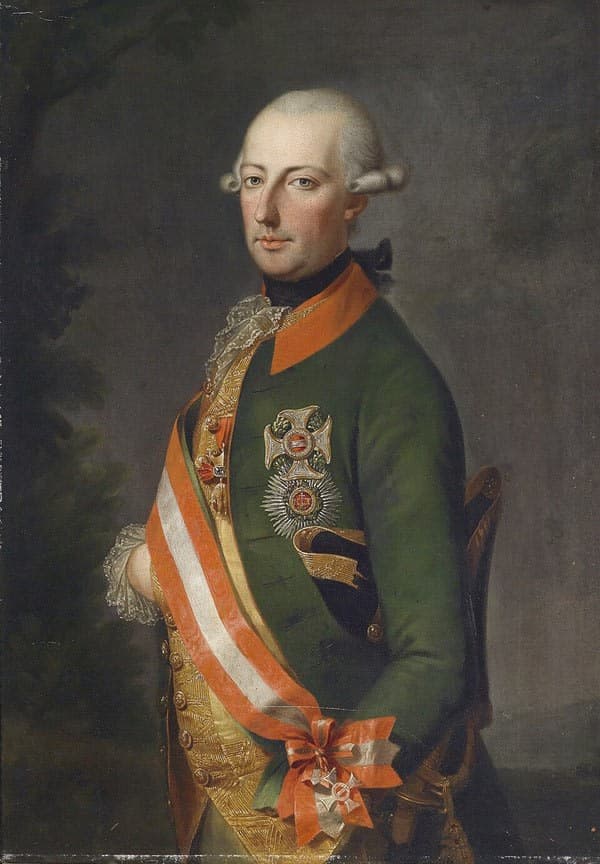
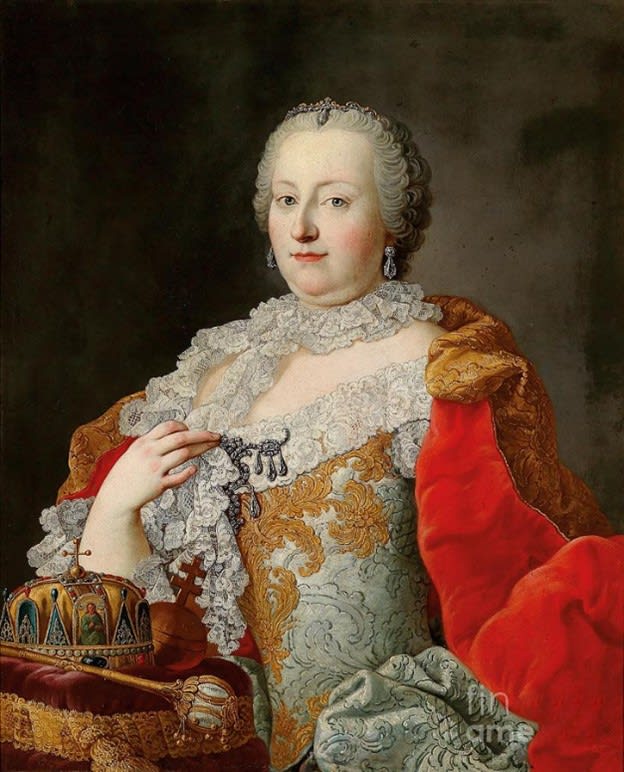
The life of Joseph II, one of the most controversial and consequential figures of the age of enlightened absolutism, began in the very heart of the Habsburg Empire. He was born in the Hofburg Palace in Vienna on Monday, March 13, 1741, at two o’clock in the morning. The birth of the long-awaited eldest son and heir of Maria Theresa and Francis I was an event of state importance.
Already the following day, the papal nuncio baptized the infant in the presence of no fewer than sixteen prelates, giving him the long and solemn name Joseph Benedict Augustus Johann Anton Michael Adam. His godfathers, represented at the lavish ceremony by proxies, were Pope Benedict XIV himself and King Augustus III of Poland.
Joseph did not grow up alone in the large imperial family: he had fifteen brothers and sisters, although the harsh realities of the age claimed the lives of six of them before they reached adolescence.
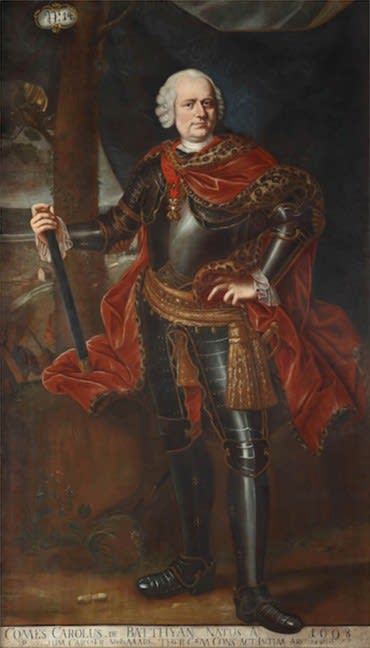
Aware of the great destiny awaiting her son, Maria Theresa personally supervised his comprehensive and carefully organized education. A group of distinguished minds of the age oversaw the upbringing of the heir.
General supervision was entrusted to Hofmeister Karl Joseph Batthyány, while Father Anton von Weger stood out among Joseph’s tutors. Johann Wilhelm Höller Franz and Bernhard Weikhart instructed the young prince in the classical disciplines, Latin, history, and philosophy. The exact sciences, particularly mathematics, were taught by the Frenchman Jean Bréquin, while State Secretary Christoph von Bartenstein contributed to Joseph’s deep understanding of history, which occupied an especially important place in his education.
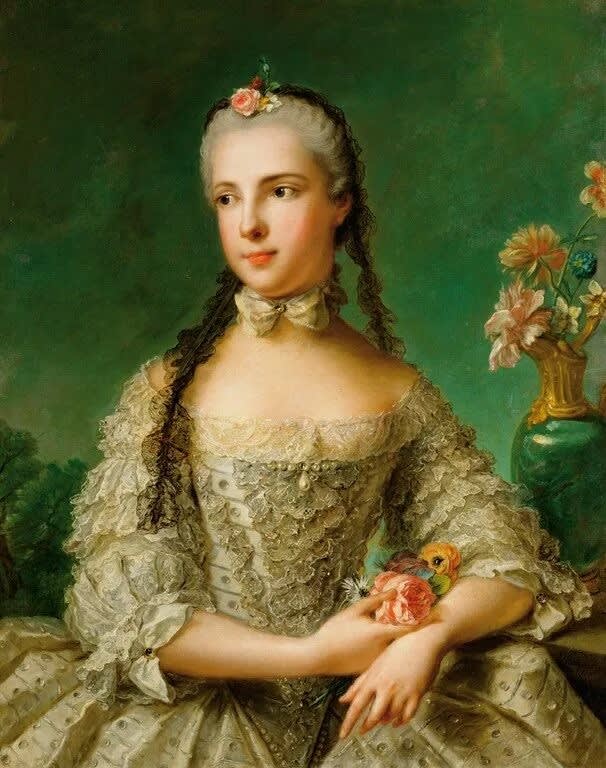
When Joseph turned nineteen, dynastic duty called him into a marriage that, to the surprise of many, brought him genuine, though short-lived, happiness.
As part of the Diplomatic Revolution—the Austro-French alliance of 1756, created with the involvement of Madame de Pompadour and Chancellor Wenzel Anton, Prince of Kaunitz-Rietberg—King Louis XV of France offered the Austrian heir the hand of his granddaughter, Isabella of Parma.
Joseph was enchanted the moment he saw her portrait, and Maria Theresa gladly approved this union between the Habsburgs and Bourbons. The lavish wedding took place in June 1760, while the service in the Augustinian Church was conducted by the papal legate Borromeo.
Joseph was deeply in love with his wife, although Isabella herself, suffering from depression and a profound fear of death following the early loss of her own mother, found greater comfort in the company of Joseph’s sister, Archduchess Maria Christina of Austria.
Their marriage produced a daughter, Maria Theresa. However, in 1763, while pregnant for the second time, Isabella contracted smallpox. This caused premature labor on November 22, 1763. The newborn Archduchess Maria Christina died that same day, and Isabella herself passed away shortly afterward.
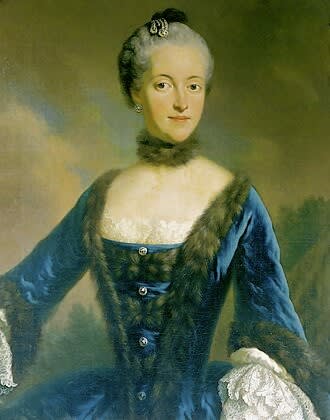
The death of his beloved wife was a devastating blow to Joseph.
He desperately resisted new dynastic marriage plans, but political pressure proved stronger. In 1765, in connection with Habsburg claims to part of Bavaria, he married his second cousin, Princess Maria Josepha of Bavaria, daughter of Charles VII and Maria Amalia.
The marriage was unbearably cold. The shy Maria Josepha sincerely loved her husband but felt inadequate beside him, while Joseph openly admitted that he felt no attraction toward her.
The couple met only at meals and before going to bed. Two years and four months after the wedding, Maria Josepha contracted smallpox and died. Joseph neither visited her during her illness nor attended her funeral, although he later bitterly regretted his cruelty.
This marriage would subsequently serve as a formal pretext for the outbreak of the War of the Bavarian Succession.
Joseph never married again.
In August 1765, a sudden seizure claimed the life of Joseph’s father, Francis I.
Joseph automatically became Holy Roman Emperor and was appointed by his mother as her co-ruler. In a letter to his former tutor Batthyány, the twenty-four-year-old monarch revealed his grief:
“He was my teacher, my friend... Providence has already presented me with the cup of sorrow in my youth. I lost my wife after barely three years with her. Dear Isabella! I shall never forget you! ... Support me now as a monarch in the fulfillment of my important duties.”
Despite his exalted title, real power remained in the hands of Maria Theresa.
Joseph was entrusted only with the army, the treasury, and the court, but even in these areas his mother retained the final say. Nevertheless, with his characteristic energy, he set about rationalizing the inefficient financial system, demanding transparent accounting and reducing the extravagance of his father’s court, insisting that the monarchy had to serve the state.
During this period, Joseph joined the State Council.
Even then, his memoranda were filled with Enlightenment ideas: he demanded religious tolerance, limitations on the power of the Church, freedom of trade, and relief from feudal burdens.
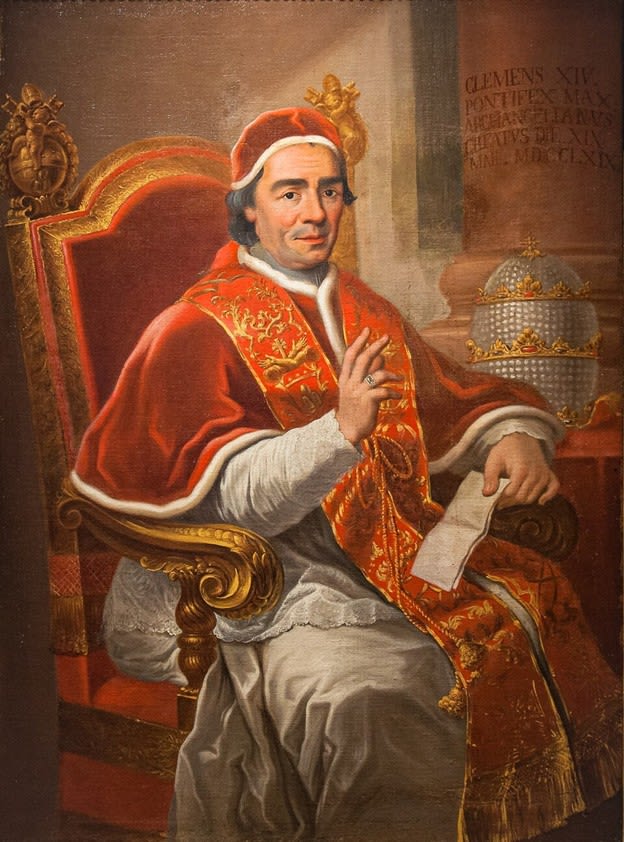
When Pope Clement XIV suppressed the Jesuit order in 1773, Joseph enthusiastically supported the decision, regarding the order as an obstacle to educational reform.
With his support, the General School Ordinance (Allgemeine Schulordnung) was adopted in 1774.
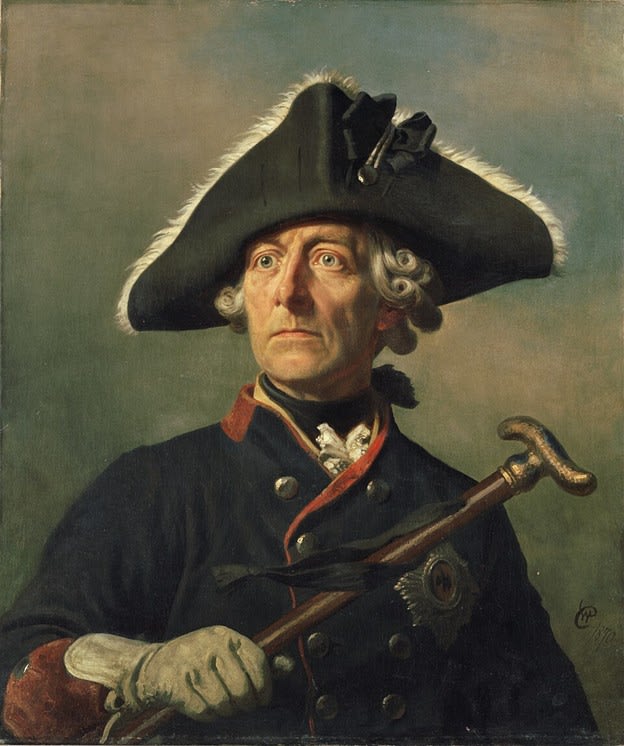
Joseph also traveled extensively. In 1769 at Neisse and again in 1770 at Mährisch-Neustadt, he met King Frederick II of Prussia. On the second occasion, Chancellor Kaunitz accompanied him, and the meeting became a prelude to the First Partition of Poland in 1772, from which Austria acquired Galicia.
Frederick perceptively described Joseph as an ambitious man capable of “setting the whole world on fire.” A similar judgment—“ambitious and despotic”—was made of him by the French foreign minister, the Comte de Vergennes, in 1777.
Joseph’s foreign-policy ambitions frequently collided with harsh reality.
When Frederick II fell ill in 1775, Joseph assembled troops in Bohemia with the intention of seizing Silesia, but the Prussian king recovered.
The death of the Bavarian Elector Maximilian Joseph in December 1777 triggered a new crisis. Unlike the cautious Maria Theresa, Joseph was eager to annex Bavarian territory, which led to war in 1778.
Because of Joseph’s logistical failures, the campaign entered history as the “Potato War,” since it revolved more around the search for provisions than actual battles.
Only Maria Theresa’s secret negotiations led to the Peace of Teschen in 1779, which granted Austria merely the modest territory of the Innviertel.
Maria Theresa’s death on November 29, 1780, finally gave Joseph a free hand.
Obsessed with the ideals of enlightened absolutism, he unleashed an avalanche of reforms upon the empire—more than 6,000 edicts and approximately 11,000 new laws.
It was a benevolent yet ruthless form of paternalism: the emperor wanted to make his subjects happy, but strictly according to his own vision.
He demanded absolute dedication from officials and promoted them on the basis of merit rather than birth.
Seeking administrative uniformity, he made German compulsory, which provoked fierce resistance.
In Hungary, where he refused to be crowned with the Holy Crown in order to avoid swearing to uphold local liberties, he acquired the mocking nickname “the King in the Hat” (kalapos király) and unintentionally stimulated a movement for the revival of the Hungarian language.
Attempts to simplify the empire mechanically often ended in failure. For example, in 1786 he merged the Duchy of Mantua with Milan, only for his successor Leopold II to reverse the arrangement in 1791.
Despite the excesses, Joseph’s social reforms were enormous in scale.
In 1781, he abolished serfdom. With the support of Karl von Zinzendorf, a unified system of financial accounting was introduced.
The legal system underwent radical restructuring. Drawing on criticism of the Codex Theresiana by Kaunitz and Baron Binder, the emperor issued the General Judicial Ordinance (Allgemeine Gerichtsordnung) in 1781.
Judges were now required to possess a university education, aristocratic privileges within the courts were abolished, and the number of appellate courts was reduced to six, while the supreme court, the Oberste Justizstelle, was retained.
Offenses were divided into serious crimes (Verbrechen) and political offenses (politische Verbrechen), while crimes against the state (Staatsverbrechen) were handled through a special procedure.
In August 1783, Joseph effectively abolished the death penalty through a secret order, replacing it with severe imprisonment. Those sentenced to life imprisonment could still be subjected to branding and chains, which he regarded as a more effective deterrent.
In January 1787, a new criminal code, the Allgemeines Gesetzbuch über Verbrechen und deren Bestrafung, established the principle nullum crimen sine lege—“no crime without law.”
At the same time, defendants were deprived of legal counsel, as the search for truth was entrusted to the judge.
Marriage became a civil contract, non-Catholics gained the right to divorce, and sons and daughters were granted equal inheritance rights.
Joseph’s Enlightenment zeal also extended to education, medicine, and religion.
School attendance became compulsory for both sexes, although the introduction of German as the language of instruction in 1784 caused widespread indignation.
That same year, Vienna’s enormous centralized General Hospital, the Allgemeines Krankenhaus, opened its doors. Despite an appalling mortality rate of around 20 percent caused by hospital epidemics, the institution laid the foundations for the later triumphs of Viennese medicine.
Joseph’s religious policies shocked Europe.
The Patent of Toleration of 1781 granted rights to Lutherans, Calvinists, and Orthodox Christians, although those wishing to leave Catholicism were required to complete a six-week course.
An edict of 1782 broke down the walls of Jewish ghettos and opened universities and trades to Jews. In 1789, a similar charter for the Jews of Galicia abolished their communal autonomy as part of a broader policy of Germanization.
The pragmatic monarch closed approximately one-third of the monasteries in Austria and Hungary, preserving only those engaged in medical care and education, and redirected the confiscated wealth toward charitable purposes.
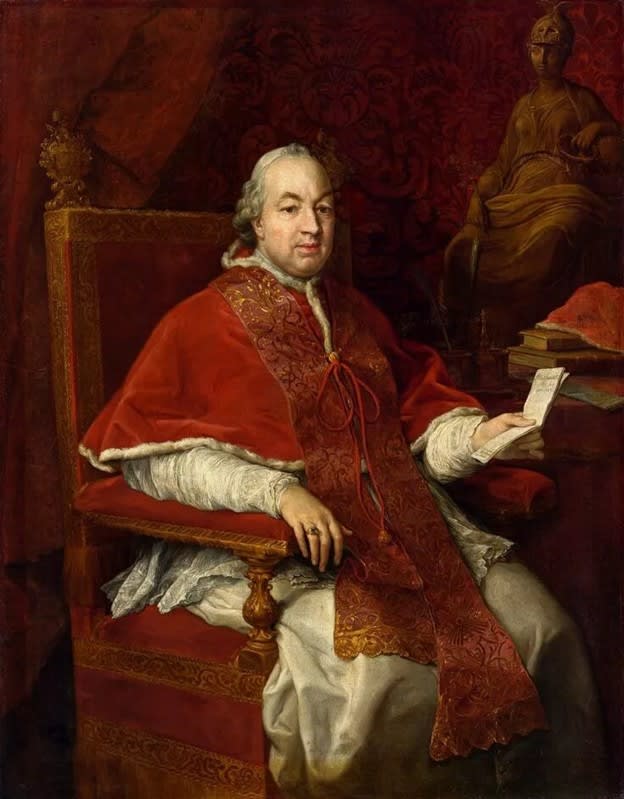
In March 1782, the alarmed Pope Pius VI personally traveled to Vienna, but Joseph, though receiving the pontiff politely, refused to yield.
The emperor sympathized with anticlerical Freemasons, while his attitude toward theology was neatly illustrated by a joke he made in the dark archives of the Sorbonne in Paris:
“Ah, when theology is concerned, there is always little light.”
Joseph’s foreign policy, influenced by the ideas of cameralism and populationism, remained aggressive.
He strengthened the Military Frontier, incorporating Transylvania into it in 1761, which had a major impact on the development of the Serbs and Croats.
His plan in 1785 to exchange the Austrian Netherlands for Bavaria once again collapsed in the face of opposition from Frederick II, who created the League of Princes (Fürstenbund).
Attempts to abolish the Barrier Treaty on the Scheldt were blocked by France.
Concerned about growing Russian influence in the Balkans, Joseph traveled to meet Catherine II under the pseudonym “Count Falkenstein.” This resulted in the Austro-Russian alliance of 1781 and later in the exhausting Austro-Turkish War of 1787–1791, during which Joseph personally commanded troops with little success.
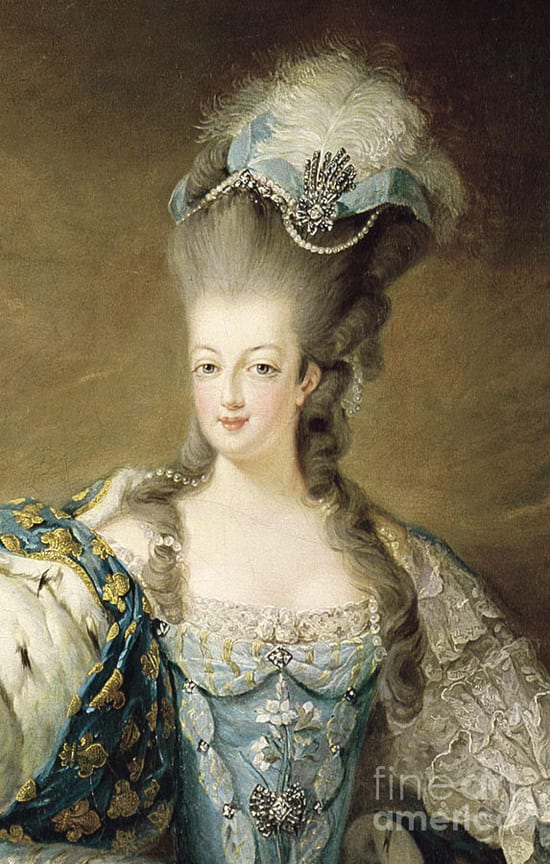
In 1789, after the outbreak of the French Revolution, he attempted to organize the rescue of his sister Marie Antoinette and Louis XVI, but the plan collapsed because of the royal couple’s indecision.
The speed and authoritarian character of Joseph’s reforms ultimately produced a political catastrophe.
Discontent spread across the empire. In 1789, the Brabant Revolution broke out, temporarily creating the independent United Belgian States.
The Hungarian nobility, enraged by attacks on their traditional privileges, launched a wave of resistance that forced the dying monarch to revoke most of his reforms in the kingdom.
Death approached the emperor amid this political crisis.
As early as the autumn of 1788, Joseph had returned to Vienna suffering from exudative pulmonary tuberculosis.
He wrote to his brother Leopold:
“I cough, spit up phlegm, and can hardly breathe. I drink seltzer water and goat’s milk, but I notice no improvement. This has already lasted eight months.”
In January 1790, his fever and chest pains intensified.
During the night of February 19–20, after managing to sleep briefly with the help of painkillers, he awoke at around five in the morning, asked for his confessor to be summoned, and died five minutes later, less than a month before his forty-ninth birthday.
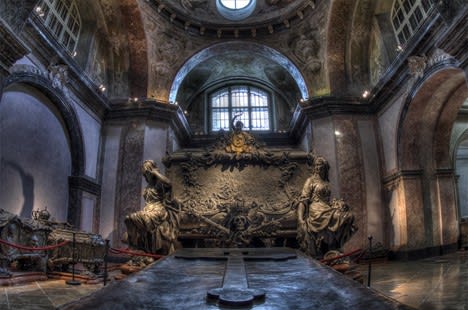
His body, dressed in a field marshal’s uniform, was placed in a simple copper coffin in Vienna’s Capuchin Crypt, at the foot of the magnificent sarcophagi of his parents.