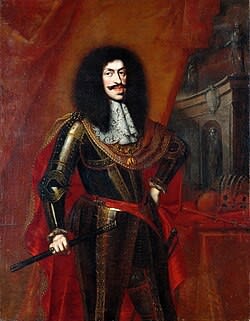
The life of Joseph I, the future Holy Roman Emperor, began in majestic Vienna. Although he was the first long-awaited son born to his parents within their marriage, for his father, Emperor Leopold I, the boy was already his third son and seventh child overall. The dynastic history of the Habsburgs was overshadowed by frequent tragedies: of the four children born from Leopold’s previous marriage to the Spanish Infanta Margaret Theresa, only one survived infancy, while the two daughters born to his second wife, Claudia Felicitas of Austria, also died at an early age. As a result, Joseph grew up in a large imperial family surrounded by six half-brothers and half-sisters.
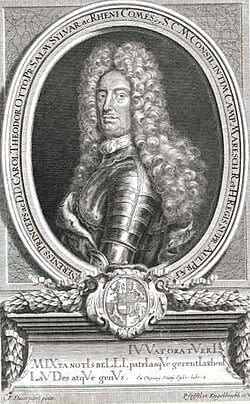
The upbringing of the young archduke was entrusted to Karl Theodor, Prince of Salm, whose strict but progressive guidance had an enormous influence on the formation of the future monarch’s character. The prince, who had previously belonged to the Protestant faith, succeeded in instilling in his pupil not only an excellent command of languages but also a broad outlook. It was largely under his tutor’s influence that Joseph grew up to be far less zealous a Catholic than his deeply religious parents and relatives, gradually becoming receptive to the progressive ideas of the approaching Enlightenment. The young man invariably devoted his free time to the two great passions of his life—music and hunting.
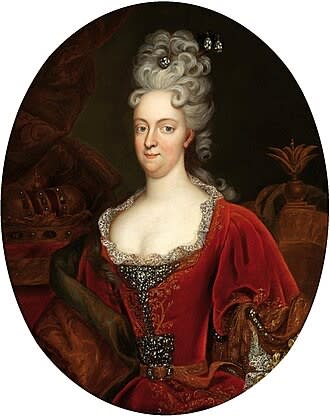
His public image began to take shape at a very early age: as early as 1684, the painter Benjamin Block created the first portrait of the six-year-old archduke, and political triumphs soon followed. At only nine years of age, on December 9, 1687, Joseph was solemnly crowned King of Hungary, and a few years later, on January 23, 1690, the eleven-year-old heir received the crown as King of the Romans.
The prince’s coming of age was also accompanied by arrangements for his personal life. On February 24, 1699, in Vienna, Joseph married Wilhelmine Amalia of Brunswick-Lüneburg. However, their family life turned into a series of disappointments. Three children were born from the marriage, but their only male heir tragically died of hydrocephalus before reaching even one year of age.
Joseph himself became notorious for numerous extramarital affairs, although none of them produced illegitimate children. This recklessness led to disastrous consequences: the monarch contracted a venereal disease, presumed to have been syphilis, and transmitted the infection to his wife precisely when they were trying to conceive another heir, leaving the empress permanently infertile.

Foreseeing a dynastic crisis, the aging Leopold I forced Joseph and his younger brother Charles to sign the Mutual Pact of Succession. The document established the following principle: if neither brother produced a son, Joseph’s daughters would have absolute precedence over Charles’s daughters.
This short-sighted agreement, which did not take into account the possibility that Charles’s daughter—the future great empress Maria Theresa—might ascend the throne, would later become one of the principal causes of the bloody War of the Austrian Succession.
It was on the battlefield that Joseph began his path toward real political power. In 1702, at the height of the War of the Spanish Succession, he gained his first and only experience of direct participation in military operations when he joined the forces of the imperial general Louis William, Margrave of Baden-Baden, during the Siege of Landau.
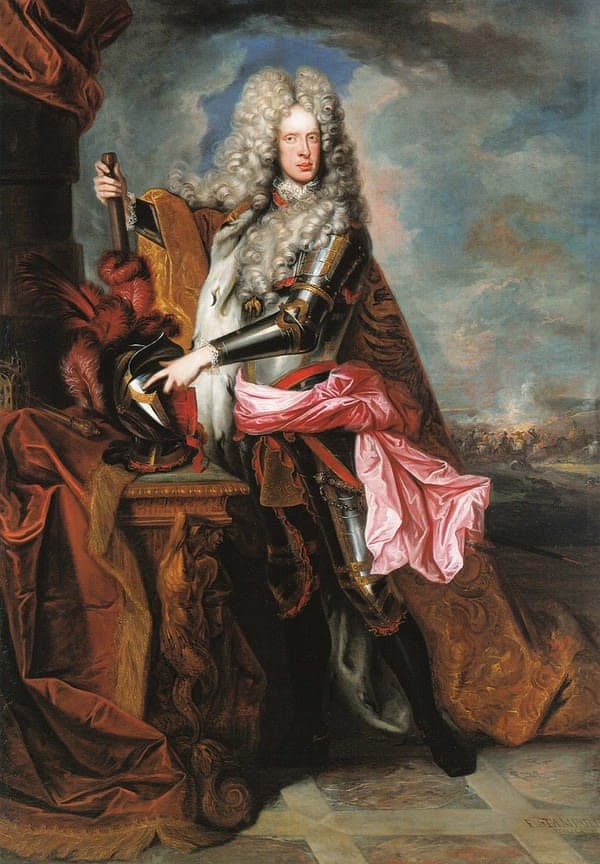
That same year, Johann Rudolf Huber painted the famous portrait of the young commander. Even before formally ascending the throne, Joseph demonstrated that he was a ruler capable of looking far into the future. The young Viennese court was alive with innovative ideas: the future emperor surrounded himself with reform-minded advisers, sharply reduced the bloated number of privy councillors, and devoted all his efforts to modernizing the central administrative institutions.
His efforts were successful—the bureaucratic apparatus began to function more efficiently, while the chronically weak financial position of the Habsburg monarchy was successfully stabilized.
Upon ascending the throne, Joseph I set himself an ambitious goal—to strengthen his personal position within the Holy Roman Empire and thereby transform Austria into an undisputed great power. His attempts to expand Habsburg possessions and assert imperial rights in Italy were so forceful that a dispute over the Duchy of Mantua nearly led to open war with the Vatican.
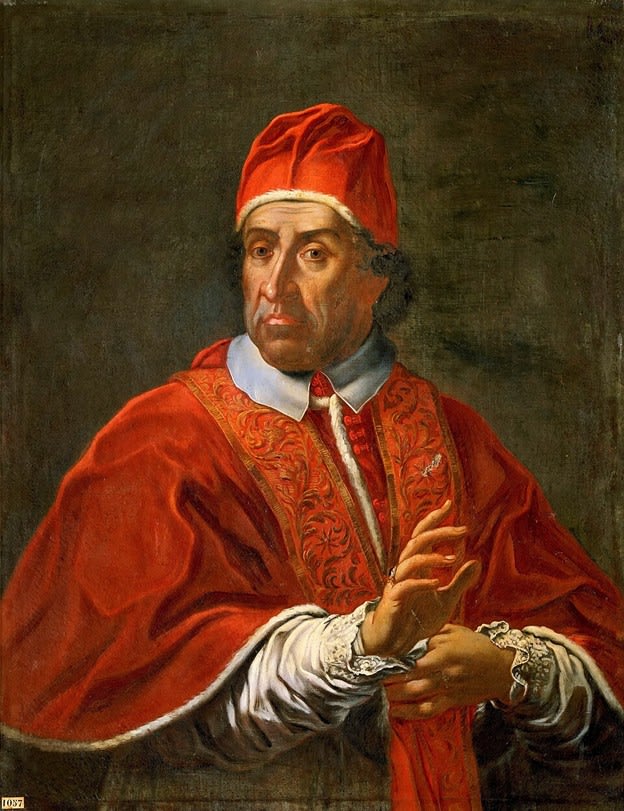
Tensions reached their peak on June 16, 1708, when Pope Clement XI threatened the defiant emperor with excommunication from the Church.
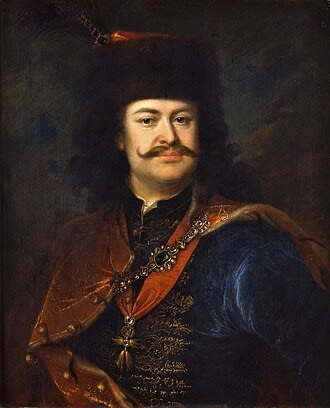
On the eastern frontiers of the empire, the situation was no less explosive. Joseph inherited from his father the massive Kuruc uprising in Hungary. The rebellious nobles of Transylvania, opposing Habsburg domination, at one point advanced almost to the gates of Vienna.
Although the emperor was forced to respond with military force, he fundamentally changed the punitive policies of his predecessors. Rejecting demonstrative mass executions of the uprising’s leaders, Joseph instead moved toward a negotiated peace, which in the long term proved highly advantageous to the crown by facilitating the final integration of Hungary into the empire.
Throughout his reign, the monarch waged an exhausting struggle against the leader of the rebellion, Francis II Rákóczi, until Rákóczi was ultimately forced to flee to the Ottoman Empire. Joseph’s repeal of some of his father’s most authoritarian decrees noticeably reduced social tensions.
He was also extraordinarily fortunate in his military commanders. While Joseph governed the state, his trusted general, the brilliant Prince Eugene of Savoy, achieved one victory after another. Acting independently in Italy or joining forces with the Duke of Marlborough in Germany and Flanders, Eugene repeatedly defeated the armies of the French king Louis XIV.

Rákóczi’s uprising, which raged from 1703 to 1711, exposed deep religious and ethnic divisions within the Kingdom of Hungary. A significant portion of the local nobility and common people adhered to Calvinism. Hoping to obtain complete freedom of religion and equal rights from Vienna, they actively supported the rebellion.
Recognizing the scale of the threat, the Viennese court was forced to soften some of its harshest pro-Catholic measures. At the same time, Joseph made a diplomatic gesture toward the Orthodox Serbs and Romanians living in eastern and southern Hungary. In 1706, he officially reaffirmed the religious freedoms granted to them by the late Leopold I, and in 1708 he confirmed the status of the newly established Metropolitanate of Krušedol.
Concerned about the future of the empire, Joseph also began painstaking work on the Pragmatic Sanction—the crucial document governing succession to the Austrian hereditary lands, which would eventually be completed by his brother Charles VI.
However, Joseph’s progressive views and religious concessions stood in grim contrast to his brutal policy toward the Roma population. In 1710, he not only reaffirmed but also severely intensified his father’s anti-Roma decree.
Whereas Leopold had declared the Roma outside the protection of the law and demanded that they be punished if they returned to Bohemia, Joseph introduced a system of brutal mutilations intended to identify expelled individuals. In the Kingdom of Bohemia, captured Roma had their right ears cut off; in the Margraviate of Moravia, their left ears were removed; and in Austria, the image of a gallows was burned into their backs with a red-hot iron.
The decree uncompromisingly ordered that all adult men be hanged without trial, while women and children were to be subjected to severe flogging followed by permanent expulsion. Even the slightest display of mercy or assistance toward Roma was punishable by six months of forced labor, while officials who failed to enforce the bloody order faced an enormous fine of 100 Reichstalers. These inhumane measures triggered a wave of legalized mass killings throughout the empire.
The life of this contradictory, ambitious, and energetic ruler came to an abrupt end. Europe was struck by the devastating smallpox epidemic of 1711, which had already claimed the lives of the Grand Dauphin Louis of France and three siblings of the future Emperor Francis I.
The disease did not spare Joseph. Lying on his deathbed in the Hofburg Palace, the emperor made one final appeal to his wife, swearing that he would permanently end his extramarital affairs if Heaven granted him recovery. But no miracle occurred.
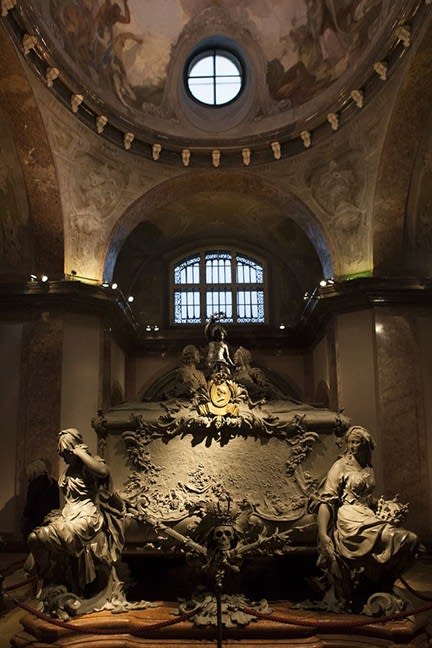
Joseph I died on April 17, 1711. His solemn and somber funeral took place on April 20. The monarch’s body was laid to rest in Tomb No. 35 in the Charles Vault, part of the famous Imperial Crypt—the traditional burial place of the Habsburg dynasty.
The magnificent tomb, designed by the outstanding architect Johann Lukas von Hildebrandt, was richly decorated with reliefs depicting battle scenes from the War of the Spanish Succession, permanently commemorating the military triumphs of Joseph’s era.
The memory of the reforming emperor has survived not only in the stone of the crypt but also on the map of his native city: Vienna’s eighth district still bears the name Josefstadt in his honor.