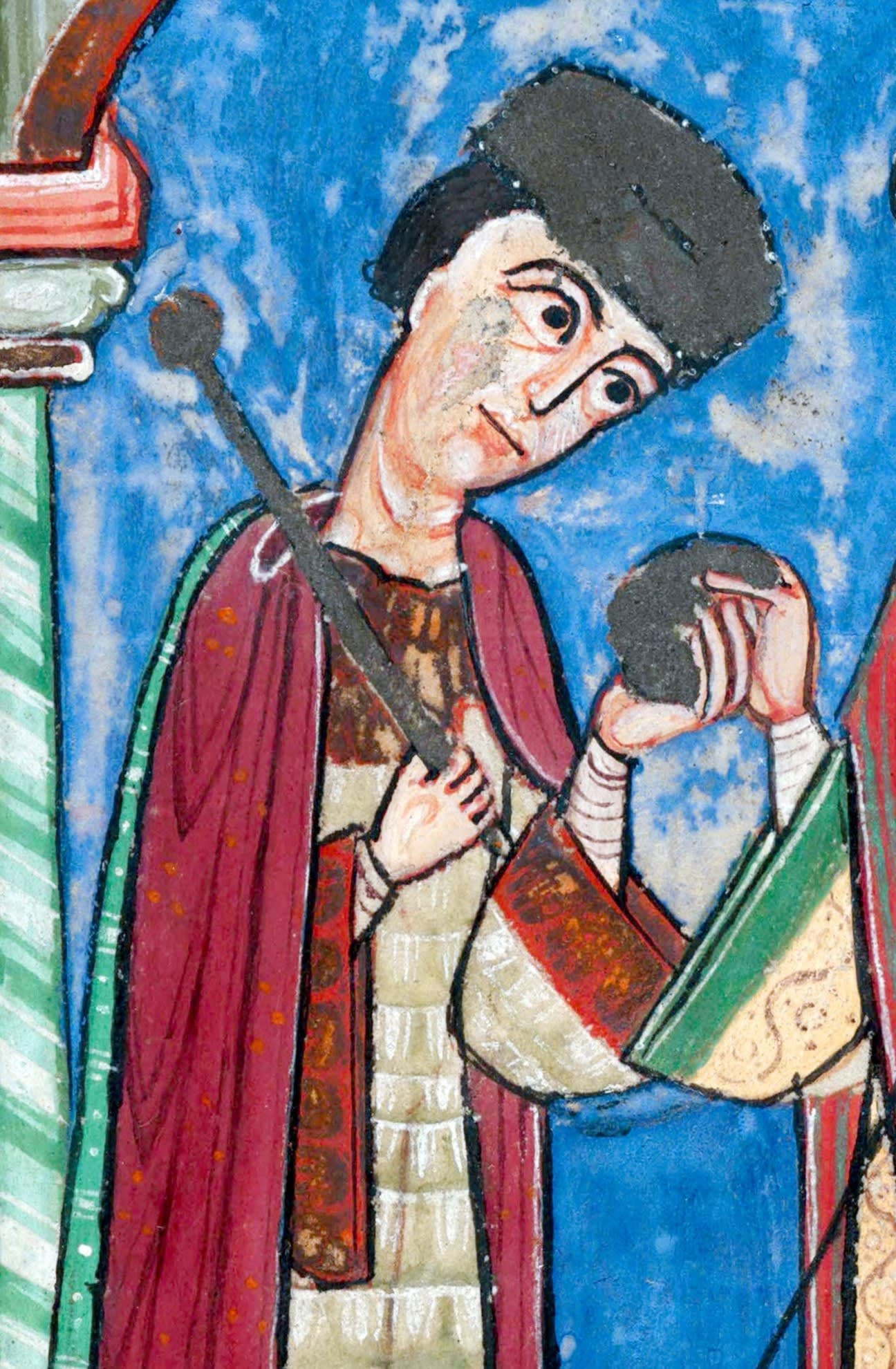
The story of Emperor Henry V begins during one of the most turbulent periods in the history of the Holy Roman Empire.
The exact date of his birth remains uncertain. Historians generally believe that he was born on 11 August 1081, or possibly in 1086. The first completely reliable milestone in his biography comes at Easter 1101, when the young prince underwent the solemn ceremony of knighthood, known as the Schwertleite. Traditionally, such a ceremony was performed when an heir was approximately fifteen years old.
Of all the children of the powerful but deeply troubled Emperor Henry IV and his devoted wife Bertha of Savoy, who died in 1087, only three survived into adulthood: Henry himself, his elder brother Conrad, and their sister Agnes. Two other children died in infancy.
The emperor’s younger son spent his childhood in Regensburg, far from the center of political turmoil, under the strict supervision of his tutor, Conrad, Bishop of Utrecht.
By the time Henry was born, his father had already spent years fighting an exhausting and uncompromising struggle to preserve his authority.
Henry IV faced opposition from the pope, imperial bishops, and secular princes. A ruler of a severe temperament, he showed little willingness to respect the advice, ancient rights, or privileges of the landed aristocracy.
The center of rebellion became Saxony, soon joined by the powerful southern duchies of Bavaria, Swabia, and Carinthia.
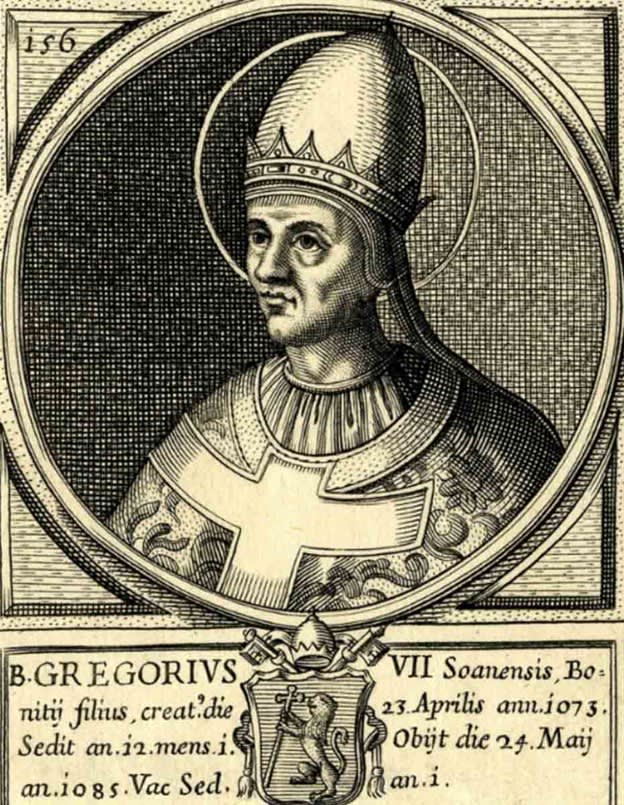
Seeking an ally, the southern princes turned to the principal ideological leader of the Church reform movement — Pope Gregory VII.
The central issue was investiture.
Gregory VII categorically demanded that the emperor surrender the right personally to appoint abbots and bishops.
For Henry IV, such a concession was unthinkable, since this practice had formed the backbone of the Imperial Church System since the reign of Otto I the Great.
The conflict reached its climax in 1077, when the pope excommunicated the emperor.
Henry IV’s legendary and humiliating act of penance at snow-covered Canossa temporarily secured the lifting of the excommunication, but peace did not last.
Further excommunications followed in 1080 and 1094.
In 1102, the Church’s condemnation fell not only upon the emperor himself, but also upon all his supporters, including his young son — the future Henry V.
The Empire and the Church had become separated by a seemingly bottomless abyss.
Attempting to preserve his weakening authority, Henry IV desperately strengthened his position in the south.
His daughter Agnes was betrothed to Frederick, who received the Duchy of Swabia in 1079.
At the same time, the emperor sought to secure the dynasty through a clear succession.
He initially designated his elder son Conrad as his heir and had him crowned at Aachen in 1087.
But Conrad dealt his father a devastating blow.
While in Italy in 1093, he defected to the side of the Church reformers.
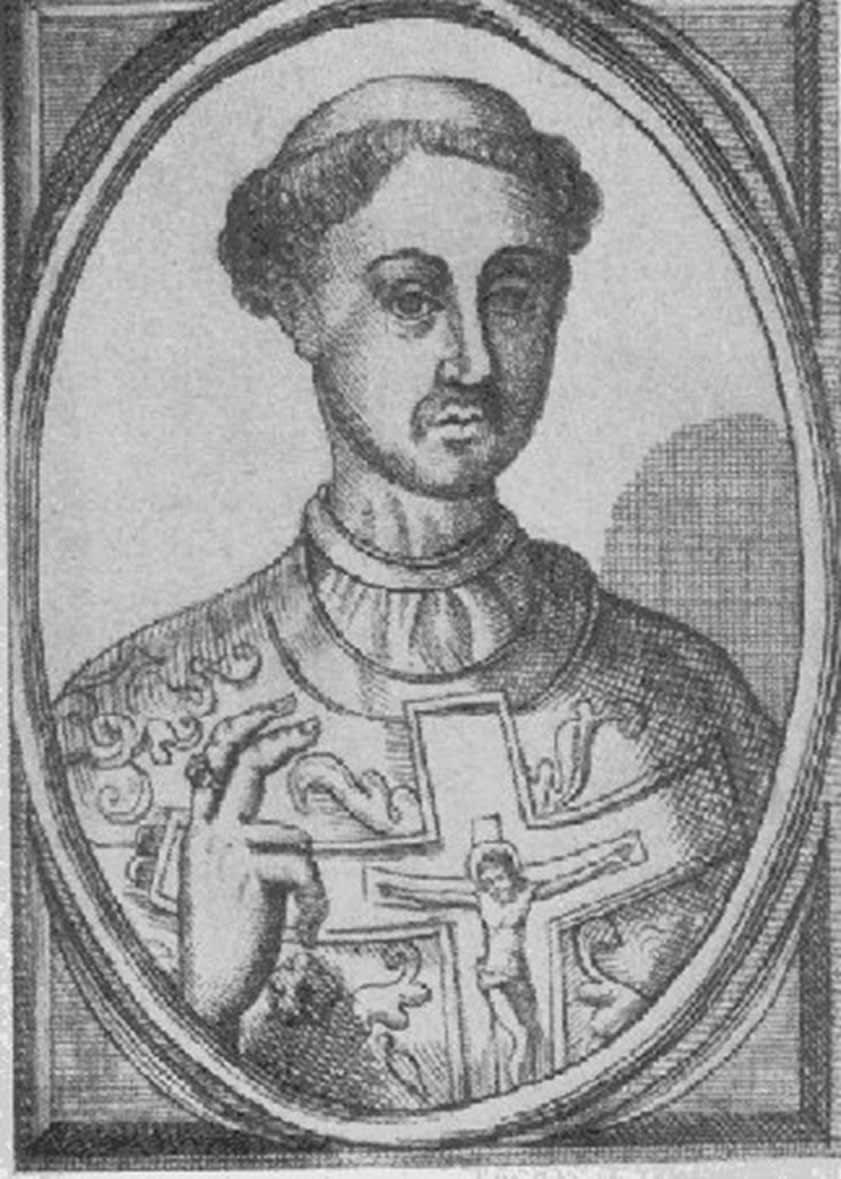
Henry IV responded harshly.
At the imperial assembly in Mainz in May 1098, Conrad was stripped of both his royal title and his inheritance rights.
Everything was transferred to his younger brother, Henry V.
In return, the young prince swore a solemn oath never in his life to rebel against his father.
On 6 January 1099, Henry V was crowned at Aachen and publicly repeated this promise.
When Conrad died ingloriously in Florence on 27 July 1101, the young Henry became the emperor’s only surviving son and the principal hope of the Salian dynasty.
For the next six years, father and son ruled together, and outwardly there seemed to be no disagreement between them.
Unlike many heirs of earlier generations, Henry V remained in the background and rarely interfered in government.
After the betrayal and death of his eldest son, Henry IV’s policies had also become increasingly cautious.
Yet this calm was merely the silence before a great storm.
What exactly persuaded Henry V to break his oath and overthrow his own father remains a matter of debate among historians.
Some scholars believe that the cause lay in the young king’s religious and reform-minded convictions, combined with the influence of an ambitious circle of young Bavarian aristocrats.
Margrave Diepold III of Vohburg, Count Berengar II of Sulzbach, and Count Otto of Habsberg-Kastl allegedly convinced the prince of a terrifying possibility: his father’s cause had been lost forever, and the Church would inevitably triumph.
They warned Henry that if he quietly waited for his father to die naturally, another more decisive figure might seize the throne amid widespread dissatisfaction.
Driven by fear of losing the crown and anxiety for the salvation of his own soul, Henry turned against his father.
Other historians identify the trigger in a bloody incident that occurred in February 1104.
At Regensburg, a nobleman named Sighard of Burghausen was brutally murdered by local inhabitants and ministeriales.
The victim’s outraged relatives and the local aristocracy expected severe punishment for the killers, but Henry IV allowed the matter to fade away.
This was interpreted as open contempt for the nobility.
Before the murder, Henry V had attempted to mediate but had failed.
The emperor’s inaction deeply offended his son.
Critics of this interpretation, however, point out that too much time passed between Sighard’s death and the beginning of the rebellion for it to be regarded as the sole cause.
In November 1104, Henry V was still accompanying his father on a punitive campaign against Saxon reformers who had rebelled over the election of the Archbishop of Magdeburg.
But on 12 December, the unthinkable occurred.
Under cover of darkness, Henry V deserted, abandoned his father’s camp, and permanently broke his oath.
He rushed to Regensburg, where he celebrated Christmas among the conspirators.
His companions urged him to launch an open rebellion, but the young prince remained tormented by the fear that he had committed perjury.
At the turn of 1104–1105, he secretly sent messengers to Rome, begging Pope Paschal II to release him from his filial and feudal oath.
The pope, recognizing an opportunity to destroy an old enemy, absolved Henry and promised him full support — on the condition that the new king rule justly and defend the Church.
Supporters of father and son flooded the empire with letters and polemical writings, each side accusing the other of violating both divine and human law.
Meanwhile, Henry V built alliances.
In the spring of 1105, he travelled to Saxony, where hatred of his father burned more fiercely than anywhere else.
Henry IV had not dared enter the region since 1089.
Within two months, the young king presented himself as the ideal ally of the reformers.
He removed bishops loyal to his father — Frederick of Halberstadt, Udo of Hildesheim, and Henry of Paderborn.
On Palm Sunday, Henry entered Quedlinburg barefoot, demonstrating profound humility — humilitas, regarded as one of the principal Christian virtues of a ruler.
He consolidated his triumph in Saxony at Pentecost in Merseburg by confirming an Archbishop of Magdeburg acceptable to the Church.
At the same time, Henry systematically destroyed his father’s alliances.
By promising his sister Agnes in marriage to Leopold III of the powerful Babenberg dynasty, he persuaded Leopold to abandon the old emperor.
At the end of October 1105, Henry V triumphantly entered Speyer, the heart of the Salian dynasty, and boldly appointed Gebhard, one of his father’s bitterest enemies, as bishop there.
The confrontation was approaching its climax.
In the autumn of 1105, the armies of father and son confronted one another along the banks of the Regen River.
The atmosphere was explosive, but the imperial princes, fearing a fratricidal bloodbath, refused to allow battle.
It was agreed that peace would be negotiated at a Christmas assembly in Mainz.
Henry IV believed reconciliation was still possible.
On 20 December at Koblenz, his son staged a scene of biblical emotional intensity.
Weeping, Henry V threw himself around his father’s neck and covered him with kisses.
In the political culture of the twelfth century, such a public gesture carried enormous significance.
The reassured old emperor disbanded his army, and on 21 December, father and son travelled together toward Mainz.
But it was a trap.
On 23 December at Bingen, Henry V persuaded his father to wait inside a castle, falsely claiming that Archbishop Ruthard of Mainz was planning an assassination and would not allow him into the city.
The emperor agreed.
He was taken to Böckelheim Castle, controlled by Bishop Gebhard.
The heavy gates closed behind him.
The ruler of the empire found himself in a dark prison.
According to the chronicles, Henry IV spent Christmas “unwashed, unshaven, and deprived of every service.”
Broken by betrayal and humiliation, the emperor surrendered.
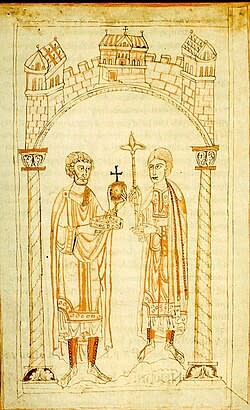
At the imperial assembly in Mainz, his son forced the captive ruler to hand over the greatest symbols of imperial power:
the crown, sceptre, cross, Holy Lance, and sword.
On 31 December 1105 at Ingelheim, Henry IV formally signed his abdication.
Henry V immediately spread the claim that the transfer of power had been entirely “voluntary,” desperately attempting to give the coup the appearance of lawful dynastic succession.
On 5 or 6 January 1106, in the presence of around fifty princes, Henry V was formally anointed as king.
Archbishop Ruthard, while handing him the regalia, pronounced an ominous warning:
“If you do not become a just ruler and defender of the Church, you will end your days as your father did.”
From that moment, Salian royal authority rested not only upon divine mandate and the protection of the Virgin Mary, but also upon physical possession of the imperial regalia and the consent of the princes.
Yet the old king was still alive.
Henry IV escaped from Ingelheim to Liège, where he began gathering an army for revenge.
His son panicked and called an emergency imperial assembly for Easter 1106.
But events took another course.
On 7 August 1106, Henry IV suddenly died at Liège, where the townspeople buried him with great honors.
A spontaneous cult soon began to form around his grave, as the deposed emperor came to be venerated almost as a saint.
Alarmed by this symbolic resurrection of his father’s authority, Henry V ignored princely protests.
On 24 August, he ordered the body exhumed and transported to Speyer.
On 3 September, it was secretly buried in an unconsecrated annex of Speyer Cathedral.
Only in 1111, after the excommunication was lifted from the dead emperor, was Henry IV finally buried in the Salian family crypt.

After taking the throne, Henry V drew an important lesson from his father’s downfall.
In the spring of 1106, he openly declared:
“Neglect of the princes caused the ruin of the Empire.”
From this point began an era of so-called consensual government.
The king shared the burdens of rulership with the highest aristocracy.
Royal charters increasingly contained the formula:
“by the judgment and counsel of the princes.”
Henry regularly convened court assemblies, or Hoftage, which were attended by large numbers of nobles who now felt responsible for the fate of the state.
Henry restored bishoprics to clerics who had been expelled under his father.
Negotiations with the papacy were now conducted by delegations composed of both ecclesiastical and secular lords.
The king’s inner circle included Bishop Eberhard of Eichstätt, until his death in 1112, Count Berengar II of Sulzbach, and Count Palatine Godfrey of Calw.
Frequent witnesses in royal documents included Archbishop Frederick of Cologne, Archbishop Bruno of Trier, the bishops Burchard of Münster, Otto of Bamberg, and Erlung of Würzburg, Count Herman of Winzenburg, and later Duke Frederick II of Swabia and Margrave Herman of Baden.
Relying upon this coalition, Henry moved freely throughout the empire and settled disputes with considerable force.
Until 1112, he was a frequent visitor to loyal Saxony.
When the ancient Saxon Billung dynasty became extinct in 1106 following the death of Duke Magnus, Henry boldly ignored customary inheritance traditions.
He passed over the deceased duke’s sons-in-law — Henry the Black and Otto of Ballenstedt — and instead granted the duchy to Lothair of Supplinburg as a reward for his support during the rebellion of 1104–1105.
Foreign policy remained turbulent.
In 1107, Henry campaigned in Bohemia in an effort to restore Bořivoj II, who had been deposed by Svatopluk.
Henry summoned Svatopluk to judgment and imprisoned him, but the complexities of Bohemian politics soon intervened.
Bořivoj was forced to become godfather to Svatopluk’s son, while Svatopluk eventually returned and retained power.
In 1108, Henry went to war against King Coloman of Hungary, supporting the claimant Álmos.
But a sudden attack from behind by the Polish ruler Bolesław III and the restless Bořivoj forced Henry to reverse direction.
A punitive expedition against Poland for tribute ended disastrously.
On 24 August 1109, at the Battle of Hundsfeld, imperial forces were defeated by Bolesław III.
Only in 1110 did Henry partially restore imperial prestige in the east by installing the loyal Vladislaus I on the Bohemian throne.
Yet the principal political wound remained unresolved: Italy and the continuing conflict with the Church.
South of the Alps, Salian authority had weakened dramatically.
Between 1095 and 1110, the empire issued no documents for Italy, while the Milanese openly ignored the German king.
The struggle over investiture — the right to appoint bishops through the presentation of the ring and staff — remained an open wound.
Henry continued appointing churchmen.
The staff and ring, symbols of the bishop’s mystical marriage to the Church, continued to be presented to imperial nominees.
On 7 January 1106, Archbishop Conrad I of Salzburg received the regalia in Mainz.
In 1107, Henry filled the sees of Halberstadt, Magdeburg, Speyer, and Verdun.
Yet appointments were increasingly shaped by political connections at court.
Bishoprics effectively became monopolized by a narrow circle of high aristocratic families, while the influence of cathedral schools and chapters diminished.
Pope Paschal II demanded the complete abandonment of this practice.
Attempts at compromise at the synods of Guastalla in 1106 and Châlons-en-Champagne in 1107 failed spectacularly.
Feeling increasingly powerful, the pope confirmed the prohibition of lay investiture at the French council of Troyes.
Negotiations reached a dead end.
A dramatic confrontation became inevitable.
In August 1110, preparations were completed for a historic campaign to Rome intended to settle the investiture dispute once and for all.
Henry prepared for triumph.
A new royal seal was created specifically for the campaign, while the court chaplain and chronicler David was instructed to write a multi-volume propagandistic account of events in simple language so that ordinary people could understand the king’s greatness.
Unfortunately, this work has not survived.
An enormous army, reportedly numbering 30,000 knights, marched through the Great St. Bernard Pass.
The chronicler Otto of Freising described how the columns moved through the night by the light of thousands of torches, displaying the terrifying power of the empire.
After passing Piacenza, Parma, and Florence, the army reached Sutri by February 1111.
A second column under Duke Welf II of Bavaria, advancing from the southeast, joined the principal force near Roncaglia.
Welf’s presence was particularly symbolic because his family had once fought against the Salians.
It represented the apparent unity of the German political nation.
Welf’s position was also important because of his connection to Italy.
From 1089 to 1095, he had been married to the great Margravine Matilda of Tuscany.
Her enormous possessions stretched across Lombardy, Emilia, Romagna, and Tuscany.
As early as 1079, Matilda had promised her vast inheritance to the papacy.
But faced with Henry’s enormous military power, she hesitated.
After negotiations over the king’s “peace and honor” — de pace [...] de regis honore suoque — she allowed his army to pass through her territories.
The concept of royal honor was gradually evolving into the idea of absolute sovereign authority capable of justifying imperial claims over all Italy.
The road to Rome now lay open.
In Lombardy, Archbishop Grossolano even expressed willingness to crown Henry with the Iron Crown.
Pope Paschal II found himself in a desperate position.
Deprived of Matilda’s support, he appealed to the traditional enemies of the empire — the Normans of southern Italy, who had already captured Rome in 1084.
Roger of Apulia and Robert I of Capua promised assistance.
The pope also relied upon Roman urban aristocrats and rebellious northern cities such as Milan, which after conquering Lodi in 1111 was building an increasingly independent regional power.
Yet Robert of Capua’s army was blocked by an imperial supporter, Count Ptolemy I of Tusculum.
Cornered, Paschal offered Henry V an extraordinary and radical compromise.
The so-called Concordat of Sutri, negotiated between 4 and 9 February 1111, proposed the following arrangement:
Henry would completely renounce his right to appoint bishops.
In return, the Church would surrender to the crown all of its feudal possessions, duchies, minting rights, customs revenues, and markets.
The pope believed that the political power and wealth of the clergy were themselves the sources of simony and corruption.
For the German bishops, however, the proposal amounted to political destruction.
They would lose their territorial power, income from lands, and influence, becoming dependent upon alms and papal authority.
The coronation festivities were scheduled for 12 February 1111.
At the entrance to St. Peter’s Basilica, Henry V performed an extraordinary public act of humility.
He kissed the pope’s feet — the first recorded instance of such an act in this context.
But when the terms of the agreement were read aloud inside the basilica, chaos erupted.
The bishops, realizing that they were about to lose their wealth and political power, revolted furiously.
Popular unrest spread through Rome itself.
The coronation collapsed.
An enraged Henry demanded the restoration of his right to invest bishops and insisted upon immediate coronation.
Paschal refused.

Henry V then committed an extraordinary act.
Inside St. Peter’s Basilica itself, his soldiers seized the pope and placed him under arrest.
For two long months, Paschal remained a prisoner.
The pressure worked.
On 12 April at Ponte Mammolo, a new agreement was signed.
The pope lifted the condemnation from the dead Henry IV, restored the king’s right to invest bishops with ring and staff, and swore never to excommunicate Henry V.
The following day, 13 April 1111, the broken Paschal finally crowned Henry emperor.
But this victory marked the beginning of Henry’s decline.
The arrest of the highest spiritual authority in western Christendom shocked Christian Europe.
A storm of outrage followed.
In the summer of 1111, at a synod in Jerusalem, Cardinal Kuno of Palestrina condemned Henry.
In September 1112, a Burgundian synod under Archbishop Guy of Vienne, the future Pope Callixtus II, formally excommunicated the emperor.
In March 1112, the Lateran Council solemnly annulled the investiture privilege, denouncing it as a “depraved privilege” — Pravilegium.
As historian Stefan Weinfurter observed, the year 1111 broke the backbone of Henry’s reign.
His alliance with the reformers collapsed.
The carefully constructed system of consensual government with the princes, built upon the ruins of his father’s authority, began to disintegrate rapidly.
After the scandalous imperial coronation in rebellious Rome, Henry V did not remain in Italy for long and quickly withdrew his army across the Alps.
On the return journey, from 6 to 8 May 1111, he stayed at Bianello Castle as a guest of Matilda of Tuscany.
Within its walls, emperor and margravine concluded an important agreement which many modern historians interpret as providing for the transfer of her enormous estates to Henry V after her death.
Having secured his southern interests, Henry returned to Germany to complete perhaps the most important symbolic act of his reign.
On 7 August 1111, after the lifting of the Church’s condemnation, he finally organized a proper royal funeral for his father.
Until then, Henry IV’s body had remained in an unconsecrated side chapel of Speyer Cathedral.
For the young emperor, the burial ceremony became a powerful instrument of legitimacy.
Walking behind the coffin, he presented himself not as a rebel who had overthrown his monarch, but as a loyal son and lawful heir.
He thereby proclaimed that his authority rested not only upon princely consent and successful rebellion, but also upon sacred and unbroken dynastic right.
On the same day, 7 August, and again exactly one week later, on 14 August, a date with special liturgical significance for commemorating the dead, Henry V took another unprecedented step.
He granted the inhabitants of Speyer two privileges providing civic freedoms extraordinary for the early twelfth century.
The townspeople were exempted from:
inheritance taxes,
property taxes,
and certain judicial fees.
Because the first charter was directly connected with memorial ceremonies for Henry IV, historians regard the Speyer privileges as an important milestone in the development of European urban liberties.
The Salian conception of monarchy was changing rapidly.
The first three rulers of the dynasty had granted lands and privileges primarily to the clergy.
Now an entire city, with its merchants and craftsmen, had been incorporated into the political system responsible for preserving the memory of the Salian dynasty.
Speyer’s economic prosperity, legal rights, and civic freedoms became inseparably associated with Henry V.
Three years later, in 1114, Worms also received generous economic privileges, although its inhabitants did not receive the same degree of personal civic freedom.
Peace within the empire, however, proved fragile.
Beginning in the fateful year 1111, Henry increasingly made decisions unilaterally and ignored the opinions of the princes.
He began using the same harsh authoritarian methods as his late father.
This only intensified political opposition.
After the arrest of the pope in Rome, many important churchmen abandoned the emperor.
Among the first were Archbishop Conrad I of Salzburg and Bishop Reinhard of Halberstadt.
But the most damaging rupture was with one of Henry’s closest former associates — Adalbert of Saarbrücken.
From 14 February 1106, Adalbert had served as imperial chancellor and one of the principal architects of royal policy.
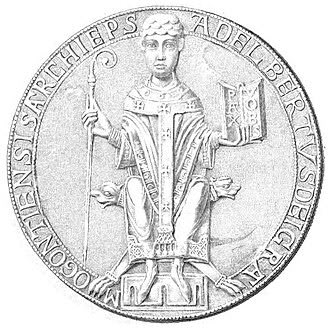
In 1109, he became Archbishop of Mainz and accompanied Henry on the Italian campaign of 1110–1111.

The dispute centered upon land.
As the Salian dynasty expanded its possessions along the Middle Rhine, it inevitably collided with the territorial interests of the Church of Mainz.
The immediate spark was the magnificent Trifels Castle.
Ignoring Adalbert’s property claims, Henry declared Trifels an imperial castle — Reichsburg — in 1113.
For centuries afterward, the imperial regalia would be stored there.
Without consulting the princes, Henry ordered his former friend imprisoned.
Adalbert remained in captivity for three years.
Only in November 1115, when the enraged inhabitants of Mainz threatened the emperor with armed rebellion, was the archbishop released.
By then, he had been reduced by starvation almost to a living skeleton.
The old Ottonian traditions of demonstrative mercy and peaceful reconciliation had largely disappeared.
The Salians were constructing a harsher model of punitive royal authority.
It was therefore hardly surprising that the rescued Adalbert of Mainz became one of the empire’s most relentless enemies.
At the same time, Saxony again erupted into rebellion.
In 1112, Duke Lothair of Supplinburg rose against the crown.
The rebellion was quickly suppressed.
But in 1113, the childless Margrave Ulrich of Carniola died.
According to ancient Saxon traditions, local aristocrats immediately claimed his rich inheritance.
Henry V decided otherwise.
In his view, without direct heirs, the lands reverted to the empire.
Having secured formal approval from the royal princes, he deliberately ignored the Saxon aristocracy.
Lothair of Supplinburg once again raised the banner of revolt, but he was decisively defeated at the Battle of Warnstedt and forced to seek forgiveness.
Meanwhile, a new crisis developed in the west.
Archbishop Frederick of Cologne broke with the emperor.
The immediate cause was a campaign against the Frisians, who had refused to pay their annual tribute.
Rumors spread that Henry had deliberately exposed Cologne’s military contingent to enemy attack.
The people of Cologne also complained bitterly about the brutality of royal ministeriales, or villici, whom the emperor used as administrators.
In his letters, Archbishop Frederick described the condition of the Church as catastrophic.
Important bishoprics such as Worms and Mainz remained vacant for years while their wealth was extracted by greedy royal officials.
From 1113, Henry had also returned to directly distributing ecclesiastical offices.
The court chaplain Burchard became administrator of Cambrai, Bruning received Hildesheim, and Gerhard received Merseburg.
The Saxon nobility was not consulted.
By the beginning of 1114, opposition had reached breaking point and united around Cologne.
Two punitive campaigns launched by Henry ended in humiliating failure.
At first, the emperor captured the powerful fortress of Deutz, on the opposite bank of the Rhine, cutting Cologne’s commercial arteries.
In response, the townspeople raised a large militia reinforced by skilled archers.
They crossed the river and formed for battle.
The summer heat was unbearable.
Imperial knights, exhausted by the temperature, removed parts of their heavy armor.
A storm of arrows from Cologne then penetrated their weakened defenses.
Henry retreated south in disgrace and, in fury, allowed Bonn and Jülich to be plundered.
When the emperor attempted to return toward Deutz, the leading rebels blocked his path.
Among them were Archbishop Frederick, Duke Godfrey of Lorraine, Henry of Zutphen, Count Theodoric of Are, Count Gerhard of Jülich, Lambert of Müllenark, and Eberhard of Gandernol.
The fighting was brutal.
Eberhard was killed, while Theodoric, Gerhard, and Lambert were captured.
But reinforcements soon arrived from Count Frederick of Westphalia, accompanied by his brother Henry.
The emperor was forced to flee and narrowly avoided capture.
The campaign culminated in October 1114 on a plain near Andernach.
After an initial clash in which Duke Henry of Lorraine withdrew, Henry’s elite Swabian, Bavarian, and Franconian troops confronted the main rebel army.
The battle was decided by an extraordinary charge from the youth of Cologne — journeymen and apprentices who rushed screaming against the armored imperial forces.
Count Theodoric committed his reserves, and Henry’s army collapsed.
Imperial authority along the Lower Rhine was shattered.
Disaster followed disaster.
On 11 February 1115, Duke Lothair decisively destroyed the imperial army at the famous Battle of Welfesholz.
Salian authority in Saxony effectively disappeared.
From that moment, Lothair ruled the region almost as an independent king.
Henry’s prestige evaporated rapidly.
Not a single prince attended the Hoftag in Mainz on 1 November 1115.
Planned assemblies were repeatedly cancelled because the halls stood empty.
Henry spent Christmas 1115, traditionally one of the principal occasions for displaying royal majesty, at Speyer with only a small group of loyal supporters.
Among them, Duke Frederick II of Swabia stood out as one of the emperor’s most faithful allies.
At the same time, Henry’s enemies celebrated triumphantly in Cologne at the invitation of Adalbert of Mainz.
The connection between the monarchy and the episcopate had collapsed.
Whereas under Henry’s father approximately one-third of royal charters had benefited bishoprics, under Henry V the proportion fell to roughly one-twelfth.
Only thirteen of thirty-eight dioceses appeared regularly in his documents.
Only Bavaria remained an unshaken stronghold of royal authority.
Henry himself did not visit the region for an entire decade after 1111 because he was occupied by wars along the Rhine and in Saxony.
His enemies nevertheless failed to establish themselves there.
Major Bavarian lords remained loyal to the crown, including Berengar II of Sulzbach, Margrave Diepold III of Vohburg, Count Engelbert II of Sponheim, his brother Hartwig, Bishop of Regensburg, and Hermann, Bishop of Augsburg.
Their loyalty was generously rewarded.
Engelbert II, for example, received the March of Istria and in 1124 became Duke of Carinthia.
Seeking support through international prestige, Henry V had begun marriage negotiations with the English crown as early as 1108.
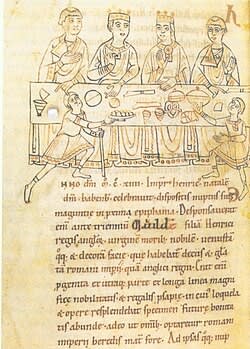
At Easter in 1110, in Utrecht, he became formally betrothed to the eight-year-old English princess Matilda.
Her father, King Henry I of England, paid an extraordinary dowry of 10,000 pounds of silver, or according to some sources as much as 15,000.
The alliance substantially increased the English king’s prestige in European politics.
On 25 July 1110, the Archbishop of Cologne crowned Matilda in Mainz as Queen of the Romans.

Four years later, on 7 January 1114, Mainz was transformed by a magnificent wedding ceremony.
Henry hoped to use the celebration to reconcile himself with the political elite.
Duke Lothair of Supplinburg even appeared at the wedding barefoot and dressed in the clothing of a penitent, performing the ritual of submission known as Deditio for his earlier Carniolan rebellion.
It was the only such ritual during Henry’s reign and evoked the golden age of Ottonian mercy.
Yet the emperor immediately destroyed the atmosphere of reconciliation.
In the middle of the festivities, he ordered the arrest and imprisonment of Count Louis of Thuringia for earlier Saxon offenses.
The king’s arrogance ruined the mood of unity.
Offended princes left the feast without permission and began quietly weaving new conspiracies.
Unfortunately for the dynasty, the marriage to Matilda produced no surviving heir.
The chronicler Herman of Tournai briefly mentions a child who died soon after birth.
Only one illegitimate daughter of Henry, Bertha, is known with certainty.
In 1117, she married Count Ptolemy II of Tusculum.
During the struggle with the papacy, this unusual alliance between the emperor and the Roman aristocracy possessed considerable political significance.
Soon Henry’s attention turned south again.
Leaving Germany under the care of Duke Frederick II of Hohenstaufen and his brother Conrad, he crossed the Alps.
After the events of 1111, a Church council had annulled the concessions granted by Paschal II.
Archbishop Guy of Vienne excommunicated Henry, although Pope Paschal himself initially refused to confirm the sentence.
Then, on 24 July 1115, Matilda of Tuscany died.
In February 1116, the emperor crossed the snow-covered Alpine passes with a small but elite force to claim her enormous possessions in northern and central Italy.
Henry wanted more than land.
He intended to establish an impregnable political base there against his German enemies.
By issuing a series of judicial edicts, he successfully presented himself as a defender of law.
Italian cities submitted.
Rome became especially important.
Henry visited the Eternal City five times, more often than any other Salian ruler, and was repeatedly given elaborate receptions.
On 21 January 1118, Pope Paschal II died.
Henry intervened in the succession and promoted Maurice, Archbishop of Braga, from the emerging Portuguese kingdom.
Maurice became the antipope Gregory VIII, but failed to defeat his rival, the legitimate Pope Gelasius II.
Papal legates led by Archbishop Jordan of Milan attempted to excommunicate Henry.
Eventually, Gelasius II himself formally placed the emperor under anathema.
Meanwhile, the political situation in Germany became increasingly dangerous.
The princes scheduled a Hoftag at Würzburg, intending to restore peace and, if Henry failed to return, depose him.
In the autumn of 1118, Henry made a rapid march north, leaving Matilda to govern Italy.
The Würzburg conspiracy collapsed.
The period from autumn 1118 to September 1119 remains obscure.
The royal chancery issued very few documents, and the movements of the court are largely unknown.
Royal authority continued to weaken.
Yet Germany had grown exhausted by bloodshed.
At Tribur, a general peace was proclaimed, while political pressure mounted for a final settlement of the investiture conflict.
On 2 February 1119, Callixtus II became pope.
On 24 October, complex negotiations began at Mouzon on the Meuse.
Henry V, having learned from bitter experience, refused to make promises without the consent of the princes.
The meeting failed.
A subsequent attempt at Reims in October 1119 became another turning point.
Henry was required to perform public penance barefoot before the pope in exchange for the lifting of the excommunication.
But the political world had changed since Canossa in 1077.
Such ritual humiliation was now regarded as incompatible with the sacred dignity of kingship.
Henry considered the demand intolerable.
The negotiations collapsed.
In anger, Callixtus appointed the emperor’s bitter enemy Adalbert of Mainz as papal legate, effectively transforming rebellion into a sacred political struggle.
By 1121, the empire again stood on the edge of civil war.
Henry marched against Mainz.
Adalbert assembled a massive Saxon army.
But when the two military forces confronted one another outside the city walls, something remarkable happened.
The princely commanders on both sides refused to spill blood.
In the autumn of 1121, they effectively forced the emperor to negotiate.
This represented the triumph of consensual politics.
The elite established a peace commission of twenty-four men — twelve supporters of the king and twelve representatives of his opponents.
On 29 September 1121, all the “heads of the state” — tot capita rei publicae, as Ekkehard of Aura described them, assembled at Würzburg.
The emperor was given an ultimatum:
peace with Rome had become unavoidable.
That peace became reality on 23 September 1122 in the historic Concordat of Worms.
The pope was represented by Cardinal Lambert, Bishop of Ostia, while the German princes stood behind Henry as guarantors.
The agreement was sealed through the exchange of two documents:
the imperial Heinricianum and the papal Calixtinum.
A revolutionary distinction was established between spiritual authority and temporal rights.
Bishops were henceforth to be elected by the “clergy and people.”
Henry V permanently renounced investiture with the ring and staff and restored the Church’s traditional possessions.
In return, the Calixtinum allowed the emperor to be present at episcopal elections and to invest bishops with their temporal rights through the touch of the royal sceptre.
Final spiritual consecration remained exclusively in the hands of bishops and metropolitans.
Abandoning Antipope Gregory VIII to his fate, Henry V was finally reconciled with the Church by the papal legate.
He preserved his dignity.
There were no bare feet and no public humiliation.
The great age of the Investiture Controversy had come to an end.
Seeking to support his father-in-law, King Henry I of England, the emperor became involved in the Franco-Norman conflict of 1123.
He also possessed less clearly defined interests in Flanders and the Low Countries.
In August 1124, he attempted to organize a major campaign against France.
The German dukes responded with cold refusal.
In France, however, the threat of German invasion produced an extraordinary wave of patriotic mobilization.
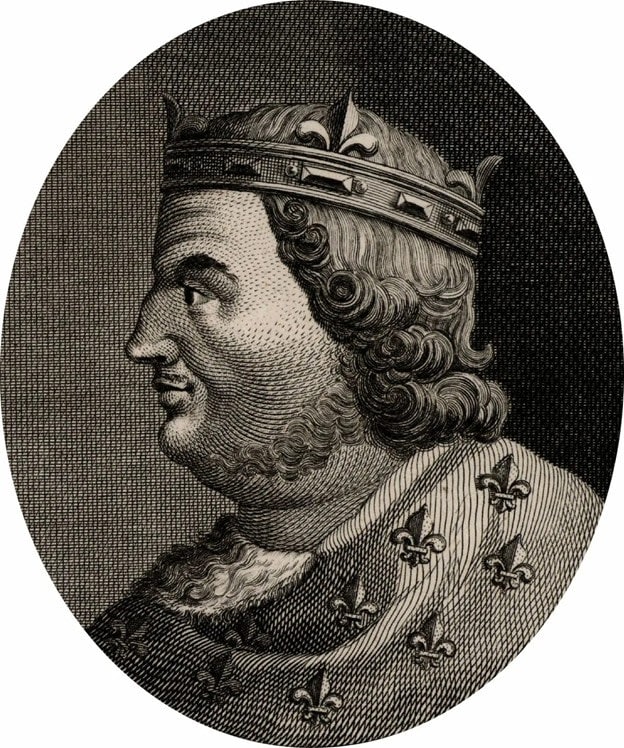
King Louis VI raised such an enormous army that Henry, after advancing only as far as Metz, prudently turned his forces around and withdrew.
At the same time, rebellion erupted in Worms.
Nevertheless, the threat of Henry’s intervention tied down French forces long enough for the English to crush Norman rebels at the Battle of Bourgthéroulde.
Whether Henry’s campaign represented a brilliant diversionary strategy or the collapse of his personal ambitions remains debated by historians.
The emperor’s final days were consumed by disputes over the inheritance of the March of Meissen and conflicts in Flanders, where the influence of his old enemy Lothair of Saxony increasingly loomed behind the opposition.
On 23 May 1125, Emperor Henry V died in Utrecht after a severe illness.
On his deathbed, he asked his companions to protect his wife Matilda and left his lands to his nephew, Frederick II of Hohenstaufen.
His body was transported to the dynastic burial place at Speyer.
His heart and internal organs were entombed in St. Martin’s Cathedral in Utrecht.
With Henry’s final breath, the male line of the great Franconian, or Salian, dynasty came to an end forever.
Soon afterward, Matilda transferred the imperial regalia to Adalbert of Mainz and returned to England in September 1126.
The Hohenstaufen hopes for the crown collapsed at the royal election in Mainz on 24 August 1125.
Frederick’s confidence and his arrogant rejection of the principle of free princely election — libera electio — alienated the political elite.
After passing over both Leopold of Austria and Charles of Flanders, the princes elected the dynasty’s long-standing enemy:
Duke Lothair III of Saxony.
From this point onward, blood alone no longer guaranteed the crown.
The empire belonged to the ruler chosen by the princes.
Speyer lost its status as the principal royal burial place for generations, and the memory of Henry V was openly commemorated by only a small number of monasteries, including Gladbach and Niederaltaich.