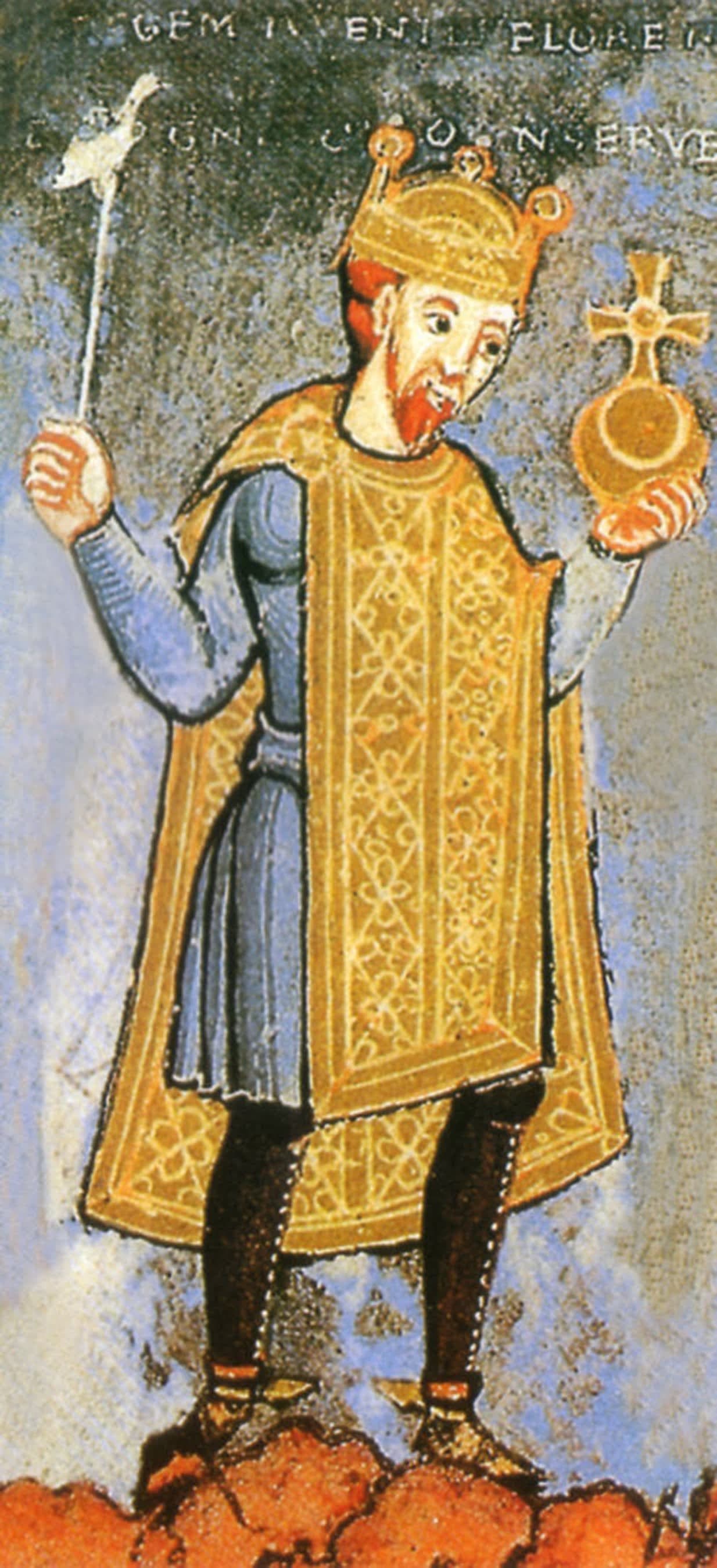
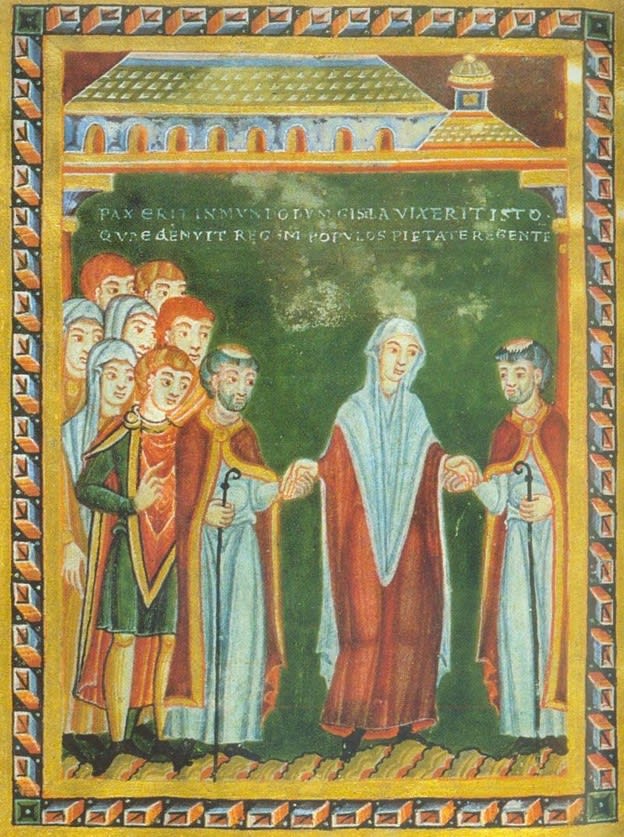
The story of one of the most powerful rulers of eleventh-century Europe began on 28 October 1016. Henry was born into the family of the Frankish aristocrat Conrad of Worms, whose possessions stretched along the banks of the Rhine, and the noble Gisela of Swabia.
The boy’s ancestry was exceptionally distinguished. Through his great-grandmother Liutgarde, the daughter of Otto I himself, his father was directly related to the imperial Ottonian dynasty. His mother, Gisela, traced her ancestry back to Charlemagne, which gave her substantial hereditary claims to lands in Swabia and Burgundy.
For Conrad, Henry was the long-awaited heir. Although a royal charter of 1024 briefly mentions certain “sons” who may have been born from an earlier union, from February 1028 onward Henry appears exclusively as his father’s only son.
For Gisela, meanwhile, Conrad was her third husband. From her previous marriages she already had three sons and possibly a daughter.
Interestingly, Conrad himself was illiterate and could neither read nor write, but Gisela ensured that the young Henry received an excellent education and became fully proficient in reading.
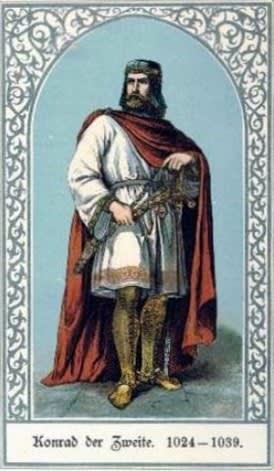
The family’s fortunes changed dramatically on 13 July 1024, when the last ruler of the Ottonian dynasty, Emperor Henry II, died.
On 4 September, the German nobility assembled at Kamba and proclaimed Henry’s father, Conrad, king.
His rise to power was far from smooth. His opponents formed a coalition that even included the new king’s stepson, Ernest II, Duke of Swabia.
In the second half of 1025, the rebels took up arms, but before the end of the year the energetic Conrad had forced most of them into submission.
Driven into a corner, Ernest appealed to his mother Gisela and asked her to act as mediator.
At the beginning of 1026, she achieved something remarkable: she persuaded the eight-year-old Henry to intercede with his severe father on behalf of his older half-brother.
Ernest was pardoned, although he had to solemnly promise Conrad military support.
Convinced of his son’s abilities, Conrad formally proclaimed Henry his heir at an assembly in Augsburg in February 1027.
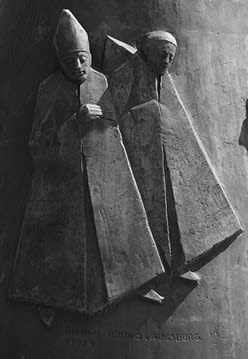
A year later, while preparing for his first Italian campaign, the king entrusted the boy’s education to Bruno, Bishop of Augsburg.
As historian Stefan Weinfurter observed, the choice was ideal. Bruno, as the brother of the late Emperor Henry II, was uniquely qualified to teach the young prince the subtleties of imperial tradition and the meaning of royal power.
Henry travelled with his tutor to Rome, where at Easter in 1027 he personally witnessed his father’s triumphant imperial coronation.

After becoming emperor, Conrad II began strengthening royal authority in Germany with an iron hand.
Ignoring the claims of Emeric, son of King Stephen I of Hungary, to lands in Bavaria, Conrad compelled the Bavarian nobility at Regensburg on 24 July 1027 to recognize the young Henry as duke.
The appointment of a ten-year-old boy to such a position was entirely unprecedented.
In the autumn of the same year, the ambitious Conrad turned his attention eastward and sent Bishop Werner of Strasbourg to Constantinople in search of a bride for Henry from the Byzantine imperial family.
Werner’s sudden death, however, brought negotiations with Emperor Constantine VIII to an end.
Undeterred, Conrad arranged for the “clergy and people” to elect Henry as co-ruler.
At Easter in 1028, in magnificent Aachen, Archbishop Pilgrim of Cologne placed the royal crown upon Henry’s head.
From that moment onward, on his father’s official seals, in imitation of Byzantine custom, the young co-ruler was proudly styled imperator in spe — “emperor in hope.”

Soon afterward, Conrad sent another embassy to Byzantium, this time to Romanos III Argyros.
Romanos proposed one of his sisters as a bride for Henry, but the German envoy, Count Manegold of Donauwörth, categorically rejected the proposal after discovering that the Byzantine princess was already married.
On 6 April 1029, Henry’s loyal tutor Bruno of Augsburg died and was succeeded by Egilbert, Bishop of Freising.
The young king soon encountered the harsh reality of war.
Bavarian forces began carrying out bold raids into Hungary, provoking a major response.
In June 1030, Conrad assembled Bavarian, Lotharingian, and Bohemian contingents and invaded Hungary.
A shortage of provisions, however, broke the army’s morale. The Germans retreated, and Hungarian forces pursued and defeated them near Vienna.
Leaving Bavaria, the furious Conrad assigned the task of resolving the consequences of the conflict to his twelve-year-old son.
Acting in Henry’s name, the prudent Egilbert began negotiations with Stephen I of Hungary.
After agreeing to surrender part of the frontier territories in exchange for prisoners, Henry personally met the Hungarian king in early 1031 and concluded a peace treaty.

In the summer of 1033, probably in late June or early July, Egilbert of Freising resigned as Henry’s tutor.
Henry was ceremonially knighted, and on 19 July the bishop received generous grants in recognition of his loyal service.
Meanwhile, Conrad II turned his attention toward Burgundy.
After the death of Rudolf III, Conrad asserted his claims to the Burgundian inheritance.
He fought two difficult summer campaigns, in 1033 and 1034, and defeated his rival, Count Odo II of Blois.
On 1 August 1034, in Geneva Cathedral, Burgundy was formally incorporated into the Holy Roman Empire.
On 18 May 1035, Henry became engaged to Gunhilda of Denmark, daughter of Emma of Normandy and the powerful Cnut the Great, ruler of Denmark, England, and Norway.
On that same eventful day, Conrad declared war on the pagan Slavic Liutizi and harshly removed his relative Adalbero, Duke of Carinthia, from power.
As part of the marriage arrangement, Cnut the Great received Southern Jutland.
The magnificent wedding itself took place at Nijmegen during Pentecost in 1036.
Unfortunately, their married life was short.
In 1038, Henry travelled to Italy to assist his father.
On the return journey along the Adriatic coast, a severe epidemic claimed the life of the young Gunhilda. The same disease also killed Herman IV of Swabia near Naples.
In 1039, Emperor Conrad II himself died, and Henry became the undisputed ruler.
At the beginning of his independent reign, Henry travelled across his vast territories.
In the Low Countries, he received homage from Gothelo I, Duke of Lorraine.
At Cologne, Archbishop Herman II joined the royal entourage and accompanied Henry into Saxony.
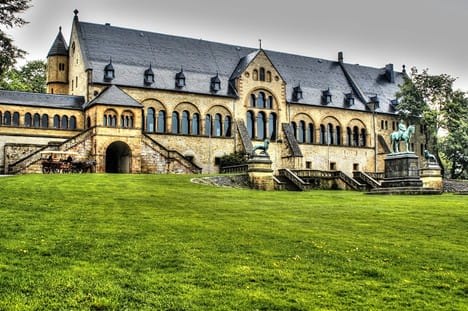
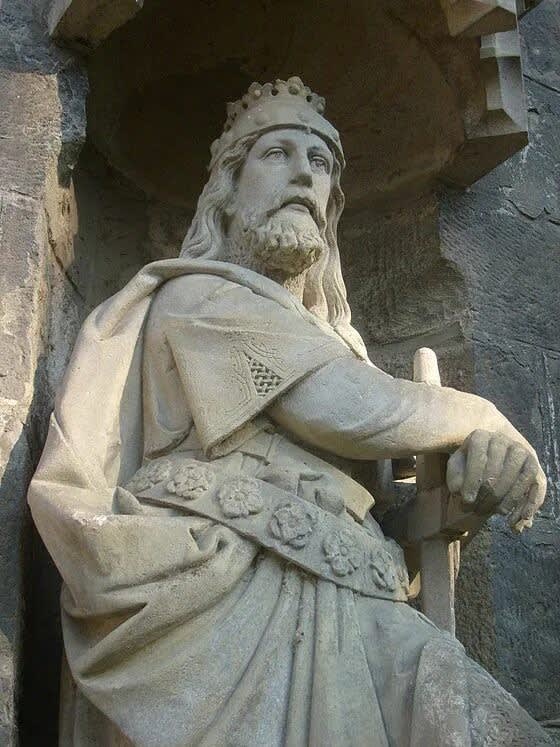
There, captivated by the beauty of the surrounding foothills, Henry began a major reconstruction of Goslar, intending to transform it into the heart of the empire — the Salian Kaiserpfalz.
A magnificent palace was built there, together with the Collegiate Church of Saints Simon and Jude, the palace chapel of St. Ulrich, and the Church of Our Lady.
Henry then travelled to Thuringia, where he met Margrave Eckard II of Meissen to discuss the alarming successes of Duke Bretislav I of Bohemia in Poland.
Entering Bohemia, Henry compelled the local nobility to submit, took hostages, and then disbanded his army.
He next visited Bavaria, but shortly after his departure King Peter Orseolo of Hungary attacked Swabian territory.
At an imperial diet convened in Ulm, Henry received the support of Italian princes.
At Ingelheim, he received embassies from Burgundy and from Archbishop Aribert of Milan, an important step toward political pacification in Italy.
By this point, Henry’s power had become almost unmatched.
He personally controlled three duchies — Bavaria, Swabia, and the inherited Carinthia — and stood at the head of three kingdoms: Germany, Burgundy, and Italy.

Military challenges soon followed.
In 1040, seeking to prevent Bretislav from establishing an independent Bohemian archbishopric, Henry gathered troops at Stavelot, concentrated reserves from Goslar at Regensburg, and set out on campaign on 13 August.
However, in the dark passes of the Bohemian Forest near Brůdek, his army fell into an ambush and suffered a crushing defeat.
The king was forced to retreat, surrendering numerous Bohemian hostages, including Bretislav’s son, in exchange for the release of captured German knights.
That same year, 1040, a coup took place in Hungary.
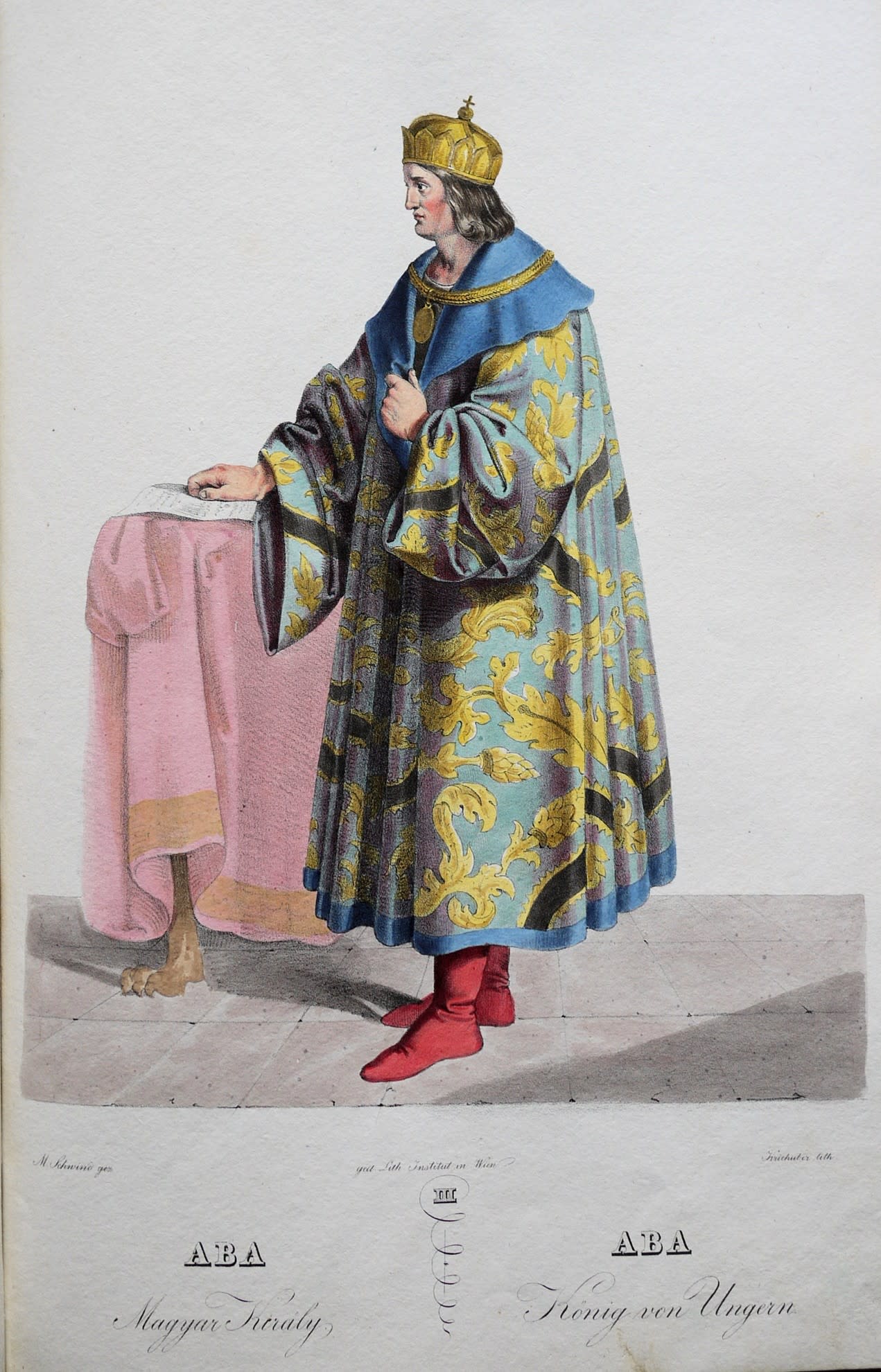
King Peter was overthrown by Samuel Aba and fled to Henry.
Setting aside their earlier disputes, the German monarch received the exile.
Bretislav’s loss of his Hungarian ally gave Henry an opportunity for revenge.
Exactly one year later, on 15 August 1041, the royal banners once again crossed the Bohemian frontier.
This time, the campaign ended in triumph, and a lasting peace was concluded at Regensburg.
After settling affairs in Burgundy at the beginning of 1042, Henry learned of new Hungarian raids.
Leaving Bavaria in the care of his relative Henry VII, the king marched through western Hungary with fire and sword in September 1042.
The usurper Samuel Aba fled eastward.
Henry celebrated the following Christmas triumphantly at Goslar.
The subdued Bretislav personally came there, and embassies also arrived.
Matchmakers from Kievan Rus’ were rejected, as were envoys from the Polish ruler Casimir I, because Casimir had failed to appear in person.
Soon afterward, Henry held an important meeting at Ivois with King Henry I of France, where they discussed the German king’s marriage to an Aquitanian princess.
Encouraged by his successes, Henry again pressured Hungary, forcing Aba to return territories along the Danube that Stephen I had once transferred to King Conrad “for the sake of friendship” — pro causa amicitiae.
The historical consequences were immense: according to the text, the Austro-Hungarian frontier established at that time remained essentially unchanged until 1920.
In March 1043, Henry suffered a severe personal loss when his mother, Gisela, died.
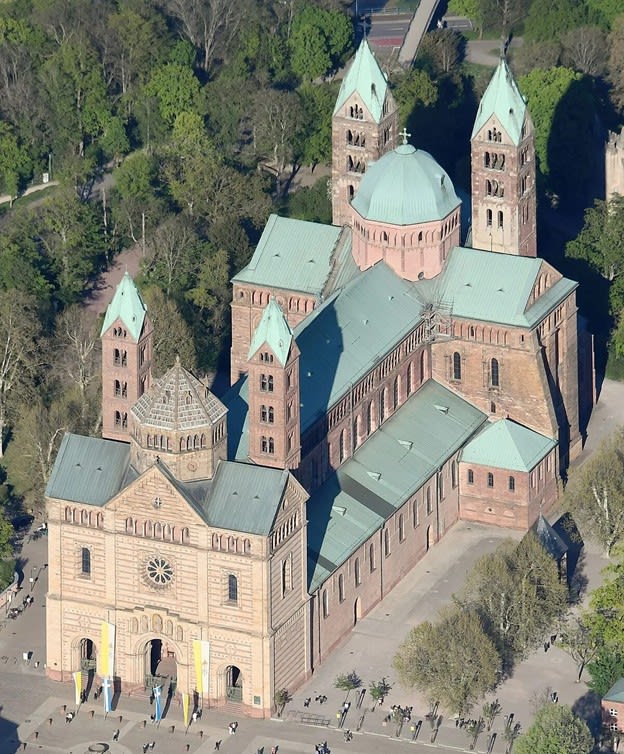
She was solemnly buried at Speyer.
What happened at her funeral astonished contemporaries.
The most powerful ruler in Europe walked behind her coffin barefoot, dressed in rough penitential clothing, with his hands crossed over his chest.
Throwing himself to the ground before the weeping crowd, he embodied an ideal of humble self-denial.
Historians would later describe his style of kingship as “Christomimetic monarchy” — rule modeled upon Christ.
Henry provided extraordinary patronage to Speyer Cathedral, transforming it into a monumental royal burial church.
Before his Italian campaign, he also presented the church with the famous Speyer Gospels, the Codex Aureus Escorialensis.

Henry reaffirmed his commitment to ideals of peace in October 1043 at Constance Cathedral.
From the pulpit, he proclaimed a form of the Peace and Truce of God, naming the occasion a “Day of Forgiveness.”
The monarch publicly renounced vengeance, forgave every insult committed against him, and called upon his subjects to follow his sacred example.
That same year, Henry married Agnes of Poitou, daughter of the Duke of Aquitaine and raised at the court of Count Geoffrey Martel of Anjou.
Despite quiet opposition from churchmen, who pointed to the blood relationship between bride and groom — both descended from Henry the Fowler — and to questionable French political connections, the marriage went ahead.
Agnes was crowned in Mainz.

The king spent the winter at Utrecht proclaiming ideals of universal forgiveness, but peaceful conditions did not last long.
In April 1044, the death of Gothelo I, Duke of Lorraine, triggered a crisis.
Seeking to prevent his vassals from becoming too powerful, Henry divided Lorraine.
He granted Lower Lorraine to the deceased duke’s younger son, Gothelo II, while Upper Lorraine remained with the elder son, Godfrey.
Insulted, Godfrey rebelled.
After failing to reconcile the brothers at Nijmegen, Henry launched a military campaign.
On 6 July 1044, at the Battle of Ménfő, his army completely defeated the numerically superior forces of Samuel Aba.
The usurper was captured and beheaded, and Peter Orseolo triumphantly returned to the Hungarian throne at Székesfehérvár.
Meanwhile, Godfrey of Lorraine engaged in intrigue, attempting to win the support of King Henry I of France.
The German monarch acted swiftly.
Summoning the rebel to Aachen, he stripped him of his duchy and of the County of Verdun.
Godfrey responded with armed rebellion.
At the beginning of 1045, Henry besieged the rebel’s castle at Böckelheim, and then suppressed centers of separatism in Burgundy, where Count Louis of Montbéliard defeated supporters of the revolt.
Burgundy was finally brought firmly under imperial control.
Henry reached the height of his power by the summer of 1045.
At Goslar he redistributed lands.
In Hungary, he received the Golden Lance from King Peter as a symbol of eternal loyalty.
In July, he finally broke Godfrey’s resistance and imprisoned him at Giebichenstein.
Yet the year was marked by tragedy.
During preparations for another Hungarian campaign, the wooden floor of a royal residence collapsed, killing the loyal Bishop Bruno of Würzburg.
That autumn, Henry himself became seriously ill at Tribur, nearly triggering a dynastic crisis, but his strong constitution ultimately prevailed.
In 1046, after suppressing another outbreak of resistance in Lower Lorraine — including the capture of Vlissingen from Dirk of Holland — and installing his daughter Beatrice as abbess, Henry turned his attention toward Rome.
The situation in the Eternal City was catastrophic.
Three men were simultaneously contesting the throne of St. Peter: Benedict IX, Sylvester III, and Gregory VI.
After a difficult march through Verona to Pavia, the German king presided over the Council of Sutri on 20 December 1046, where the competing claimants were removed.
The subsequent synod at Rome purged the curia of Roman political intriguers.
At Henry’s will, Suidger of Bamberg received the papal tiara and became Pope Clement II.
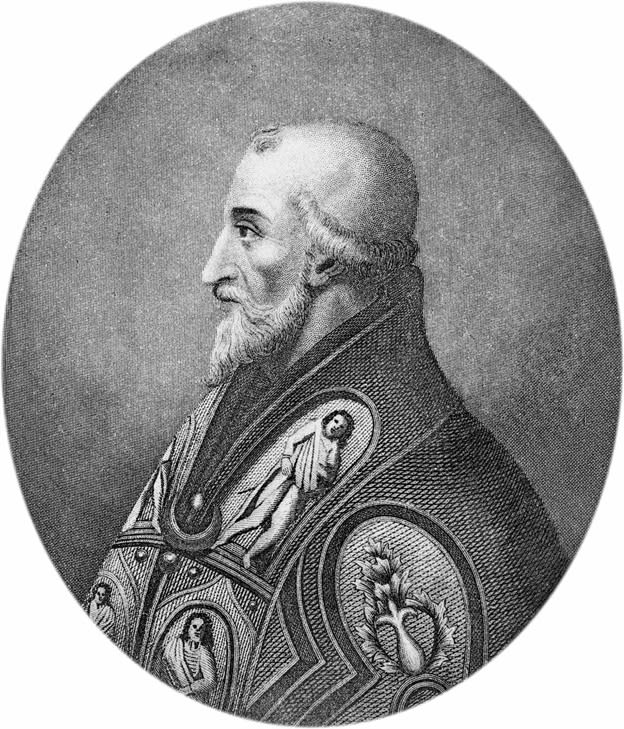
At Christmas in 1046, the newly installed pope placed the imperial crowns upon the heads of Henry and Agnes.
Grateful Romans honored the new master of Europe with a golden chain and the title of patrician — patricius.
Travelling into southern Italy, the emperor reshaped the political map of the region.
He restored Capua to Prince Pandulf IV and made the formidable Norman commanders Drogo of Hauteville and Rainulf Drengot direct vassals of the imperial crown.
The decision permanently changed the balance of power in the south and provoked resentment among the Lombards.
Henry’s return to Germany in 1047 was followed by another wave of rebellions.
The relentless Godfrey of Lorraine allied himself with Dirk of Holland and Baldwin of Flanders.
The Dutch even dared to plunder Charlemagne’s palace at Nijmegen and burn Verdun.
By 1049, however, Dirk had been killed in battle, while Baldwin and Godfrey, trapped between imperial armies and excommunicated by the pope, surrendered to the emperor.
It was also Henry who appointed Bruno of Toul to the papal throne.
Bruno entered history as Pope Leo IX, the pontiff during whose reign the Great Schism of the Christian Church would occur.

The final years of the great emperor’s reign were exceptionally difficult.
In 1051, Henry suffered a disastrous defeat in Hungary in the Vértes Mountains.
The name of the region, according to the text, was associated with “armor,” because fleeing German knights abandoned their heavy armor there in large numbers.
The campaign of 1052, including the unsuccessful siege of Pressburg, forced Henry to abandon permanently his plans for the conquest of Hungary.
Italian policy also ended in tragedy.
On 18 June 1053, at the Battle of Civitate, the Norman leaders Robert Guiscard and Richard of Capua destroyed the Swabian forces that Henry had sent to assist Pope Leo IX.
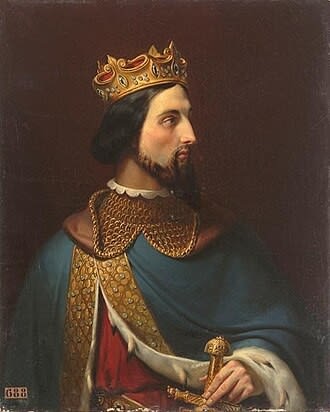
Sensing that major changes were approaching, Henry concentrated on the most important matter: the succession.
On 26 June 1053, at Tribur, his young son, who had been born on 11 November 1050, was elected King of Germany.
On 17 July 1054, the boy was crowned at Aachen.
At Christmas in 1055, in Zurich, the young Henry IV was betrothed to Bertha of Turin.
That same year, the emperor undertook his final campaign in Italy.
He held the famous judicial assembly at Roncaglia, roughly a century before Frederick Barbarossa, and suppressed the ambitions of Beatrice of Bar and her daughter Matilda.
The empire was changing inexorably.
Old sworn enemies disappeared — the rebellious Cuno of Bavaria died of plague — but loyal companions were dying as well.
In May 1056, Henry met King Henry I of France for the third time at Ivois.
The diplomatic discussion escalated into a furious quarrel, culminating in the hot-tempered French king challenging the ruler of the Holy Roman Empire to personal combat.
Henry chose instead to leave the camp with dignity under cover of darkness.
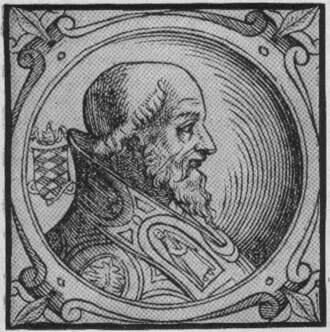
After returning to his territories, the monarch set out to suppress a Slavic uprising, but became seriously ill along the way.
At the royal hunting lodge of Bodfeld in the Harz Mountains, he gathered the highest nobles and Pope Victor II, the last of four pontiffs personally appointed by the emperor, around his deathbed.
He made them swear loyalty to his young son.
As a final act of Christian mercy, Henry released Matilda and Beatrice from captivity.
Henry III died on 5 October 1056. He had not yet reached the age of forty.
His heart was buried in his beloved Goslar, whose magnificent palaces and churches remained enduring symbols of his greatness.
His body was transported to the family crypt in Speyer Cathedral.
Henry III died as a monarch of extraordinary authority.
His unprecedented power over both Church and state raised the Holy Roman Empire to a level of strength it had rarely known before.
At the same time, that very concentration of authority planted the seeds of a future conflict — the coming Investiture Controversy, a struggle that would confront his son, Henry IV.


