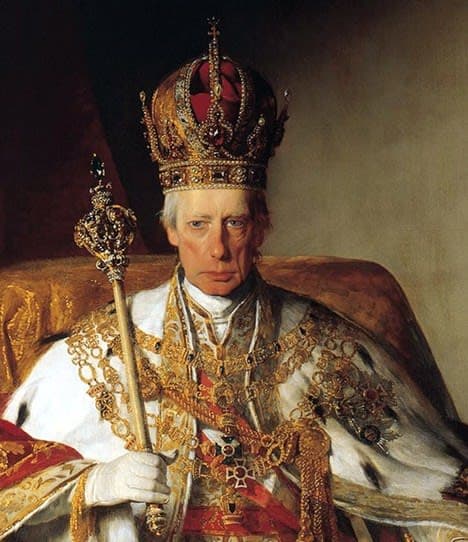
The life of the monarch destined to become the last ruler of the thousand-year-old Holy Roman Empire began beneath the warm Italian sun. Francis was born in Florence, the magnificent capital of Tuscany, into the family of Grand Duke Leopold II, who ruled those lands from 1765 to 1790, and his wife Maria Luisa of Spain, daughter of King Charles III of Spain.
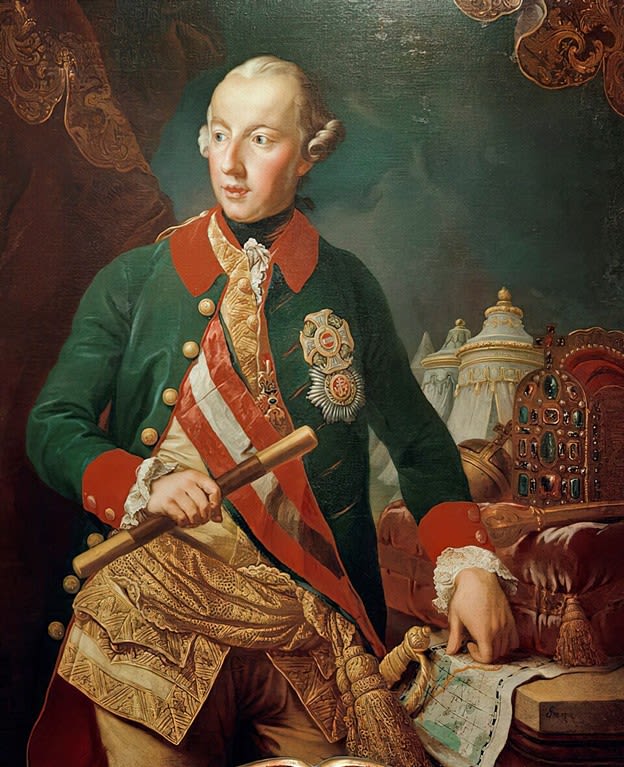
The young archduke’s childhood was genuinely happy. He grew up in the warm and indulgent atmosphere of the Florentine court, surrounded by numerous brothers and sisters. Yet his family understood perfectly well that this carefree life could not last forever. Francis’s uncle, Holy Roman Emperor Joseph II, had no surviving children from either of his two marriages, which meant that the young Florentine prince was expected eventually to inherit the great throne.
In 1784, in order to prepare the boy for his future responsibilities, the young archduke was separated from his family and sent to the imperial court in Vienna.
There Joseph II personally assumed responsibility for his education, and the transition proved deeply traumatic for the young man.
The emperor’s strict and ascetic regime contrasted sharply with the warmth of Leopold’s household. Joseph was extremely dissatisfied with his nephew. In his letters, he openly described Francis as “physically underdeveloped,” noted that he was “clumsy in his movements and manners,” and condemned him as “nothing more nor less than a spoiled mama’s boy.”
The emperor harshly concluded:
“The way in which he has been treated for more than sixteen years must inevitably have strengthened in him the illusion that the preservation of his own person is the only matter of importance.”
Believing Francis to be completely incapable of independent leadership and autonomous thought, Joseph devised for him a severe method of re-education based on “fear and unpleasantness.”
The young man was deliberately isolated from those around him in the hope of hardening his character and teaching him independence.
Although Francis was terrified of his stern uncle, he simultaneously felt profound admiration for him.
The final stage of this harsh education came in the army. Francis was sent to serve in a regiment stationed in Hungary.
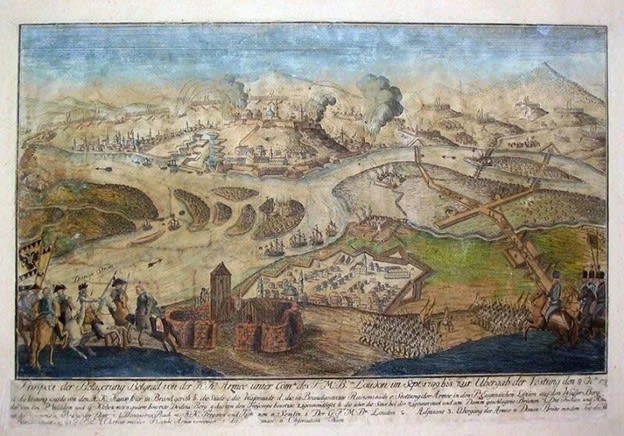
To the surprise of many, the young man adapted rather easily to military discipline. By 1789, he had already gained his first experience of war, being present at the Siege of Belgrade during the Austro-Turkish War of 1788–1791.
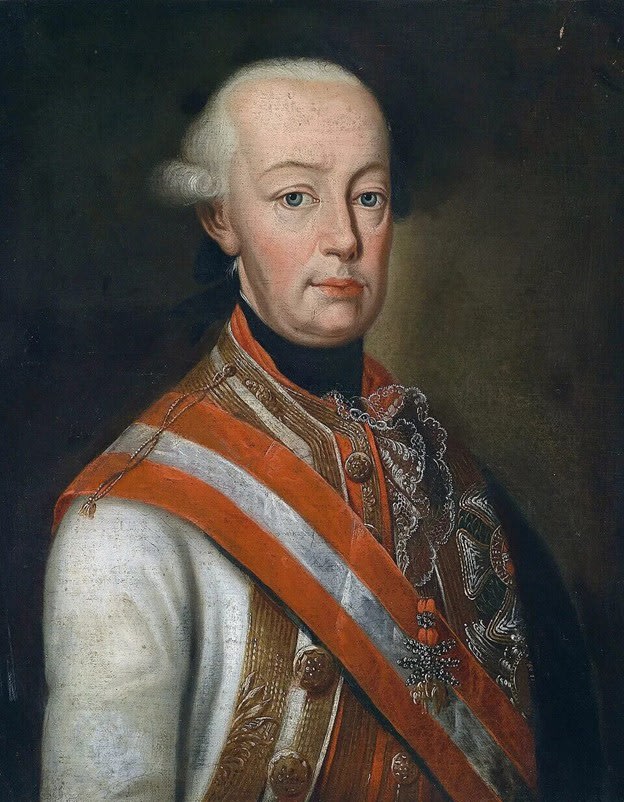
In 1790, Joseph II died, and the imperial crown passed to Francis’s father, Leopold.
For the young archduke, this marked his first genuine encounter with high politics, as he began acting as Leopold’s deputy in Vienna.
The new emperor himself was forced to travel constantly throughout his vast territories, desperately attempting to restore the loyalty of those social groups that had rebelled against the harsh reforms of the late Joseph II.
The enormous psychological strain quickly undermined Leopold’s health.
By the winter of 1791, he had become seriously ill, and at the beginning of 1792 his condition deteriorated rapidly.
On the afternoon of March 1 that year, Leopold died suddenly at the age of only forty-four.
Francis, who had turned twenty-four only shortly before the tragedy, was forced to assume the burden of imperial rule far earlier than he could have expected.
His reign began during an era of unprecedented geopolitical storms.
As head of the Holy Roman Empire and ruler of vast territories in Central and Eastern Europe, the young Francis watched the developments of the French Revolution, and later the rapid expansion of Napoleon Bonaparte, with increasing alarm.
The French threat had two dimensions for him. The monarch feared not only territorial conquest, but also the radical social and political reforms carried on the bayonets of the victorious French armies.
Relations between Vienna and Paris became strained to the breaking point.
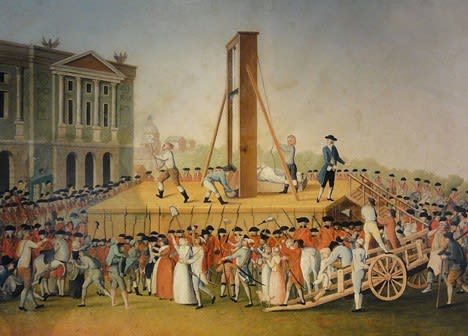
In 1793, at the very beginning of Francis’s reign, French revolutionaries sent his own aunt, Queen Marie Antoinette, wife of the deposed Louis XVI, to the guillotine.
Remarkably, the emperor himself reacted to her tragic fate with a considerable degree of indifference, placing affairs of state above family sentiment.
Francis soon drew the Holy Roman Empire into a prolonged series of wars against revolutionary France.
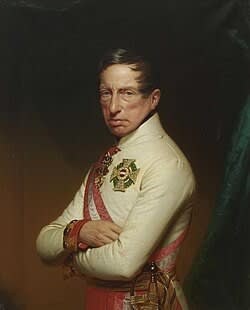
In 1794, he even personally commanded allied forces for a time during the Flanders Campaign, but later prudently transferred command to his brother, the outstanding military commander Archduke Charles, Duke of Teschen.
Despite every effort, Austrian arms suffered repeated setbacks against the military genius of Napoleon.
Under the terms of the Treaty of Campo Formio, Francis was forced to cede the strategically important left bank of the Rhine to France, receiving Venice and Dalmatia in return.
Yet peace proved short-lived. The emperor soon once again sent his armies against the French in the War of the Second Coalition.
Realizing that Europe’s political landscape was changing irreversibly, Francis took an unprecedented step.
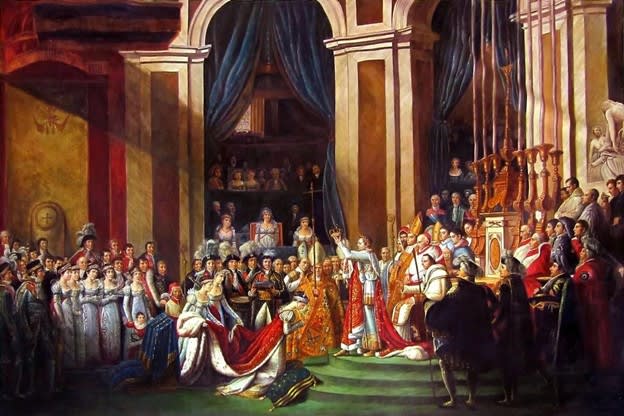
On August 11, 1804, in response to Napoleon’s proclamation as Emperor of the French, he announced that he was assuming the hereditary title of Emperor of Austria under the name Francis I.
From the standpoint of ancient imperial law, this act was highly questionable and directly contradicted established legal tradition.
Nevertheless, Napoleon had given his tacit approval to this political transformation in advance, and the decision was carried out.
As events would prove, Francis had anticipated what was coming.
During the War of the Third Coalition, the Austrian army suffered a crushing catastrophe at the Battle of Austerlitz.
The subsequent Peace of Pressburg dealt Austria an extremely severe blow and became the prelude to the final dissolution of the Holy Roman Empire.
Events moved rapidly.
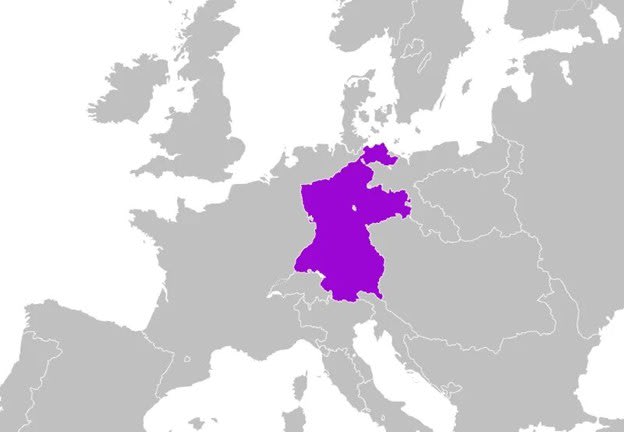
In July 1806, under overwhelming pressure from Paris, Bavaria and fifteen other German states signed the charter establishing the Confederation of the Rhine, with Napoleon solemnly proclaimed its protector.
These states formally informed the Imperial Diet of their immediate withdrawal from the Empire.
On July 22, Napoleon delivered the final blow by presenting Francis with a severe ultimatum: he demanded that the emperor renounce the title of Holy Roman Emperor no later than August 10.
Five days later, recognizing the hopelessness of the situation, Francis submitted to the inevitable.
In his historic proclamation, diplomatically omitting any reference to the French ultimatum, he declared that since the Peace of Pressburg he had done everything within his power to fulfill his imperial duties.
However, the creation of the Confederation of the Rhine had convinced him that he was no longer capable of governing the Empire in accordance with the oath he had once sworn.
Francis solemnly declared:
“By the present declaration, we decree that we consider the bond which until now united us with the states of the Empire to be dissolved.”
With this brief statement, the thousand-year history of the Holy Roman Empire of the German Nation came to an end.
At the same time, Francis legally removed all of his hereditary territories from imperial jurisdiction and continued to rule solely as Francis I, Emperor of Austria.
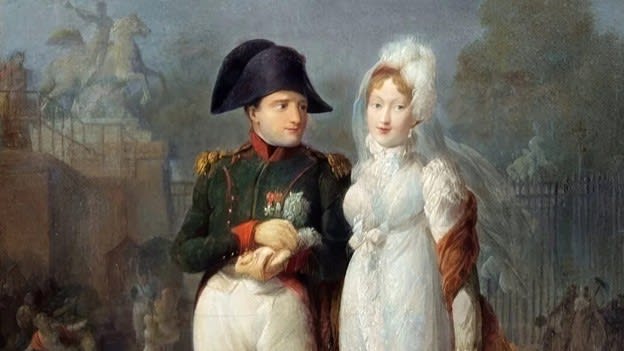
Unwilling to accept defeat, Francis became convinced by 1809 that a new confrontation was inevitable.
Yielding to pressure from the more militant circles at the Viennese court, he once again attacked France.
The Austrians hoped for success by taking advantage of the fact that Napoleon’s principal attention and forces were tied down in the Peninsular War in Spain.
But their hopes collapsed. Austria was defeated once again.
The humiliation was unprecedented. Francis was forced not only to surrender part of his territories to the French Empire and join the economically ruinous Continental System, but also to enter into a dynastic alliance by giving his own daughter, Marie Louise of Austria, in marriage to his greatest enemy—Napoleon Bonaparte.
The endless Napoleonic Wars exhausted Austria to the limit.
The state completely lost its access to the sea, while its once-undisputed dominance among the German states came under mortal threat as the increasingly powerful Kingdom of Prussia gradually assumed the role of Germany’s leading power.
Only in 1813 did Austria find the strength to rise for the fifth and final time against French domination.
By joining a powerful coalition with Great Britain, Russia, Prussia, and Sweden, the Austrian Empire played one of the key roles in the final collapse of Napoleonic hegemony.
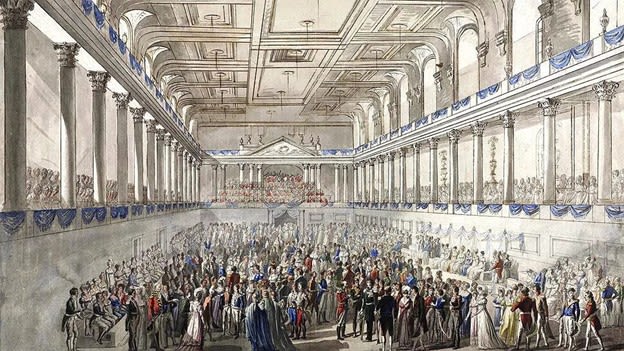
In recognition of these efforts, the Austrian capital itself was chosen as the venue for the decisive Congress of Vienna in 1815.
Francis, whose diplomatic interests were brilliantly represented by Klemens von Metternich, personally presided over this gathering of the victorious powers.
The Congress became a moment of immense personal triumph for the emperor. With great pomp, he welcomed dozens of monarchs, diplomats, and the highest-ranking figures of Europe to Vienna.
The negotiations resulted in the creation of the Concert of Europe and the Holy Alliance, marking the beginning of a long era of conservative politics across the continent.
In addition, the German Confederation—a loose association of Central European states—was established on the ruins of the old Empire.
Yet behind the scenes of the magnificent balls, Francis pursued a highly pragmatic and even cynical policy.
Behind the backs of his principal allies, Russian Emperor Alexander I and Prussian King Frederick William III, he secretly concluded a separate treaty with Louis XVIII, who had only recently been restored to the French throne.
The storms of foreign policy inevitably affected Francis’s domestic government.
The bloody chaos of the French Revolution permanently instilled in the emperor—as in many other European rulers—a profound fear of all forms of radicalism.
As early as 1794, a so-called Jacobin conspiracy was uncovered in Austrian and Hungarian military circles.
The investigation proceeded with difficulty and managed to uncover only part of the underground network.
Francis’s brother, Archduke Alexander Leopold, who at the time served as Palatine of Hungary, reported anxiously to the emperor:
“Although we have arrested many of the guilty, we still have not truly reached the heart of this matter.”
The punishment was deliberately exemplary.
Two officers deeply implicated in the conspiracy were hanged, their bodies left suspended on the gallows as a warning, while many others were thrown into prison, where some died because of intolerable conditions.
Francis’s naturally suspicious temperament, combined with bitter life experience, led to the creation of what amounted to a police state in Austria.
The emperor established an enormous network of spies, agents, and strict censors tasked with detecting the slightest signs of political dissent.
In this respect, he proved a worthy successor to his father: during Leopold’s reign, the Grand Duchy of Tuscany had already been renowned for possessing one of the most sophisticated and efficient systems of secret policing in Europe.
The monarch’s paranoia knew almost no limits.
Even members of his own family were placed under covert surveillance.
The meetings, conversations, and activities of his brothers—the military heroes Archduke Charles and Archduke John of Austria—were meticulously recorded by police agents.
Censorship became severe to the point of absurdity.
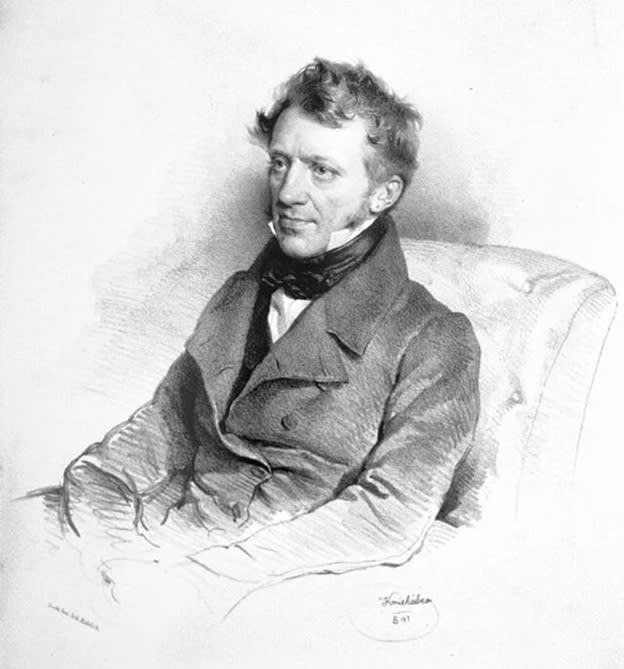
A characteristic case involved the distinguished writer Franz Grillparzer, who, despite being a sincere and committed patriot of the Habsburg monarchy, suddenly discovered that his new play had been prohibited from performance.
When the astonished author asked the censor for the reason and attempted to discover what exactly in the text had been considered unacceptable, the official indifferently replied:
“Oh, nothing in particular. I merely thought: one never knows what might happen.”
The ban had been imposed purely as an absurd form of “precaution.”
Francis also displayed a contradictory attitude toward military affairs.
During the most difficult wars against Napoleon, he was forced to grant his brother Charles extensive authority over the army.
Yet the emperor remained deeply suspicious of excessive military power being concentrated in the hands of a single individual.
He therefore consistently attempted to preserve a strict division of command responsibilities, balancing the authority of field commanders against that of the Hofkriegsrat, the Court War Council in Vienna.
During the final, peaceful years of his reign, Francis became increasingly obsessed with limiting military expenditure.
He issued a strict decree requiring that annual spending on the army under no circumstances exceed 40 million florins.
In an era of constant inflation, this inevitably resulted in disastrous underfunding of the armed forces.
The figures spoke for themselves: whereas in 1817 the army consumed approximately half of the entire state budget, by 1830 its share had shrunk to a modest 23 percent.
Despite the severity of his rule, Francis skillfully cultivated the public image of a benevolent and accessible monarch—a genuine “father of the nation.”
Twice a week, in the mornings, the emperor set aside special hours for personal audiences.
Remarkably, any subject of the Empire, regardless of origin, wealth, or social status, could register in advance and find themselves face to face with the monarch in his private office.
Francis sincerely attempted to speak with petitioners in their native languages, demonstrating respect for the multinational character of his state.
Yet this public accessibility deceived no one.
Everyone understood perfectly well that behind the mask of a good-natured ruler stood an absolute autocrat who regarded his own will as the highest and unquestionable authority.
It was this will that allowed him, without hesitation, to make decisions that shocked Europe.
Such was the case in 1804, when, without strict legal grounds, he used his authority as Holy Roman Emperor to make himself Emperor of Austria as well—a territory that at the time was perceived more as a vague geographical concept than as a unified state.
The same occurred two years later, when with a single stroke of the pen he abolished the declining old German Empire.
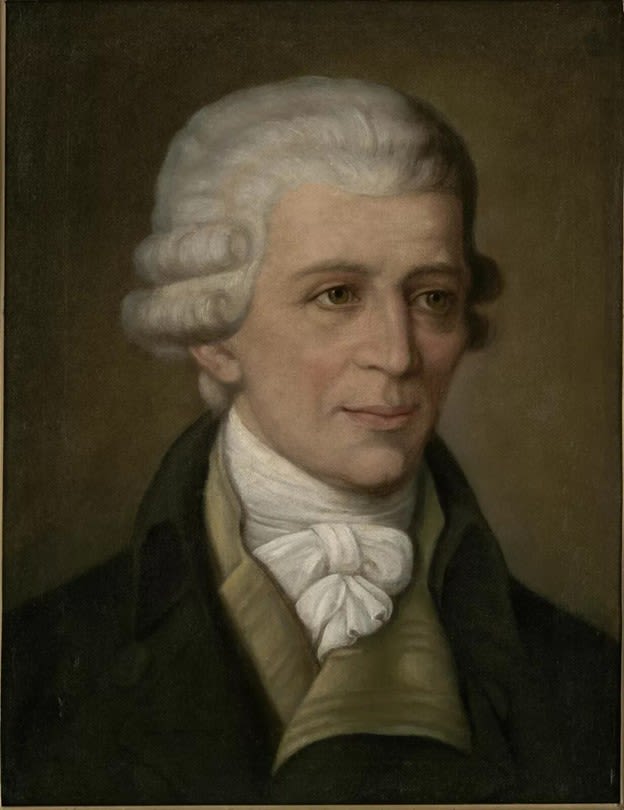
Seeking to unite the nation in the face of the French threat, Francis initiated the creation of a patriotic anthem as early as 1797.
Thus was born Gott erhalte Franz den Kaiser—“God Save Emperor Francis”—with music composed by the great Joseph Haydn.
The song became the official Kaiserhymne, or imperial anthem.
As the decades passed, its lyrics were repeatedly rewritten in honor of successive rulers of the Habsburg dynasty.
Haydn’s majestic melody, however, proved immortal. It survives to the present day and is now used as the melody of Germany’s national anthem, the Deutschlandlied.
The era of the first Emperor of Austria came to an end in the spring of 1835.
On March 2, exactly forty-three years and one day after the death of his father Leopold, the sixty-seven-year-old Francis died suddenly in Vienna following an attack of acute fever.
The monarch spent his final moments surrounded by numerous members of his family and had time to receive all the prescribed religious sacraments.
The Empire bid farewell to its founder with extraordinary solemnity.
For three days, an uninterrupted stream of Vienna’s inhabitants passed before the emperor’s open coffin, which was placed on public display in the court chapel of the Hofburg Palace.
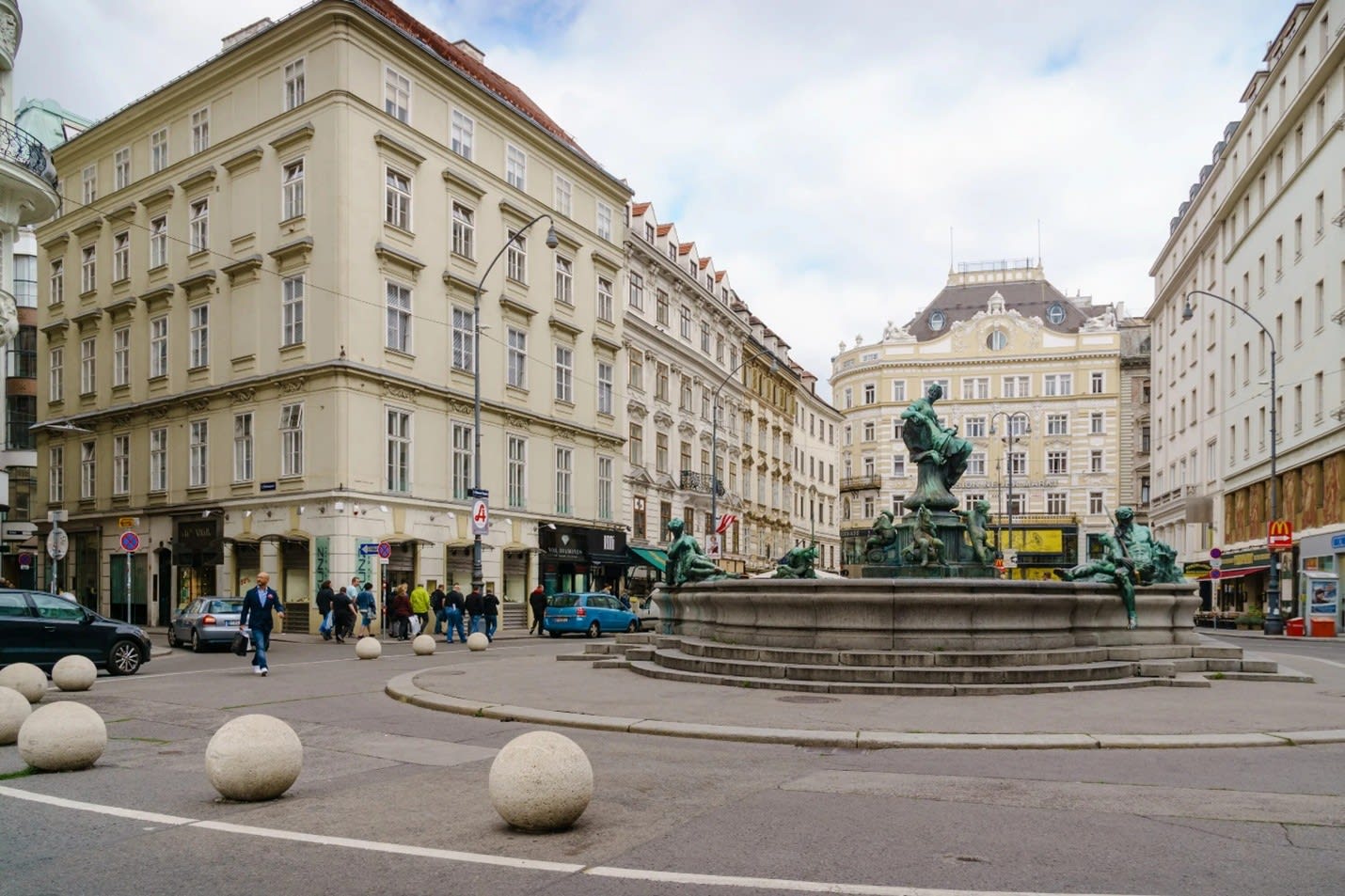
Francis found his final resting place in the traditional burial site of the Habsburg dynasty—the somber magnificence of the Imperial Crypt in Vienna, beneath Neuer Markt Square.
Today, he rests there in Tomb No. 57, surrounded in a ring by the sarcophagi of his four wives, with whom he shared his long life.
As he departed this world, Francis left a political testament to his son and heir Ferdinand.
In it, as if summing up all the wars, conspiracies, and betrayals he had experienced, he formulated what he regarded as the central principle for the survival of his dynasty:
“Preserve the unity of the family and regard it as one of the highest goods.”


