

The story of the rise of Conrad II, the future Holy Roman Emperor, has its roots in the fortunes of the Frankish nobility of the Duchy of Franconia, which stretched east of the Rhine. At the origins of the Salian dynasty stood Count Werner V of Worms. His son, Conrad the Red, who inherited the comital title in 941, succeeded in elevating his family to unprecedented heights. In 944, King Otto I granted Conrad the Red the prestigious title of Duke of Lorraine. To strengthen their alliance, Conrad married Liutgarde, the king’s daughter, in 947, becoming one of the most influential figures at court.

Soon, however, hostility arose between the king and the duke. Otto publicly refused to recognize a peace treaty that Conrad the Red, acting as his representative, had concluded with Berengar II of Italy. Tensions were further intensified by the growing influence of the king’s brother, Henry I of Bavaria, whom Conrad regarded as a direct threat to his position.
Discontent eventually developed into open rebellion. In 953, Conrad the Red joined the uprising of the king’s son Liudolf against Otto himself. The revolt was brutally suppressed, and Conrad lost his ducal title.
Nevertheless, fate gave him an opportunity for redemption. After reconciling with the monarch, Conrad the Red died heroically in 955 at the epoch-making Battle of the Lech River, which permanently halted the major Hungarian invasions of Europe.
The blood he shed for the king restored royal favor toward his family. In 956, his son Otto of Worms, a grandson of Otto I, became Count of Worms.
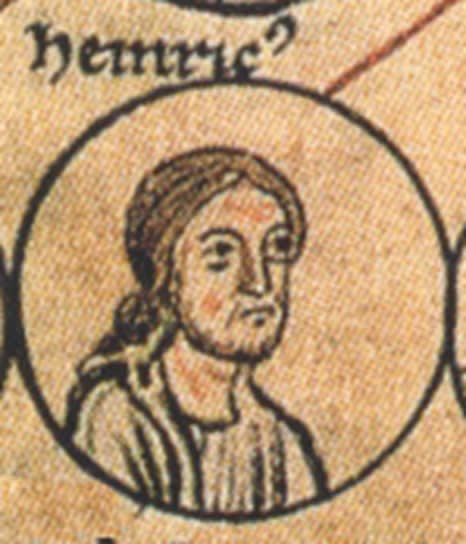
It was into the family of Otto of Worms that Henry of Speyer, the father of the future Emperor Conrad II, was born sometime between 965 and 970.
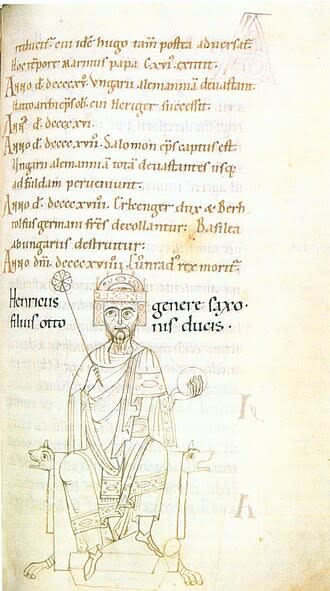
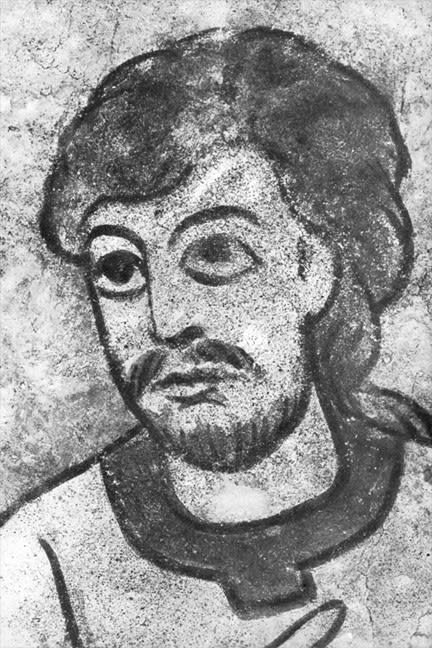
The chronicles preserve very little information about Henry. It is known only that his life ended tragically early, when he was approximately twenty years old, sometime between 985 and 990. His appearance is known only from much later representations dating from around 1237.
Conrad’s mother was the noblewoman Adelaide of Metz. After becoming a widow, Adelaide soon remarried another Frankish nobleman, after which her relationship with her young son Conrad was permanently damaged.
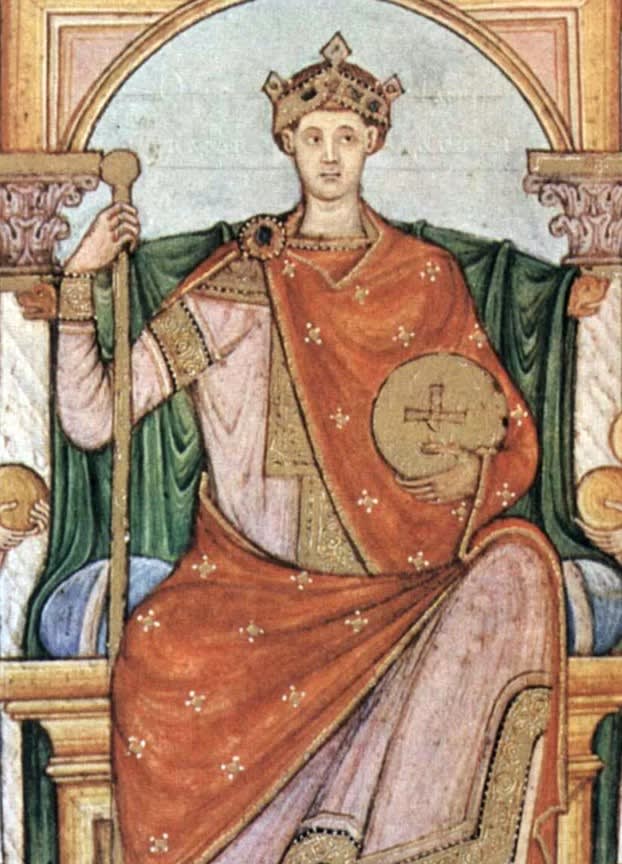
Conrad’s family constantly found itself at the center of geopolitical upheavals.
In 978, Emperor Otto II granted his nephew Otto of Worms the Duchy of Carinthia, removing the rebellious Henry I of Carinthia after the so-called War of the Three Henries.
However, Otto paid a price for this triumph. He lost the ancestral County of Worms, which passed into the hands of Bishop Hildebold, the imperial chancellor.
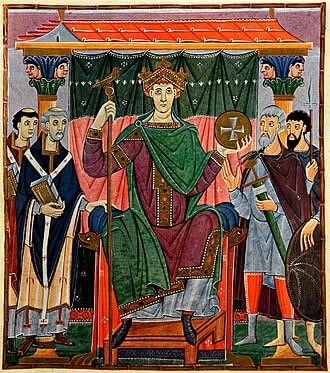
The situation changed dramatically again after the sudden death of Otto II in 983. His young son Otto III ascended the throne, while actual power passed into the hands of the regent, Empress Theophanu.
A skilled diplomat, she decided to reconcile the crown with the disgraced Henry I and restored Carinthia to him in 985.
Otto of Worms, meanwhile, regained his hereditary rights to the County of Worms. Moreover, he was officially permitted to style himself “Duke of Worms,” and his possessions were considerably expanded.
Otto served the crown loyally. The March of Verona had already been placed under his authority, while Carinthia itself was held by Henry IV of Bavaria.
The family’s influence reached its peak in 996, when Otto III elevated Otto of Worms’s son Bruno to the papal throne under the name Gregory V.
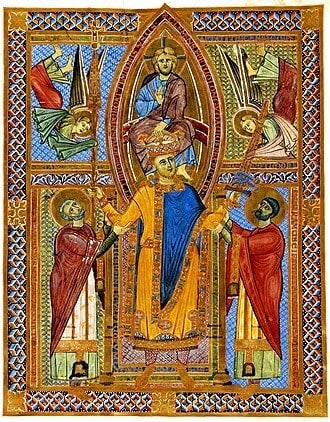
The death of Emperor Otto III in 1002 opened the way to the throne.
The principal candidates were Conrad’s grandfather Otto of Worms and Henry IV of Bavaria. As a result of a complicated compromise, Otto abandoned his claim in exchange for receiving the coveted Duchy of Carinthia from the newly elected German king, Henry II, formerly Henry IV.
To achieve this, Otto had to sacrifice his possessions in Worms, transferring them to his long-standing political enemy, Bishop Burchard of Worms.
Soon afterward, the family suffered another loss. Conrad’s uncle, Duke Conrad I of Carinthia, died prematurely.
Emperor Henry II transferred Carinthia to Adalbero of Eppenstein, while the deceased duke’s young son, Conrad II the Younger, was appointed only Count of Worms.
The boy’s guardian became his older cousin, Conrad II the Elder, who would one day wear the imperial crown.
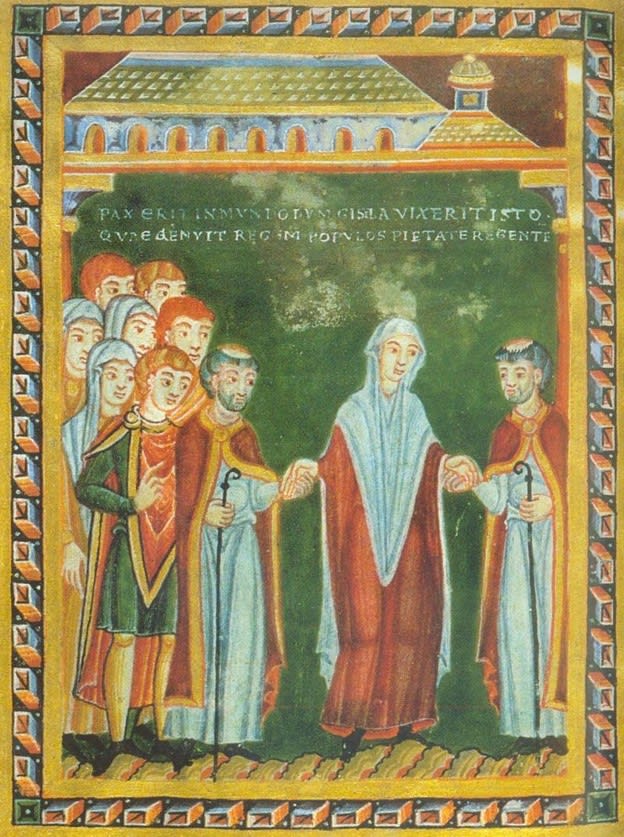
A decisive turning point in Conrad’s life came in 1016, when he married Gisela of Swabia.
The daughter of Duke Herman II of Swabia, who had unsuccessfully competed against Henry II for the throne in 1002, Gisela had already experienced a difficult but remarkable life. By the time she met Conrad, she had been widowed twice.
Her first husband was Count Bruno I of Brunswick, who died around 1010. Her second was Ernest I of the House of Babenberg. Through this marriage, Ernest inherited Swabia in 1012 after the death of Gisela’s brother, Herman III.
Gisela and Ernest had two sons, Ernest II and Herman.
When Ernest I died in 1015, Emperor Henry II proclaimed the young Ernest II Duke of Swabia.
By marrying Gisela, Conrad pursued an ambitious plan: he hoped to become regent for his stepson and effectively place Swabia under his own control.
Emperor Henry II, however, recognized the scheme and stopped it immediately. In 1016, he transferred guardianship of the young duke and the regency to Archbishop Poppo of Trier.
This decision pushed the already difficult relationship between the ruling Ottonian dynasty and the power-seeking Salian family to the breaking point.
Although Conrad failed to obtain the duchy, his marriage to Gisela made him enormously wealthy and greatly increased his prestige.
Gisela’s mother, Gerberga of Burgundy, was the daughter of King Conrad of Burgundy and granddaughter of the Frankish king Louis IV. Gisela herself traced her ancestry back to Charlemagne through both family lines.
However, the marriage provoked fierce criticism from ecclesiastical purists.
The problem was consanguinity: both Conrad and Gisela were descendants of King Henry I the Fowler—Conrad in the fifth generation and Gisela in the fourth. Canon law strictly prohibited marriages within the seventh degree of kinship.
Emperor Henry II skillfully exploited this ecclesiastical violation and forced Conrad into temporary exile.
It was there, far from home, that on 28 October 1017, Gisela gave birth to a son—the future Emperor Henry III.
Political necessity soon prevailed. Conrad reconciled with Henry II and triumphantly returned to Germany.
In 1024, Emperor Henry II died without children.
His death brought an end to the male line of the Ottonian dynasty, which had ruled Germany since 919.
A moment of crisis followed.
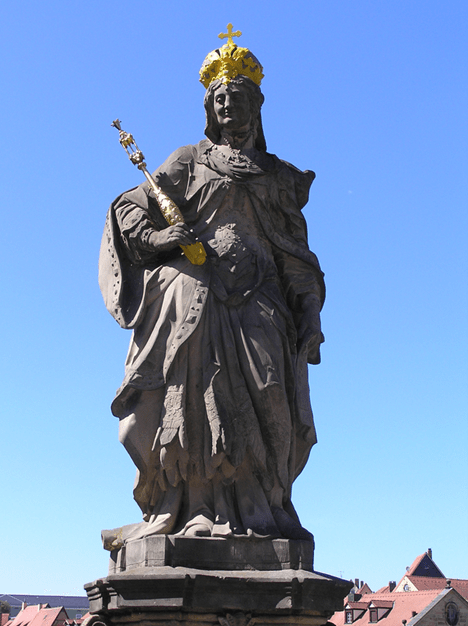
While the dukes gathered to elect a new ruler, Henry’s widow, Cunigunde of Luxembourg, assumed the duties of regent. She was supported by her brothers—Bishop Theodoric I of Metz and Duke Henry V of Bavaria—as well as by the powerful primate of Germany, Archbishop Aribo of Mainz.
The fate of the kingdom was decided on 4 September 1024 at the historic assembly at Kamba.
The gathering, attended by the chronicler Wipo of Burgundy, was presided over by Archbishop Aribo.
The main contest unfolded between two relatives: Conrad the Elder and his cousin Conrad the Younger, the future Duke of Carinthia.
Both had reason to take pride in the blood of Otto I flowing through their veins through their grandfather Otto of Worms and grandmother Liudgarde.
The Duchy of Saxony maintained a position of cold neutrality, while Lorraine leaned toward the younger Conrad.
Most princes, however, understood that the existence of Conrad the Elder’s seven-year-old son promised the kingdom long-awaited dynastic stability.
Archbishop Aribo cast the first vote for Conrad the Elder, setting an example for the clergy, followed by the secular lords.
Only Archbishop Pilgrim of Cologne and the Lotharingian dukes Gothelo I and Frederick II refused their support.
The victory was decisive.
On 8 September 1024, in the magnificent Mainz Cathedral, the thirty-four-year-old Conrad was solemnly anointed king by Archbishop Aribo.
In gratitude to heaven for his election, Conrad ordered the construction of the great Speyer Cathedral near his native Worms. Construction would begin in 1030 and conclude with its consecration in 1061.
Aribo, already serving as chancellor of Germany, was generously rewarded. Conrad granted him the title Chancellor of Italy, making him one of the most important men in the Holy Roman Empire.

Conrad inherited a fragmented and rebellious kingdom.
Lorraine, Saxony, and even his own cousin refused to recognize his authority.
To bind the country together under the weight of royal authority, the king and queen embarked upon an enormous royal tour lasting ten months.
In Augsburg, Conrad secured the support of Bishop Bruno, and in Strasbourg that of Bishop Werner. Both men were brothers of the late Emperor Henry II, and Conrad wisely drew them closer to his court.
After visiting Cologne, the royal procession arrived in Aachen, where Conrad presented himself as the direct successor of Charlemagne and loudly proclaimed his rights to the East Frankish kingdom, even though the Lotharingian princes continued to resist him.
Moving into the harsher north, Conrad travelled to Saxony and visited the daughters of Otto II—the influential abbesses Adelaide I of Quedlinburg and Sophia I of Gandersheim.
Their unconditional support transformed the attitude of the Saxon nobility.
Soon afterward, during Christmas celebrations in Minden, Duke Bernard II and the local elite submitted to the king, who in return swore solemnly to respect the ancient laws of Saxony.
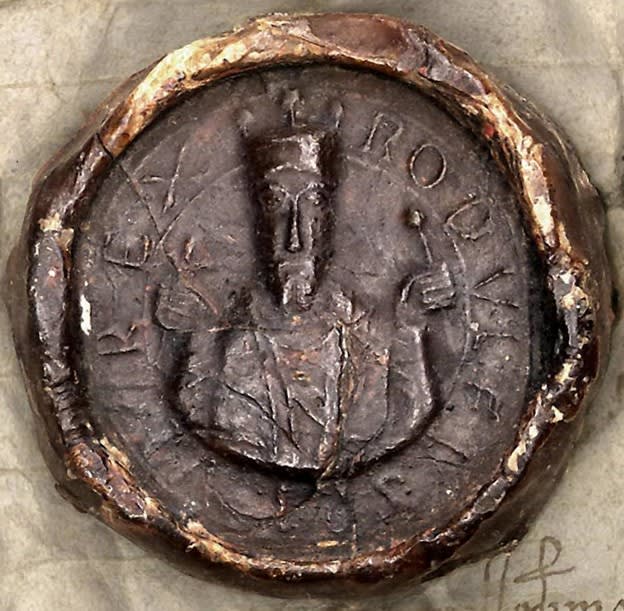
After remaining in Saxony until March 1025, the royal couple travelled to Swabia, celebrated Easter in Augsburg, and then moved into Bavaria, where they celebrated Pentecost in Regensburg.
The final destination was Zurich.
Immediately afterward, Conrad entered Burgundy in order to assert his inheritance rights. As early as 1016, Henry II had compelled the childless King Rudolf III to recognize him as his successor.
During this triumphal journey, Conrad was also forced to address problems inherited from his predecessors.
One was the prolonged Gandersheim Conflict, which had lasted for approximately ten years since the reign of Otto III.
At the heart of the dispute was control over the wealthy Gandersheim Abbey, bitterly contested between the Archbishop of Mainz and the Bishop of Hildesheim.
Otto III’s compromise had failed.
Archbishop Aribo, who had placed Conrad on the throne, expected repayment for his support.
Conrad convened synods at Frankfurt in January 1027 and again in September 1028, but both failed to settle the dispute.
Only at a third synod in 1030 did the controversy end, when Bishop Godehard of Hildesheim yielded to Aribo.

During the same royal tour in Augsburg, Conrad also quarreled with his cousin Conrad the Younger, who demanded compensation for abandoning his claim to the crown in 1024.
Fortunately, by September 1027, the relatives reconciled.
As early as June 1025, prelates from northern Italy arrived in Bavaria under the leadership of Archbishop Aribert of Milan.
In exchange for administrative privileges, Aribert promised to crown Conrad with the Italian crown.
But a storm was gathering in the Apennines.
After Henry II’s death, the Italian elite and merchant classes decided that they no longer required Frankish protection against Byzantines and Arabs.
They desired independence.
The Italian crown was successively offered to King Robert II of France, his son Hugh the Great, and even Duke William V of Aquitaine, but none dared accept it.
The center of the revolt was Pavia.
Upon learning of Henry’s death, the inhabitants, in a burst of separatist enthusiasm, completely destroyed the imperial palace associated with the Ostrogothic ruler Theodoric the Great, which had stood since the fifth century.
The merchants of Pavia, whose city lay at the crossroads of major trade routes, demanded freedom from the expense of maintaining the royal court.

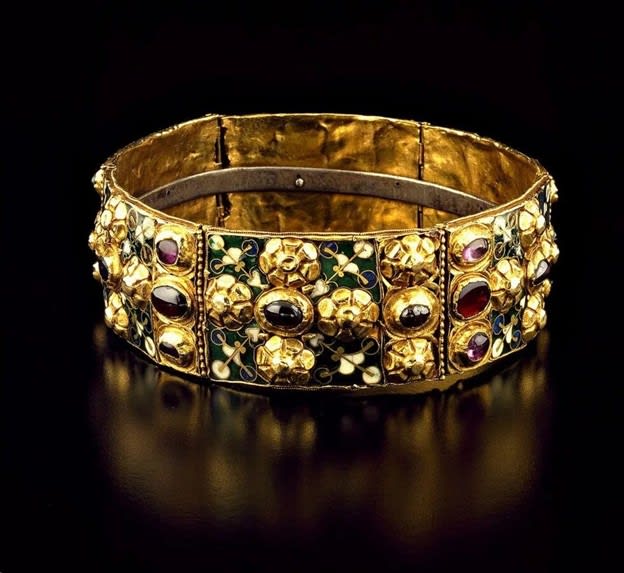
A delegation of rebels travelled north to Conrad and offered a daring justification: they claimed that they had destroyed the palace while the throne was vacant and had therefore betrayed no living king.
Conrad’s response became famous:
“The ship remains the captain’s property even after his death... The Empire remains imperial property!”
Later, in 1038, this concept would form part of the ideological foundation of the Constitutio de feudis, the “Edict on the Fiefs of the Kingdom of Italy.”
Conrad declared the destruction of Theodoric’s palace an act of aggression against the state.
In February 1026, an army of heavily armed German knights, reinforced by forces belonging to Archbishops Aribo and Pilgrim, descended upon Italy.
While the advance units placed rebellious Pavia under a strict blockade and cut off all trade, Conrad himself travelled to Milan.
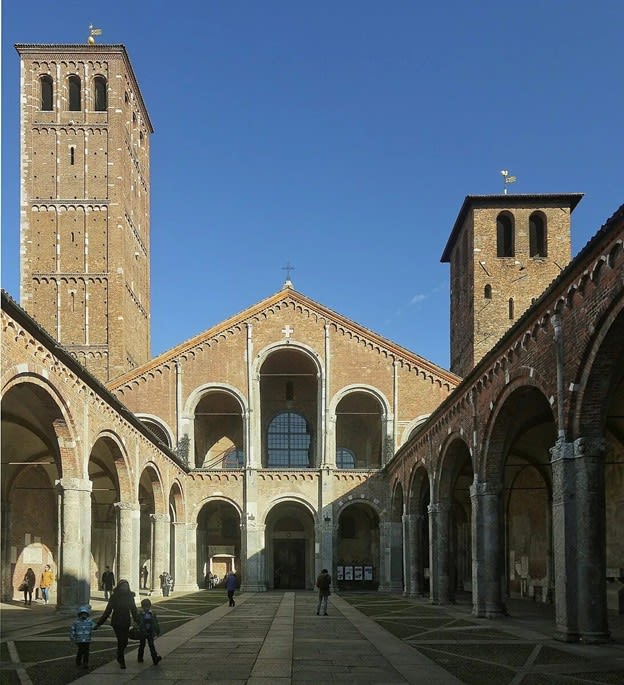
In March 1026, Archbishop Aribert of Milan solemnly placed the Iron Crown of the Lombards upon Conrad’s head.
The king celebrated Easter at Vercelli in the company of the elderly Bishop Leo, an adviser of the late Otto III, who died several days later.
His role as Conrad’s principal imperial ally in Italy was taken over by Aribert, under whose influence the Basilica of Sant’Ambrogio began to expand with Conrad’s patronage.
The Italian expedition was accompanied by difficulties.
In June, Conrad’s army entered Ravenna, where the quartering of troops provoked a revolt by the inhabitants.
Because of the exhausting summer heat, the emperor withdrew his army northward into the Po Valley and spent Christmas at Ivrea.
By the end of winter, the nobility had surrendered. Only Pavia continued to resist until early 1027, when Abbot Odilo of Cluny intervened as a mediator.
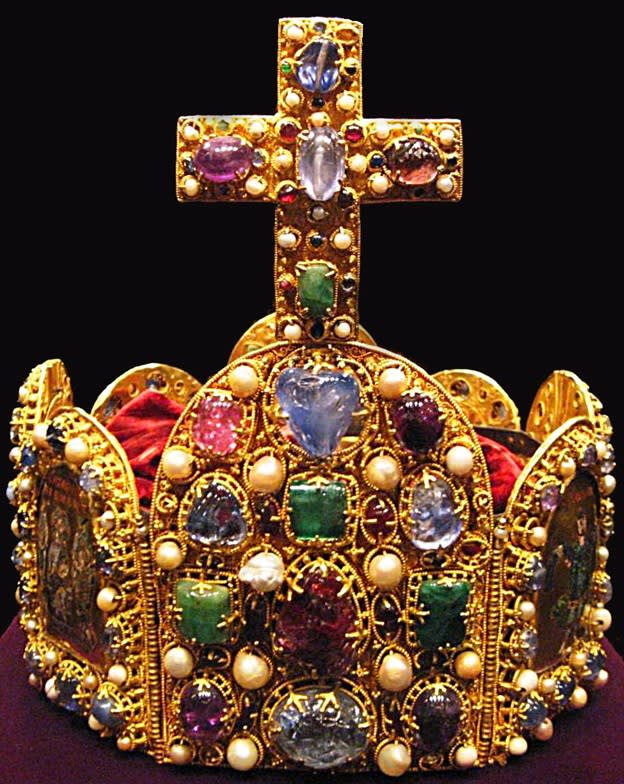
On 26 March 1027, Conrad’s reign reached its ceremonial climax.
In the old St. Peter’s Basilica, Pope John XIX crowned Conrad and Gisela Emperor and Empress of the Holy Roman Empire.
The magnificent celebrations lasted for seven days.
Among the witnesses were Conrad’s son Henry, Cnut the Great, King of England and Denmark, King Rudolf III of Burgundy, and seventy archbishops and bishops.
During the festivities, Conrad also resolved the long-standing dispute over precedence between Milan and Ravenna in favor of Milan.
He then travelled south and compelled the principalities of Capua and Salerno, as well as the Duchy of Benevento, to submit.
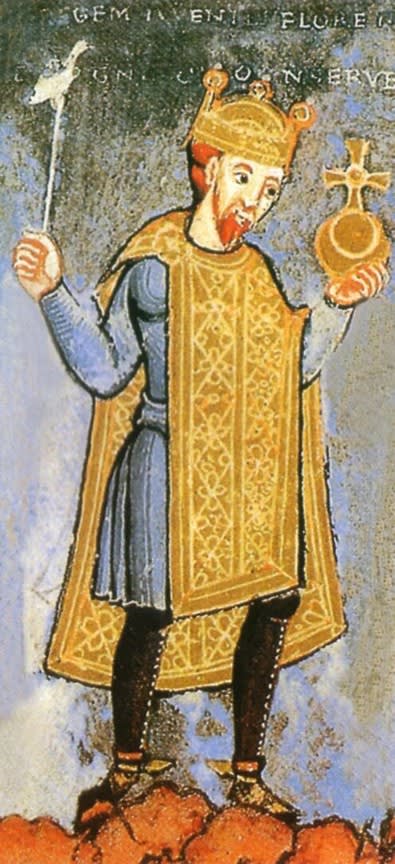
The emperor then began reorganizing the Church with a firm hand.
His goal was to suppress the autonomy of Venice.
At the Lateran Synod of 6 April 1027, Conrad proclaimed the supremacy of the Patriarchate of Aquileia, led by the loyal Poppo, over the Patriarchate of Grado, traditionally allied with Byzantium.
This decision made Poppo Conrad’s principal representative in northern Italy and deprived Venice of important commercial privileges.
Returning to Germany in May 1027 for the funeral of Duke Henry V of Bavaria in Regensburg, Conrad took an unprecedented step.
Ignoring all legitimate candidates, on 24 June 1027 he granted Bavaria to his ten-year-old son Henry.
The emperor then conducted a strict inventory of imperial lands throughout the region.
He even humiliated the dowager empress Cunigunde by forcing her to account for her wittum, or widow’s property, declaring some of these lands to be imperial possessions.
These authoritarian measures planted the seeds of new aristocratic resentment.
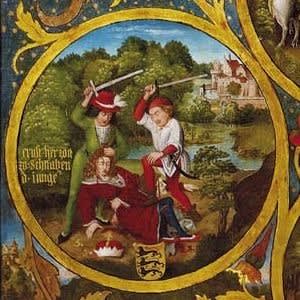
The conflict with Conrad’s stepson Ernest II of Swabia became one of the darkest chapters of his reign.
Ernest had already rebelled against his stepfather in 1025, but by 1026 he had been forced into peace and taken on the Italian expedition.
Meanwhile, the rebellion in Germany was continued by Conrad of Carinthia and Count Welf II of Swabia.
Bishop Bruno of Augsburg, who had been left as regent, suffered military defeats.
In September 1026, Conrad sent Ernest to suppress the rebellion, but Ernest betrayed his stepfather and joined the rebels.
After returning in 1027, Conrad convened a court at Augsburg.
Ernest, expecting the loyalty of his vassals, called them to arms, but the Swabian counts categorically refused to fight against the lawful emperor.
Without an army, Ernest, Conrad of Carinthia, and Welf II surrendered at Worms on 9 September 1027.
Ernest was imprisoned in Giebichenstein Castle, while Gisela became regent of Swabia.
When the young Henry was crowned King of Germany at Aachen in 1028, Gisela persuaded Conrad to pardon her eldest son.
Ernest was released, but Swabia remained under his mother’s control.
At Easter 1030, Conrad offered his stepson the restoration of real authority if he destroyed the enemies of the crown, above all his friend Count Werner of Kyburg.
Ernest’s refusal to betray his friend sealed his fate.
Conrad declared him an enemy of the state, secured his excommunication, and this time even his mother turned against him.
Soon afterward, Ernest and Werner were killed in an unequal battle against the forces of the Bishop of Constance near Falkenstein Castle in the Black Forest.

Ernest’s younger brother, the young Herman, was appointed duke.
When Herman died in 1038, Conrad transferred Swabia to his son Henry.
The emperor tolerated independence nowhere.
Duke Adalbero of Carinthia, who had received his title in 1012 and had previously been a loyal supporter of the king—even carrying the royal sword at the synod of September 1027—began to behave as an independent sovereign.
From 1028 onward, he maintained peace with King Stephen I of Hungary, whose forces, after Henry II’s death, had repeatedly struck imperial frontier territories, particularly Carinthia.
For Conrad, this provided a pretext for removing him.
On 18 May 1035, he summoned Adalbero before a court in Bamberg on charges of treason.
The dukes protested and demanded the participation of the co-ruler, the young Henry.
Henry, who had promised to act as mediator, initially refused to support Adalbero’s deposition.
Only after threats, tears, and intense pressure from his father did Henry submit.
Adalbero was stripped of all titles and fled to his mother in Ebersberg, Bavaria, where he died in 1039.
The vacant Duchy of Carinthia passed to Conrad the Younger on 2 February 1036.
Ultimately, Conrad II succeeded in concentrating the three southern German duchies in the hands of his family.
Swabia and Bavaria were controlled by his son Henry—Swabia previously having been held by his stepson Herman—while Carinthia passed to his cousin.
Conrad continued the centralizing policies of the Ottonians, but his methods were ruthless.
Earlier rulers had often preferred public repentance by rebels followed by reconciliation.
The first Salian emperor instead made severe judicial proceedings a normal instrument of government.
By declaring vassals “enemies of the state”, as in the cases of Ernest of Swabia and Adalbero of Carinthia, he broke with ancient German political traditions and forged a new, increasingly autocratic empire through force and law.
Having consolidated his throne, Conrad II continued with an iron hand the policy developed by his Ottonian predecessors—the so-called Imperial Church System.
Its essence lay in using the German Church as the principal and most reliable instrument of government.
Since the 950s, the Ottonians, distrustful of ambitious secular nobles, had preferred to appoint prelates to important positions of state authority.
Justifying their absolute authority through divine right, monarchs presented themselves as protectors of the Church and demanded unconditional political loyalty in return.
Under this system, bishoprics and abbeys received enormous landed estates and secular authority while being completely exempted from the jurisdiction of local aristocrats.
The highest churchmen answered directly to the emperor, effectively becoming his personal vassals.
In return, they owed two major obligations: servitium regis, royal service, and servitium militum, military service.
The clergy had to maintain the imperial court during the monarch’s constant journeys across the kingdom and effectively perform many of the functions of a state bureaucracy.
Military service required bishops and abbots to provide contingents of knights for the imperial army and to perform complex diplomatic missions.
Conrad exploited this system with extraordinary energy, but his approach was notably cold and pragmatic.
As his biographer, the chronicler Wipo of Burgundy, cautiously observed, Conrad was not especially concerned with advancing the interests of the Church for their own sake.
Unlike the pious Ottonians, who had founded at least eight monasteries over a century, the Salian dynasty established only one during a comparable period—Limburg Abbey, which Conrad transformed from a stern fortress into a monastery in 1025.
The emperor rarely involved himself in theological disputes.
During his entire reign, he convened only five synods, and even these were primarily intended to achieve political reconciliation.
Conrad frequently delegated questions of church policy to his ambitious wife, Gisela of Swabia.
When Archbishop Aribo of Mainz, primate of Germany, died in 1031, Conrad favored the brilliant theologian Wazo of Liège, then serving as dean under the Bishop of Liège.
Gisela, however, insisted on another candidate, and the important see was ultimately given to Abbot Bardo of Hersfeld, whom she favored.

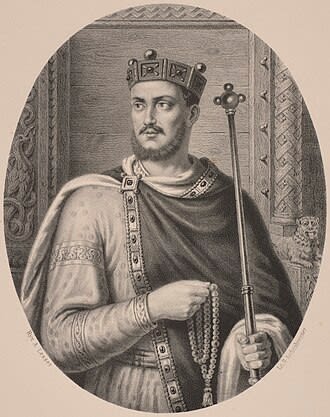
Storm clouds were also gathering along the empire’s eastern frontier.
Under Duke Bolesław I the Brave of the Piast dynasty, Poland had fought exhausting wars against Henry II.
The conflict ended in January 1018 with the Peace of Bautzen.
According to the text, Bolesław formally recognized Henry II as his overlord and in exchange retained extensive frontier territories.
To reinforce the alliance, the widowed Bolesław married Oda of Meissen, daughter of the Saxon Margrave Eckard I.
Peace survived until Henry’s death in 1024.
Taking advantage of the German interregnum, Bolesław made a daring move.
On Easter, 25 April 1025, he had himself crowned king.
This was unprecedented, since his ancestors had borne only the title of dukes of the polity known as Civitas Schinesghe, which Rome and the rest of Europe had become aware of only several decades earlier.
Two months later, the newly crowned king died, probably from illness.
He was succeeded by his son Mieszko II Lambert, who was crowned at Christmas in the same year.
Mieszko’s first action was to drive his brothers into exile: his older half-brother Bezprym and his younger brother Otto Bolesławowic.
Otto fled west and appealed to Conrad II for protection.

Conrad regarded Mieszko’s royal coronation as a personal insult and an act of usurpation against imperial supremacy.
However, while the emperor was campaigning in Italy for the crown in 1026, a revolt erupted in Germany under Ernest II of Swabia, Conrad the Younger, and Frederick II of Upper Lorraine.
The rebels appealed to Mieszko, who promised to attack Conrad from the east.
The emperor, however, acted more quickly.
Returning in the middle of 1027, he crushed the rebellion before the Poles could intervene.
Preparing a counterattack against Poland, Conrad concluded a strategic alliance with Cnut the Great, King of England and Denmark.
Cnut’s presence at the imperial coronation of 1027 was rewarded with authority over the March of Schleswig.
Realizing that he was caught between the Germans and Danes, Mieszko launched a preemptive strike in 1028, invading Lusatia.
He occupied territories belonging to the western Slavic Liutizi federation.
These tribes had been targets of imperial expansion since the campaigns of Hermann Billung and Gero in the 940s, but after the uprising of 983 they had regained independence.
The fragile balance created by the Peace of Bautzen collapsed.

In desperation, the Liutizi sent envoys to Conrad.
The emperor immediately renewed the German-Liutizi alliance and in 1029 besieged Bautzen in the March of Meissen.
The campaign failed.
The Liutizi did not provide the troops they had promised, while the threat of a Hungarian attack from the south forced Conrad to withdraw.
By 1030, the situation had become critical.
Poland and Hungary formed an alliance.
While Mieszko ravaged Saxony, Stephen I of Hungary invaded Bavaria.
Conrad responded with a major diplomatic maneuver.
He concluded an alliance with Grand Prince Yaroslav the Wise of Kiev, who immediately attacked Poland from the east and seized Cherven Rus’.
Having secured his southern flank through peace with Hungary in 1031, conceding territories between the Leitha and Fischa rivers, Conrad turned the full force of his army against Mieszko that autumn.
Bautzen was besieged again.
Crushed between the imperial offensive from the west, Rus’ from the east, and the internal uprising led by his returning brother Bezprym, Mieszko Lambert capitulated in the autumn of 1031.
Under the Treaty of Merseburg, he was forced to return the Meissen and Lusatian marches to Conrad.

Peace did not bring stability to Poland.
Mieszko was immediately overthrown by Bezprym, who returned from exile in Kiev, where he had lived since 1025, supported by the forces of Yaroslav the Wise.
The deposed Mieszko attempted to seek refuge in Bohemia but fell into a terrible trap.
Duke Oldřich of Bohemia imprisoned him and ordered him castrated.
This was a brutal act of revenge for the fact that Mieszko’s father, Bolesław, had blinded Oldřich’s brother Boleslaus III approximately thirty years earlier.
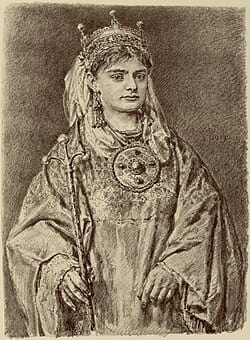
Seeking Conrad’s favor, Bezprym sent the Polish royal regalia to the emperor.
They were delivered by Richeza of Lotharingia, wife of the mutilated Mieszko.
Bezprym formally renounced the royal title, becoming only a “duke,” and acknowledged dependence upon the Empire.
His reign, however, descended into bloodshed.
His extreme cruelty drove Otto Bolesławowic into conspiracy, and in the spring of 1032, Bezprym was killed by his own followers.
To fill the political vacuum, Conrad convened an assembly at Merseburg.
Empress Gisela intervened and persuaded her husband to show mercy toward the mutilated Mieszko.
Freed from Bohemian imprisonment, Mieszko appeared before the emperor.
Under the new Merseburg agreement, Conrad divided Poland into three territories and distributed them among Mieszko, Otto, and their relative Dietrich.
Mieszko retained the ducal title and nominal seniority, but the weakened Polish state was now firmly subject to imperial pressure.
This arrangement soon collapsed.
In 1033, Otto was assassinated.
Mieszko then drove out Dietrich and reunited the country, stubbornly continuing to call himself king.
His triumph was short-lived.
After Mieszko’s death in 1034, Poland, torn apart by noble conflicts and revolts, descended into the turmoil of a major pagan reaction.
His widow Richeza and young son Casimir I fled to the protection of the Holy Roman Empire.
Bohemia, incorporated into the imperial political sphere under Henry II, remained equally turbulent.
Henry II had once installed Duke Jaromír there, but in 1012 Jaromír was overthrown by his own brother Oldřich.
Taking advantage of the imperial-Polish conflict, the aggressive Oldřich reconquered Moravia from the Poles by 1029, strengthening his authority, and in 1031 brutally mistreated the fugitive Mieszko.
Feeling secure, Oldřich boldly refused to attend Conrad’s Merseburg assembly in July 1033.
Conrad, occupied with the struggle for Burgundy, became furious and sent his seventeen-year-old son, Duke Henry of Bavaria, against the rebellious vassal.
The young prince’s first military campaign ended in complete triumph.
Henry overthrew Oldřich and restored the long-suffering Jaromír to the throne.
Oldřich was imprisoned in Bavaria, while his son Bretislav I became Count of Moravia.

In 1034, Conrad showed mercy and allowed Oldřich to return.
Oldřich immediately overthrew Jaromír, ruthlessly blinded him, and expelled his own son Bretislav, who had probably supported his uncle.
However, on 9 November 1034, Oldřich suddenly died.
The blinded Jaromír nobly renounced the restored crown in favor of his nephew, and Conrad formally recognized Bretislav as the new Duke of Bohemia.
Relations with Hungary developed no less dramatically.
Stephen I, crowned at Christmas in the year 1000 with Otto III’s approval, was the brother-in-law of Henry II through his marriage to Gisela of Bavaria, Henry’s sister.
Conrad’s expansionism, however, destroyed this former friendship.
In 1026, Conrad drove the Doge Otto Orseolo from Venice. Otto was married to the Hungarian princess Grimelda.
In 1027, Conrad demonstratively deprived Stephen’s son Emeric of potential hereditary claims in Bavaria by giving the duchy to his own son Henry.
The Hungarian king responded in the autumn of 1027 by blocking the roads used by Bishop Werner of Strasbourg, who was travelling disguised as a pilgrim to Constantinople carrying a secret plan for a dynastic marriage between the Empire and Byzantium.
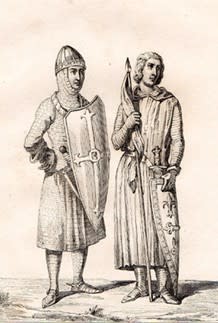
In 1029, Bavarians provoked border clashes, and in 1030 full-scale war erupted.
Conrad’s invasion of Hungary ended in disaster.
The Magyars employed scorched-earth tactics, forcing the imperial army to suffer from hunger and retreat.
The emperor then turned his attention to suppressing Ernest’s rebellion, leaving the Hungarian front to his son Henry.
Henry acted prudently.
In 1031, he secured peace by conceding territories between the Leitha and Fischa rivers, bringing relative stability until 1040.
While blood was being shed in the east, Conrad fought over an enormous inheritance in the west.
In 1016, the childless King Rudolf III of Burgundy, under pressure, had recognized his nephew Emperor Henry II as heir.
But Henry died in 1024.
Conrad immediately claimed that the inheritance rights now passed to him as Henry’s successor.
Rudolf resisted.
Moreover, the powerful Count Odo II of Blois entered the struggle.
In August 1027, through the mediation of the widowed Empress Cunigunde, Conrad and Rudolf met near Basel.
They reached an agreement: Rudolf would rule independently until his death, after which the crown would pass to Conrad.
When Rudolf died on 6 September 1032, Odo of Blois rapidly occupied western Burgundy.
Having dealt with Poland, Conrad marched his army through snow-covered Alpine passes and on 2 February 1033 was crowned King of Burgundy at the Abbey of Payerne.
His first clashes with Odo were unsuccessful, and in March Conrad withdrew toward Zurich.
However, in April and May 1033, at a meeting at Deville on the Meuse, Conrad forged a strong alliance with King Henry I of France, who also regarded Odo as an enemy because of his support for rival claimants to the French throne.

Caught between his enemies, Odo was decisively defeated during the campaigns of 1033 and 1034.
On 1 August 1034, beneath the vaults of Geneva Cathedral, Conrad solemnly proclaimed the incorporation of Burgundy into the Holy Roman Empire.
The Kingdom of Arles, encompassing parts of modern southeastern France, western Switzerland, Franche-Comté, and Dauphiné, passed under imperial authority.
Conrad granted the territories broad autonomy, but the principal strategic goal had been achieved.
Control over the western Alpine passes now protected Italy against invasion.
According to the text, emperors would continue to bear the title “King of Burgundy” until the dissolution of the Empire in 1806.
In domestic policy, Conrad also acted as a reformer.
He formally confirmed ancient Saxon law and introduced new legislation in Lombardy, protecting the rights of lesser knights and burghers—the valvassores—against the arbitrary authority of Archbishop Aribert of Milan and the upper nobility.
The dynasty was becoming more secure.
In 1028, Conrad arranged for his son Henry to be anointed at Aachen and later married him to Gunhilda, daughter of Cnut the Great.

The final phase of Conrad’s reign was illuminated by another southern campaign.
In 1038, Prince Guaimar IV of Salerno appealed to the emperor for assistance against Prince Pandulf of Capua, whom Conrad himself had released from imprisonment in 1024.
When Conrad learned that Guaimar had simultaneously requested aid from the Byzantine emperor Michael IV the Paphlagonian, he immediately led an army into the Mezzogiorno.
After reaching southern Italy, Conrad appointed the German Richer as abbot of Monte Cassino, replacing the former abbot, who had been imprisoned by Pandulf.
At Troia, the emperor demanded that Pandulf return property belonging to the monastery.
The frightened prince sent his wife and son with an enormous payment of 300 pounds—approximately 140 kilograms—of gold, and offered two children as hostages.
Conrad agreed, but the hostages managed to escape while Pandulf hid in the powerful fortress of Sant’Agata de’ Goti.
Enraged, Conrad stormed Capua, transferred it to Guaimar, and formally confirmed Aversa as a county under the Norman mercenary Rainulf Drengot.
Pandulf fled to Constantinople, while southern Italy was brought firmly under imperial power.
The journey home became tragic.
A deadly epidemic struck the army returning from Italy and claimed the lives of the emperor’s daughter-in-law and stepson.
Conrad survived.
After conducting important judicial assemblies at Solothurn, Strasbourg, and Goslar, he transferred authority over Swabia and Carinthia to his son Henry, systematically preparing the succession.
According to the text, this foundation later enabled Henry, on 14 January 1040, shortly after his father’s death, formally to assume the title Rex Romanorum — “King of the Romans”, placing the Frankish royal title firmly on the path toward imperial dignity.
A year later, in 1039, Conrad’s health collapsed.
On 4 June, the emperor died in Utrecht after a severe attack of gout.
Following the custom of the time, his heart and internal organs were buried in the local Cathedral of St. Martin.
His embalmed body then undertook one final solemn journey through Cologne, Mainz, and Worms to the magnificent Speyer Cathedral, which Conrad himself had founded.
There Conrad II found his final resting place.
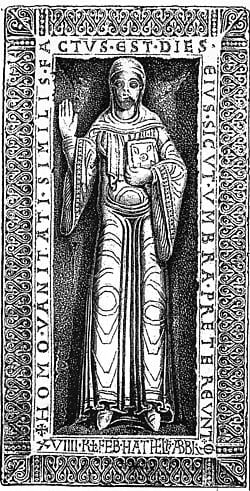
In 1900, his sarcophagus was transferred to the cathedral crypt, where it remains today.
His memory was preserved in the chronicle The Deeds of Emperor Conrad II, written by his chaplain Wipo of Burgundy.
In 1046, the work was ceremonially presented to Conrad’s son and successor, who by that time had become the undisputed ruler of the empire.


