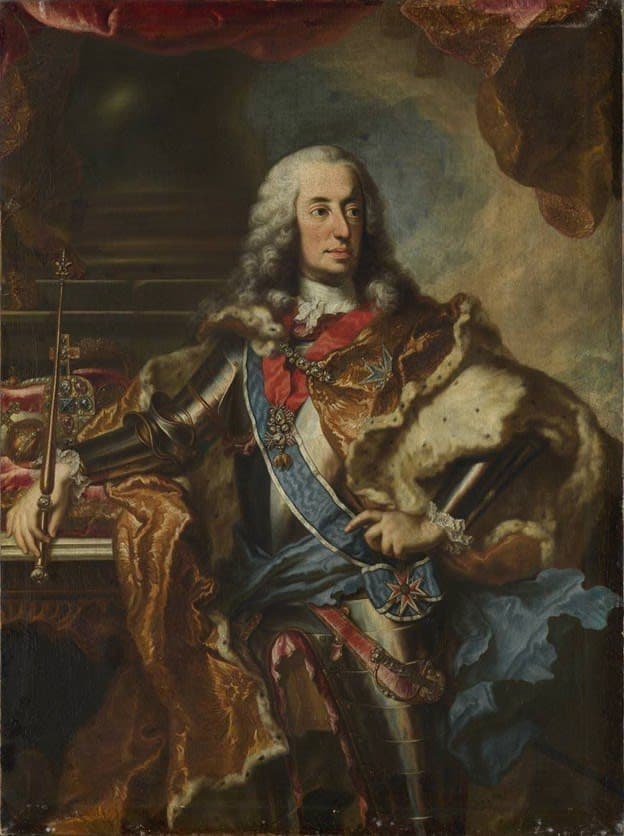

Charles Albert, who entered history as Charles VII, Holy Roman Emperor, was born in Brussels and united in his lineage the blood of two powerful dynasties. His father was Maximilian II Emanuel, Elector of Bavaria, while his mother was Theresa Kunegunda Sobieska, daughter of the celebrated Polish king John III Sobieski.
However, the prince’s childhood was overshadowed by the gathering storm clouds of the War of the Spanish Succession, which mercilessly divided his family. In 1701, the royal couple left Brussels and returned to Munich, but the political crisis only intensified. After the crushing defeat at the Battle of Blenheim in August 1704, Maximilian Emanuel was forced to flee to the Spanish Netherlands.
Young Charles remained in Munich with his brothers and sisters under the care of his mother, who assumed the duties of regent. Yet in May 1705, after Theresa Kunegunda traveled to Venice, the Austrian authorities harshly barred her from returning to Bavaria, forcing her into an exile that would last for ten long years.
The family was finally torn apart after April 29, 1706, when Maximilian Emanuel, having suffered another defeat at Ramillies, was placed under the imperial ban and withdrew to Compiègne. During these turbulent years, Charles himself was effectively kept under house arrest in Austria, and only in 1715 was the exhausted Wittelsbach family finally reunited.

Having reached adulthood in August 1715, the young prince embarked on the traditional educational journey through Italy, which lasted from December 3, 1715, to August 24, 1716. This experience shaped both his political and aesthetic tastes.
After returning home, in 1717 he received his first experience of war while serving with Bavarian auxiliary forces during the Austro-Turkish War of 1716–1718.
A decisive moment in his life came when, at the imperial court in Vienna, he met Archduchess Maria Amalia of Austria, the younger daughter of the late Emperor Joseph I and Wilhelmine Amalia of Brunswick-Lüneburg. Their wedding took place on October 5, 1722.
Although this dynastic marriage formally required Bavaria to renounce all claims to the Habsburg throne, paradoxically it created a powerful legal basis for Charles’s later claims to part of the Habsburg inheritance.
In 1725, while visiting Versailles for the wedding celebrations of King Louis XV of France, Charles established strong personal ties with the French court, laying the foundations of his future foreign policy.
When his father died in 1726, Charles inherited the titles of Duke of Bavaria and Elector of the Palatinate, becoming one of the influential prince-electors of the Holy Roman Empire. Along with power, he inherited an enormous state debt of 26 million guilders, yet he skillfully continued his father’s policy of maintaining peaceful relations with both his Habsburg relatives and France.
Seeking to enhance the prestige of his dynasty, in 1729 he founded the Order of Saint George and ordered the construction of the formidable Rothenberg Fortress.
Charles’s ambitions, fueled by years of rivalry with Vienna, extended far beyond Bavaria. As the son-in-law of Emperor Joseph I, he categorically refused to recognize the Pragmatic Sanction of 1713, and after the death of Charles VI in 1740, he openly asserted his claims to the German hereditary lands of the Habsburgs, challenging the heiress Maria Theresa.
In July 1741, he took a decisive step by concluding the Treaty of Nymphenburg and entering into a military alliance with France and Spain against Austria.
The resulting War of the Austrian Succession initially appeared to promise triumph. In 1741, Charles boldly invaded Upper Austria, planning to seize Vienna itself. However, the allied French forces under Charles Louis Auguste Fouquet, Duke of Belle-Isle, changed direction and were sent into Bohemia, where they successfully captured Prague in November 1741.
This victory enabled Charles to be crowned King of Bohemia in Prague on December 19, 1741, even though Habsburg resistance had not yet been decisively broken.
The culmination of his political career came at the beginning of the following year. On January 24, 1742, Charles was elected King of Germany, and after his solemn coronation in Frankfurt on February 12, 1742, he became Holy Roman Emperor.
His imperial image was magnificently immortalized in the allegorical paintings of that year and on Bavarian silver thalers minted in 1743.
Charles VII became the second emperor from the Wittelsbach dynasty after Louis IV and the first member of the family to occupy the German throne since Rupert of the Palatinate.
Remarkably, the imperial crown was placed upon his head by his own brother, Clemens August of Bavaria, Archbishop and Elector of Cologne. Although Clemens August politically sympathized with the Habsburg-Lorraine dynasty, he nevertheless voted for his own brother in the imperial election.
Charles was also supported by King George II of Great Britain in his capacity as Elector of Hanover, even though Britain and Hanover remained allies of Austria in the war.


Yet Charles’s imperial triumph almost immediately turned into tragedy. Shortly after his coronation, Maria Theresa’s army poured into the Bavarian lands.
The newly crowned emperor was forced to flee Munich, becoming an exile and spending almost three years within the walls of the Barckhaus Palace on the Zeil in Frankfurt.
The disaster worsened in December 1742, when most of Bohemia was lost and the Austrians allowed the encircled French troops under the Duke of Belle-Isle and François-Marie de Broglie to withdraw under honorable terms.
Charles VII found himself in a humiliating position—a sovereign who controlled neither his ancestral territories nor the empire itself, whose institutions of authority had by then become largely symbolic.
Across Europe, he was openly mocked. In aristocratic salons, a poisonous Latin phrase circulated:
“Et Caesar et nihil” — “Both emperor and nothing.”
It was a mocking distortion of the proud ancient motto aut Caesar aut nihil—“either Caesar or nothing.”
His generals were mocked no less harshly. The Bavarian commander Ignaz Felix, Count of Törring-Jettenbach, was sarcastically compared by contemporaries to a drum, who observed that “he was heard only when he was beaten.”
Seeking to maintain the prestige of his fading authority from exile in Frankfurt, Charles actively issued legal decrees.
In 1743, he granted imperial privileges to the University of Erlangen and elevated a number of his supporters into the imperial nobility.
In 1744, by imperial decree, he prematurely declared Duke Charles Eugene of Württemberg to have reached legal adulthood. He also rewarded the dynasty of Prince Alexander Ferdinand of Thurn and Taxis, his principal commissioner to the Perpetual Imperial Diet in Regensburg, with the hereditary office of General Postmasters of the Imperial Postal Service.
Meanwhile, military fortune remained unpredictable. The new commander of the Bavarian army, Friedrich Heinrich von Seckendorff, desperately attempted to reverse the course of the war during the campaigns of 1743 and 1744.
In 1743, the allies managed briefly to recover Bavaria, and in April Charles was able to visit Munich. But after the French retreated toward the Rhine, the capital fell once again.
Only a new offensive by the Prussian king Frederick II during the Second Silesian War forced the Austrian army to withdraw from Bavaria and retreat into Bohemia.

In October 1744, the exhausted Charles VII finally returned to liberated Munich.
The former imperial vice-chancellor Friedrich Karl von Schönborn attempted to act as a mediator and secure a compromise with Vienna, but negotiations reached a dead end, while France failed to provide additional support.
Suffering severely from gout, the emperor died in January 1745 at Nymphenburg Palace.
He was buried in the crypt of the Theatine Church in Munich, while his heart was separately transferred to the Shrine of Our Lady in Altötting.
In his memory, the composer Georg Philipp Telemann wrote the mournful requiem “I Hoped for Light.”
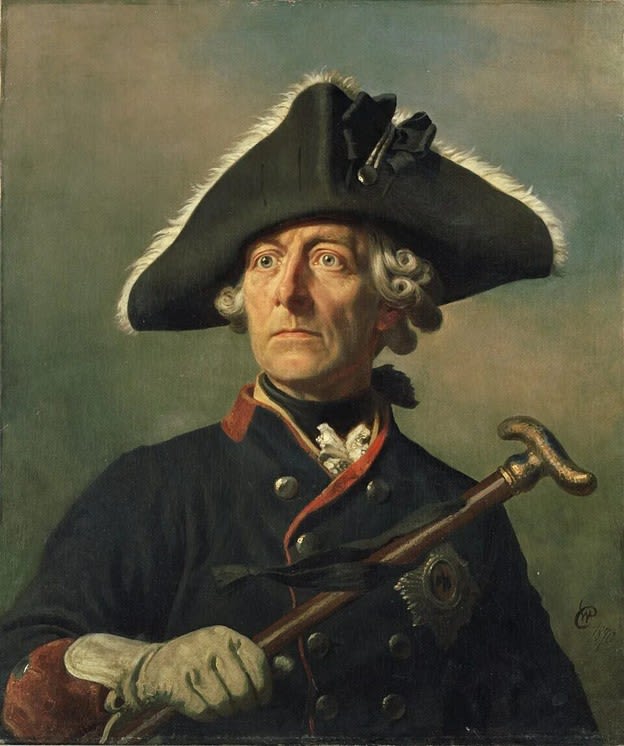
Charles’s death shocked many of his allies. In 1746, Frederick the Great bitterly admitted:
“This death deprived me of an emperor who was my friend.”
Soon afterward, Charles’s son and successor, Maximilian III Joseph, concluded the Treaty of Füssen with Austria, under which Vienna finally officially recognized the legitimacy of his father’s imperial title, while Charles’s brother Clemens August definitively adopted a pro-Austrian position.
Despite all the political and military disasters of his reign, Charles VII left behind an enormous cultural legacy, and his era became a period of flourishing Bavarian Rococo.
It was under his rule that the construction of Nymphenburg Palace was completed, and it became the favored summer residence of later generations of Bavarian rulers.
The magnificent Grand Palace Circle (Schlossrondell), surrounded by richly decorated Baroque mansions, was conceived by Charles as the foundation of a new city called Karlstadt—a bold project that was never realized.
By his order, magnificent state apartments and the famous Ancestral Gallery were created in the Munich Residence between 1726 and 1731.
Charles was also a generous patron of the arts. In 1731, he purchased Porcia Palace, and in 1736 he ordered its complete reconstruction in the Rococo style for his favorite, Countess Topor-Morawitzky.
Between 1733 and 1737, his chief court architect, François de Cuvilliés, constructed the elegant Holnstein Palace for another of the emperor’s favorites, Maria Caroline Charlotte von Ingenheim.
The pinnacle of this graceful architectural style was the Amalienburg, built between 1734 and 1739—a richly decorated hunting lodge in the grounds of Nymphenburg Palace, designed by Cuvilliés for the emperor’s wife, Maria Amalia.
During these years, a truly creative atmosphere flourished at the Bavarian court. Outstanding masters from across Europe worked in royal service for many years, among them Dominique Girard, François de Cuvilliés, Joseph Effner, Ignaz Günther, Johann Michael Fischer, the brothers Cosmas Damian and Egid Quirin Asam, Johann Michael Feuchtmayer, Matthäus Günther, Johann Baptist Straub, and Johann Baptist Zimmermann.
Although overshadowed by his political failures, Charles VII entered history permanently as a monarch who gave his homeland a form of aesthetic immortality.



