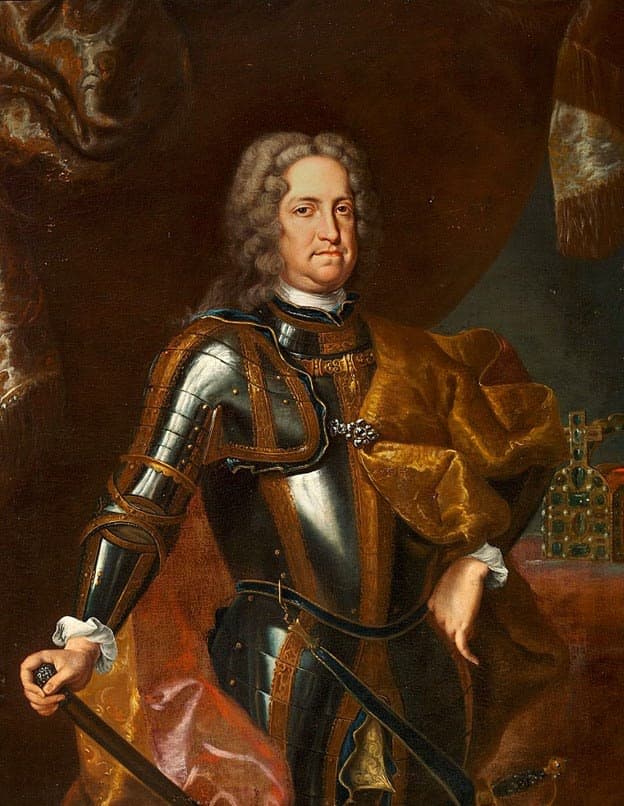
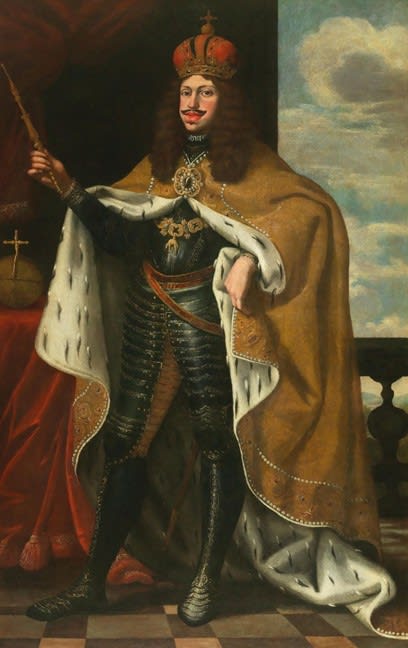
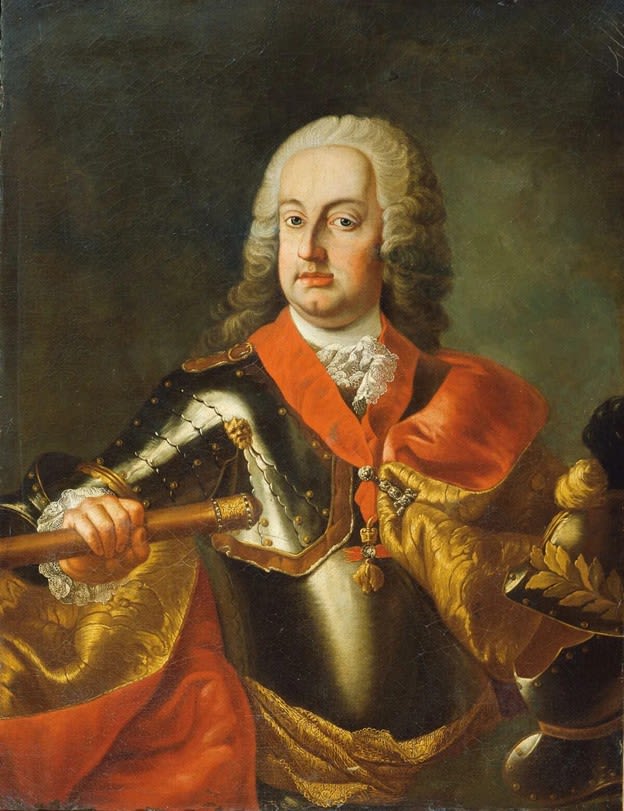
The life of Archduke Charles, who at baptism received the elaborate and lengthy name Charles Francis Joseph Wenceslaus Balthasar Johann Anton Ignatius, began on October 1, 1685. He was born into the family of Holy Roman Emperor Leopold I and his third wife, Princess Eleonore Magdalene of Neuburg, becoming their second son. As the younger heir, Charles might have spent his life in the shadow of his elder brother Joseph, but fate destined him to become one of the key figures on the European political stage of his time.

The beginning of his great ambitions can be traced to 1700, when King Charles II of Spain died. Having left no direct heir, the deceased monarch plunged Europe into a dynastic crisis. Since both rulers belonged to the powerful Habsburg dynasty, the young Charles immediately proclaimed himself the legitimate King of Spain. However, another claimant also sought the throne—the French candidate Philip, Duke of Anjou, grandson of the powerful French king Louis XIV.
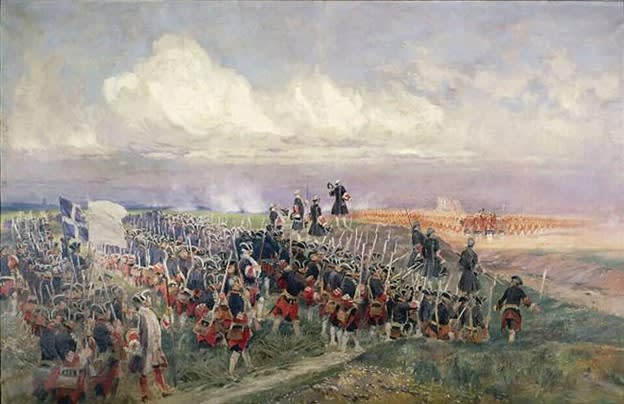
This clash of interests triggered the massive War of the Spanish Succession, which dragged on for fourteen long and exhausting years. In this struggle, the Austrian claimant was supported by an impressive coalition that included the kingdoms of Portugal, England, Scotland, and Ireland, as well as most of the states of the Holy Roman Empire. Charles also found many loyal supporters within Spain itself, who entered history as the “Austracists.” Their position was particularly strong in the lands of the Crown of Aragon, where the local nobility and population had good reason to fear the harsh centralizing policies associated with the French Bourbons.
Known to his Spanish supporters as King Charles III, in 1705 he personally landed on the Iberian Peninsula, where he spent the next six years attempting to win the crown. Despite his title and support, his actual authority remained significantly limited and extended mainly over the territory of the Principality of Catalonia.
The situation changed fundamentally in 1711. The death of his elder brother, Emperor Joseph I, forced Charles to leave Spain urgently and return to Vienna in order to assume the imperial crown of the Holy Roman Empire and become Charles VI.
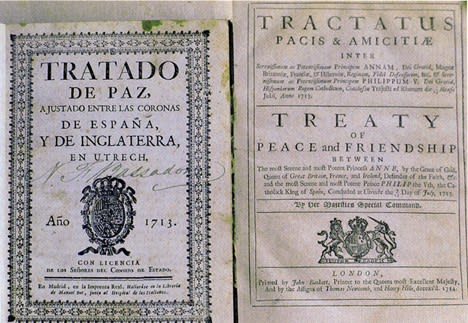
This event completely altered the balance of power. The recently formed Kingdom of Great Britain, fearing an excessive strengthening of the Habsburgs, was firmly unwilling to allow the revival of the enormous empire of Charles V and the restoration of a personal union between Austria and Spain. After losing British support, the Austrian coalition began to disintegrate, and three years later the war ended with a series of peace settlements—the Treaties of Utrecht, Rastatt, and Baden.
The Peace of Utrecht, formally ratified in 1713, definitively recognized Philip as King of Spain on the condition that he renounce his rights to the French throne after his grandfather, thereby preventing the union of France and Spain.
As compensation for the loss of the Spanish crown, the Austrian Habsburgs received some of the richest territories formerly held by Spain: the Kingdom of Naples, the Duchy of Milan, the Austrian Netherlands, and the Kingdom of Sardinia. Although Charles significantly expanded his possessions, he remained deeply wounded by the loss of Spain until the end of his life.
This nostalgia manifested itself in his fanatical recreation of the strict and somber ceremonial traditions of the Spanish Habsburgs at the Viennese court, while Charles himself adopted the clothing of the Spanish monarchs. As the British historian Edward Crankshaw aptly observed, the emperor’s traditional attire now invariably consisted of “a black doublet and breeches, black shoes, and scarlet stockings.”
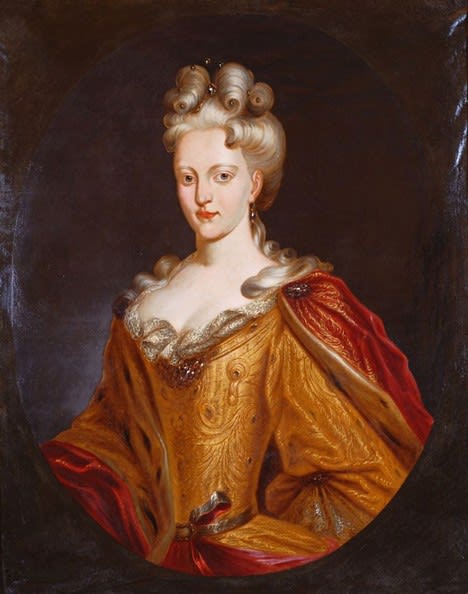
Even before these upheavals, Charles’s father and his closest advisers had concerned themselves with finding a suitable wife for the archduke. Their choice fell on the eldest daughter of Louis Rudolph, Duke of Brunswick-Wolfenbüttel—Elisabeth Christine of Brunswick-Wolfenbüttel, whom contemporaries unanimously regarded as an exceptionally beautiful woman.
However, despite their happy marriage, when Charles inherited the throne from his brother in 1711, he realized with horror that he had become the last male in the direct line of the House of Habsburg. Strict succession rules in the Habsburg lands excluded women from inheriting power. Charles’s failure to produce a surviving son threatened the complete partition and destruction of the monarchy after his death.
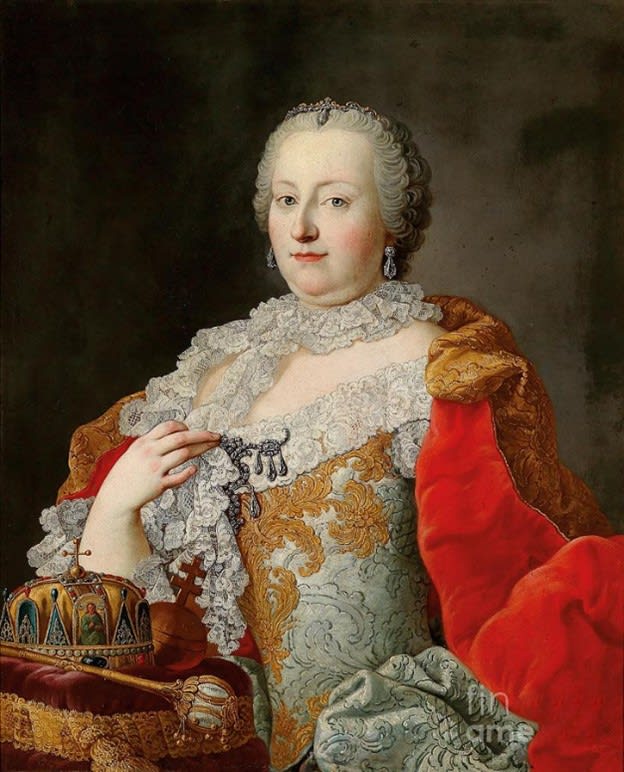
Recognizing this potentially fatal threat, on April 19, 1713, the emperor issued a historic document—the Pragmatic Sanction. This decree abolished exclusively male succession throughout the Habsburg territories and solemnly declared those lands to be completely indivisible.
Implementing the Sanction proved difficult. The Hungarian Diet, for example, agreed to approve it only a decade later, in 1723. Charles and Elisabeth Christine had only three daughters: the famous Maria Theresa, Maria Anna, and Maria Amalia.
After the birth of his eldest daughter, Maria Theresa, Charles took the radical step of depriving his own nieces—Maria Josepha and Maria Amalia, daughters of his late brother Joseph I—of their prior hereditary rights. By doing so, he violated the Mutual Pact of Succession that had been carefully devised by his father.
From that moment until the end of his life, Charles devoted the greater part of his time and diplomatic efforts to compelling the European powers to recognize the Pragmatic Sanction. In pursuit of this goal, he made enormous concessions. At Britain’s insistence, for example, he was forced to close one of his favorite projects—the Ostend Company, a successful trading enterprise in the Austrian Netherlands that he himself had founded in 1722.
Ultimately, the Sanction was formally recognized by Great Britain, France, the Dutch Republic, Spain, Russia, Denmark-Norway, and Savoy-Sardinia. Yet, as Prince Eugene of Savoy prophetically observed, the best guarantee of any succession remained a strong army and a full treasury.
This was soon confirmed. Charles’s nieces married the rulers of Saxony and Bavaria, and both states eventually refused to honor the agreements. Moreover, France, which had publicly recognized the Sanction in 1735, treacherously concluded a secret pact with Bavaria in 1738, promising support for the “just claims” of the Bavarian Elector Charles Albert to the Austrian inheritance.
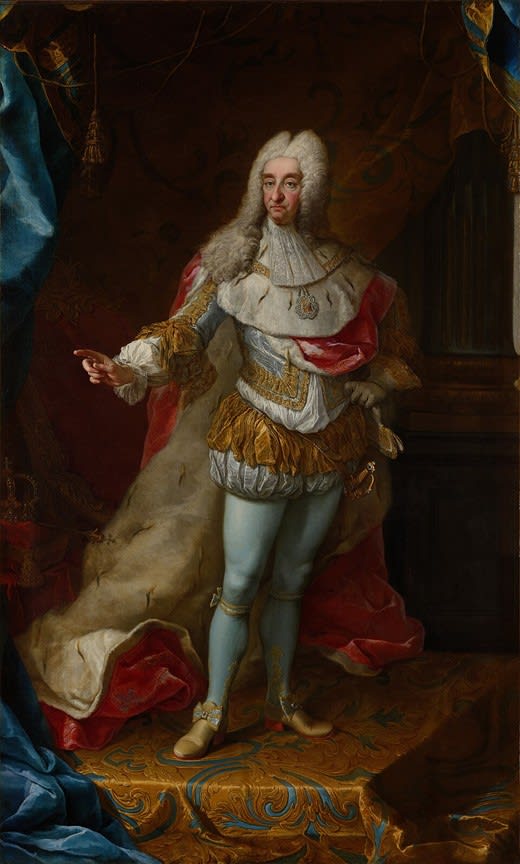
During the first half of his long reign, Charles VI was highly successful on the battlefield, and the Habsburg monarchy steadily expanded its frontiers.
The brilliant victory in the Austro-Turkish War of 1716–1718 allowed the Banat to be incorporated into Hungary, while direct Austrian rule was established in Serbia and Oltenia, or Lesser Wallachia, extending the crown’s possessions as far as the lower Danube.
The War of the Quadruple Alliance of 1718–1720 also ended successfully. Under the Treaty of The Hague of 1720, Charles made a strategic exchange: he ceded Sardinia to Victor Amadeus II, Duke of Savoy, and received Sicily in return. Although the largest island in the Mediterranean was considerably more difficult to defend, its acquisition satisfied imperial ambitions.
The same treaty recognized Don Carlos—the younger son of Philip V and future King Charles III of Spain—as heir to the Duchy of Parma and the Grand Duchy of Tuscany, even though Charles VI had previously actively supported the claims of Anna Maria Luisa de’ Medici, daughter of the reigning Grand Duke Cosimo III de’ Medici, to the Tuscan inheritance.
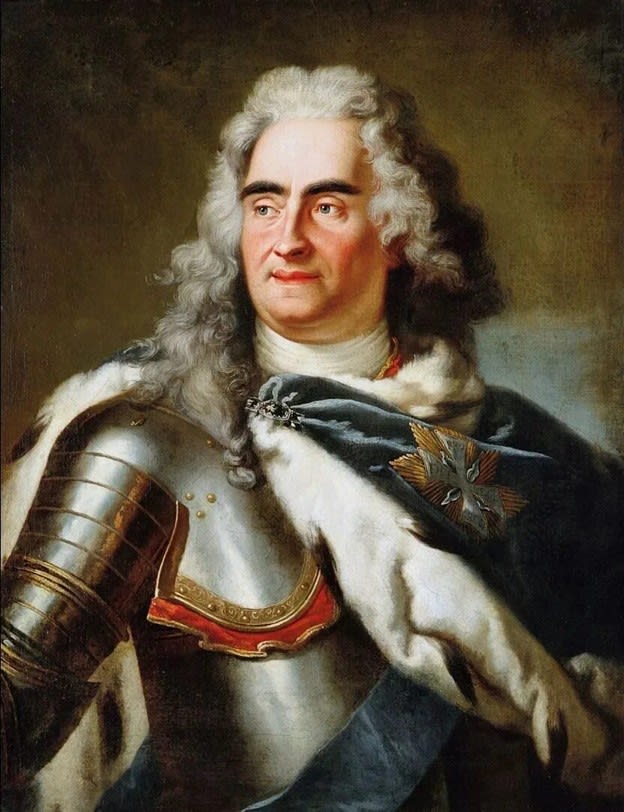
Relative peace in Europe collapsed once again with the outbreak of the War of the Polish Succession in 1733–1738. The catalyst for the conflict was the struggle for the throne between Augustus of Saxony, the eldest son of the deceased monarch, and Stanisław Leszczyński.
Vienna naturally supported Augustus, while Paris backed Leszczyński. According to the settlement established by the Treaty of Vienna of 1738, Augustus ultimately secured the Polish throne, but the price for Austria was high: Charles was forced to surrender the kingdoms of Naples and Sicily to Don Carlos, receiving in exchange only the considerably smaller Duchy of Parma and Grand Duchy of Tuscany.
Family matters also demanded attention. The question of Maria Theresa’s marriage, as the principal heiress, had been on the agenda since her childhood.
At first, the girl was betrothed to Leopold Clement of Lorraine. The young man was expected to travel to Vienna to meet his bride, but in 1723 he tragically died of smallpox, dealing a severe blow to the young archduchess.
His younger brother, Francis Stephen, then arrived at the Viennese court. The emperor considered various possible matches, including Don Carlos, but eventually gave his blessing to his daughter’s marriage to Francis Stephen.
This decision created new political complications. Toward the end of the War of the Polish Succession, France issued an ultimatum demanding that Francis renounce his hereditary Duchy of Lorraine in favor of the deposed Stanisław Leszczyński, after whose death the territory would pass to France.
Charles VI personally compelled Francis Stephen, who had held the title of Duke of Lorraine from 1729 to 1737, to renounce his homeland, confronting him with the famous cold declaration: “No renunciation, no archduchess.”
Apart from his family, Charles maintained an exceptionally close relationship with a small circle of trusted individuals at court. Among them were the Lord High Master of the Horse, Prince Schwarzenberg, and a young court huntsman.
Yet the person dearest to the emperor remained his bedchamber chamberlain, Michael Joseph, Count Althann. Charles felt an exceptionally deep attachment to him, openly referring to him as “my only heart, my consolation [...] my kindred soul.”
Their close relationship lasted for approximately nineteen years, and Count Althann’s premature death in 1722 became a devastating and irreparable blow to the monarch.
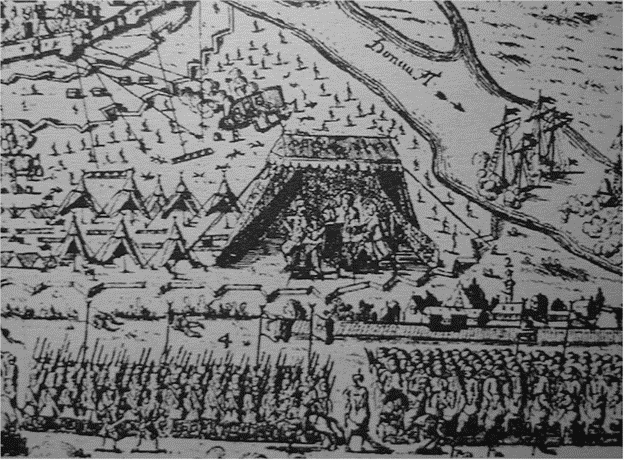
Unfortunately, the final years of Charles’s reign were overshadowed by military disasters. In 1737, allied with Russia, the emperor entered a new war against the Ottoman Empire.
The beginning seemed promising. By the autumn of 1737, imperial troops had successfully captured Niš, and in 1738 they attempted to consolidate their position along the new frontiers.
However, the following year brought a series of severe defeats for the Habsburg army. The humiliating Treaty of Belgrade of 1739 forced Charles to return extensive territories to the Ottoman sultan, including the Bosnian part of Posavina, central Serbia, and Oltenia, or Lesser Wallachia.
This exhausting, enormously expensive, and unsuccessful campaign caused an explosion of public outrage in Vienna. Popular anger even turned against Maria Theresa’s husband, Francis of Lorraine, whom the Viennese began contemptuously calling a “French spy.”
In domestic policy, the emperor showed himself to be a zealous Catholic, actively restoring the structures of the Catholic Church in territories reconquered from the Ottomans and annexed under the Treaty of Passarowitz of 1718.
At the same time, however, he was forced to adopt a flexible approach toward the religious freedoms of other confessions. In the Kingdom of Hungary, a significant part of the population and elite practiced Calvinism and belonged to the Reformed Church, while large numbers of Orthodox Serbs and Romanians lived in the south and east.
Displaying political pragmatism, Charles repeatedly reaffirmed the historic privileges granted to the Orthodox population by his predecessors, Leopold I and Joseph I. Furthermore, in 1732, a special official collection was issued by his decree, legally codifying these rights.
The final chapter of the monarch’s life began unexpectedly. In October 1740, despite piercing cold and torrential rain, Charles went hunting near the Hungarian frontier.
After returning to the Favorita Palace in Vienna, he became seriously ill and soon died at his residence in the Hofburg on October 20, 1740.
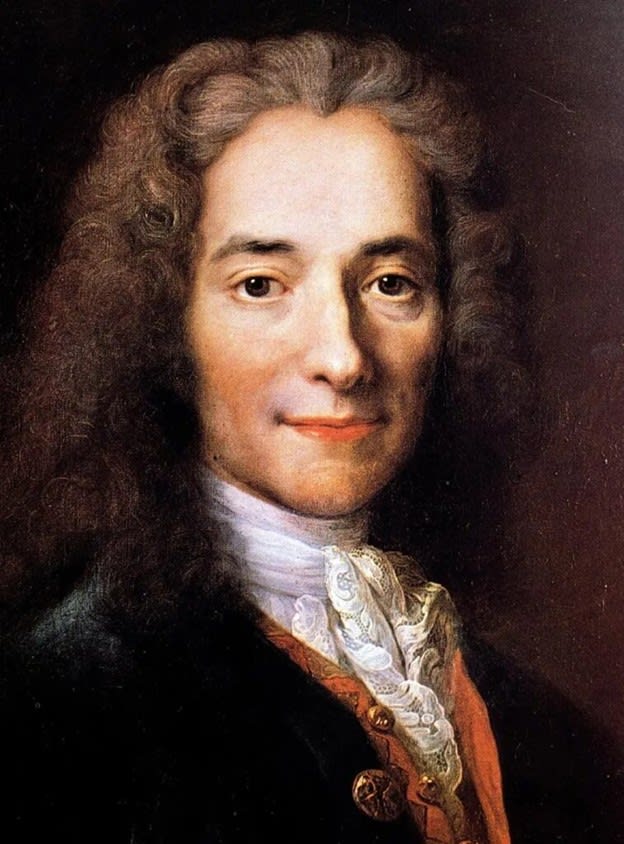
Voltaire would later propose a famous explanation in his Memoirs, suggesting that the cause of the emperor’s sudden death may have been a fatal dish of poisonous mushrooms—death caps. The emperor’s body found its final resting place in the Imperial Crypt in Vienna.
Charles VI’s death exposed the illusory nature of the principal achievement of his life: the Pragmatic Sanction failed to protect the empire from bloodshed.
As soon as the monarch died, the states that had previously solemnly pledged to respect the Sanction—Prussia, Bavaria, France, Spain, Saxony, and Poland—turned against Austria in coalition.
The young Maria Theresa was forced to defend her inheritance by force of arms. In the resulting War of the Austrian Succession, she managed, against tremendous odds, to retain the crown and the majority of her possessions. However, Silesia, rich in coal and mineral resources, was permanently lost to Prussia, while the Duchy of Parma passed to Spain.
Charles left his daughter a state in a deplorable condition. The monarchy was suffocating under the burden of debt, no more than 100,000 florins remained in the state treasury, the army was paralyzed by mass desertion, and the remaining military units were pointlessly scattered in small and ineffective garrisons throughout the empire.
Contemporaries seriously expected Hungary to break away from the authority of the weakening Habsburg monarchy at any moment.