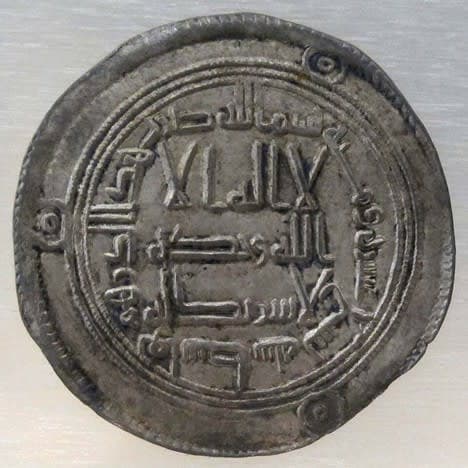
Hishām, who inherited the throne after his brothers al-Walīd, Sulaymān, and Yazīd II, ascended the caliphate in January 724 carrying the burden of his contemporaries’ prejudices. He was branded “miserly” for his frugality, while his lineage (his mother was from the Makhzūm tribe rather than a prestigious Qurayshite family) and his congenital squint became objects of malicious mockery.
Hishām began his reign with a traditional but harsh rotation of officials. After the end of the sacred month of Ramadan, he dismissed governors loyal to his predecessor and replaced them with men whose rise depended personally on him. Khālid ibn ʿAbdallāh al-Qasrī became governor of Iraq; Egypt was placed under the authority of his brother Muḥammad (and later al-Ḥurra ibn Yūsuf); and the Caucasian front was entrusted to his half-brother Maslama.
Unlike his predecessors, Hishām did not squander the treasury to purchase the loyalty of Mecca and Medina during the pilgrimage. He believed gold was needed far more on the frontiers, where the caliphate faced enemies superior in mobility and ferocity.
In the north, Maslama ibn ʿAbd al-Malik waged an exhausting war against the Khazar Khaganate. In 728 the Arabs undertook the famous “muddy campaign,” pursuing the Khazars deep into their territory. Despite the harsh conditions, Hishām deemed Maslama’s results insufficient and replaced him with al-Jarrāḥ only to reinstate Maslama later.


The climax came with the capture in 732 of the fortress of Derbent, the “Iron Gates,” which became an outpost for the Islamization of the Caucasus. Control later passed to Marwān ibn Muḥammad (the future last Umayyad caliph), who carried Arab arms as far as Samandar and Balanjar, bringing the Khaganate to the brink of collapse.

The most tragic events unfolded in Transoxiana (Central Asia), where the Arabs confronted the power of the Türgesh Khaganate. A campaign toward the Ferghana Valley in 724 ended in disaster, remembered as the “Day of Thirst.” The defeated Muslim army was forced to retreat for eight days, abandoning its baggage and dying of thirst.

The situation was compounded by intertribal feuds among the Tamīm, Azd, and Muḍar factions. The conflicts descended into absurdity: government detachments fought one another, and commanders such as Naṣr ibn Sayyār were subjected to humiliating punishments (shaving of beards and flogging).
Governor Ashras ibn ʿAbdallāh attempted to convert the Sogdians to Islam by promising exemption from the poll tax (jizya). When it became clear that mass conversion was emptying the treasury, he ordered the tax reinstated even for neophytes. This sparked the fierce Sogdian revolt of 728–730. The Arabs lost control of the region, retaining only the major cities.
In 731, at a mountain pass near Samarkand, Arab forces again suffered enormous losses. Only by promising freedom to enslaved men in exchange for fighting did al-Junayd manage to relieve Samarkand. The Türgesh were pushed back, but the cost was so high that scarcely a thousand soldiers survived from the vast army.
In 734, a rebellion erupted in Khurāsān led by al-Ḥārith ibn Surayj. Raising black banners (a portent of the future Abbasid uprising), he called for a return to “the Book of God and the Sunna.” He was supported not only by Arabs but also by large masses of mawālī (non-Arab converts), impoverished by taxation. Al-Ḥārith captured Balkh and besieged Merv, and only the intervention of Asad ibn ʿAbdallāh in 735–736 suppressed this center of revolt. Al-Ḥārith fled to the Türgesh, transforming from a champion of faith into an ally of the “infidels.”
In 737, Asad ibn ʿAbdallāh inflicted a decisive defeat on the Türgesh khagan, stabilizing the eastern frontier and restoring Sogdia to caliphal authority under terms of amnesty.
On the far western edge of the empire, the caliphate also reached its limits. In Europe, in October 732, the army of ʿAbd al-Raḥmān al-Ghāfiqī was defeated by the Franks under Charles Martel at the Battle of Poitiers, halting the advance of Islam into the heart of Gaul.

In Africa, the greed of the governor ʿUbaydallāh ibn al-Ḥabḥāb, who imposed crushing taxes on Muslim Berbers, triggered the Great Berber Revolt (739–742). Berbers inspired by Kharijite ideas annihilated Syrian armies in the so-called “Battle of the Nobles” (on the Chelif River) and at Naḥr al-Qudr.
The situation in Spain (al-Andalus) became unmanageable. Newly arrived Syrian troops quarreled with local Arabs, crucified their own governor, and unleashed a bloody massacre in Córdoba. Hishām was losing control of the West.
In the very heart of the caliphate — Iraq a revolt broke out in 737 led by Zayd ibn ʿAlī, grandson of Ḥusayn. The Shiʿites of Kufa once again summoned an Alid, but at the decisive moment abandoned him. Zayd fell in battle, and his movement was crushed by Yūsuf ibn ʿUmar.

Far more dangerous, however, was the underground propaganda of the Abbasids. In Khurāsān, a deeply clandestine network of twelve agents (naqībs) was established, collecting funds and preparing the overthrow of the Umayyads. Preoccupied with external wars, Hishām failed to recognize this threat: underground leaders bought their way out of prison, while their agitators worked among the discontented mawālī.
While the empire’s peripheries burned, the central provinces—Syria and Palestine—enjoyed peace. Hishām directed his legendary frugality toward monumental construction. He built Qaṣr al-Ḥayr al-Gharbī, a lavish residence featuring a gigantic dam, a reservoir holding three million cubic meters of water, and irrigated gardens. The palace was adorned with Byzantine mosaics and carved stucco.
Hishām ibn ʿAbd al-Malik died in 743, leaving behind an empire that still appeared unshakable at its core but was scorched by fires on its edges. His reign marked the last period of relative stability. After him, the caliphate descended into a succession of short reigns and the Third Fitna, which only seven years later would culminate in the triumph of the Abbasids.


