
In the autumn of 1165, in the magnificent imperial palace of Valkhof overlooking Nijmegen, Henry was born—the son of the powerful Emperor Frederick Barbarossa and Beatrice I, Countess of Burgundy. The boy was destined to become one of the most influential rulers of Europe. At just four years of age, on Pentecost in 1169, his father secured his election as King of the Romans at a splendid court assembly in Bamberg. Shortly afterward, on 15 August of the same year, the crown was placed upon the child’s head beneath the vaults of the ancient Aachen Cathedral.
Henry’s early years unfolded against the backdrop of momentous political events. In 1174–1176, the young heir was already accompanying his father on the difficult Italian campaign against the Lombard League. His excellent education was supervised by Godfrey of Viterbo. Henry grew into a man of exceptional intelligence and refined taste: he was fluent in Latin and, as the chronicler Alberic of Trois-Fontaines enthusiastically observed, “was distinguished by the gift of learning, crowned with the flowers of eloquence, and knowledgeable in canon and Roman law.”
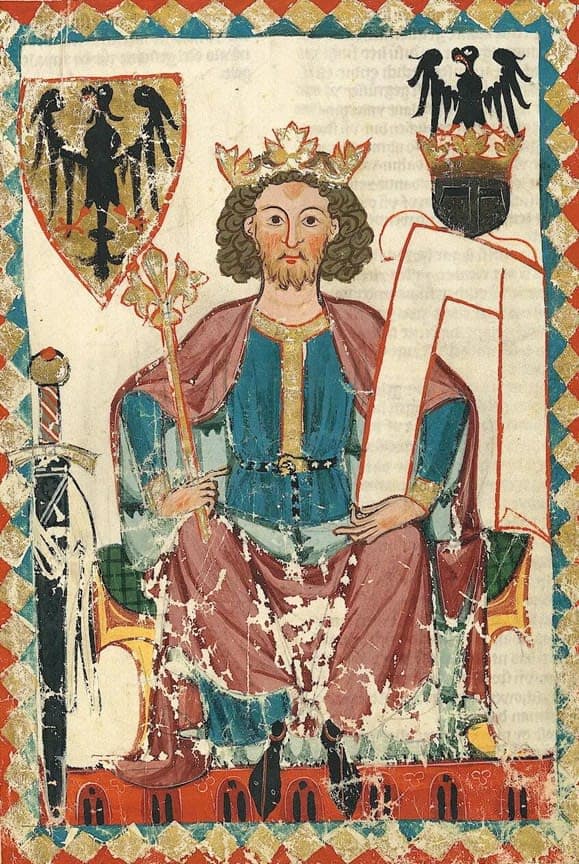
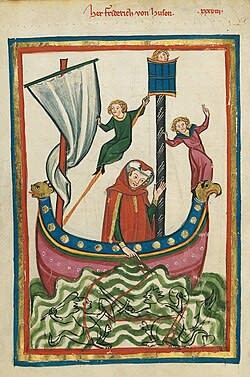
Unlike many stern rulers of his time, Henry had a deep passion for the arts. He maintained close ties with minnesingers, including Friedrich von Hausen, Bligger von Steinach, and Bernger von Horheim, and became a patron of poetry himself. The moving song Kaiser Heinrich, preserved in the Weingarten Manuscript, was almost certainly written by him. In the famous Codex Manesse—a fourteenth-century manuscript containing the works of around 140 poets—Henry occupies the first and most prestigious position. He is depicted with the imperial eagle, regalia, and a scroll. At least three poems are attributed to the young, romantically inclined monarch. One of them contains a confession surprisingly tender for a future ruthless emperor, declaring that love outweighed worldly power: “Before I give her up, I would sooner give up the crown.”

In 1178, after returning to Germany, the now more mature Henry became a reliable supporter of his father in Frederick’s fierce struggle against the rebellious Duke Henry the Lion. Henry’s final transition into adulthood came at the Pentecost Diet of 1184 in Mainz, where he and his younger brother Frederick were solemnly knighted.
That same year, however, nearly became his last because of the bizarre and horrific Erfurt latrine disaster. During a gathering in a building near Erfurt Cathedral, the floor of the second storey collapsed, sending around sixty prominent nobles plunging into a cesspit below, where they met an inglorious death. Henry survived almost miraculously because he happened to be standing in a stone-floored alcove that remained intact.

Meanwhile, Emperor Frederick Barbarossa was developing far-reaching dynastic plans. By 1184, he had begun negotiations with King William II of Sicily over the marriage of Henry to the Sicilian monarch’s aunt, Constance. She was already around thirty years old. According to tradition, she had lived in the monastery of Santissimo Salvatore in Palermo, supposedly condemned to celibacy because of a dark prophecy claiming that “her marriage would destroy Sicily.”
Yet William II’s childlessness made Constance the only legitimate heiress to the immensely wealthy kingdom. On 27 January 1186, Henry and Constance celebrated a magnificent wedding in Milan.
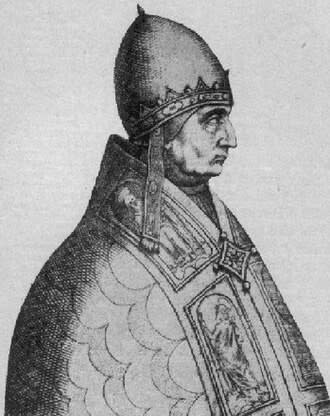
Henry soon had to demonstrate his abilities as a military commander. At the height of the conflict between the Hohenstaufen dynasty and Pope Urban III, he invaded the March of Tuscany and, with the assistance of his trusted associate Markward von Annweiler, ruthlessly devastated the neighboring territories of the Papal States.
After returning to Germany, he effectively assumed control of the empire when Barbarossa departed on the Third Crusade.
Henry energetically set about strengthening imperial authority. In the Low Countries, he elevated Count Baldwin V of Hainaut to the rank of Margrave of Namur and attempted to reach a compromise with Baldwin’s rival, Duke Henry of Brabant.
But once again the shadow of Henry the Lion fell across the empire. The exiled Welf duke returned from England without authorization and began forcibly reclaiming his former possessions in Saxony. Henry marched against him, but the campaign had to be abruptly abandoned.
The reason was news that transformed the balance of power throughout Europe: on 18 November 1189, King William II of Sicily died.
Henry now faced the possibility of uniting the imperial and Sicilian crowns. Yet events in southern Italy did not unfold according to plan. The Sicilian vice-chancellor Matthew of Ajello, supported by the Roman Curia, placed Count Tancred of Lecce on the throne.
Defending his wife’s hereditary rights, Henry supported Tancred’s rival, Count Roger of Andria, and began extensive preparations for an Italian campaign. In 1190, at Fulda, he concluded a temporary peace with Henry the Lion and proceeded to Augsburg.
It was there that devastating news reached him: on 10 June 1190, his great father, Frederick Barbarossa, had tragically died after drowning while crossing the Saleph River.


Having become the undisputed monarch, Henry did not immediately rush to Italy, although his army was already marching there. He remained in Germany to settle the fate of Thuringia, whose landgrave, Louis III, had also died during the crusade.
Henry intended to annex Thuringia to the royal domains as an escheated fief, but he encountered resistance from the deceased ruler’s brother, Hermann, who ultimately succeeded in obtaining the territory for himself.
Only in the following year did Henry cross the Alps. At Lodi, he engaged in a highly sophisticated diplomatic contest with Eleanor of Aquitaine, widow of King Henry II of England.
The emperor sought to break the engagement between her son Richard the Lionheart and Alice, daughter of the king of France, in order to isolate Richard, who had dared to support Tancred in Sicily. But the experienced Eleanor outmaneuvered the young monarch.
She obtained from Henry guarantees that he would not intervene in Richard’s conflict with the French king Philip II. In return, she promised to undermine the planned marriage between Henry’s younger brother Conrad and Berengaria of Castile, thereby preventing the Hohenstaufens from growing even more powerful.
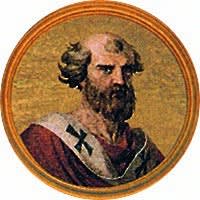
After settling matters with the Lombard League and transferring the city of Tusculum to Pope Celestine III, Henry achieved his principal objective.
On Easter Monday, 15 April 1191, in Rome, Celestine III solemnly crowned Henry and Constance emperor and empress. Later, the English chronicler Roger of Howden would spread a popular but malicious legend claiming that the pope had placed the crown on Henry’s head with his foot and then kicked it off to demonstrate papal superiority.

Yet the Sicilian crown continued to slip from Henry’s grasp. The Sicilian nobility had already chosen Tancred as their king. Invading Apulia, Henry laid siege to Naples but encountered fierce resistance.
Tancred’s brilliant admiral, Margaritus of Brindisi, defeated the emperor’s Pisan fleet and nearly destroyed the Genoese ships that arrived to reinforce it. To make matters worse, a severe epidemic broke out in the imperial camp.
Henry was forced to abandon the siege. The retreat became a catastrophe: cities switched their allegiance back to Tancred, while Constance—whom Henry had left in Salerno as a sign that he intended to return soon—was betrayed by the local population and handed over to Tancred as a prisoner.
Henry was forced to hurry back to Germany, where rebellion had erupted once again. Henry the Lion provoked a conflict with the House of Ascania and the Counts of Schauenburg, while his son, Henry of Brunswick, deserted from the imperial army in Italy.
At Pentecost in 1192, at Worms, Henry declared the deserter an outlaw. Yet he lacked the resources for a major war. Following the death of his principal Saxon ally, Archbishop Wichmann of Magdeburg, the emperor was compelled to agree to yet another truce with the Welfs.
Even Constance’s captivity did not break Henry’s resolve. He categorically rejected Pope Celestine III’s appeals to make peace with Tancred.
Tancred refused to accept a ransom, demanding political recognition instead, while Henry merely sent furious complaints to the pope. Eventually, in June 1192, the pope secured Constance’s release in exchange for recognizing Tancred as king.
The empress was supposed to be taken to Rome as a political hostage of the Curia, but imperial soldiers staged a daring ambush near the border of the Papal States and rescued her.

Gradually, Henry began restoring his position. He inherited the Swabian lands of Welf VI, a cousin of Henry the Lion, and intervened forcefully in ecclesiastical elections.
At Liège, he supported his wife’s uncle, Albert of Rethel, but while Constance was in captivity, Albert of Louvain—the brother of the hostile Duke of Brabant—won the election.
In January 1192, Henry annulled the election by imperial authority and appointed his own chancellor, Lothar of Hochstaden. In the autumn, the emperor personally arrived in Liège with an army and compelled the electors to obey.
Albert of Rethel angrily rejected financial compensation, while Albert of Louvain fled to Reims, where he was ordained. Soon afterward, however, he was brutally murdered by mercenaries.
The killing shocked Europe. The victim’s brother, Henry of Brabant, formally made peace but continued to harbor bitter hatred. At the same time, the emperor deposed Archbishop Hartwig II of Bremen and intervened in the internal struggles of the Wettin dynasty—between Albert I, Dietrich, and Landgrave Hermann of Thuringia—in the March of Meissen.
A coalition now emerged against Henry’s increasingly arbitrary rule: the dukes of Brabant and Limburg, the archbishops of Cologne and Mainz, King Ottokar I of Bohemia, the ever-restless Henry the Lion, the Swabian Zähringens, the pope, and the English Crown.
It seemed as though the empire might collapse.
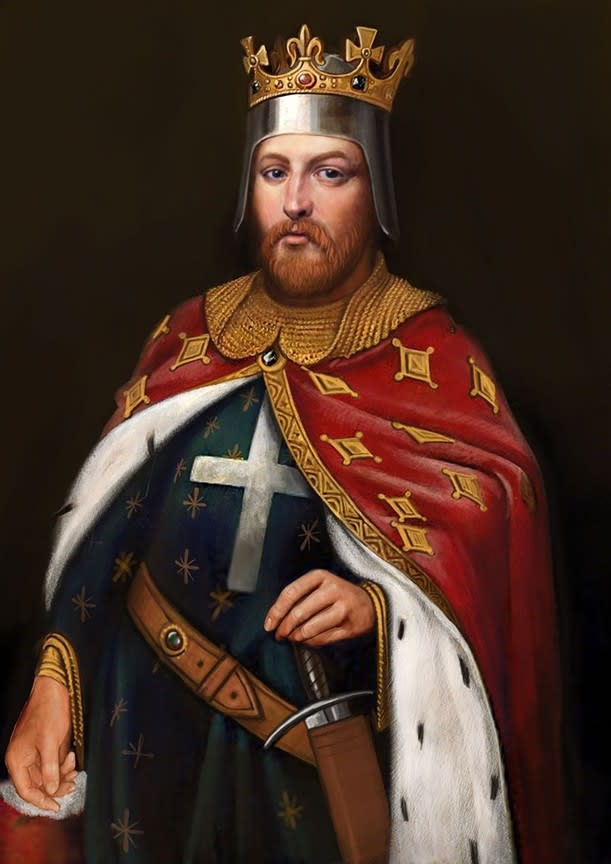
Then fate presented Henry with a royal gift.
Duke Leopold V of Austria, from the Babenberg dynasty, captured the English king Richard the Lionheart while he was returning from the crusade. On 28 March 1193, at Speyer, Leopold handed the famous prisoner over to the emperor.
Richard was confined in the gloomy Trifels Castle. For Henry, this offered the perfect opportunity for revenge over Richard’s alliance with Tancred.
Ignoring papal threats of excommunication for imprisoning a crusader, Henry demanded an extraordinary ransom of 150,000 silver marks, part of which was formally designated as the dowry of Richard’s niece for her marriage to Leopold’s son.
Deprived of English financial support, the German opposition collapsed.
Richard, desperate to preserve his crown against his brother John and King Philip of France—both of whom were being actively opposed by Eleanor of Aquitaine—accepted Henry’s terms.
Henry forced Richard to swear a vassal oath to him and then assumed the role of supreme arbiter, ordering John to return the territories he had seized from Richard.
During Holy Week in 1194, at Speyer, Richard publicly knelt before the emperor and was subsequently released.
At the same time, Henry achieved a final reconciliation with the Welfs by arranging the marriage of his niece Agnes to Henry of Brunswick. Peace was formally concluded in March 1194.

With Germany pacified behind him and enormous quantities of English silver at his disposal, Henry once again turned his attention southward.
The situation there had been disastrous: Tancred’s brother-in-law, Richard of Acerra, had reconquered Apulia. But in February 1194, Tancred suddenly died.
The throne passed to the young William III under the regency of his mother, Sibylla.
After securing permission from the Lombards for free passage, the imperial army marched toward Sicily in May 1194. The campaign became a triumphal advance.
At Pentecost Henry was in Milan; in August he captured Naples; and on 20 November he entered Palermo with almost no resistance.
On 25 December 1194, Henry was crowned King of Sicily.
The following day, fate granted him yet another triumph: in the city of Jesi, Constance gave birth to the long-awaited heir—the future great emperor Frederick II.
The young William and Sibylla surrendered in exchange for the County of Lecce, but mercy was not one of Henry’s virtues.
Within days, the entire Norman royal family and leading members of the aristocracy were arrested on charges of conspiracy. The repression was horrific: on the emperor’s orders, the young William was blinded and castrated—he would die in Swabian captivity around 1198—and numerous Norman aristocrats were burned alive.
Henry nevertheless retained useful officials such as Eugene of Palermo in his service.

At the Diet of Bari in March 1195, Henry made Constance the ruling queen of Sicily.
He surrounded Italy with a network of loyal vassals. Conrad of Urslingen became imperial vicar and Duke of Spoleto; Markward von Annweiler became Duke of Ravenna, controlling the routes south; Bishop Walter of Pagliara became chancellor; and the emperor’s brother Philip of Swabia received Tuscany.
Having secured absolute power, Henry even dared to dismiss the Pisan and Genoese fleets without granting them any of the privileges he had promised.
Southern Italy had fallen at his feet.
Henry VI’s entry into Palermo represented more than another military victory. It was a moment of triumph that transformed the geopolitical landscape of Europe.
The conquest of the Kingdom of Sicily brought the emperor extraordinary wealth. The personal and imperial revenues of the Hohenstaufen dynasty now surpassed those of any other state in the Christian world.
Relying on this financial strength, Henry sought to turn Sicily into the second unbreakable foundation of his dynasty.
His ultimate objective was the formal union of the Kingdom of Sicily with the Empire—unio regni ad imperium.
Pope Celestine III, however, deeply feared being trapped in the Hohenstaufens’ “iron vice” between their northern and southern territories and repeatedly delayed negotiations, even though Henry offered in exchange to organize a major crusade.
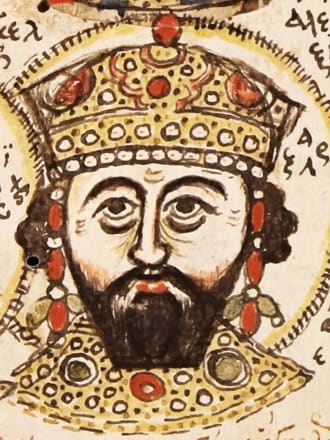
The young monarch’s ambitions extended far beyond Italy.
Inspired by the idea of universal monarchy and the concept of translatio imperii—the “transfer of empire”—Henry openly challenged Byzantium.
His expansionist policy in the East produced remarkable results. The emperor forced Leo I, ruler of Cilician Armenia, and Aimery, king of Cyprus, to accept vassal status, making them his feudatories.
In 1195, imperial envoys in Constantinople spoke from a position of strength. They asserted claims to former Italo-Norman possessions around Dyrrhachium—modern Durrës in Albania—a strategically important naval base on the eastern Adriatic.
Moreover, Byzantium was presented with an ultimatum demanding that it finance the forthcoming crusade.
When Byzantine Emperor Isaac II Angelos was overthrown, Henry moved from diplomatic pressure to open threats of invasion.
His far-reaching plans included a dynastic marriage between his younger brother Philip and Isaac’s daughter, Princess Irene Angelina.
Whether intentionally or not, this marriage raised the breathtaking possibility of uniting the Western and Eastern empires under the Hohenstaufen dynasty.
According to the Byzantine historian Niketas Choniates, Henry’s pressure was so intense that the new emperor, Alexios III Angelos, promised to pay Henry’s representatives an enormous tribute—the so-called “German tax.”
Only Henry’s sudden death would ultimately spare Constantinople from this humiliating payment.

Henry’s eastern policy also affected the interests of the powerful maritime republics.
When the truce between Pisa and Venice expired, the Pisans, secretly supported by Byzantine Emperor Alexios III, began attacking Venetian ships in the Sea of Marmara and raiding Venetian commercial establishments in Constantinople.
A genuine war erupted.
In 1197, Henry, acting as supreme arbiter, forcefully compelled the two sides to conclude a truce.
It was a subtle political game. Although Pisa and Genoa had actively assisted him during the conquest of Italy while Venice had remained neutral, Henry showed little inclination to reward his allies.
He avoided granting the Pisans and Genoese the extensive privileges he had promised them, while in 1195 and 1197 he granted a number of rights to Venice.
Yet the Venetians also remained deeply concerned.
Henry’s planned campaign against Thessalonica and Constantinople threatened to isolate their commercial empire, while Alexios III’s submission to the German monarch could deprive Venice of its political leverage.
Henry’s death therefore became a deliverance not only for Byzantium but also for Venice.
By this point, Henry VI had reached an extraordinary peak of power, becoming one of the most powerful monarchs in the Christian world.
His titulature brought together the crowns of the Holy Roman Empire, Germany, Burgundy, Italy, and Sicily. The kings of England, Cyprus, and Lesser Armenia stood in a relationship of dependence upon him, while even rulers in North Africa paid him tribute.
Recognizing that this vast realm required institutional consolidation, Henry returned to Germany in the summer of 1195.
His principal objectives were to gather forces for a crusade and to resolve decisively the issue of imperial succession.
Yet scarcely had he crossed the Alps before the emperor was once again forced to draw his sword.
Following the death of Margrave Albert I, a struggle erupted in the March of Meissen over control of the Pleissnerland, an imperial possession of the Hohenstaufen dynasty.
The deceased ruler’s younger brother Dietrich asserted his hereditary rights, but Henry firmly rejected his claim and coolly annexed the wealthy lands of Meissen to the royal domains.
In October 1195, at Gelnhausen, he demonstrated greater diplomatic flexibility by reconciling with Archbishop Hartwig of Bremen.
He then secured the support of the Saxon and Thuringian nobility for the crusade, which was scheduled to begin at Christmas 1196.
Henry was now prepared for his most audacious political initiative: transforming the Holy Roman Empire from an elective monarchy into a hereditary one.
He wanted his young son Frederick II to be crowned King of the Romans immediately, but he encountered determined opposition led by Archbishop Adolf of Cologne.
The emperor spent the winter at Haguenau Castle, where, together with his trusted ministeriales, he developed a revolutionary reform proposal.
To persuade the secular princes to surrender their traditional right to elect the monarch, Henry offered them an unprecedented concession: their own imperial fiefs would also become fully hereditary, with the right of succession extending even through the female line.
He sought to win over the ecclesiastical princes by promising that the Crown would renounce the Jus Spolii—the right to confiscate the property of deceased prelates—and would no longer collect revenues from vacant episcopal sees.
Triumph appeared close.
At the Diet of Würzburg in March–April 1196, Henry managed to overcome much of the opposition and obtain the support of the majority of the princes.
Yet his victory proved illusory.
Adolf of Cologne conspicuously boycotted the assembly, while the princes of Saxony and Thuringia continued to obstruct the project.
In July, Henry departed for Burgundy and Italy to meet the pope, hoping to secure papal support. Celestine III, however, still alarmed by the prospect of a Sicilian-German union, ended the negotiations.
Meanwhile, dissatisfaction in Germany continued to grow.
At the Diet of Erfurt in October, the German princes definitively rejected Henry’s plan for hereditary monarchy.
Even so, the emperor’s authority remained so great that at Christmas 1196 in Frankfurt his son Frederick II was nevertheless elected King of the Romans according to the traditional elective procedure.
While the succession was being decided in Germany, disaster was developing in the south.
While staying in Capua, Henry ordered the brutal execution of Count Richard of Acerra, who was being held prisoner by the imperial ministerialis Diepold of Schweinspeunt.
In March 1197, the emperor arrived in Messina to make final preparations for the crusade, but Sicily was already in flames.
Harsh Hohenstaufen rule had provoked major uprisings around Catania and in southern parts of the island.
The rebels even attempted to place Count Jordan of Bovino on the throne.
The revolt was drowned in blood by punitive detachments commanded by the German generals Markward von Annweiler and Henry of Kalden.
Some German chroniclers, who openly despised Empress Constance, spread rumors that she had secretly led the rebels against her own husband.
Modern scholarship—particularly the work of theologian and historian Theo Kölzer—rejects the claim that she directly betrayed Henry.
Kölzer nevertheless notes that the horrific “methods of maintaining discipline” employed by Henry in Constance’s homeland permanently destroyed their marriage, and the empress may well have passively sympathized with her rebellious compatriots.
The end came suddenly.
While hunting in the forests near Fiumedinisi, the emperor was struck by severe chills.
His illness progressed rapidly.
On 28 September 1197, Henry VI died in Messina at the age of only thirty-two.
The most likely cause was malaria, although an older infection contracted during the siege of Naples in 1191 may also have proved fatal.
Dark rumors immediately circulated that Constance had poisoned her brutal husband, although no evidence supported the accusation.
The emperor was initially buried in Messina, but in 1198 his remains were transferred to the magnificent cathedral of Palermo.
Many centuries later, at the end of the eighteenth century, his tomb was opened. Today, artifacts recovered from it—including remnants of footwear, a headband, and luxurious silk fabric—are preserved in the British Museum.

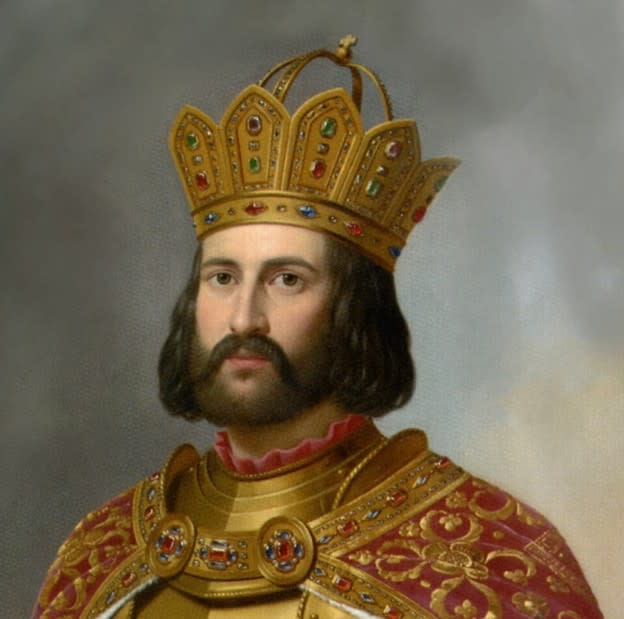
Henry’s death set a catastrophe in motion.
His young son Frederick was supposed to inherit both crowns, but the empire descended into political chaos.
In Germany, opposition princes led by Archbishop Adolf of Cologne elected Otto of Brunswick—the son of the Hohenstaufens’ longtime enemy Henry the Lion—as anti-king.
In an effort to save the dynasty, the deceased emperor’s brother Philip of Swabia was likewise elected and crowned King of the Romans in March 1198.
A bitter struggle for the German throne began, tormenting the country for almost two decades.
Only in 1212 would the now grown Frederick II return and reclaim the crown, while Otto, defeated by the French at the Battle of Bouvines in 1214, would die in relative obscurity in 1218.
In historical memory, Henry VI is often overshadowed by the towering figures of his father Frederick Barbarossa and his son Frederick II.
Nevertheless, assessments of his reign have often emphasized its extraordinary significance.
The historian Helmut Koenigsberger described Henry as an “exceptionally capable politician,” whose political skill broke the alliance of Western European kings.
The tragedy was that this enormous empire depended almost entirely upon the iron will of a single individual.
His premature death dealt a severe blow to the process of political consolidation in Germany.
The brutal reprisals in Sicily left a bloody stain on his reputation, yet modern scholarship also places Henry VI firmly within the context of his violent age: a brilliant and ruthless ruler who attempted to restrain the centrifugal forces of history, but ultimately expanded his empire to such enormous dimensions that it could not survive the death of its creator.


