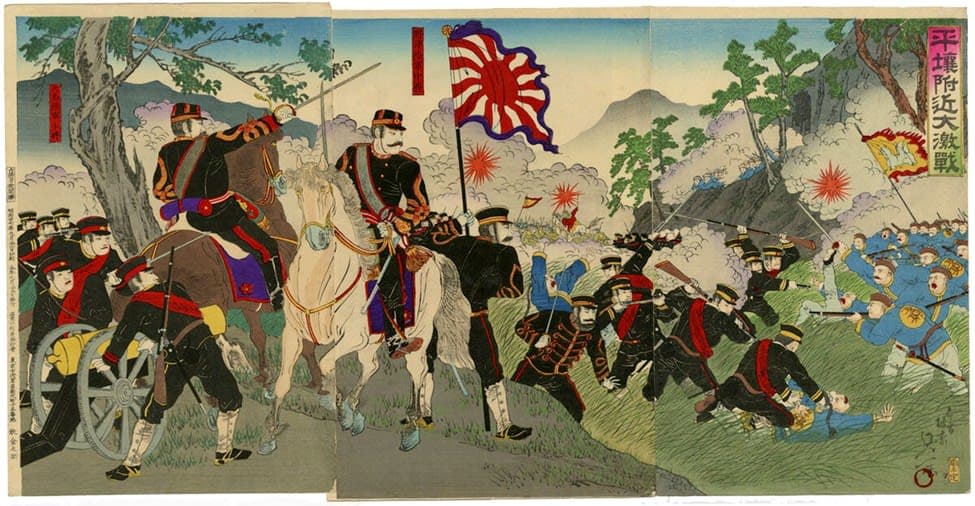
The Sino–Japanese War, which proved catastrophic for the Qing Empire, was the culmination of a long struggle for control over Korea. Japan considered Korea “a dagger pointed at the heart of Japan” and sought to prevent foreign influence there. As early as 1876, Japan forced Korea to open its ports to trade, and in 1885 after a pro-Japanese coup was suppressed by Qing troops the two countries concluded an agreement withdrawing their forces from Korea, effectively turning it into a kind of joint protectorate.
In June 1894, at the request of the Korean government, the Qing Empire dispatched picked units of the Huai Army to suppress the peasant uprising of the Donghak sect. Japan used this as a pretext and sent into the country three times as many troops as China. It immediately demanded “reforms,” which in practice meant placing Korea under Japanese control.

On 23 July the Japanese carried out a coup d’état in Seoul, seizing the royal palace. The new puppet government “requested” that Japan expel Chinese troops. Even before that, on 25 July, the Japanese navy had already opened hostilities by sinking the British steamer Kowshing carrying two battalions of Chinese infantry. A formal declaration of war followed only on 1 August 1894.

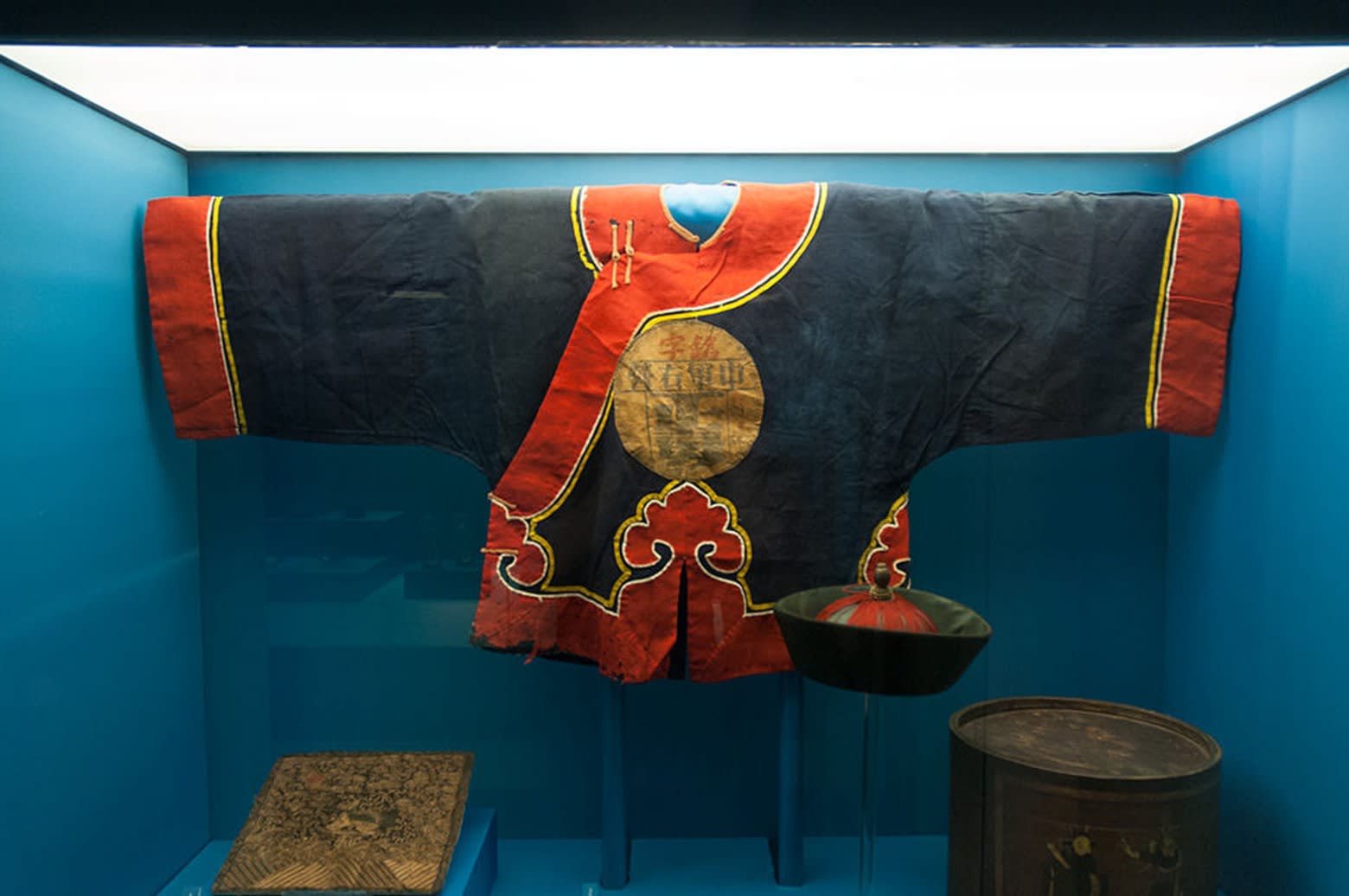
At the outset of the war, Chinese forces under Ye Zhichao and Nie Shicheng inflicted serious losses on the Japanese in a rearguard action near Seonghwan, after which they withdrew to Pyongyang. The battle showed that Chinese troops could put up worthy resistance, but their lack of coordination and shortages of ammunition prevented them from exploiting success.
China had only about 18,000 troops in Korea, facing 40,000 Japanese. On 15 September, Japanese forces surrounded and crushed Ye Zhichao’s army, dealing it a devastating defeat. The Chinese lost Korea and were forced to retreat beyond the Yalu River.

At sea, the outcome hinged on the Battle of the Yalu River estuary on 17 September 1894. The Beiyang Fleet under Ding Ruchang clashed in a fierce fight with the Japanese squadron. After five hours of combat both sides suffered heavy losses, but the Chinese fleet withdrew to Weihaiwei, took shelter there, and refused thereafter to put to sea to relieve besieged fortresses.
Defeats on land and at sea shocked Beijing. The court was then preparing to celebrate the 60th birthday of Empress Dowager Cixi, for which 10 million taels of silver had been allocated. The defeat delivered a severe blow to the prestige of Li Hongzhang, whose creation had been the Huai Army.
The Japanese carried the war onto the empire’s own soil, invading southern Manchuria. The advance of the 1st Japanese Army was checked by stubborn Chinese resistance under Ma Yukun and Nie Shicheng, but at the same time the Japanese landed a second army on the Liaodong Peninsula.

On 21 November the Japanese seized the fortress of Lüshun (Port Arthur) almost without resistance. Discipline in the fortress collapsed; many officers fled, and those remaining offered no defense. Japanese soldiers who stormed the city carried out a massacre, killing around 2,000 people, including civilians.
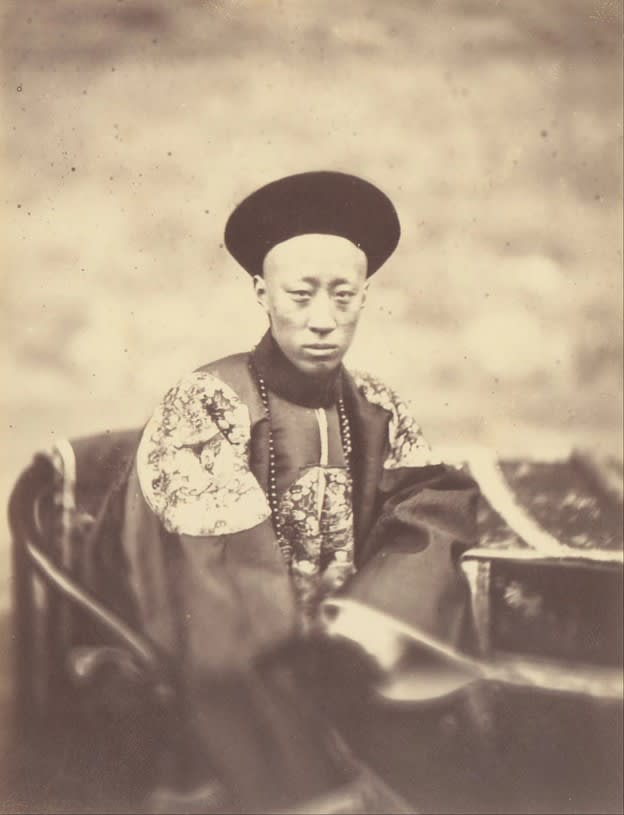
The fall of Lüshun threw the court into panic. Cixi, fearing for her power, sacrificed Li Hongzhang, removing him from all posts. Command of operations was handed to Prince Gong.
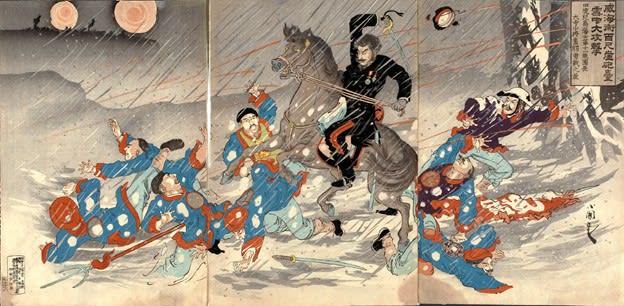
Despite defeats, China continued to resist. In December 1894 provincial armies were redeployed to Manchuria for a counteroffensive. Bitter fighting raged through the winter, but Chinese forces could not drive the Japanese back.
Japan’s main blow fell on the fortress of Weihaiwei, where the Beiyang Fleet had taken refuge. On 30 January 1895 Japanese troops began their assault. After ten days of siege, Chinese forces and the fleet were compelled to capitulate. Admiral Ding Ruchang and several other commanders took their own lives rather than surrender. On 14 February Weihaiwei fell, and the Beiyang Fleet was completely destroyed.
In March 1895 peace talks began in the Japanese city of Shimonoseki. The Japanese insisted on the participation of Li Hongzhang. During the negotiations an assassination attempt was made on him. On 17 April 1895 the humiliating Treaty of Shimonoseki was signed, under which: China recognized Korea’s independence; China ceded Taiwan, the Pescadores (Penghu) Islands, and the Liaodong Peninsula to Japan; and China paid a massive indemnity of 200 million taels of silver.
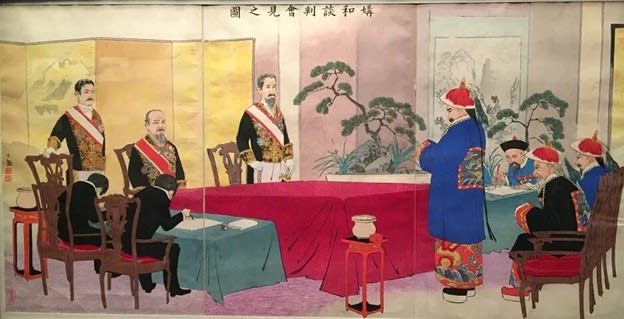
The treaty sparked a wave of protest in China. Soon Russia, France, and Germany issued a joint protest, forcing Japan to renounce annexation of the Liaodong Peninsula in exchange for an increased indemnity. This intervention showed that even after defeat China remained an object of great-power maneuvering. The war, which had begun over Korea, ultimately shattered the Qing Empire’s authority and opened the way to further aggression against it.


