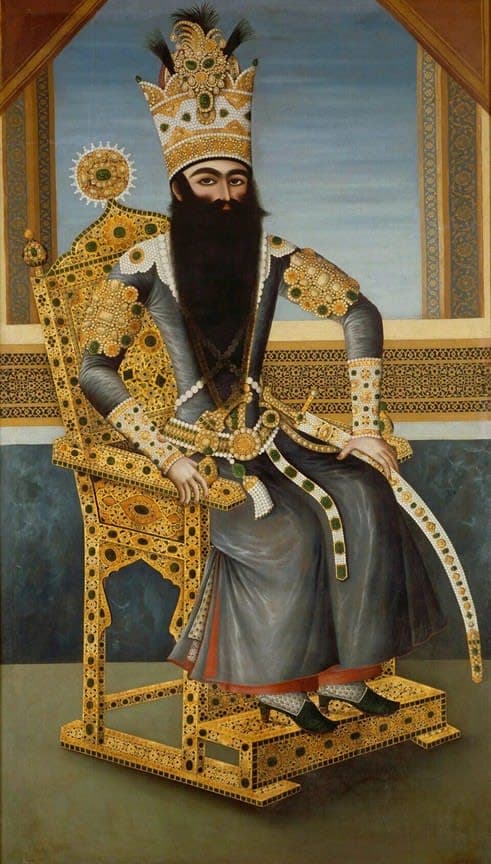

Fath Ali Shah was born on 5 August 1772 in Damghan. At birth he received the name of his great-grandfather—Fath Ali—yet he entered history under his household name, Baba Khan, which he bore until his coronation. His childhood was inseparably bound up with political turmoil: when Baba Khan was only five years old, his father Hossein Qoli Khan became involved in a conspiracy against the Zand dynasty. As a result, the boy was sent to Shiraz as a living pledge of the clan’s loyalty to the court of Karim Khan. There he was reunited with his uncle, the future founder of the dynasty, Agha Mohammad Khan, who was also languishing in honorable captivity.
After Karim Khan’s death in 1779, Baba Khan’s life turned into a succession of escapes and battles. He saw his father fall at the hands of Turkmens in 1777, and he himself nearly became a victim of inter-clan enmity. His guardian and in effect stepfather became his uncle, Agha Mohammad Khan, who, despite his physical condition, married Baba Khan’s mother in order to secure his rights to guardianship over the heir. In 1781 the young Baba Khan showed his first independence, recapturing Damghan from hostile chieftains and beginning to form his own harem. His marriage to Asiya Khanum Devellu in 1783 became a crucial political move, reconciling the warring branches of the Qajar tribe.
When, in 1797, Agha Mohammad Khan was killed in Shusha, Baba Khan held the post of governor of Fars. He immediately moved toward the throne, taking the title of Fath Ali Shah. His reign began with a sharp political gesture, for the powerful vizier Haji Ibrahim Kalantar — a man who had in effect “made” the previous shah was executed on charges of treason. By this act, Fath Ali Shah showed that he did not intend to share power with anyone.
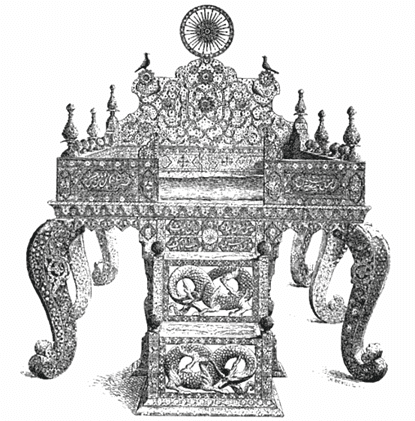
Unlike his uncle, Fath Ali Shah adored luxury. He created a new imperial style, commissioning the manufacture of the legendary regalia: the “Takht-e Khurshid” (Throne of the Sun); the “Takht-e Naderi” (Nader’s Throne); the “Taj-e Kiani” (Kiani Crown), studded with thousands of pearls and emeralds.

His intellectual appetites were just as great: in 1797 he read in full the 3rd edition of the Encyclopaedia Britannica, after which he proudly added to his titles the designation “Master of Britannica.”
Fath Ali Shah entered history as one of the greatest patrons. It was under him that Persian oil painting and portraiture reached their apogee. The shah, being an ethnic Turk, wrote poetry in refined Persian and sought to turn his court into a likeness of the legendary courts of antiquity.
His domestic policy was peculiar: he bound the empire together through kinship ties. The shah had 150 sons and 20 daughters, whom he appointed as governors of provinces. Yet this “family” method of governance had a flaw, for because of the despotic upbringing he had received under his uncle, Fath Ali Shah himself possessed a weak character and often avoided decisive action, preferring instead ceremonial splendor.
The most dramatic page of his reign was foreign policy. Under Fath Ali Shah, Iran found itself squeezed between the interests of Russia, Great Britain, and Napoleonic France.
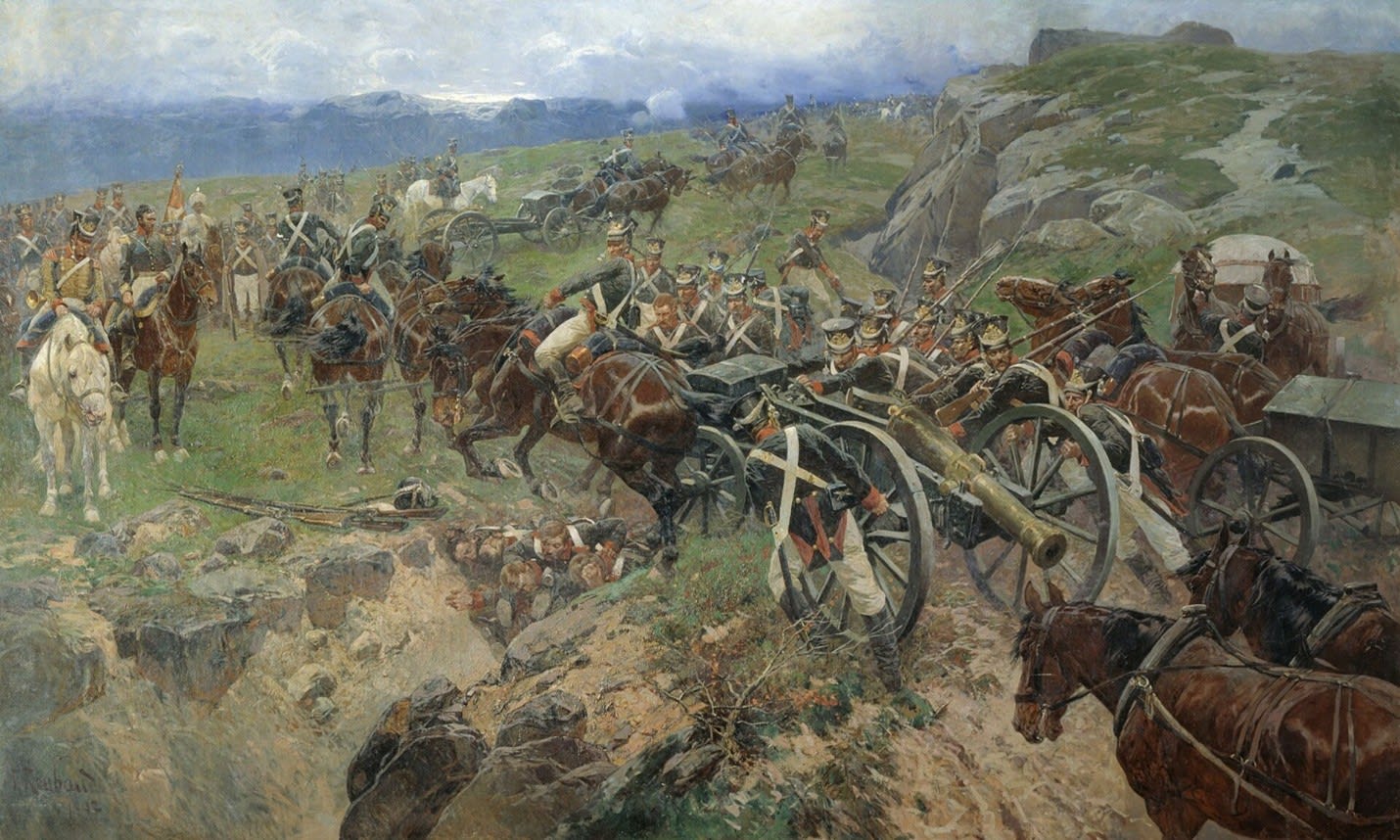
The nine-year war (1804–1813) against the Russian Empire ended in the catastrophic Treaty of Gulistan. Iran lost Georgia, Dagestan, Baku, Ganja, and Karabakh forever.

In an attempt to find an ally against Russia, the shah concluded the Treaty of Finckenstein (1807) with Napoleon, but after Napoleon’s alliance with Alexander I, Persia once again found itself alone.
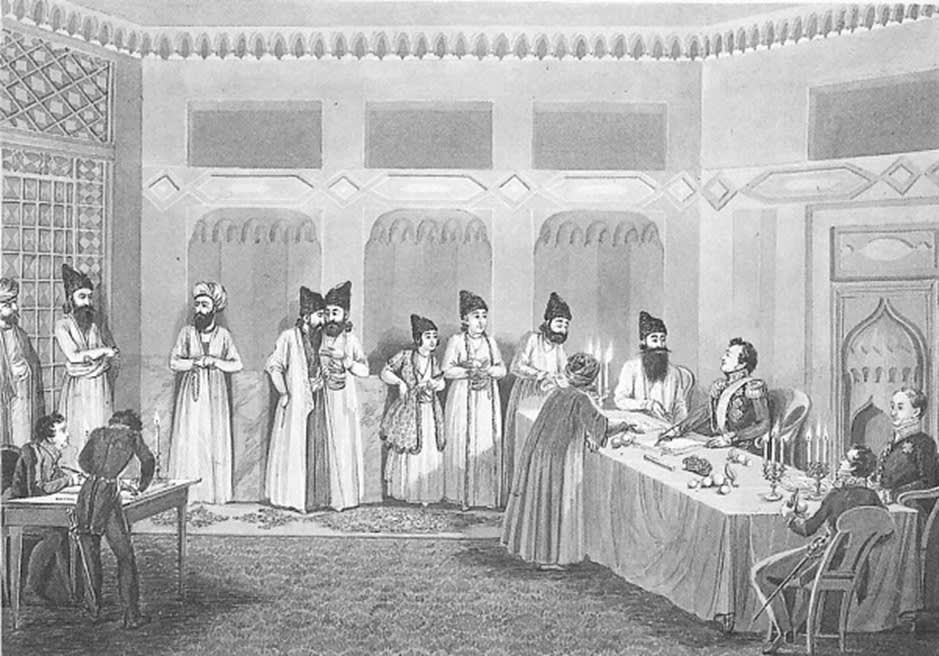
The war of 1826–1828 ended with the Treaty of Turkmenchay, under which the Erivan and Nakhichevan khanates passed to Russia. The symbol of this tragedy was the death of the Russian mission and Alexander Griboyedov in Tehran in 1829, for which the shah was compelled to offer official apologies.

The dynasty’s chief hope was his heir—the talented and reform-minded Abbas Mirza. He attempted to modernize the army and culture under European influence, but, unfortunately for the country, he died in 1833, only a year before the death of Fath Ali Shah himself.

Fath Ali Shah died in 1834, leaving the throne to his grandson, the feeble-minded Mohammad Shah. Despite military defeats and the loss of enormous territories, Fath Ali Shah remained in Iranians’ memory as the “Shah-i Turk”—a ruler who, in an era of colonial pressure, managed to preserve the core of Iranian statehood and gave the world a unique stratum of Qajar art.


