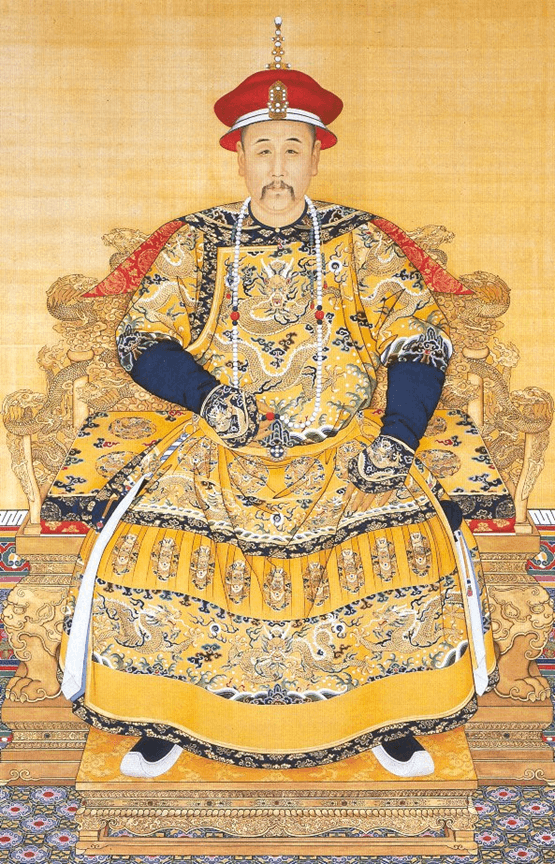

In 1722, Yinzhen, the fourth son of Emperor Kangxi, ascended the throne under the reign title Yongzheng. He inherited a powerful, centralized empire, but one facing serious internal challenges. The banner system once the backbone of Manchu power had begun to decay. Manchu warriors, formerly the state’s military elite, increasingly led idle lives, fell into debt, and sold their hereditary lands.

Yongzheng immediately began a series of decisive reforms to strengthen Manchu authority. Beginning in 1729, the government started buying back the sold lands to return them to their original Manchu owners, hoping to halt the economic decline of the military class.
He also attempted to equalize the rights of the “respectable people” peasants, officials, artisans, and merchants with those of the so-called “base people” (jianmin): actors, barbers, prostitutes, and others of “low professions.” In 1723, an edict was issued allowing them to live among the general population, marry freely, and even sit for the imperial examinations. However, these measures failed to achieve the intended results, and discrimination persisted.

Like his father, Yongzheng paid enormous attention to ideological control. He strengthened the system of “village lectures,” requiring all residents to attend every two weeks for moral and political instruction. In 1724, he issued decrees expanding the “Sacred Edict” of Kangxi, targeting dissenters and reinforcing Confucian orthodoxy.
The emperor was ruthless toward opposition. The most notorious case was that of the scholar Lü Liuliang, whose writings contained anti-Manchu remarks. Although Lü had already died, his corpse was exhumed and dismembered, while his students and family were executed. To ensure total control over society, Yongzheng created a vast network of secret agents who monitored every social class.

In his pursuit of ideological purity, Yongzheng turned against Christianity. In 1724, he banned Catholic missionaries from preaching and later expelled them from the country altogether. This move was part of a broader policy of isolation, which led to the closure of more than 300 Christian churches.
Yongzheng worked tirelessly to strengthen the empire’s borders. To defend the northern frontier, he created the new province of Jilin in 1726 and built an additional fortified line known as the “Willow Twig Border.”
A major diplomatic achievement was the signing of the Treaty of Kyakhta with the Russian Empire in 1728, which established the border between Khalkha Mongolia and Russia. In 1731–1732, Chinese embassies arrived in Moscow and St. Petersburg, making Russia the first European country ever visited by official Chinese envoys.
Yongzheng also tightened control over Mongolia, acting as its supreme ruler and encouraging feudal fragmentation to weaken the khans’ power.
In 1724, he used a rebellion in Qinghai as a pretext for conquest. Qing forces defeated the Oirat-Khoshut tribes, annexed their lands, and significantly weakened the Dzungar Khanate.
He also successfully completed the second Qing campaign in Tibet. After the withdrawal of Qing troops in 1723, civil strife erupted there, and Yongzheng sent a 15,000-strong army to restore order. In 1728, he left two resident ministers and a garrison in Lhasa, establishing permanent Qing control over Tibet.
In 1729, the war with the Dzungars resumed. Despite some defeats, the Qing army delivered a decisive blow in 1733, forcing them to retreat. The conflict, however, drained the treasury, and Yongzheng had to open peace negotiations, which dragged on for several years.


Yongzheng distrusted the Manchu aristocracy, many of whom had opposed his accession. To consolidate absolute power, he established the Grand Council (Junji Chu) in 1730, replacing the Council of Princes and High Ministers. This new body, entirely subordinate to the emperor, became the highest government institution, concentrating both civil and military authority thus transforming the Qing monarchy into an absolute autocracy.
He also began appointing more Chinese officials to high positions, which further deepened resentment among the Manchu elite.
Emperor Yongzheng died in 1735 under mysterious circumstances, giving rise to rumors of poisoning. His fourth son, Hongli, succeeded him as Emperor Qianlong.
Although Yongzheng’s reign was short, it was a period of strict reforms and the further strengthening of the Qing Empire.


