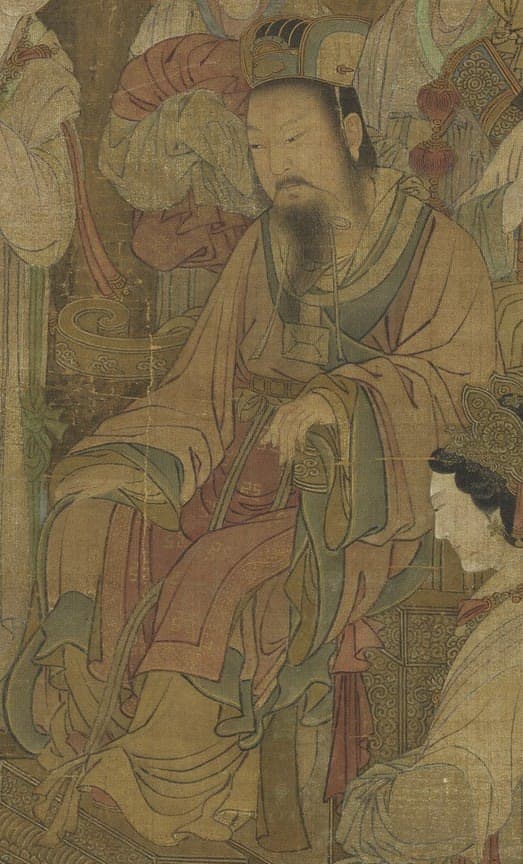

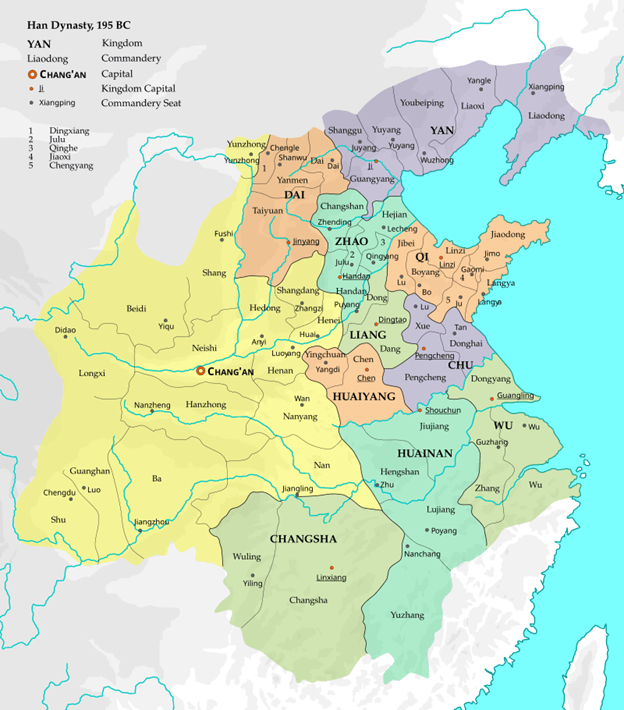
Liu Heng was the fourth son of the dynasty’s founder, Emperor Liu Bang (Gaozu), and the concubine Consort Bo. In 196 BCE, at the age of six, he was made the fief-king (wang) of the border region of Dai, where raids by the nomadic Xiongnu had to be repelled constantly.
After Liu Bang’s death in 195 BCE, real power was seized by his widow, Empress Dowager Lü (Lü-hou). A harsh and despotic ruler, she sought to eliminate the Liu clan, yet Consort Bo unlike others escaped repression and was sent to join her son in Dai.
In 180 BCE Lü-hou died, and a group of capital officials including the chancellor Chen Ping and the commander Zhou Bo—staged a coup and destroyed the Lü clan. They summoned Liu Heng, who had remained apart from the struggle and thus was an ideal compromise candidate, to take the throne. After conferring with his intimates and receiving a favorable divination he accepted and traveled to the capital Chang’an in the autumn of that year.

Immediately upon accession he proclaimed a general amnesty and pursued a policy of gradually easing aside the grandees who had installed him while consolidating his own authority.
Wen-di’s reign became an age of prosperity for the people. He pursued humane domestic policies aimed at easing subjects’ burdens. Soon after enthronement he abolished the traditional punishment of relatives together with the offender and ended penalties for “insulting” the emperor. He replaced gruesome modes of execution (such as burning or boiling alive) with beheading, and abolished mutilating punishments, substituting them with caning (their severity was later reduced under his successor). In 160 BCE he freed all government slaves.
Wen-di also carried out significant economic reforms. He steadily reduced the land tax, and in 167 BCE abolished it altogether. He allowed free movement between provinces, removed internal customs barriers, and ended state monopolies on salt and metal production. In 175 BCE he permitted private minting of bronze cash while setting a state standard.
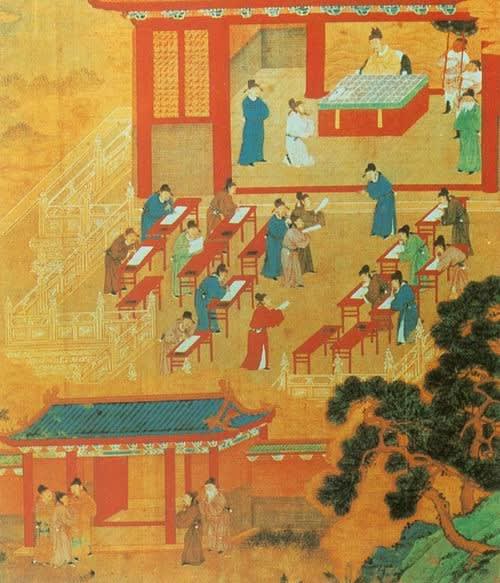
He introduced state relief for the elderly, widows, and orphans. In 165 BCE the emperor held China’s first examination to select candidates for government service an important step toward merit-based recruitment.

In foreign policy Wen-di strove for peace, avoiding wars of conquest—unlike other emperors. The chief threat remained the nomadic Xiongnu. Wen-di sought to placate them with regular gifts and peace agreements, though raids still occurred; he favored a defensive posture and strengthened the northern frontiers with military colonies. On the southern borders he secured peace with the ruler of Nanyue, Zhao Tuo, who agreed to acknowledge Han suzerainty.
Liu Heng died in 157 BCE at age forty-five. In his testament he asked that the duration and severity of mourning be kept to a minimum and ordered his harem disbanded so the consorts could live independently. His tomb at Baling was only found in 2017; its relative simplicity reinforces the image of an emperor who valued modesty and restraint. Wen-di’s reign is counted among the finest in Chinese history: his humane reforms and peaceful policy restored the economy, boosted population growth, and strengthened the Han dynasty, laying the groundwork for centuries of prosperity.


