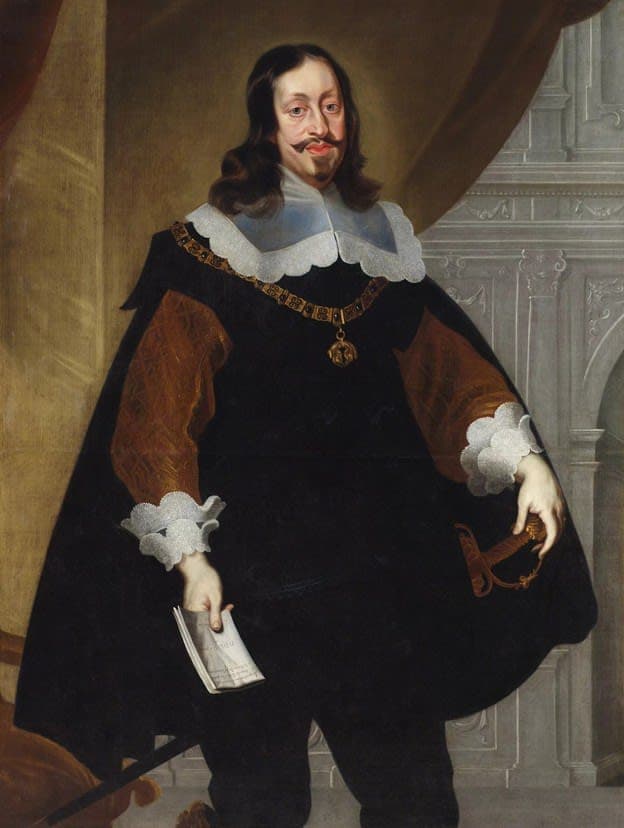
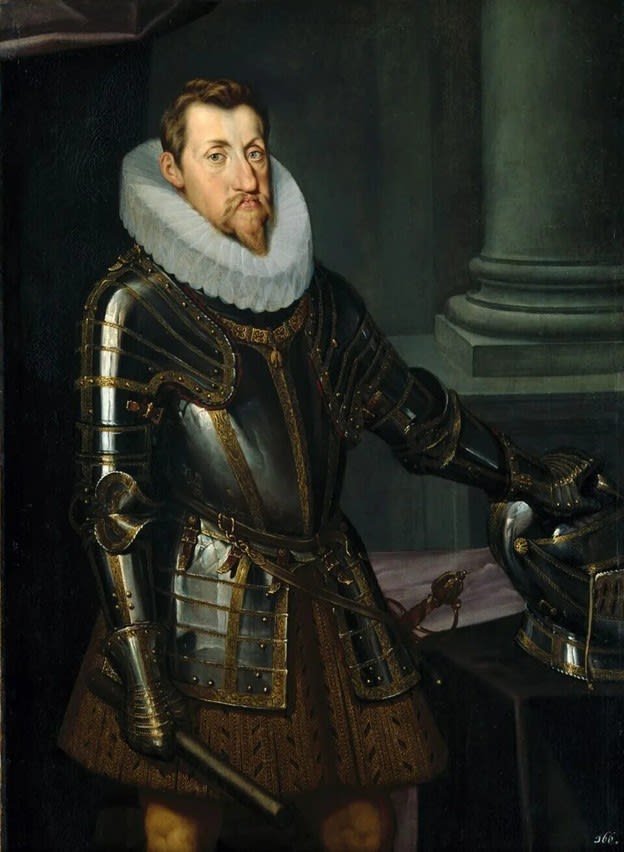
The life of the future Holy Roman Emperor Ferdinand III began in the Austrian city of Graz. He was born into the family of Emperor Ferdinand II, a representative of the powerful Habsburg dynasty, and his first wife, Maria Anna of Bavaria, becoming their third son. At baptism, the boy received the double name Ferdinand Ernst. The young Habsburg spent his childhood in Carinthia. He grew up surrounded by deep parental care and developed a strong and close attachment to his father, brothers, and sisters. Significantly, even in later years, when political disagreements arose between the adult son and his imperial father, they were almost always able to reach a peaceful compromise.
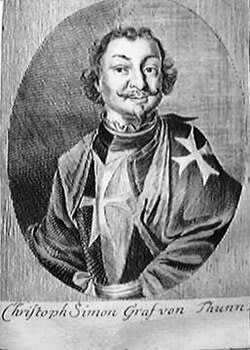
At the imperial court, Ferdinand received an excellent and comprehensive education. His religious and academic upbringing was supervised by the Jesuits, but secular and military mentors played an equally important role in shaping the young archduke’s personality. These included knights of the Teutonic Order: Johann Jakob von Daun, a member of the Lower Austrian Estates, and Christoph Simon von Thun. The latter not only headed Ferdinand’s court and personal household but also assumed responsibility for teaching the young man the art of warfare.
The efforts of his tutors were not in vain: Ferdinand grew into a highly educated man and a polyglot. Although historians do not know exactly how many languages he spoke or how fluent he was in them, the breadth of his learning is beyond doubt.

After the premature deaths of his elder brothers—Karl in 1603 and Johann Karl in 1619—Ferdinand was officially proclaimed heir to the throne and began systematic and thorough preparation for governing a vast state. In many respects, he resembled his father, remaining a deeply convinced and sincere Catholic. Unlike Ferdinand II, however, at whose court the Jesuits exercised dominant influence, the young heir felt a certain dislike for their excessive political power.
Ferdinand’s political career developed rapidly. In 1621, he officially received the title of Archduke of Austria. Several years later, the process of his coronation in the Habsburg kingdoms began: on December 8, 1625, he was crowned King of Hungary, and on November 27, 1627, he became King of Bohemia.
As a pragmatic ruler, Ferdinand immediately took steps to strengthen his absolute authority. He created an important legal and military precedent by issuing the so-called Revised Land Ordinance. This document dealt a severe blow to the autonomy of regional elites: from then on, the Bohemian Estates were deprived of the right to raise troops independently, and this crucial prerogative was reserved exclusively for the monarch.
Despite these successes, the road to supreme power in the Empire was not smooth. At the Imperial Diet in Regensburg in 1630, Ferdinand II failed to secure his son’s election as King of the Romans. Moreover, the young heir ambitiously sought to prove himself on the battlefield, but his attempts to obtain supreme command of the Imperial army and participate in the campaigns of the famous general Albrecht von Wallenstein were unsuccessful.
This estrangement led Ferdinand to join the Viennese court opposition against the increasingly independent generalissimo. At the beginning of 1634, the heir took a direct part in preparing Wallenstein’s second and final removal from command.

Meanwhile, the Habsburgs were developing their dynastic marriage strategy. In 1631, after many years of difficult diplomatic negotiations, Ferdinand married his cousin, the Spanish Infanta Maria Anna. One of the paradoxes of the era was that, against the background of the raging and devastating Thirty Years’ War, the wedding celebrations were astonishingly extravagant and magnificent, lasting a total of fourteen months.
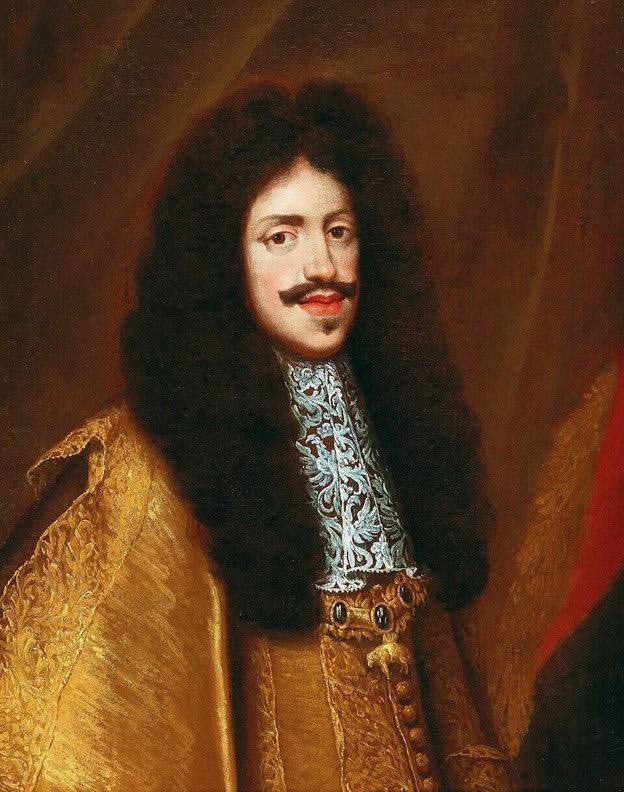
The marriage proved not only politically important but also happy. Six children were born from the union, including future heirs to the throne: Ferdinand IV of Hungary and Emperor Leopold I. The highly educated and dearly loved Maria Anna, as well as her brother, the Spanish Cardinal-Infante Ferdinand, exercised enormous influence over the prince. During the most difficult period for the dynasty following Wallenstein’s death, they maintained the vital political connection among the three Habsburg courts of Madrid, Brussels, and Vienna.
After Wallenstein’s assassination, Ferdinand’s finest hour as a military commander arrived. On May 2, 1634, he personally assumed supreme command of the Imperial army. A distinguished staff gathered around him: Generals Matthias Gallas and Ottavio Piccolomini, military adviser Johann Kaspar von Stadion, and the experienced political adviser and Obersthofmeister Maximilian von und zu Trauttmansdorff.
Success followed quickly. In July 1634, the Imperial forces recaptured Regensburg, which had been occupied by the Swedes since November 1633, and in August they regained control of the fortress of Donauwörth, which had been lost in April 1632.
The commander-in-chief’s greatest triumph, however, was the enormous Battle of Nördlingen in September 1634. In this engagement, the Imperial army joined forces with a Spanish army commanded by Cardinal-Infante Ferdinand and inflicted a crushing defeat on the Swedes. Having lost control of southern Germany, the Swedish forces were compelled to retreat northward.

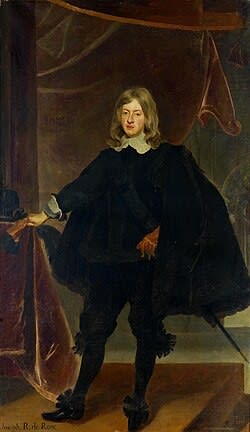
Although historians note that Ferdinand’s personal tactical contribution to the Battle of Nördlingen was limited, his political stature rose enormously after the victory. This was reinforced by the fall of the all-powerful imperial minister Hans Ulrich von Eggenberg, who for many years had effectively dictated policy to Ferdinand II.
Having strengthened his authority, Ferdinand acted as imperial commissioner during the conclusion of the Peace of Prague in 1635. There, he demonstrated himself to be a farsighted politician, urging the electors to unite their efforts in the war and actively advocating the inclusion of wavering Protestant Estates in the peace process.
Ferdinand retained his interest in military affairs throughout his life. Even after leaving the post of commander-in-chief, he studied military theory intensively, and the celebrated commander Raimondo Montecuccoli later dedicated one of his works to him.
Supreme power came to Ferdinand shortly before his father’s death. On December 22, 1636, at the Imperial Diet in Regensburg, Ferdinand III was officially elected King of the Romans. On February 15, 1637, following the death of Ferdinand II, he became Holy Roman Emperor.
The new monarch’s principal supporter was his longtime associate Trauttmansdorff, who became chief minister of Austria and effectively served as the Empire’s leading diplomat. He held this position until 1647, when health problems led to his replacement by Johann Ludwig of Nassau-Hadamar.
The office of Obersthofmeister passed to Johann Weikhard von Auersperg, a future chief minister who was also responsible for the education of the heir, Ferdinand IV. Unlike his father, Ferdinand III abandoned the practice of keeping a permanent spiritual adviser at his side, preferring to make state decisions independently.
The state inherited by Ferdinand III resembled a bleeding wound. Two decades of the Thirty Years’ War had brought immense territories of the Empire to complete devastation. The demographic catastrophe was evident: the population had fallen dramatically and was physically exhausted. Millions of people had lost their families, become disabled, lost their homes, and fallen into extreme poverty. The prolonged war had also caused deep moral deterioration and the destruction of the social foundations of society.
Although Ferdinand himself had little desire to continue the bloodshed, the momentum of the prolonged conflict, the complexity of the geopolitical struggle, and a degree of his own indecision prevented him from ending the war quickly. Hopes for rapid reconciliation with France and Sweden collapsed.
After France openly entered the conflict in 1635, the war erupted with renewed intensity. A joint Spanish-Imperial offensive against French territory in 1636 was initially successful, but the situation at the fronts soon became disastrous for Vienna.
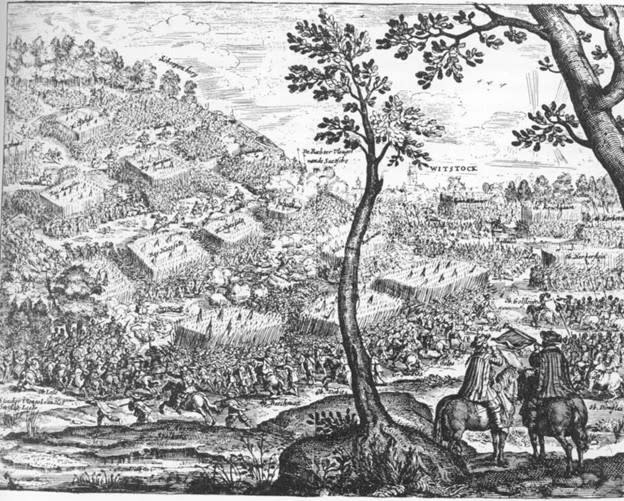
After winning the Battle of Wittstock in 1636, the Swedes regained the strategic initiative and threatened the emperor’s new allies, Saxony and Brandenburg-Prussia. In 1637, Ferdinand transferred Gallas’s main army from France to northern Germany. Gallas managed for some time to contain the Swedes in Pomerania, but severe famine forced him to retreat back into Bohemia at the end of 1638.
At the same time, the German Protestant commander Bernard of Saxe-Weimar, serving France, dealt a painful blow to the Habsburgs. He seized their ancestral possessions in Alsace and, after a lengthy siege, captured the strategically important fortress of Breisach.
In 1639, the Swedish general Johan Banér broke through Saxony into Bohemia. The threat became so serious that Ferdinand was forced to recall Piccolomini’s army from the Spanish Netherlands, effectively bringing direct military cooperation between Vienna and Spain to an end.
In 1640, the combined forces of Piccolomini and the new commander-in-chief, the emperor’s brother Archduke Leopold Wilhelm, succeeded in pushing Banér back toward the Weser River. Nevertheless, northern Germany had effectively been lost to the emperor, and Bohemia remained under permanent threat.
Political settlement was equally difficult. In 1641, an Imperial Diet was held in Regensburg. The emperor initially attempted to prevent Protestant administrators and princes who had fought against him from participating, but ultimately almost all the Estates—with the exception of Hesse-Kassel, Brunswick-Lüneburg, and the Palatinate—recognized the decisions of the assembly.
That same year, in Hamburg, Ferdinand, Spain, France, and Sweden signed a preliminary peace agreement and agreed to convene a large-scale peace congress in Osnabrück and Münster.
However, conditions on the battlefield continued to deteriorate. From 1642 onward, the Swedish-French alliance operated at full strength. The Swedes won the Second Battle of Breitenfeld in 1642, and in 1643 the French crushed the Spanish army in the epoch-making Battle of Rocroi. This allowed Paris to redirect enormous military resources to the German theater of war.

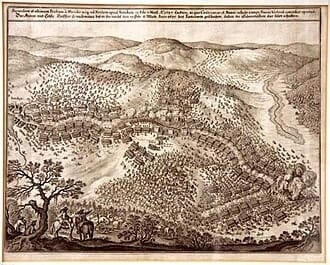
The historic peace negotiations began in Münster and Osnabrück in 1644 and lasted for four exhausting years, while fighting continued throughout the entire period.
The diplomatic process, which began with endless procedural disputes, proved extraordinarily complex. France and Sweden placed unprecedented pressure on Ferdinand, forcing him to admit all the Imperial Estates to the congress and grant them ius belli ac pacis—the sovereign right to declare war and conclude peace.
The congress therefore went far beyond arranging a simple armistice and began reshaping the internal constitutional structure of the Holy Roman Empire itself.
Ferdinand III took an extremely active role in the process. Detailed reports were delivered to Vienna every week, and despite being surrounded by a staff of highly capable advisers, the monarch himself bore the burden of the final decisions. Historical documents indicate that the emperor possessed a deep understanding of affairs of state, recognized the enormous responsibility resting upon him, and was not afraid to make difficult decisions.
Military defeats repeatedly forced Vienna to reduce its demands. Trauttmansdorff advised fighting a decisive battle in the hope of obtaining more favorable peace terms. Ferdinand personally traveled to the army, but on March 6, 1645, the Swedes decisively defeated the Imperial forces at the Battle of Jankau.
The Swedish commander Lennart Torstensson then advanced directly toward Vienna. The situation became critical. Ferdinand organized a large religious procession carrying an icon of the Virgin Mary in order to strengthen the morale of the inhabitants, while he himself was forced to leave the capital. Vienna was ultimately saved by Archduke Leopold Wilhelm, who compelled the enemy to retreat.
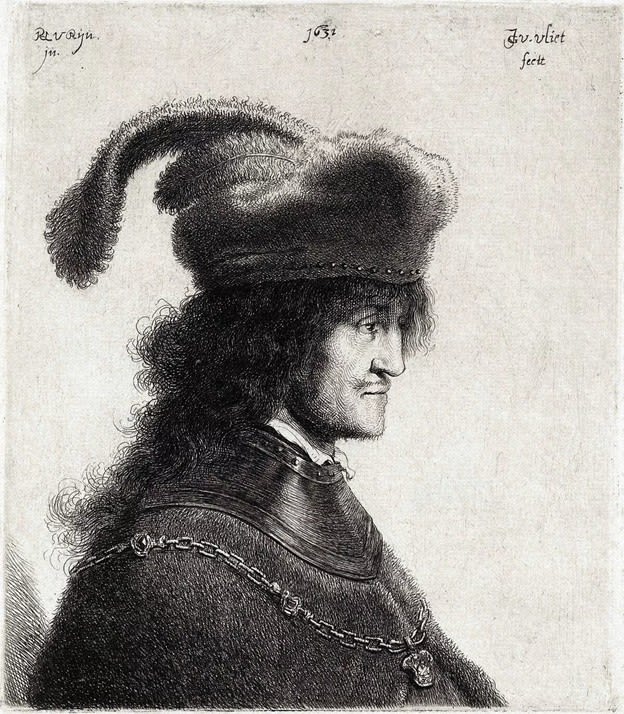
Attempting to reduce the pressure on his position, Ferdinand sought to win over George I Rákóczi, Prince of Transylvania and an ally of Sweden and France. The Peace of Linz of 1645 required serious concessions: the emperor guaranteed the Hungarian Estates the right of representation and granted Protestants freedom of religion.
This effectively ended plans for a harsh Counter-Reformation in Hungary and the construction of an absolutist political model there.
In the same fateful year of 1645, the Habsburgs lost Spanish support. Because of domestic crises, Madrid completely ceased its financial and military assistance. Without Spanish gold, the Imperial army could no longer conduct major offensive operations, leaving Ferdinand’s position at the peace congress critically vulnerable.
Understanding this, the emperor sent Trauttmansdorff to Westphalia with new, strictly secret instructions, which did not become publicly known until 1962. The documents revealed that, in order to end the bloodshed, Ferdinand was prepared to make considerably greater concessions than were ultimately demanded of him.
The consequences of the Thirty Years’ War were severe. The Holy Roman Empire lost extensive territories. France formally secured control of the Three Bishoprics, which it had already occupied since 1552. Switzerland and the Netherlands obtained full independence.
Within the Empire, Sweden acquired the island of Rügen, Western Pomerania, Wismar, and the territories of Bremen-Verden as Imperial fiefs. The Tyrolean branch of the Habsburgs lost control over the Décapole, while Sundgau and Breisach on the Upper Rhine passed to France.
Bavaria retained the electoral status it had acquired at the beginning of the war, while a new, eighth electoral dignity was specifically created for the Palatinate.
The political landscape had changed permanently. The Imperial Estates acquired the right to conclude international alliances, provided that such alliances were not directed against the Empire or the emperor. The major principalities benefited particularly from this development.
Imperial institutions were henceforth to be composed of Catholics and Protestants on the basis of parity. Although Ferdinand’s plan to establish Empire-wide absolutism collapsed, the Holy Roman Empire itself and the institution of monarchy survived and retained considerable political significance.
Ferdinand III himself did not regard the Peace of Westphalia as a catastrophe. Trauttmansdorff’s diplomatic skill had protected the Empire from a worse outcome.
Moreover, within the hereditary Austrian lands, the results were highly favorable. Property settlements in Bohemia and the advantageous Revised Land Ordinance of 1627 remained in force. Upper Austria, which had previously been pledged to Bavaria, returned to direct Viennese control without compensation.
The Counter-Reformation in Ferdinand’s personal territories was accepted as part of the peace settlement, with only minor concessions to Protestants in certain areas of Silesia. The Habsburg monarchy retained a strong foundation for the construction of a powerful centralized state, which has led historians to regard Ferdinand’s negotiating strategy as successful.
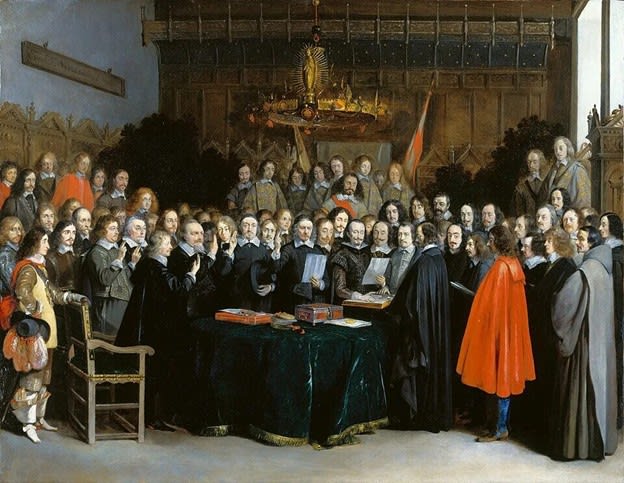
The process of pacifying Europe was completed at the Nuremberg Congress of 1649–1650, where the extraordinarily complicated questions surrounding the withdrawal of French and Swedish armies were settled. Negotiations were so tense that war nearly broke out again.
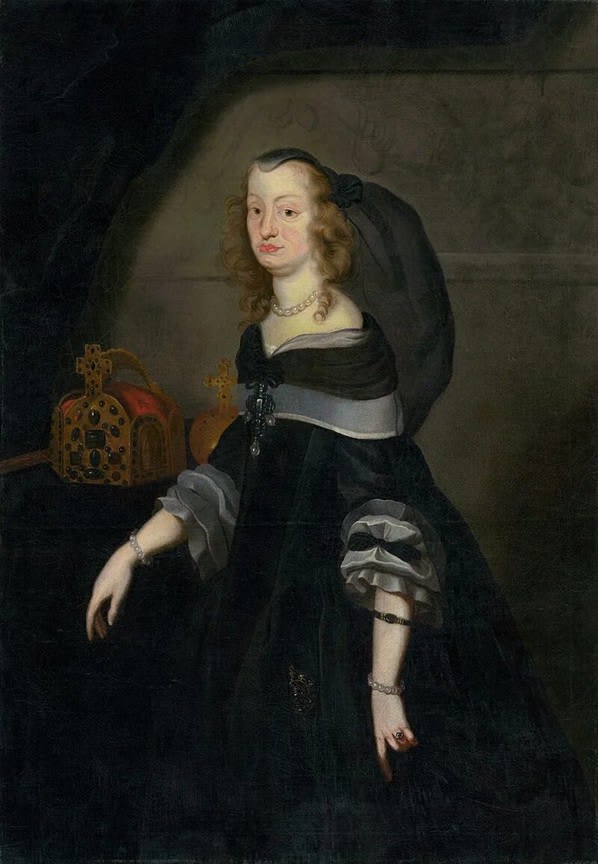
During the same period, the emperor experienced a series of personal tragedies. On May 13, 1646, his first and dearly beloved wife, Maria Anna of Spain, died while giving birth to their last child.
Two years later, on July 2, 1648, a magnificent wedding ceremony was held in Linz between Ferdinand and his second wife, his cousin Maria Leopoldine of Austria. However, this marriage lasted only slightly more than a year: the empress died suddenly in childbirth.
In 1651, the emperor married for the third and final time. His chosen bride was Eleonora Gonzaga. The new empress was a woman of deep religious faith who generously financed the Ursuline convent in Vienna and the female Order of the Starry Cross. Eleonora was also highly educated, wrote poetry, composed music, and together with her husband became an intellectual inspiration behind the so-called Italian Academy.
The postwar years became a period of internal consolidation. In his hereditary lands—Austria, Bohemia, and Hungary—Ferdinand possessed considerably greater authority than his predecessors had before 1618.
The influence of the local Estates declined, while ecclesiastical reforms in the spirit of the Counter-Reformation continued. Having absorbed the bitter lessons of war, the emperor formed a permanent standing army from the surviving veterans, which would become a powerful instrument in the hands of his successor, Leopold I.
The monarch also paid particular attention to the security of the capital. He spent more than 80,000 florins on the large-scale modernization and expansion of Vienna’s fortifications.
Despite the reduction of imperial authority under the Peace of Westphalia, Ferdinand had no intention of withdrawing from Imperial politics. He successfully worked to restore the Crown’s influence within the institutions of the Empire.
An important step was the reorganization of the Aulic Council, which successfully competed with the Imperial Chamber Court. The Council’s legitimacy was confirmed by international treaties, and it continued to exist until 1806.
At the end of 1652, the emperor convened an Imperial Diet in Regensburg, which remained in session until 1654. This assembly entered history as the last traditional Imperial Diet; it would later be replaced by the Perpetual Diet, a continuously operating congress of diplomats.
At this meeting, the provisions of the Peace of Westphalia were incorporated into the constitution of the Empire. Ferdinand demonstrated considerable political skill: he successfully postponed consideration of constitutional proposals that threatened his authority and secured voting rights in the Diet for nobles who had been elevated to princely rank by his father.
The meeting also produced a strategic anti-Swedish alliance with the Polish-Lithuanian Commonwealth, through which the Empire later provided military assistance to Poland during the Second Northern War.
One of Ferdinand’s most important dynastic successes was the election of his son Ferdinand IV as King of the Romans. However, the young man died tragically in 1654.
The second son, Leopold, was still too young to receive the imperial crown. Displaying considerable diplomatic skill, Ferdinand III deliberately delayed the work of the Imperial deputation in order to gain time until his son reached adulthood.
Leopold was eventually successfully crowned King of Bohemia and King of Hungary.
Foreign policy remained active during the final years of Ferdinand’s reign. In 1656, he sent Imperial regiments to Italy to support Spain in its exhausting struggle against France.
Emperor Ferdinand III died on April 2, 1657, leaving behind a state that had survived the most terrible war in its history and had embarked on a path toward centralization.
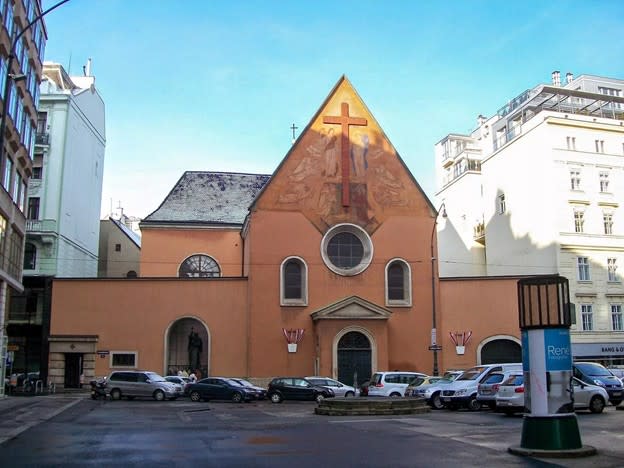
His body was laid to rest in the Imperial Crypt of the Capuchin Church in Vienna, while his internal organs, in accordance with the elaborate Habsburg burial tradition, were interred separately in Vienna’s Ducal Crypt.