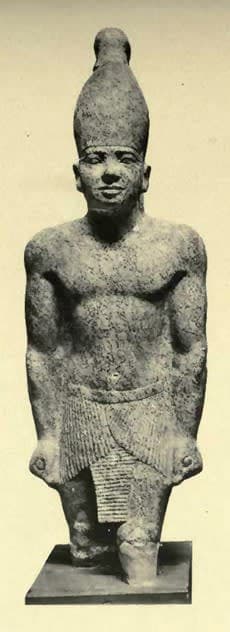
The question of the legitimacy of Teti’s claim to the throne remains one of the most debated in Egyptology. His predecessor, Pharaoh Unas, died without leaving direct male heirs, which apparently triggered a period of political instability. To mend the broken line of succession, Teti married Queen Iput I, who was presumably a daughter of Unas. This marriage became a classic example of “legitimation through matrimony,” transforming a military commander or high official into a full-fledged “Son of Ra.”
A reflection of this struggle for unity was his Horus name — Sehotep-tawy, which translates as “Horus who pacified the Two Lands.” Egyptologists see in this title not merely a formality but an indication of real suppression of unrest and reconciliation of rival factions of the nobility. Notably, the change of dynasty did not lead to a “purge” of the administration: dignitaries such as Sabu-Ibebi retained their high posts as high priests of Memphis and continued to enjoy the favor of the new ruler, emphasizing Teti’s desire for stability.
Determining the exact length of Teti’s reign is difficult. The Turin King List, unfortunately, preserves only precise data for months and days — 6 months and 21 days. Manetho attributed to him 30 years of rule, but modern scholars treat this figure with skepticism.
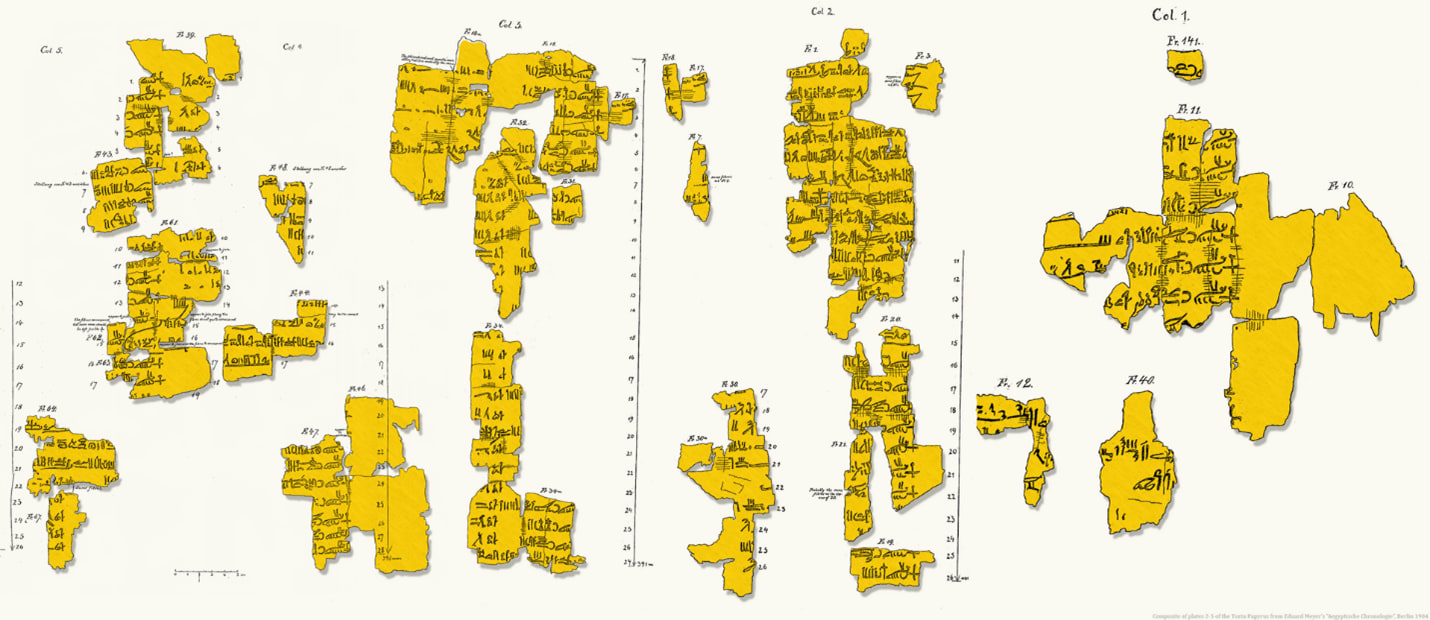
The most realistic estimate of 10–12 years is derived from the biography of the famous official Weni. Weni recalls that he received his first official belt of office under Teti. Given the typical pace of career advancement in Ancient Egypt, Teti could hardly have ruled for 30 years; otherwise Weni’s career would have appeared quite different. Nevertheless, during this decade Teti managed to implement a tax reform: archaeologists have found references to the “6th cattle count,” which under a two-year cycle corresponds to the 11th or 12th year of his reign.
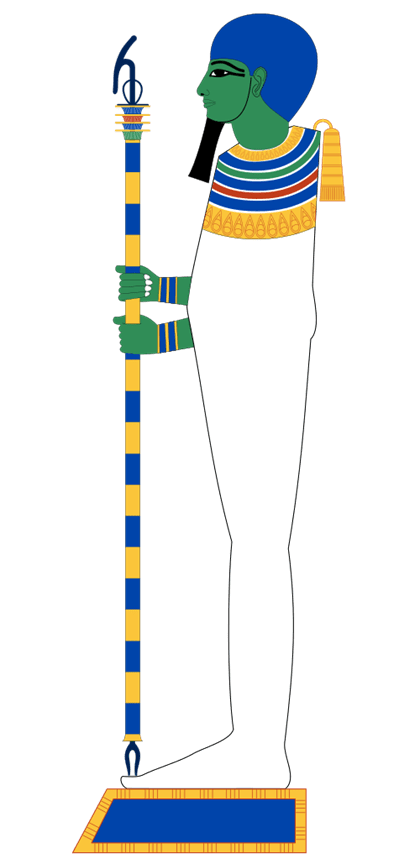
One of Teti’s most important achievements was a shift in the religious vector. While the previous dynasty had been closely associated with the solar cult of Ra in Heliopolis, Teti, a native of Memphis, decisively elevated the local deity — Ptah, the “Divine Craftsman.”
It was during this period that the famous “Memphite Theology” took shape, according to which all existence arose from the thought of Ptah and the word on his tongue. Teti united the offices of the high priests of Ptah under the authority of his loyal servant Sabu-Tjeti and added to his cartouche the epithet “Beloved of Ptah.” This was a powerful political move that allowed him to rely on the capital’s elite in opposition to the weakening Heliopolitan priesthood.
Despite attempts at centralization, the process of strengthening regional nobility continued under Teti. This is vividly demonstrated by the tombs of his officials.
The vizier and son-in-law of the pharaoh, Mereruka (husband of his daughter Wadjitkhathor), built for himself a colossal tomb of 33 chambers — the largest private tomb of that era.
Influence of the nomarchs: The luxury of the burials of dignitaries such as Kagemni or Ankhmahor indicates that enormous resources of the country were increasingly concentrated in the hands of the high bureaucracy rather than solely in the royal treasury.
The end of Teti’s reign was tragic. Manetho reports that the pharaoh was murdered by his own guard. There is a theory that the conspiracy was led by a certain Userkare — a mysterious figure whose name suddenly appears in king lists immediately after Teti.
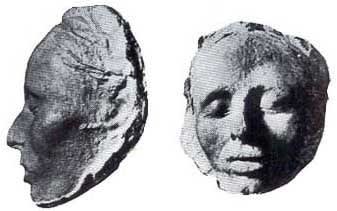
Evidence of violent death is provided by a unique find — Teti’s posthumous mask, discovered by Edward Quibell. The fact that craftsmen had to take a cast from the face of the deceased indicates the suddenness of death: court sculptors simply did not have time to complete portrait statues of the king during his lifetime. Moreover, Teti’s mummy (or rather what remained of it after robbers) shows signs of hurried embalming, indirectly supporting the theory of a sudden and bloody coup.
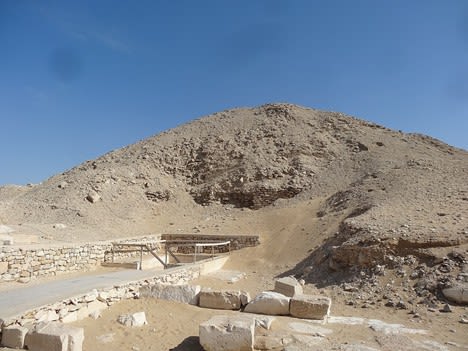
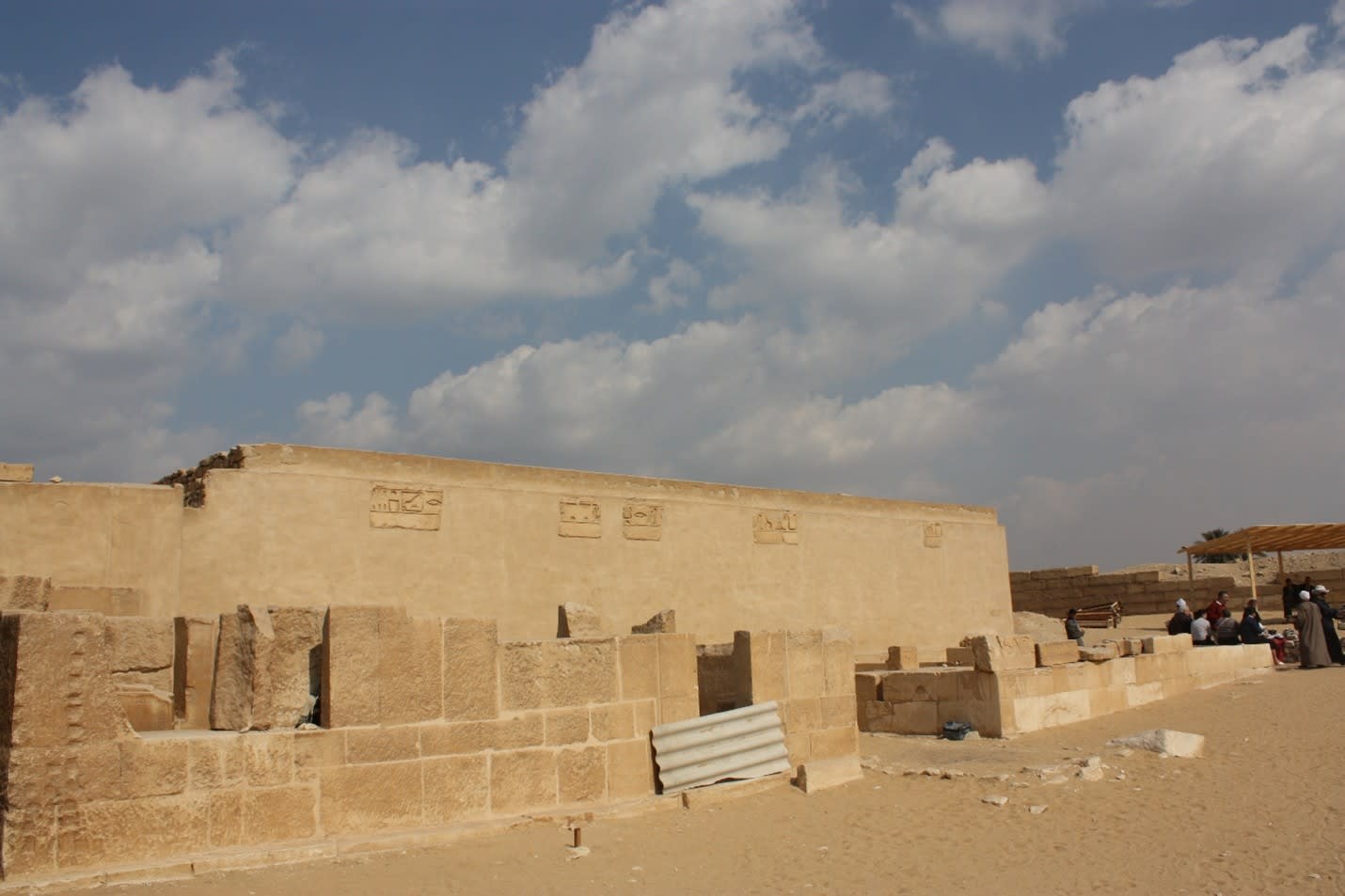
Teti’s pyramid, called Djed-sut-Teti, was erected at Saqqara. Originally it was a majestic structure 43 meters high, faced with white limestone. Unfortunately, in the Middle Ages the pyramid served as a quarry, and today it more closely resembles a natural hill barely reaching 20 meters in height.
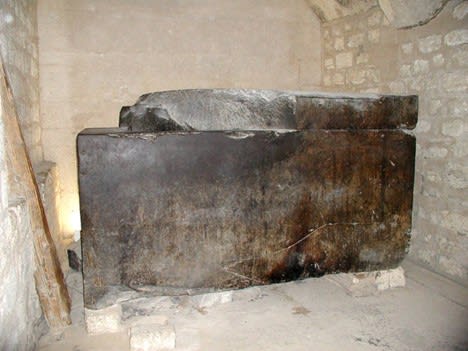
Basalt sarcophagus: Inside the tomb a massive sarcophagus bearing the king’s name has survived, although the mummy itself was torn apart by robbers — archaeologists managed to find only the pharaoh’s arm and shoulder.
Pyramids of the queens: Near Teti’s complex stand the pyramids of his wives, including Iput I. In her tomb a cedar coffin with the queen’s remains and her gold jewelry was discovered, a rare stroke of luck for archaeologists.
Despite his violent end, Teti III left a deep imprint on popular memory: his cult at Saqqara was maintained for hundreds of years, well into the Middle Kingdom.


