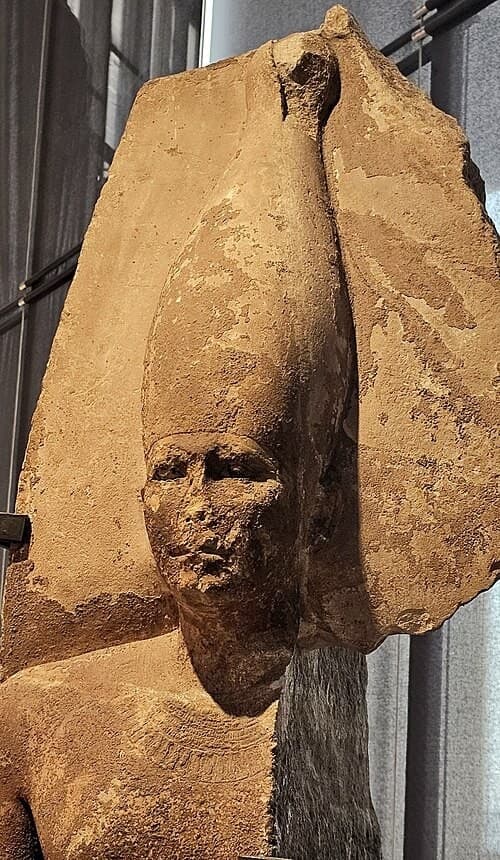
The appearance of Sneferu on the historical stage is shrouded in scholarly debate. According to the Saqqara King List, he became the direct successor of the last ruler of the Third Dynasty — Huni. However, ancient texts such as the Instruction of Kagemni describe his accession as the enthronement of a “beneficent ruler,” without specifying any blood relationship with his predecessor. This led the Egyptologist Manetho to identify Sneferu as the founder of a new dynasty. A more detailed hypothesis suggests that Sneferu may have been the son of Huni by a secondary wife, Meresankh. To legitimize his claim to the “Two Lands,” he married Queen Hetepheres, daughter of Huni’s principal wife. This union united the bloodline of the ruling house and inaugurated a new era, while Hetepheres later became the mother of the great Khufu (Cheops).

The pharaoh’s origins likely lay in the 16th nome of Upper Egypt, in a locality called Menat-Sneferu (“Nurse of Sneferu”), traces of which appear in inscriptions throughout the country. The length of his reign varies in the sources: the Turin Papyrus assigns him 24 years, whereas Manetho speaks of 29 years of rule.


Sneferu was an innovator even in royal titulary. Under him the convention was established whereby a personal name was accompanied by a sacred one enclosed in a cartouche — a symbol of the sun’s path encircling the pharaoh’s name and protecting it for eternity. His titulary became the model for later generations:
Horus name: Nebmaat (“Lord of Truth” or “Master of Justice”).
Golden Horus: Symbol of military triumphs and divine authority.
Son of Ra: Emphasizing direct connection with the solar deity.

Records from the Palermo Stone allow us to glimpse the chronicle of his reign during the 9th to 12th cattle-count years. This was a time of intensive naval construction and territorial expansion. In the 10th year alone, Sneferu launched several ships measuring 100 cubits (about 52 meters) and 60 smaller vessels. This fleet became an instrument of colonization:
In a campaign against the “Nehesy” (the dark-skinned peoples of the south) in Nubia, 7,000 prisoners and 200,000 head of cattle were captured.
A campaign against the land of Tehenu (Libya) brought 1,100 prisoners and thousands of livestock.
A peaceful expedition of 40 ships to Lebanon brought precious cedar wood, from which palace gates named “The Exaltation of the White Crown” and “The Exaltation of the Red Crown” were constructed.
The Sinai Peninsula held a special place in Sneferu’s policy. He secured Egypt’s control over copper mines and turquoise quarries. In Wadi Maghara reliefs survive depicting the pharaoh — “Subduer of Foreign Lands” — triumphantly striking an Asiatic chieftain with his mace. His success in Sinai was remembered for millennia; officials were praised with the phrase: “Nothing like this has been done here since the time of Sneferu,” and the king himself was venerated there as a patron deity.
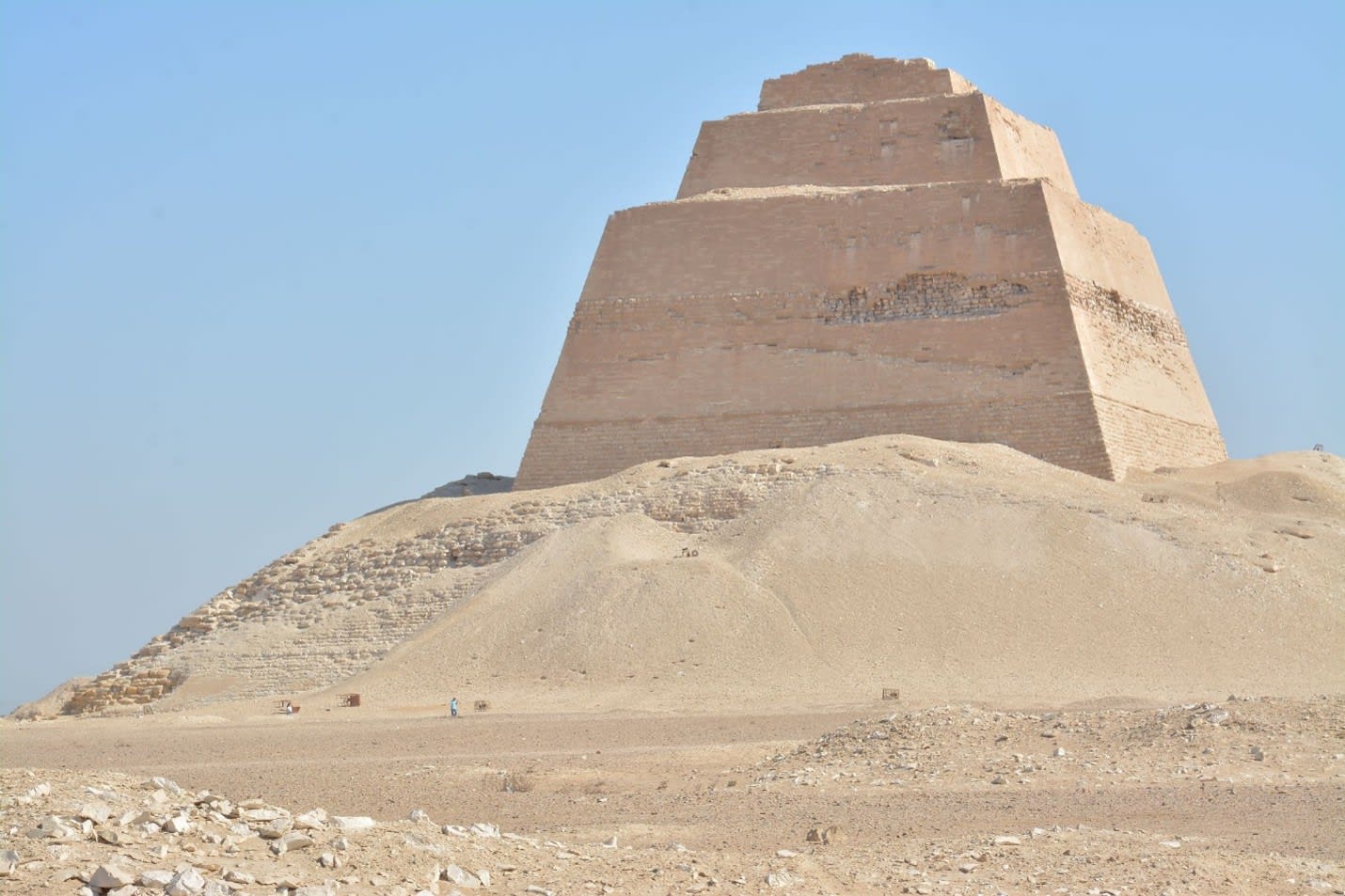
Sneferu was the only pharaoh credited with constructing several colossal pyramids, which served as experimental grounds in the search for the ideal form.
The pyramid at Meidum (height 118 m) was originally built as a step pyramid. Many believe Huni began it, and Sneferu chose to complete his predecessor’s project. At the third stage of construction he ordered the steps to be filled with stone and the entire structure to be clad in smooth Tura limestone. Thus emerged the first attempt at a “true” pyramid. Today it appears as a strange three-tiered tower rising above a mound of ruins, but inside lies a simple and elegant chamber reached by a descending passage for lowering the sarcophagus. It was here that Auguste Mariette discovered masterpieces of art — the statues of Rahotep and Nofret.

After relocating the royal necropolis 45 km north, Sneferu built the “Bent” Pyramid at Dahshur (base 188.6 m). It is unique because at a height of 49 meters the angle of its sides abruptly changes from 54° to 43°. Scholars debate the reason: whether it was an attempt to accelerate construction, reduce weight to prevent collapse, or a deliberate architectural symbolism. Inside are two systems of corridors with unique sliding-block portcullis mechanisms, as well as mysterious cedar beams whose purpose remains unclear.
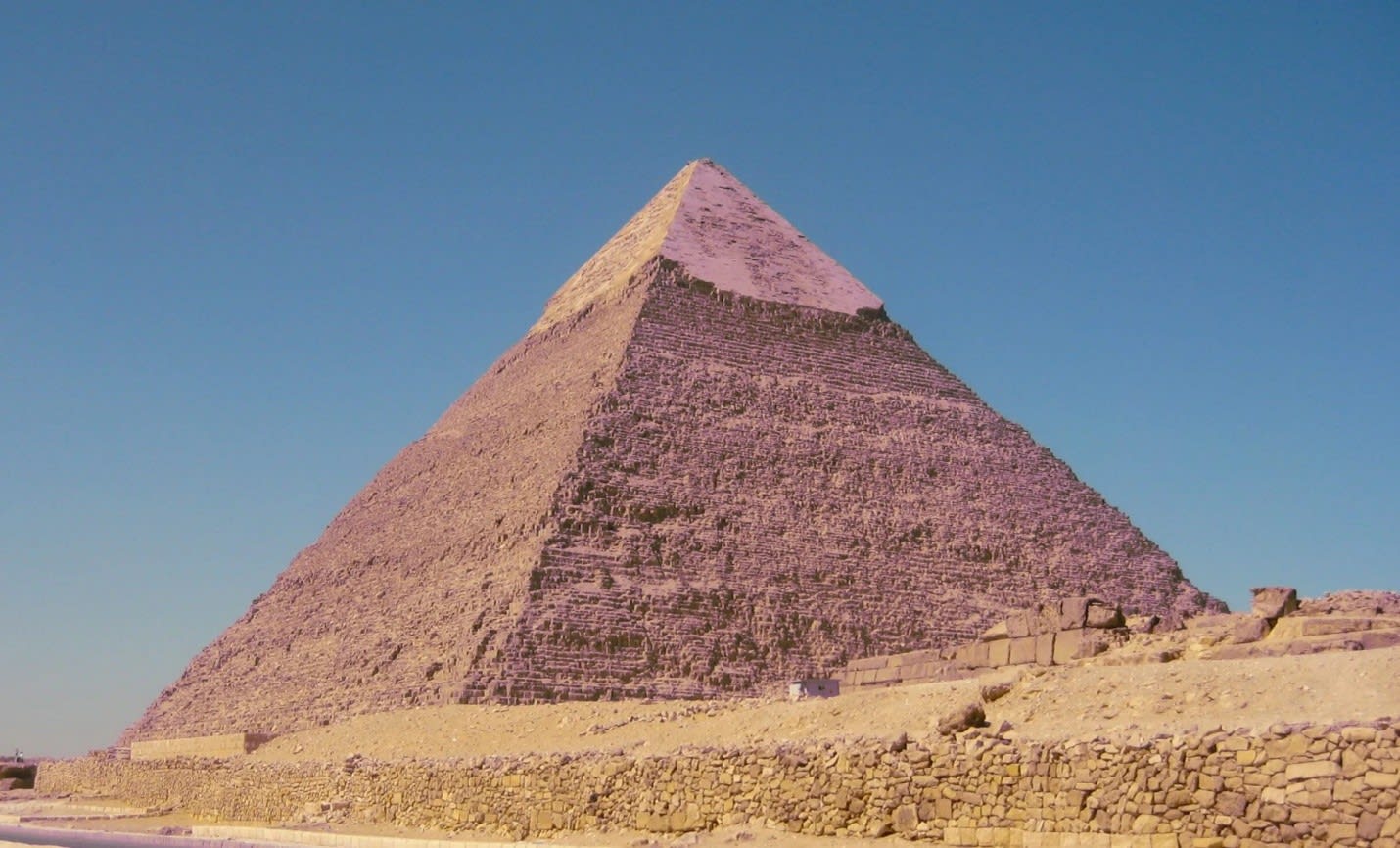
The Northern Pyramid at Dahshur (the “Red” Pyramid) became the world’s first true pyramid with correct geometric proportions. Its base (218.5 × 221.5 m) is only slightly smaller than that of Khufu’s pyramid. Because of its shallow angle (43°) it appears squat, yet its scale is enormous. The reddish hue of the limestone in sunlight gave it its modern name. Inside are three adjoining chambers with magnificent corbelled vaults.
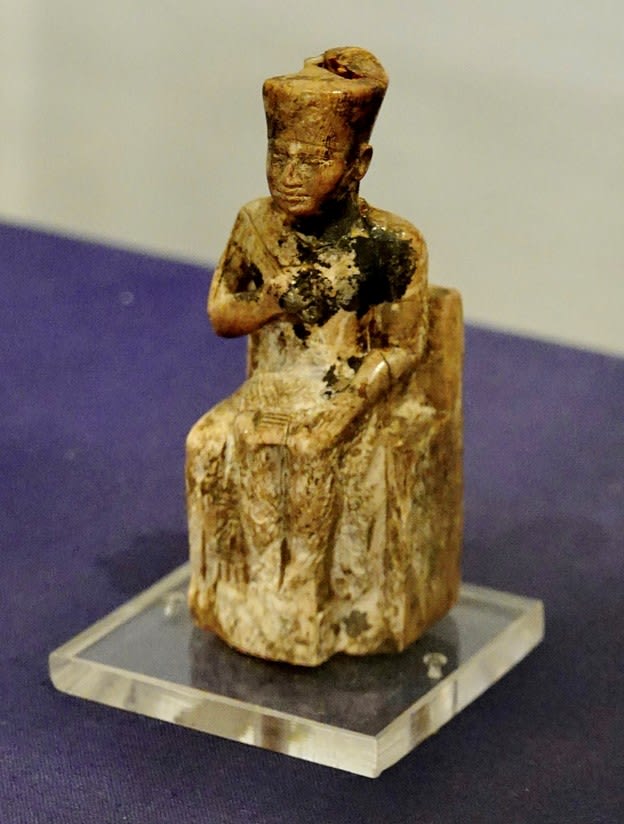
Administration under Sneferu functioned as a family enterprise: his sons Kanefer and Rahotep held the highest military and priestly offices. During his reign the system of Egyptian nomes (provinces) was finally consolidated.
Despite the immense strain placed on the country, Sneferu remained in popular memory as an ideal, wise, and benevolent ruler. This sharply contrasts with the image of his son Khufu, whom tradition portrays as a despotic tyrant. Sneferu’s cult endured throughout Egyptian history — from the Middle Kingdom to the Ptolemaic period. He left his heir a prosperous, fortified state and the engineering technologies that enabled Egypt to reach the zenith of its greatness.


