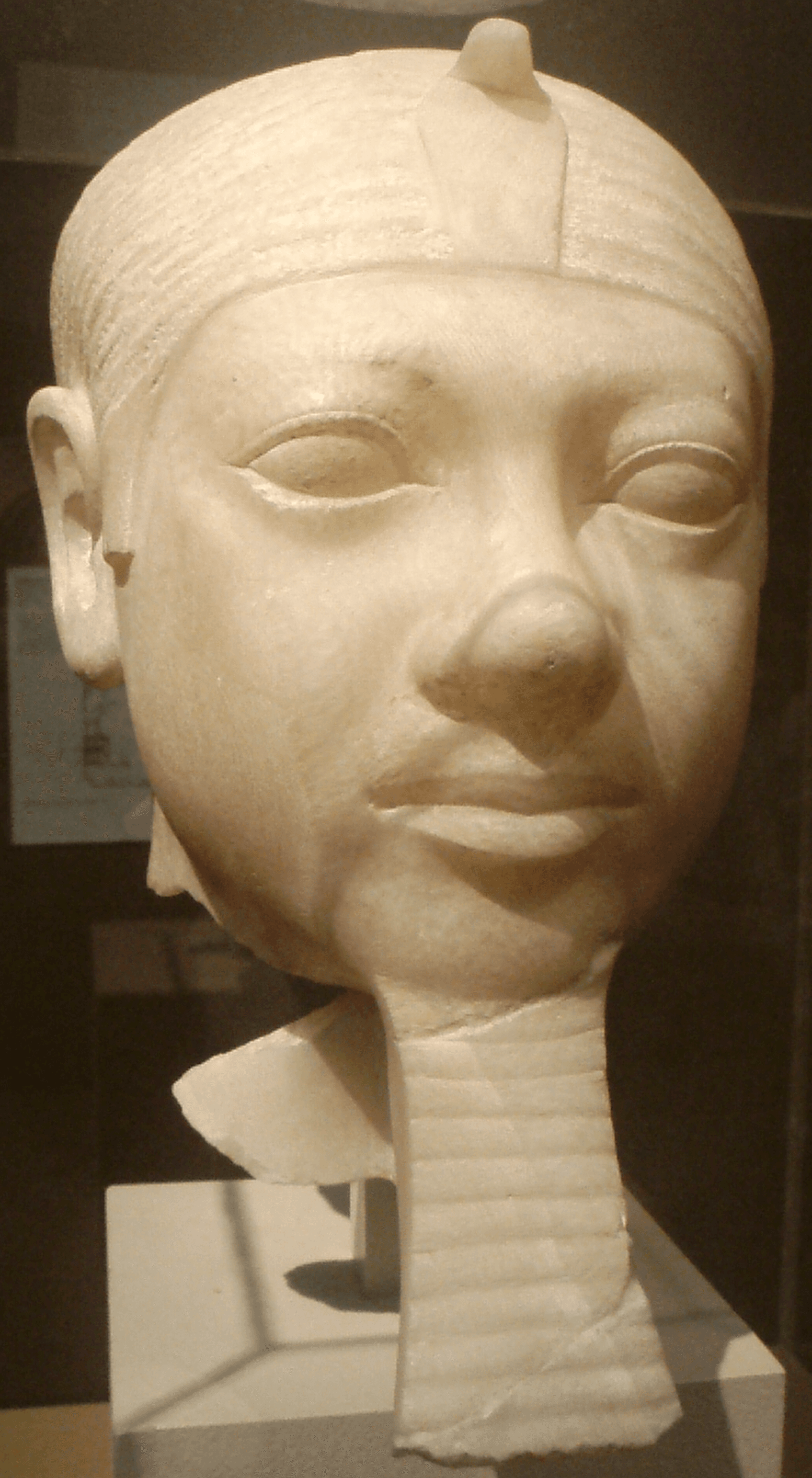

Shepseskaf ascended the Egyptian throne at a difficult time. Apparently, he was the son of Pharaoh Menkaure by a secondary wife or concubine. To legitimize his position, he married his half-sister Khentkaus — the daughter of Menkaure by the principal queen. His accession was accompanied by a kind of “construction crisis” caused by the sudden death of his father.

The first years of his reign were devoted to fulfilling his filial duty. Shepseskaf ordered the funerary complex of Menkaure at Giza to be completed as quickly as possible. However, the scale of the work clearly did not match the resources of the treasury: archaeologist George Reisner discovered that construction proceeded in incredible haste. Where majestic stone should have stood, the walls were built of unbaked brick, and many statues remained unfinished. In this temple a damaged stela dated to the second year of Shepseskaf’s reign was found. It recounts how the young king personally attended rituals in the pyramid “Divine is Menkaure,” promising the priests eternal endowments in exchange for the intercession of his father’s spirit in the face of the “heavy calamities” that had befallen the country.

The ancient historian Herodotus mentions this ruler under the name Asychis. According to his testimony, Shepseskaf sought to leave a memory of himself no less magnificent than that of his predecessors. He built the eastern gateway of the temple of the god Ptah (the Greek Hephaestus) in Memphis, which surpassed all others in size and richness of decoration.
However, behind this outward splendor lay serious economic problems. Herodotus reports that under Asychis “money had almost disappeared, and trade had declined.” The situation became so critical that the pharaoh issued an unprecedented law: henceforth Egyptians could borrow money only by pledging the mummy of their own father. Failure to repay the debt entailed a terrible punishment — the debtor and all his descendants lost the right to burial in the family tomb, which for an ancient Egyptian meant the final destruction of the soul in the afterlife.
The most astonishing decision of Shepseskaf was his complete rejection of the pyramid form for his own burial. While his grandfather Khufu and his father Menkaure erected colossal monuments at Giza, Shepseskaf moved the construction site to South Saqqara. There he built a unique monument known today as Mastabat el-Faraun (“Mastaba of the Pharaoh”), which bore the ancient name Qebeh Shepseskaf (“Place of Purification of Shepseskaf”).
His tomb had the appearance of a gigantic stone sarcophagus:
Height: Reached 20 meters.
Structure: A massive stone block surrounded by a double enclosure, with a funerary temple and a paved causeway one kilometer long.
Interestingly, Herodotus records a legend about this structure, calling it a “pyramid of bricks.” According to the tradition, an inscription on the stone proudly asked that the king not be ranked below the stone pyramids, declaring that he rose above them as Zeus above the gods, and that the bricks for it were taken from the mud of a sacred lake. Although the real mastaba is built of stone, this legend emphasizes the monument’s exceptional character in the eyes of contemporaries.

The rejection of the pyramid form and the absence of the element “Ra” in Shepseskaf’s name (unlike his brothers and father) gave rise to a theory of his conflict with the increasingly powerful priesthood of Heliopolis. Some historians see in the mastaba a deliberate break with solar theology.
However, records on the Palermo Stone and the titles of officials of that time use the hieroglyph of a pyramid when referring to Qebeh Shepseskaf. This suggests that the pharaoh originally planned a pyramid. Its internal layout — an inclined corridor, vestibule, and burial chamber — fully repeats the structure of Menkaure’s pyramid, but with one important detail: everything here, including the ceiling and walls, was faced with elite granite. Most likely, the short duration of his reign (from 4 to 7 years according to different sources) and lack of funds forced the architects to transform an unfinished pyramid into a monumental mastaba.

Shepseskaf remained in memory as a ruler who valued loyal people. A vivid example is the fate of the nobleman Ptahshepses, who was raised in the royal harem together with the king’s children and eventually received in marriage the pharaoh’s eldest daughter, Maath.

The death of Shepseskaf marked the end of the glorious and contradictory age of the Fourth Dynasty. Manetho mentions a mysterious successor, Thamphthis, who ruled for nine years, but historical monuments are silent about him. Soon power passed to Userkaf, the founder of the Fifth Dynasty, who returned to the cult of Ra. Shepseskaf, however, entered eternity as the pharaoh who, in an era of crisis and turmoil, preferred the “purity” and “coolness” (Qebeh) of his unique sarcophagus to the traditional splendor of giant pyramids.


