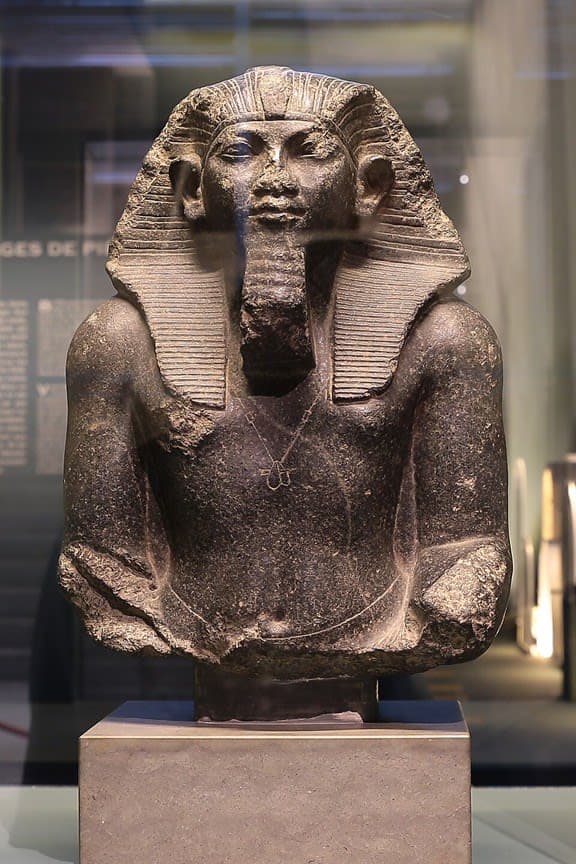
Ascending the throne under the prenomen Khakheperre (“He who arises as the manifestation of the sun god”), Senusret II assumed the mission of maintaining the cosmic order — Ma’at. His titulary was filled with profound meaning: the “Horus name” Seshemu-tawy proclaimed him “Ruler of the Two Lands,” while the “Golden Horus name” Netjeru-hetep testified to the “peace of the gods” that had come under his protection.
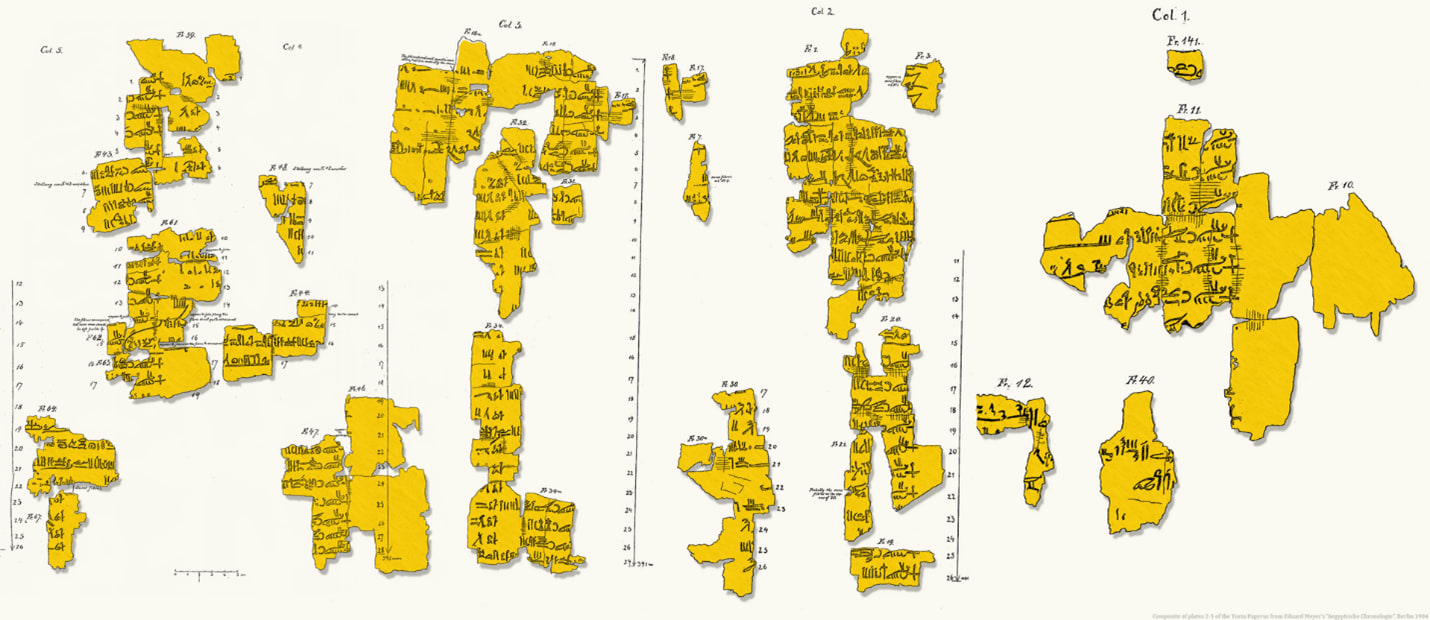
Historical memory of him was curiously distorted in the works of ancient authors. Manetho merged the achievements of Senusret II and his great successor Senusret III into the figure of the legendary conqueror Sesostris, attributing to him an incredible 48-year reign. In reality, according to the damaged records of the Turin Papyrus and archaeological data, Senusret II ruled for about 19 years. This duration appears the most plausible, given the colossal volume of construction works he managed to complete, including his pyramid and an entire city beside it.

Contrary to the common perception of the peaceful character of his reign, the southern policy of Senusret II was imbued with a spirit of military readiness. Egypt of that time closely monitored the “southern frontier land” — Nubia. In the third year of his reign, while Amenemhat II was still alive, Senusret sent a trusted official named Hapu to Nubia. His task was to inspect the bastions in the region of Wawat.
Evidence of this activity has survived for centuries. A massive wall linking Aswan and Shellal was constructed at this time to protect ships at the First Cataract from sudden attacks by Kushites. Bastions around the city of Nekhen (Hierakonpolis) and fortresses at Koshtamna and Kuban formed a powerful defensive belt.
The absence of triumphal inscriptions about victories may indicate that Egypt at that time encountered serious resistance from rebellious Nubian tribes. It seems that outposts founded earlier under Senusret I had been destroyed, and the dark-skinned warriors of the south began to threaten Egypt’s very borders. Fear of them was so great that inhabitants of the southern provinces lived in constant tension, and the future pharaoh Senusret III would begin his reign with a large-scale punitive war to rid the country of this shadow of terror.
A completely different picture was observed on the northeastern frontiers. Relations with Asian tribes (the Aamu) were characterized by peaceful coexistence and trade. The famous scene in the tomb of the nomarch Khnumhotep II at Beni Hasan depicts the arrival of a delegation of Asiatics.

At their head walked the “ruler of the deserts,” Absha. His people, dressed in bright, finely woven garments, brought kohl — a valuable eye cosmetic — as a gift to the nomarch. The depiction of bearded men with Semitic facial features, women, and children riding on donkeys clearly shows that Asian clans received official permission to settle on Egyptian lands. They became part of the country’s economic system, paying tribute to the treasury in exchange for security and pasturelands.
Senusret II continued the ambitious project of his predecessors to develop the Faiyum oasis. The transfer of the royal residence closer to this region stimulated the development of agriculture and irrigation.
The pharaoh skillfully maintained the balance of power by strengthening ties with the provincial elite. The nomarchs of Middle Egypt enjoyed his particular trust; their children were raised at court alongside royal princes. This created a caste of loyal administrators who, returning to their regions, introduced metropolitan standards of art and administration. The reign of Senusret II became a time of harmony between the throne and local princes, ensuring the internal stability of the state.
The king’s principal monument was his pyramid at el-Lahun, named “Senusret Shines.” Built of mudbrick on a core of natural rock, it was faced with magnificent limestone and crowned with a black granite pyramidion.

The architects of Senusret II undertook unprecedented measures to protect the king’s chambers. The entrance was moved from the traditional northern side to the southern side and concealed within a deep shaft. Inside, the pyramid was cut by a true labyrinth of corridors with trap shafts. The burial chamber of red granite was offset from the center of the base to deceive robbers.
Although ancient thieves did penetrate inside, in their haste they dropped a golden cobra (uraeus) from the royal diadem — a masterpiece of jewelry inlaid with lapis lazuli and garnets. But the most sensational discovery was the “Illahun Treasure” of Princess Sithathoriunet. In her tomb, hidden in silt, pectorals, diadems, and ornaments of incredible beauty were found — items the robbers had simply overlooked.
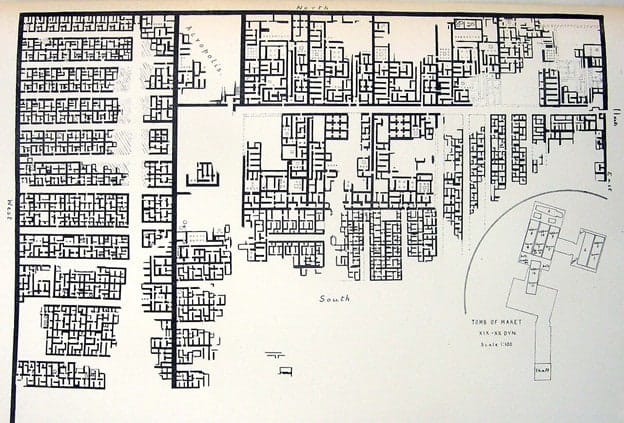
Beside the pyramid arose the city of Hotep-Senusret (“Senusret is Satisfied”), known today as Kahun. This was the first meticulously planned settlement in history. The city was clearly divided into two parts: a western quarter with cramped workers’ houses and an eastern sector where luxurious villas of officials stood, containing up to 70 rooms with pools and columned halls.
It was here that archaeologists made a major discovery — the archive of the Kahun Papyri. These documents revealed the everyday life of Egyptians: from mathematical problems and medical treatises (including the oldest known veterinary text) to legal wills and private letters. Kahun became a unique “snapshot” capturing the social structure of Egypt during the flourishing of the Middle Kingdom.
Senusret II left behind a country full of strength and internal unity. His faithful wife Nefret and numerous daughters, such as Hatshepsut and Sithathor, surrounded the throne, which would soon be occupied by his son — the great reformer Senusret III.


