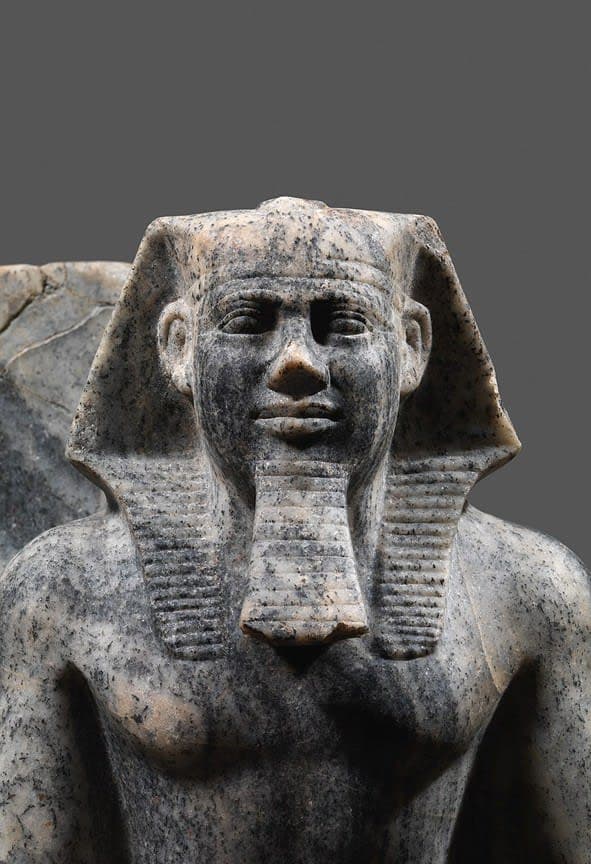
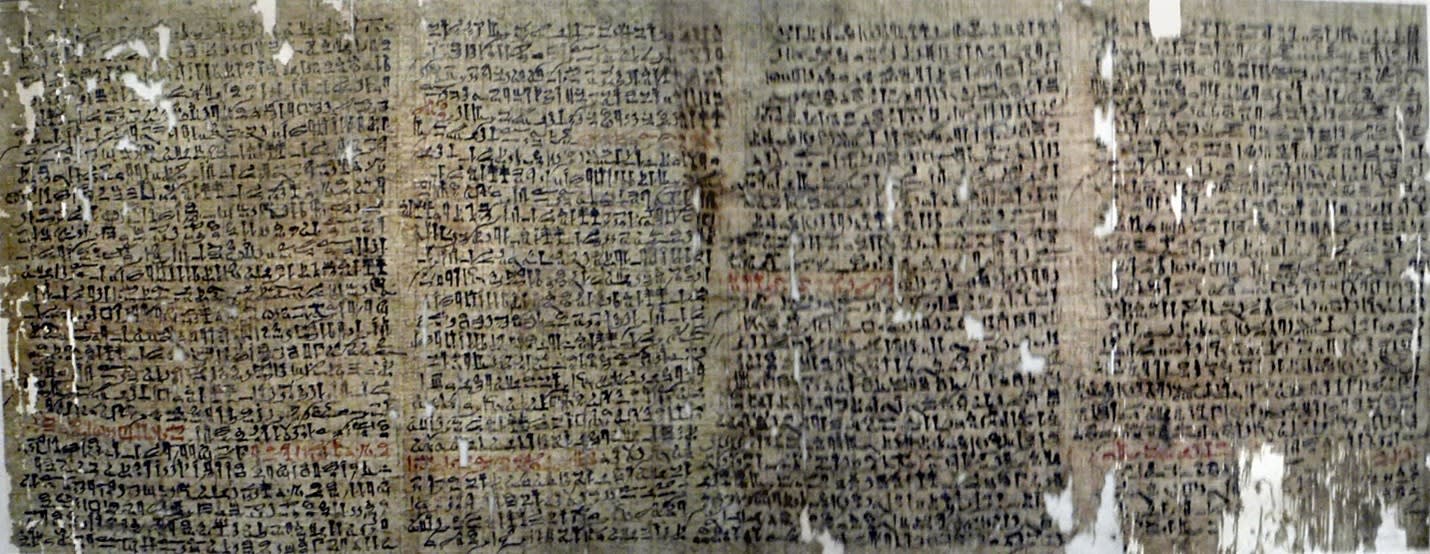
The origin of Sahure, like that of the entire early Fifth Dynasty, is shrouded in legends. According to the famous Westcar Papyrus, Sahure was one of three twin brothers (together with Userkaf and Neferirkare), born to the wife of a priest of Ra, Reddedet, by the Sun god himself. Historians most often identify Reddedet with Queen Khentkaus I, the “mother of two kings,” whose influence on the formation of the dynasty was enormous.
There is also a version that Sahure’s mother may have been Queen Neferhetepes, daughter of Pharaoh Djedefre, since Sahure personally oversaw the restoration of her funerary temple. His only known wife was Neferethanebty, and the reliefs of his temple preserve the names of four sons: Horemsaf, Khakare, Netjerirenra, and Nebankhra.
Thanks to the Palermo Stone and the Turin Papyrus, the duration of Sahure’s reign is known with unusual precision for that era. He ruled approximately 13 years, 5 months, and 12 days. Despite the relatively short period, the density of events during this time is striking.


Sahure continued the policy of promoting individuals not of royal blood to high offices, valuing professionalism and personal loyalty. A vivid example of such relations is the story of the chief physician Sekhmetenankh. When the doctor asked the pharaoh to grant him a “false door” for his tomb, Sahure not only agreed but ordered it to be made of stone in the palace courtyard under his personal supervision and then commanded that it be painted sky blue.
Sahure became the first pharaoh whose foreign policy acquired a truly global scale. He turned Egypt into an active player on the international stage:
Sahure organized the first documented grand maritime expedition to Punt (East Africa). Records report an incredible haul: 80,000 measures of myrrh, 6,000 units of a gold-silver alloy, and 2,600 logs of valuable timber.
The pharaoh waged a victorious war against the Tehenu tribes. Reliefs depict the capture of a colossal amount of livestock — a total of 822,941 animals, including donkeys and sheep. In one scene Sahure personally executes a Libyan chieftain in the presence of his family.
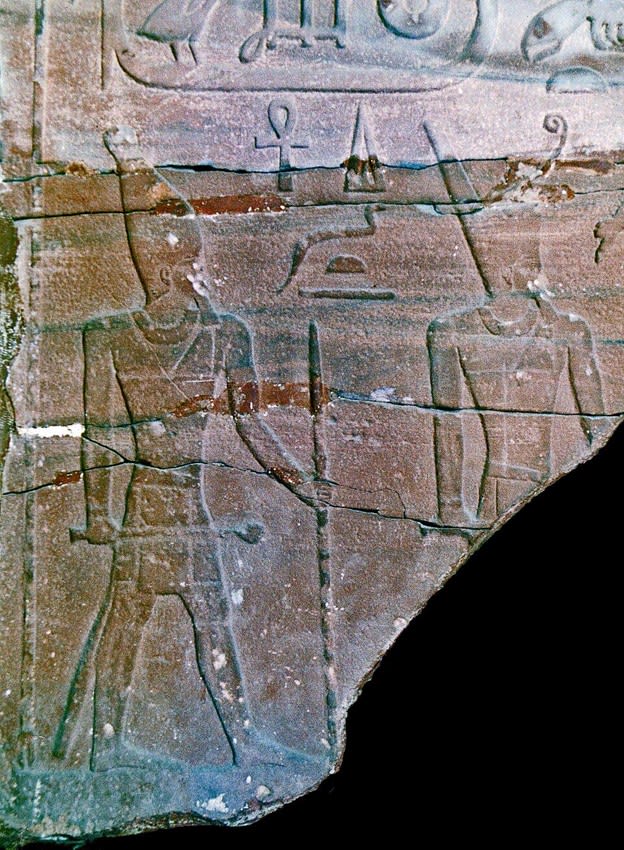
On the Sinai Peninsula, the pharaoh secured Egypt’s rights to the “Turquoise Mountains,” extracting 6,000 weight units of turquoise. His expeditions reached the Second Cataract of the Nile in Nubia, as evidenced by inscriptions near the village of Tomas and at Buhen.
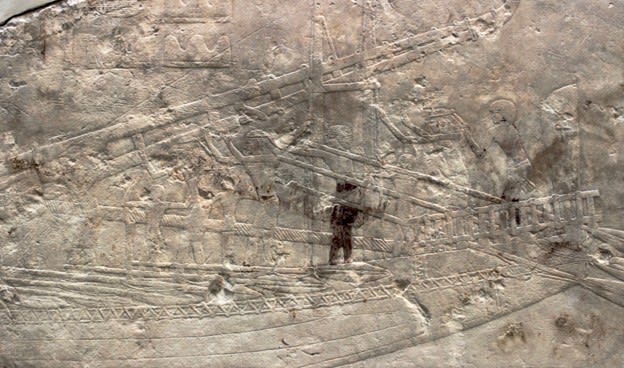
Sahure’s fleet regularly visited the coasts of modern Lebanon. In Byblos a vessel bearing his name was found, and temple reliefs depict sailors returning from Syria with unusual trophies — Syrian bears.
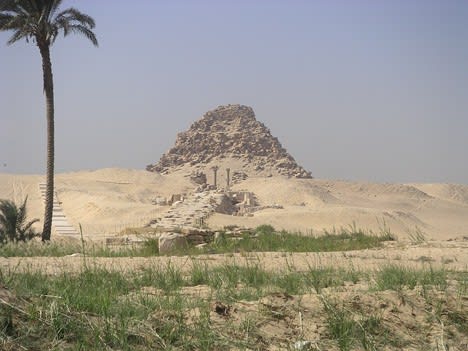
Sahure founded a new royal necropolis at Abusir, where he built the pyramid Ha-Ba (“The Soul’s Ascension”).
The pyramid had a height of 49.6 meters. Although today it is heavily ruined, its funerary complex is considered one of the most perfect in Egyptian history.
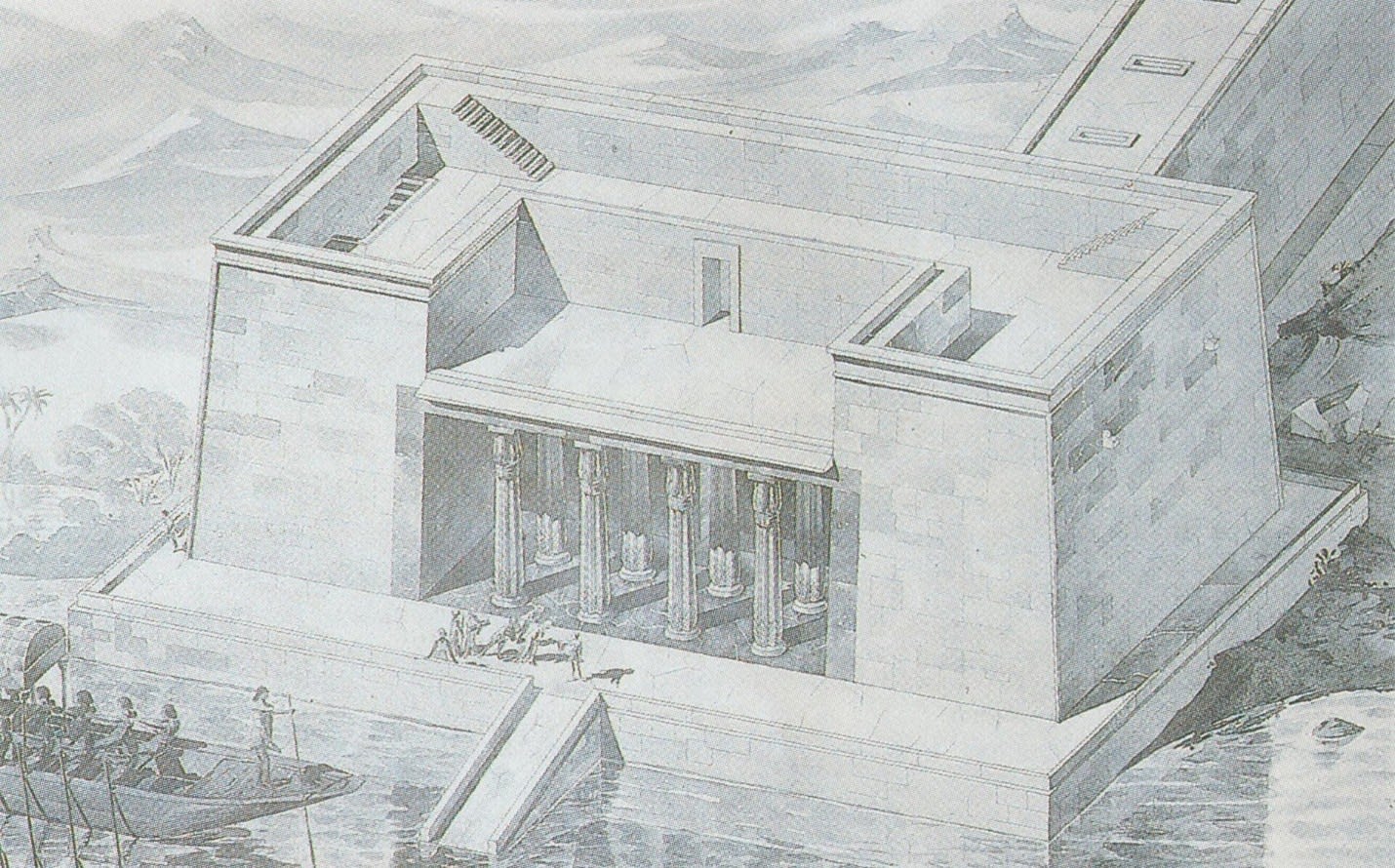
Upper temple: Decorated with 16 granite columns with palm-leaf capitals. The temple walls were covered with reliefs totaling about 10,000 m², distinguished by extremely fine detail.
A complex drainage system functioned in the temple — copper pipes and lion-head spouts carried water into underground reservoirs.
The craftsmen combined red granite, black basalt, white limestone, and milky alabaster, creating a unique play of colors.
In addition to the pyramid, Sahure erected a solar temple which, according to one version, stood on the site of the future pyramid of Niuserre. Although the temple itself has not survived, fragments of a huge obelisk clad in copper and gold confirm its grandeur.
Sahure left behind the memory of a wise and powerful ruler. His cult flourished for centuries:
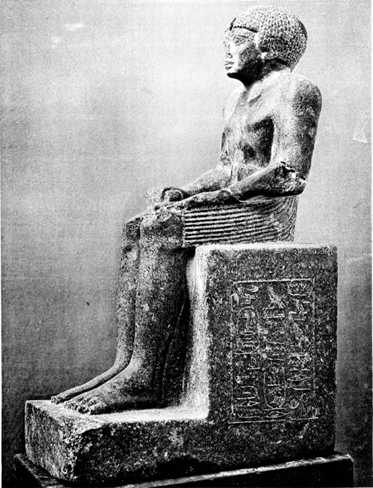
During the Middle Kingdom, Pharaoh Senusret I (Twelfth Dynasty) called him his great ancestor and installed his statue at Karnak.
During the New Kingdom, Pharaoh Thutmose III included him in the list of kings worthy of eternal worship, and the son of Ramesses II, Prince Khaemwaset, personally undertook the restoration of his pyramid.
Even 2,000 years later, in Ptolemaic times, Sahure was venerated as a deity in the temple of Sekhmet at Memphis.
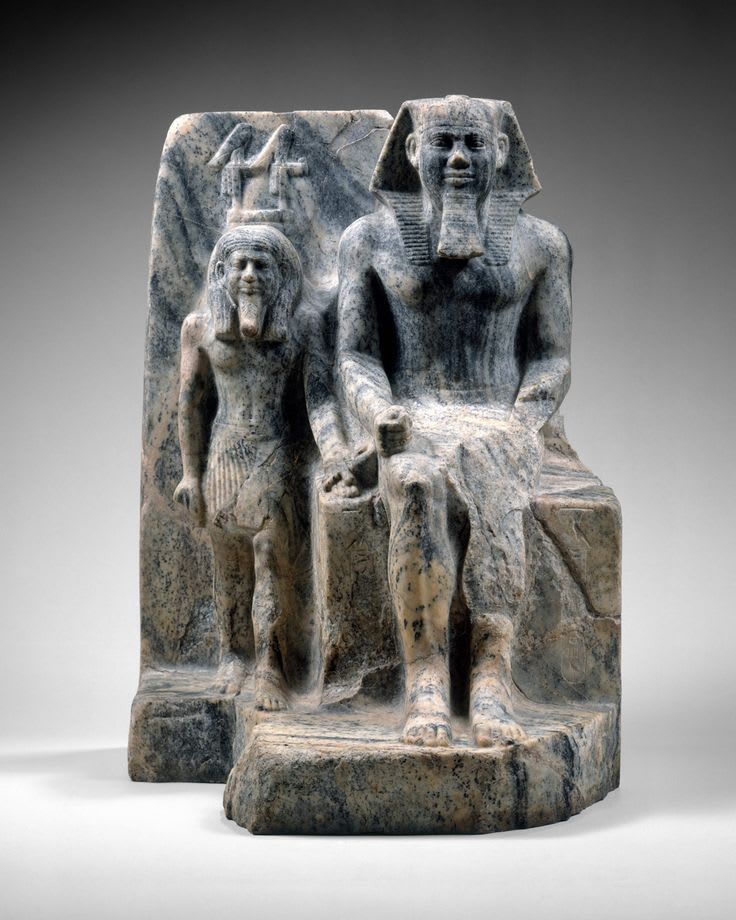
The only nearly completely preserved statue of Sahure is now in the Metropolitan Museum (New York). It depicts the pharaoh on a throne beside the patron god of the Coptos nome, recalling a time when Egypt’s power extended far beyond the horizon.


