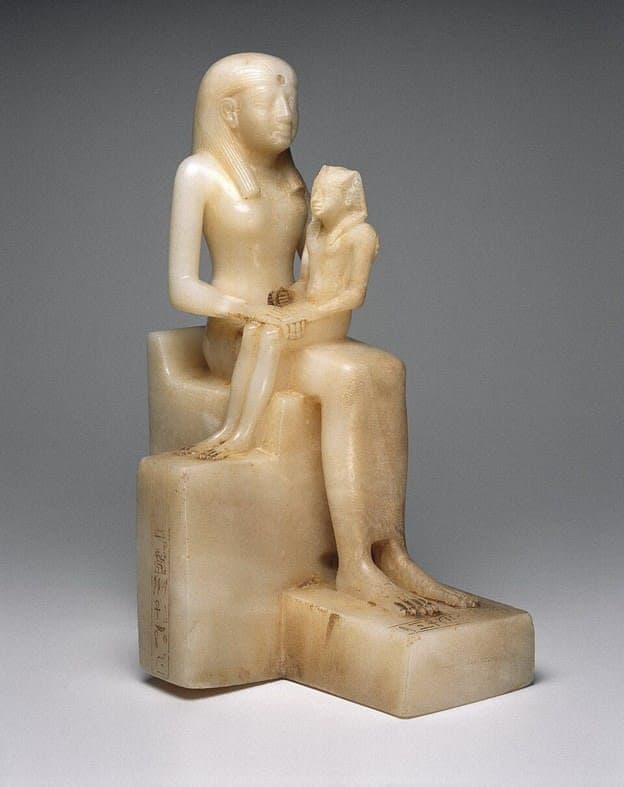
Fate decreed that after the early death of Merenre I, the crown of Egypt passed to his younger half-brother, the six-year-old son of Pharaoh Pepi I and Queen Ankhesenmerire II. The small boy, scarcely able to hold the scepter on his own, found himself at the head of a vast state. However, behind him stood a powerful family coalition: his mother, Queen Ankhesenmerire II, and his uncle — the influential prince Djau.
Djau, who held the posts of vizier (chati) and chief judge, became the true architect of stability during the early years of his nephew’s reign. The influence of the queen mother is eloquently demonstrated by inscriptions in Sinai, where her titles and images occupy positions equal to those of the king. She styled herself “Mother of the King” and emphasized her connection with the pyramids of her husband and son, legitimizing the young Pepi’s authority through divine lineage.
The main debate surrounding Pepi II concerns the length of his reign. Manetho claims that the pharaoh lived to the age of one hundred, ruling an incredible 94 years. The Turin Papyrus supports this figure, mentioning more than 90 years of rule.

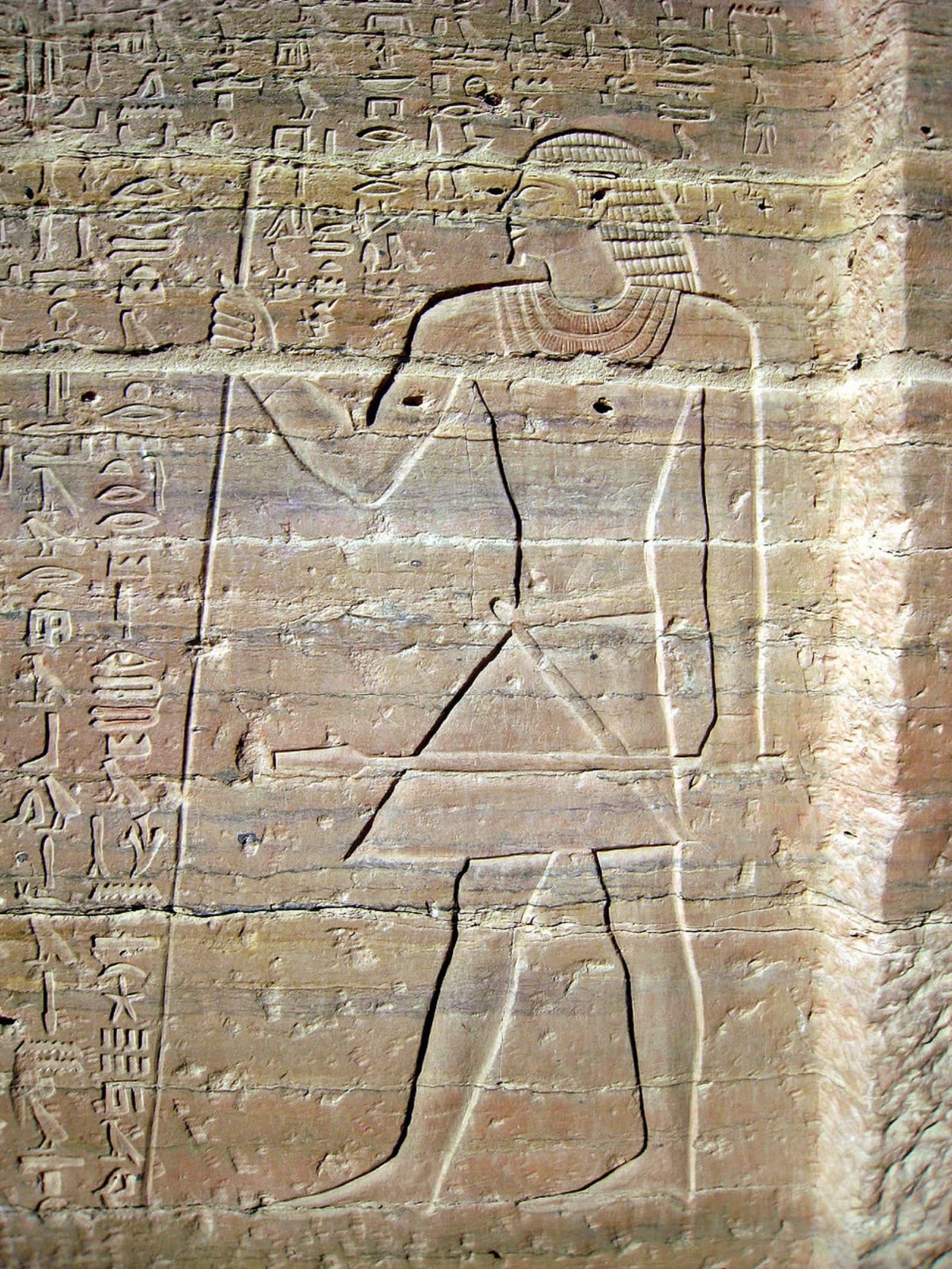
Archaeological data, however, are more restrained: the latest recorded date is the “31st cattle count.” Under a biennial census cycle, this yields about 62 years of rule. Nevertheless, historians do not exclude the possibility that in the final decades of the aged monarch’s life, building activity simply declined and new quarry inscriptions ceased to appear. In any case, Pepi II became a symbol of longevity, adopting the throne name Neferkare (“Beautiful is the spirit of Ra”) and the Horus name Netjerkhau (“Divine in his ascent”).
Pepi II’s foreign policy continued aggressive expansion to the south but with a particular emphasis on exotic goods and trade relations.
The most touching document of the era is a letter from the eight-year-old pharaoh to the “Overseer of the South,” Harkhuf. Returning from his fourth expedition to the land of Yam (Sudan), Harkhuf reported that he was bringing back a “pygmy for the dances of the god.” In the young Pepi II, beneath the divine titles, a normal child emerged, responding with an enthusiastic decree: he ordered that the dwarf be guarded more carefully than all the treasures of the mines, checked ten times each night, and promised Harkhuf a reward greater than that given to the legendary Baurded under Pharaoh Isesi. This letter, carved on the façade of Harkhuf’s tomb, remains a rare example of the personal emotions of a ruler of Ancient Egypt.
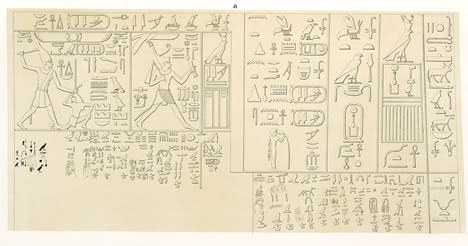
Not all expeditions were peaceful. Nomarchs of Elephantine, such as Sabni and Pepinakht, carried out dangerous military missions:
Sabni led a punitive expedition into Nubia to recover the body of his father Mekhu, who had been killed during a mission. He returned triumphantly with his father’s body and was richly rewarded with lands.
Pepinakht (“Overseer of Foreign Lands”) twice defeated the tribes of Wawat and Irtjet, capturing the sons of local rulers as hostages. He also conducted a daring raid on the Red Sea coast (near modern Quseir) to recover the bodies of Egyptian sailors led by Anankhet, who had been killed by “sand-dwellers” while attempting to build a ship for an expedition to Punt.
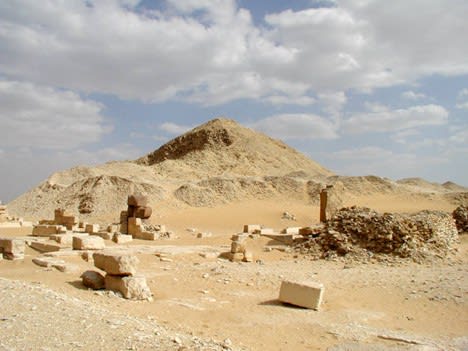
For his burial Pepi II chose South Saqqara. His complex, Menkh-ankh Neferkare (“Neferkare is established as living”), became the architectural pinnacle of his dynasty. Interestingly, during construction the architects discovered a crack in the casing and were forced to encircle the pyramid with a massive reinforcing stone belt.
Excavations by Gustave Jéquier in the 1920s–30s revealed thousands of relief fragments. They depict not only traditional scenes of the defeat of Libyans and Asiatics but also lively everyday details: hippopotamus hunts, ceremonial receptions, and even humorous scenes of a youth climbing a pole for a prize in the form of a cake.
The pyramid was surrounded by an entire “city of the dead” for his wives: Queens Neith, Iput II, and Udjebten. Each had her own small pyramid with “Pyramid Texts” inside — a unique case highlighting the elevated status of royal wives during this period.
Despite outward grandeur, Pepi II’s reign became a time of a “quiet revolution” of the nomarchs. The pharaoh was forced to issue so-called immunity decrees (for example, the Coptos Decree), exempting temples and estates of nobles from taxes and obligations. This was a sign of weakness: in order to secure provincial loyalty, the king effectively distributed the resources of the crown.
By the end of his extraordinarily long reign, the prestige of royal authority had weakened. This is reflected in the satirical “Tale of Neferkare and General Sasenet,” written later, in which the great pharaoh is portrayed in a highly ambiguous light, secretly visiting his subordinate under cover of night.
The death of the long-lived Pepi II led to chaos. His successors, Merenre II and the mysterious Queen Nitocris, ruled only briefly and failed to restrain the ambitions of provincial princes. The Old Kingdom, once as monolithic as granite, disintegrated, plunging Egypt into the long centuries of the First Intermediate Period.


