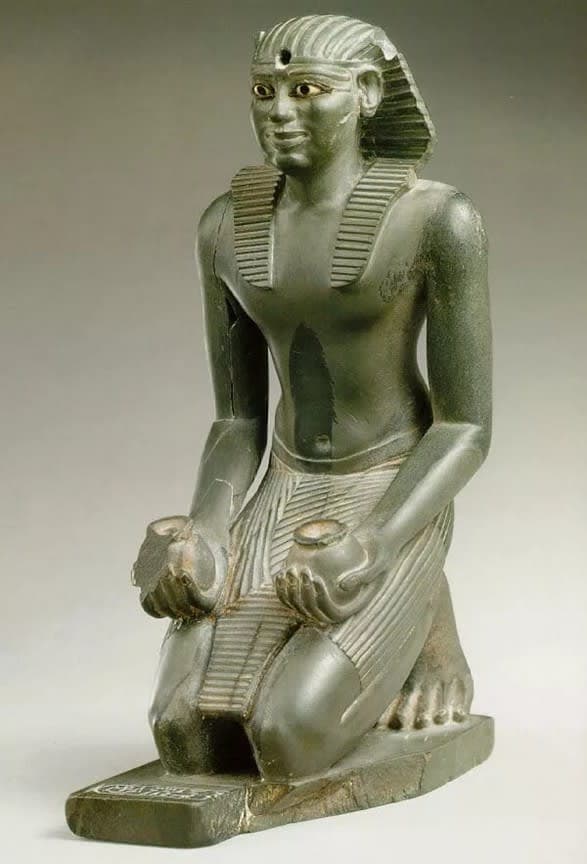
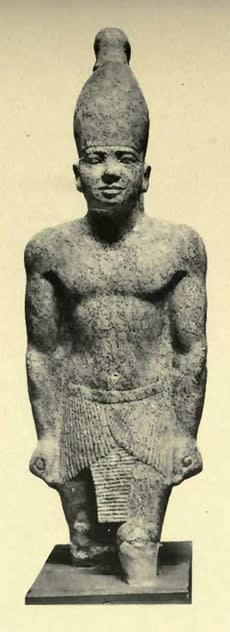
Pepi I ascended the throne at about 20 years of age, during a period overshadowed by tragedy: his father, Pharaoh Teti, had fallen victim to a conspiracy. There are strong grounds to believe that between Teti and his legitimate heir Pepi, a usurper named Userkare ruled for six years, possibly the leader of the conspirators. However, once Pepi I gained power, he demonstrated remarkable political resolve. He completely erased the usurper’s name from the official chronicle, counting his reign directly from the moment of his father’s death.
This approach is confirmed by inscriptions in the quarries of Hatnub and Wadi Hammamat, where the dates “25th cattle count” and “year after the 18th count” mysteriously coincide with the Sed jubilee. This proves that Pepi ruled for at least 25 years according to one system of reckoning and about 50 years according to another, which aligns well with Manetho’s account assigning him 53 years of rule. At the beginning of his reign, the young king relied on the regency of his mother and the support of provincial nobility, to whom he was forced to grant certain concessions.
Having become the full sovereign, Pepi adopted the throne name Meryre (“Beloved of Ra”), emphasizing his devotion to the Heliopolitan priesthood. His Horus name — Meritaawy (“Beloved of the Two Lands”), and his Nebty name — Merikhet (“Beloved of the people”), projected the image of an ideal ruler striving for harmony within the state. Before his personal name he invariably placed the title “Son of Ra,” reinforcing the monarch’s divine status.
Pepi I pursued an active foreign policy, turning Egypt into a powerful military state.
The pharaoh organized a major campaign into the region of Tomas in Nubia to “open the lands of Wawat.” His influence in Nubia was so great that local tribes (Medjay, Ireret) pledged to supply auxiliary contingents to the Egyptian army.
A key figure of Pepi’s reign was the nobleman Weni (Una), whose autobiography is an invaluable historical source. Weni rose from a junior priest to chief overseer of the royal servants and trusted confidant of the pharaoh.
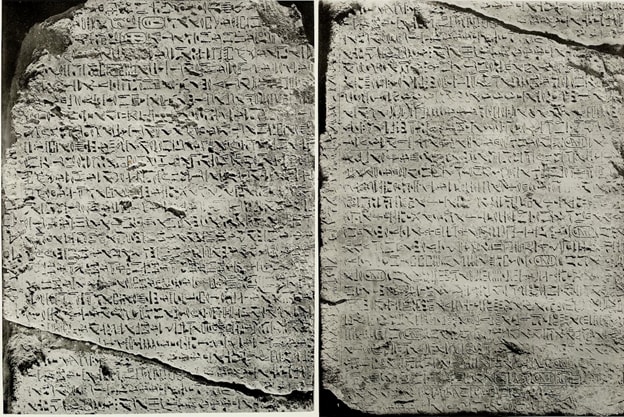
It was Weni who was entrusted with investigating the most intimate and dangerous matter — a secret scandal in the royal harem involving Queen Weret-Yamtes. Weni proudly states that he conducted the interrogation alone, without the participation of high officials, underscoring the boundless trust placed in him by the monarch.
Later Weni led a colossal army assembled from all Egypt and Nubia to suppress the Bedouins of the Heriush (“dwellers of the sands”). The campaign ended in the complete destruction of the enemy, devastation of their strongholds, and cutting down of vineyards, as attested by a triumphal song of the soldiers. Five times Weni subdued rebellious nomads, and toward the end of Pepi’s reign he carried out a unique amphibious operation: part of the troops advanced by land while another part traveled by ships, reaching the “Nose of the Antelope” (presumably Mount Carmel in Palestine).
Military successes laid the foundation for flourishing trade. Pepi I established strong ties with Byblos (modern Lebanon), which effectively became an Egyptian outpost in the Mediterranean. Inscriptions bearing the pharaoh’s name have even been found in distant Ebla (Syria).
Special attention was paid to the route through Wadi Hammamat to the Red Sea. Massive expeditions of builders and craftsmen were sent there to obtain precious breccia and ore, supplying large-scale state construction.
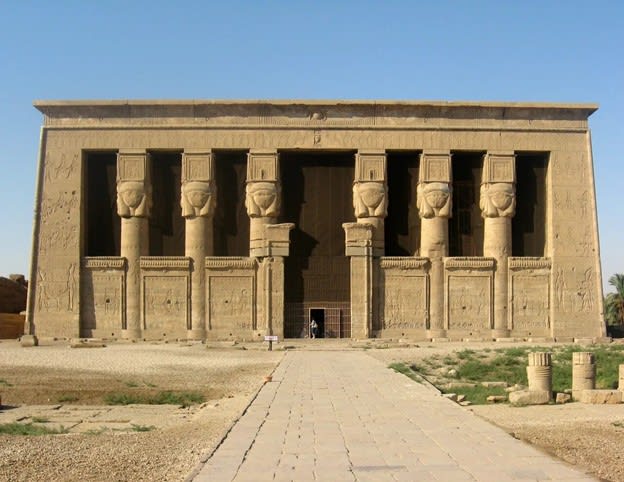
Pepi’s building activity encompassed the entire country. He restored and expanded sanctuaries at Tanis, Bubastis, Abydos, and Coptos. According to legend, Pepi I rebuilt the temple of Hathor at Dendera based on ancient plans from the time of Khufu discovered in archives. On the island of Elephantine, traces of his presence — granite naoi and inscriptions — are still found.
The pharaoh also paid attention to irrigation: under his direction the royal builder Meriram-Ptahankh dug new canals in Upper and Lower Egypt, necessary for preventing famine and developing agriculture.
Pepi’s personal life was closely intertwined with politics. After the disgrace of his first wife, he formed a strategic alliance with the powerful nomarch of Abydos named Khui, marrying two of his daughters. Both received the name Ankhesenmerire.
From the first sister was born the heir Merenre I.
From the second sister (already late in Pepi’s life) was born the future long-lived ruler — Pepi II.
The queens’ brother, Djau, became vizier, marking the growing influence of provincial nobility at court.
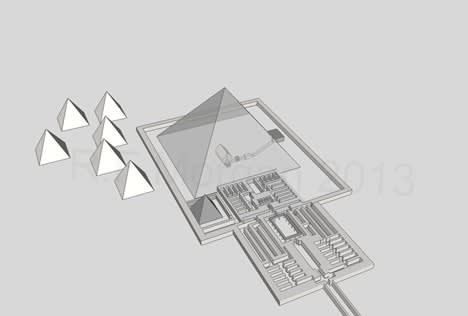
Pepi I built his pyramid in South Saqqara. His complex was named Men-nefer (“Well established”). This name proved so significant that it eventually passed to the surrounding city, which the Greeks later called Memphis.
It is with this pyramid that a major discovery in Egyptology is associated. In 1880, Auguste Mariette and Gaston Maspero uncovered the burial chamber, whose walls were entirely covered with the “Pyramid Texts.” This definitively refuted the theory of “silent” tombs. Although the pyramid is heavily ruined and long served as a quarry, archaeologists discovered three smaller pyramids nearby belonging to the pharaoh’s wives, including Queen Nubwenet.
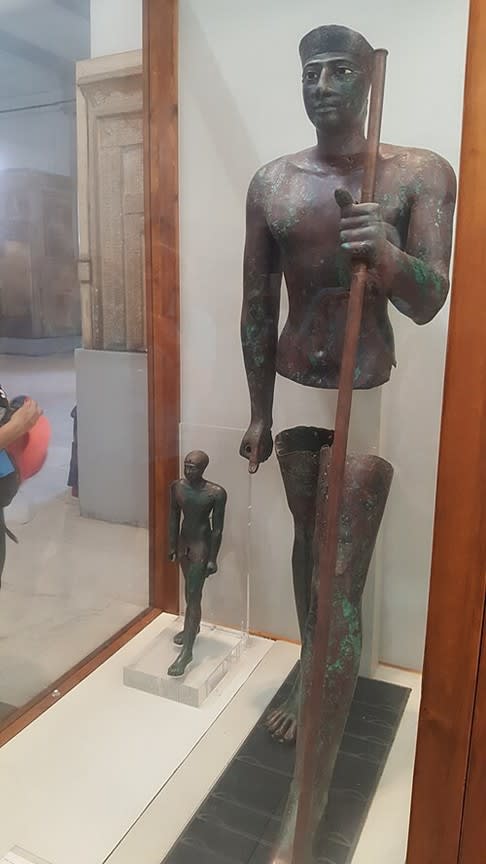
One of the most astonishing monuments of Pepi’s reign is the set of copper statues found at Hierakonpolis. The life-size statue of Pepi I (1.83 m) made of hammered copper is the earliest known example of metal sculpture of such scale. Nearby stood a smaller statue of a youth, depicting either his son Merenre or Pepi himself “reborn” after the jubilee. The king’s gaze, made of obsidian and limestone, still impresses with its depth and authority.
Pepi I left behind a powerful, wealthy state respected by its neighbors. Yet beneath the external splendor lay the growing power of the nomarchs, who were transforming from loyal servants into semi-independent rulers. His marriage to the daughters of a provincial prince signaled that the pharaoh already required external support to maintain the throne. Nevertheless, his reign remained in memory as a golden age, and his name was revered in temples even two millennia later.


