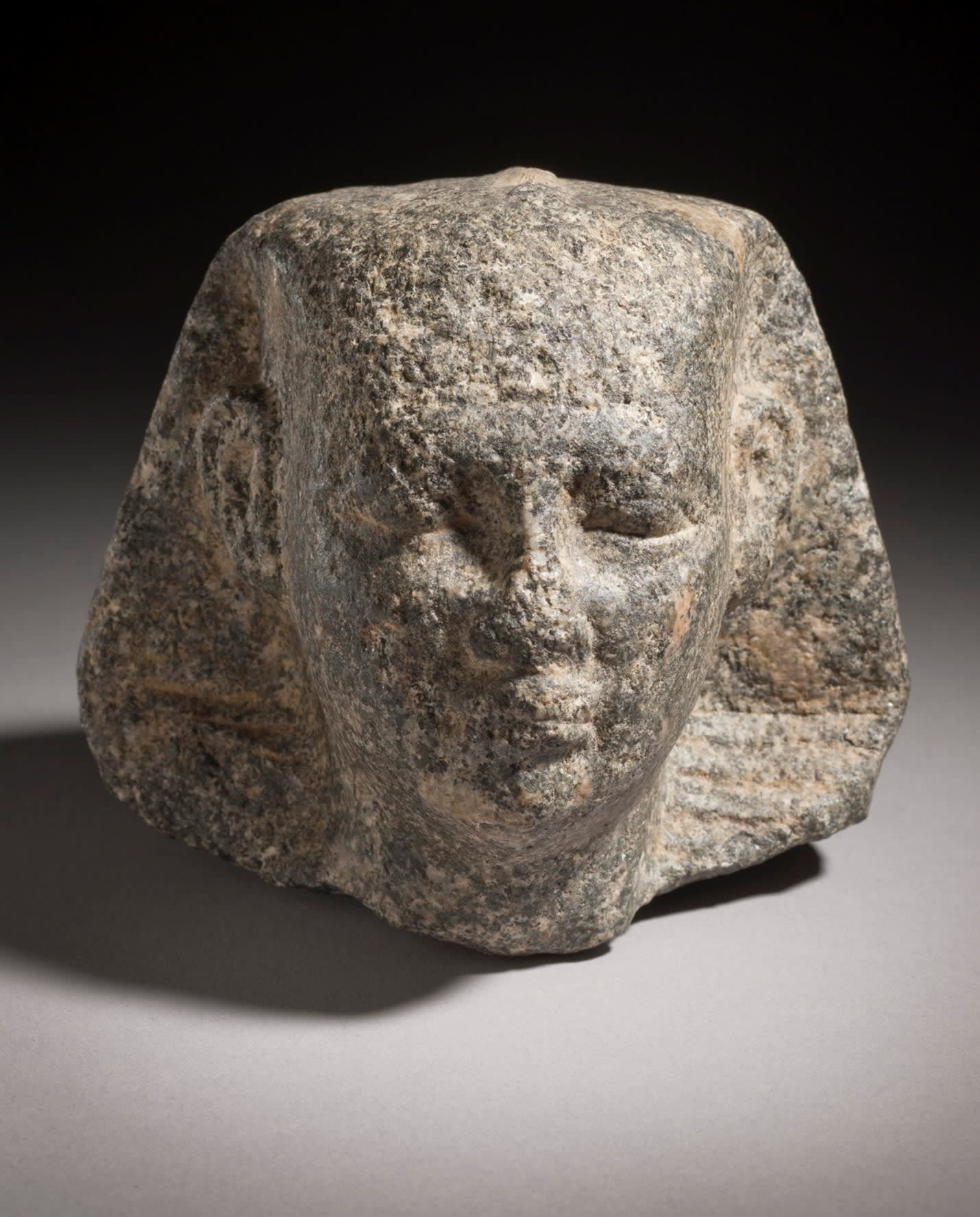

Niuserre was the younger son of Pharaoh Neferirkare Kakai and the great queen Khentkaus II. He ascended the throne after his elder brother Neferefre, whose reign ended abruptly. However, the story of this accession was not smooth: between the brothers, the mysterious Shepseskare likely managed to “insert” himself. Historians believe this was an attempt by another branch of the family to seize power, but Niuserre succeeded in restoring the throne to the legitimate heirs of Neferirkare.
The question of the length of his reign is a real puzzle for historians:
Manetho attributes to him an incredible 44 years.
The Turin Papyrus is heavily damaged, but scholars tend toward figures of 24 or 34 years.
Archaeological evidence: Scenes of the Heb-Sed festival (the thirtieth anniversary of rule) in his temple practically confirm that Niuserre remained on the throne for more than three decades. This made his reign the most stable and longest of the Fifth Dynasty era.

Niuserre was not only a builder but also an energetic strategist. His influence extended far beyond the Nile Valley:
On the rocks of Wadi Maghara, the pharaoh is depicted as the “Smasher of Asiatics.” These were not merely punitive expeditions but protection of strategic turquoise and copper mines. Recent finds confirmed that the base for these campaigns was the ancient port of Ayn Sokhna on the shore of the Gulf of Suez.
In the city of Byblos, a statue and a vessel bearing his name were found, indicating regular maritime expeditions for valuable cedar from Lebanon.
In the south, at the Second Cataract of the Nile (the fortress of Buhen), his seals were discovered, and in the quarries of Gebel el-Asr — stelae attesting to the extraction of valuable gneiss for royal statues.
Niuserre’s chief masterpiece was the solar temple Shesep-ib-Ra (“Satisfaction for Ra”) at Abu Ghurab. This was a grand structure erected on an artificial platform.
The temple formed a unique ensemble:
In the center of the courtyard, on a 20-meter base, rose a massive stone obelisk about 36 meters high. This was the first known example of such a construction, inside which there was even a passage to the upper platform.
A huge monolith before which bulls were sacrificed. The blood flowed through special channels into ten elegant alabaster basins.
The gallery walls were decorated with magnificent reliefs depicting the seasons, the deities of the Nile, and the cycles of natural life. It was a true stone hymn to the life-giving sun.
South of the temple stood a 30-meter model of the celestial vessel of the god Ra, built of brick and painted in bright colors.

Niuserre built his pyramid at Abusir under the name Men-setu (“Enduring Places”). Here he displayed considerable practicality (or, as we might say today, resource optimization). He usurped the valley temple of his father Neferirkare and “redirected” part of the already constructed paved causeway toward his own pyramid.
The pyramid itself had a height of more than 50 meters. Because of earlier tombs in the area, his funerary temple acquired an unusual L-shaped plan. Although the structure is now heavily ruined, it preserves traces of papyrus-form columns and refined bas-reliefs. Nearby, Niuserre built a small pyramid for his grandmother — the famous Queen Khentkaus I.

Sculpture of Niuserre’s time took a step toward deep psychological expression. The famous double statue in Munich is a unique monument of the Old Kingdom:
The left figure depicts Niuserre as a young, idealized god-king.
The right figure shows him again, but aged and wise, with bags under his eyes and sunken cheeks.

The era of Niuserre comes alive in the tombs of his subjects. The most impressive biography belongs to the nobleman Ptahshepses, who lived a life spanning the reigns of seven kings. He began his career under Menkaure (builder of the third pyramid of Giza) and reached the peak of power under Niuserre. His inscriptions are full of pride in royal favor: Niuserre allowed him to kiss his foot (the highest sign of trust) and invited him to participate in sacred processions on the royal barque.
Niuserre Ini completed the formation of the classical character of the Fifth Dynasty. He left behind a prosperous Egypt in which the cult of the Sun, military power, and refined art merged into a single harmonious whole.


