The history of Ancient Egypt begins not with a simple enumeration of names but with the majestic and at times harsh figure of Narmer — a ruler standing on the thin boundary between legend and documented history. He is often called the first pharaoh of Egypt or the founder of the First Dynasty, although in historical scholarship his status remains the subject of deep debate. If Narmer is regarded as a figure distinct from the legendary Menes, he appears to us as the last great king of the “Zero Dynasty” and the true architect of Egyptian statehood, ruling in the distant thirty-second century BC.
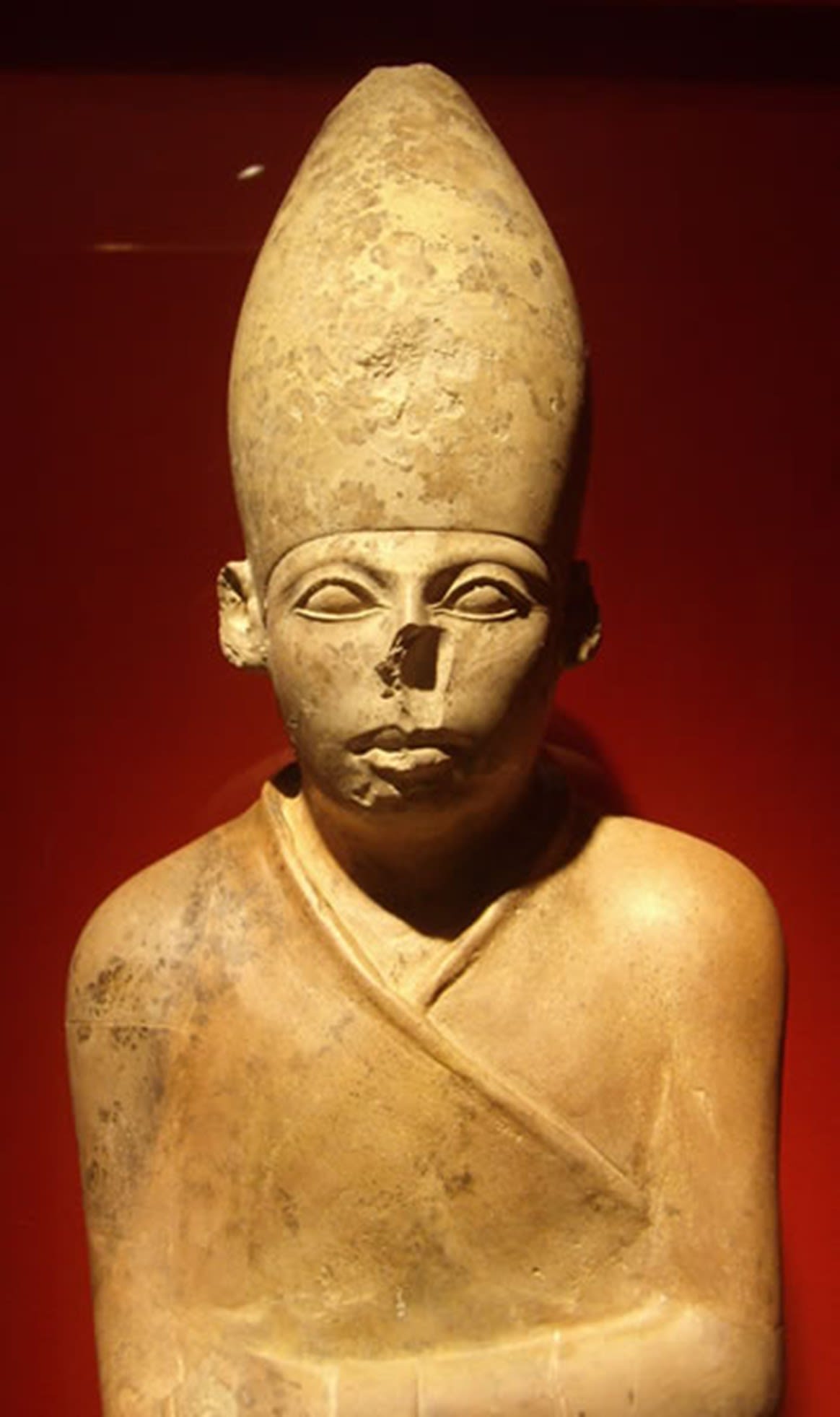
One of the principal mysteries of early Egypt is the absence of Narmer’s name in later official king lists. It is precisely this vacuum that gave rise to the theory that Narmer and Menes were the same person. Perhaps “Narmer” was his “Horus name” (associated with the god Horus), while “Menes” was his personal or throne name. Several hypotheses attempt to resolve this debate: some scholars see in Menes the successor of Narmer who inherited an already unified country; others believe that unification was a long process begun by Narmer and completed only generations later, up to the reign of Pharaoh Khasekhemwy. There is also a more radical opinion that Narmer merely suppressed rebellions in Lower Egypt, while the true unifier was the enigmatic King Scorpion, whose very existence is itself shrouded in uncertainty.
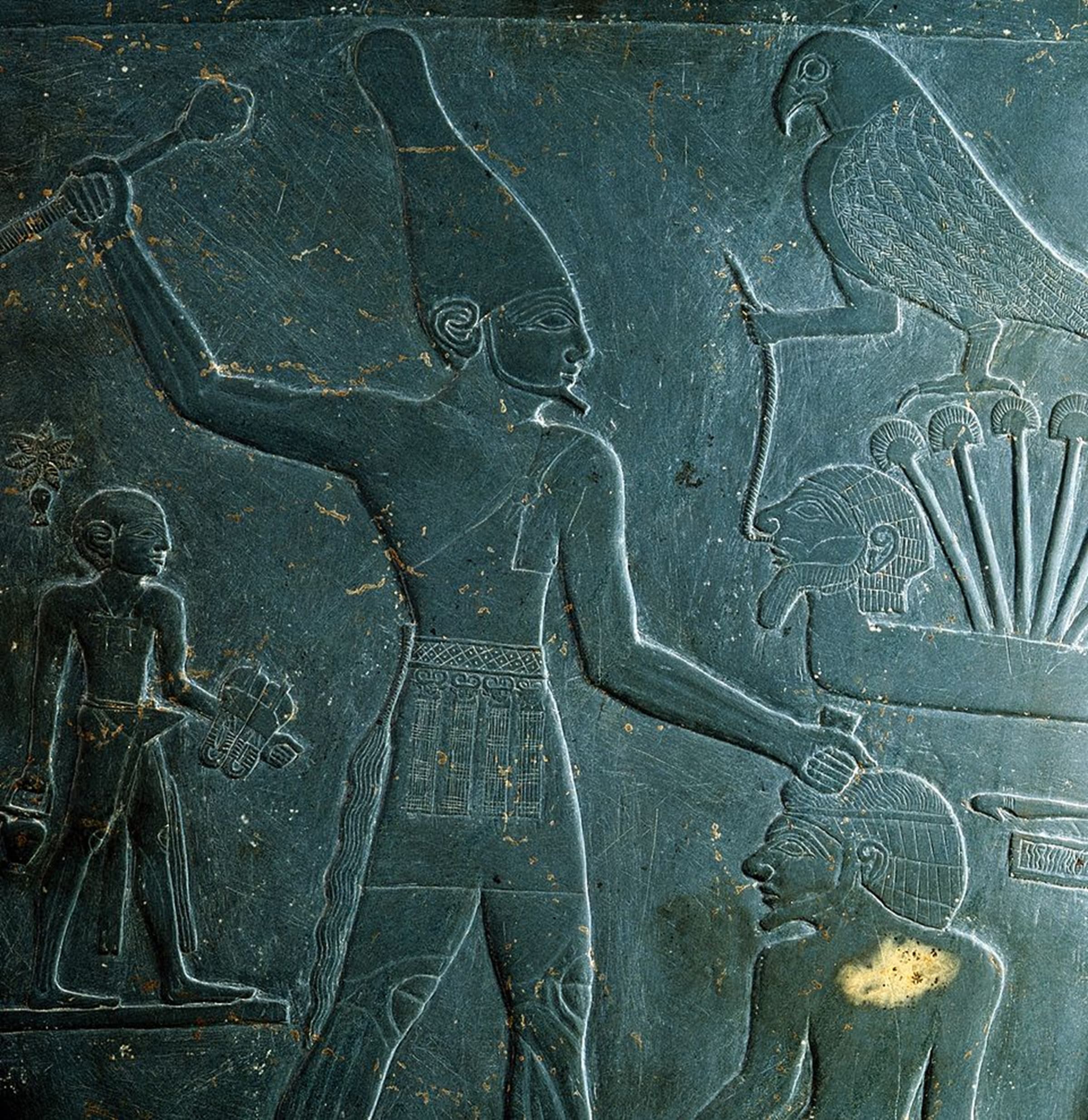
The main testimony to his era and power is the famous Narmer Palette, discovered by James Quibell at Hierakonpolis in 1898. This artifact, 64 cm high and 42 cm wide, now kept in the Cairo Museum, serves not merely as a cult object but as a genuine political declaration.
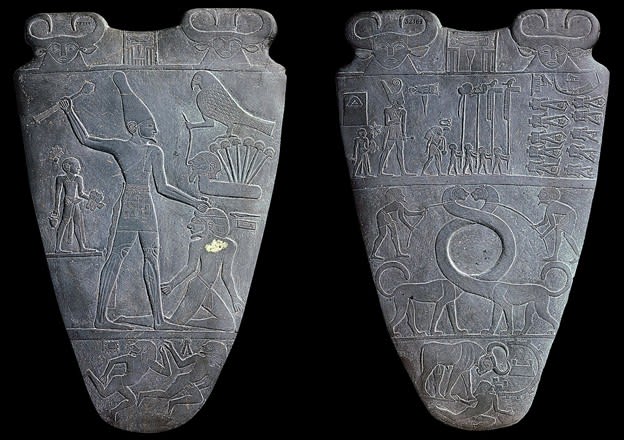
On the front side of the palette the pharaoh appears wearing the tall white crown of Upper Egypt. He is depicted at the moment of triumph: raising a heavy mace, he strikes an enemy from the “Harpoon Region” (northwestern Delta). The inscription reports the capture of six thousand prisoners. The reverse side shows Narmer already in the red crown of Lower Egypt, ceremonially proceeding with his retinue and sandal-bearer toward rows of the decapitated bodies of his opponents. The combination of the two crowns on a single monument became the first visual symbol in history of the unification of the Two Lands — Upper and Lower Egypt — under a single authority.
Another important artifact is the Narmer Macehead, preserved in the Ashmolean Museum in Oxford. The images on it suggest that the pharaoh remained in power for a considerable time. It depicts the celebration of the heb-sed — a royal jubilee traditionally held after thirty years of rule. Here Narmer sits on a high throne beneath a canopy, dressed in the ritual garments of Osiris, while above him hovers the vulture goddess Nekhbet.
Truly colossal numbers are recorded on this monument: the capture of 120,000 prisoners and vast herds of cattle. Although modern historians tend to regard these figures as exaggerations intended to emphasize the king’s greatness, they clearly demonstrate the scale of his campaigns against individual nomes (provinces). It is noteworthy that in depictions associated with the early period of his activity Narmer most often appears in the white crown, suggesting his origin from Upper Egypt and the gradual conquest of northern territories. His expansion was not limited to the Nile Valley: ivory cylinders attest to campaigns in Libya, while archaeological finds confirm his influence in Palestine (Tell Erani) and Arad (modern Israel).
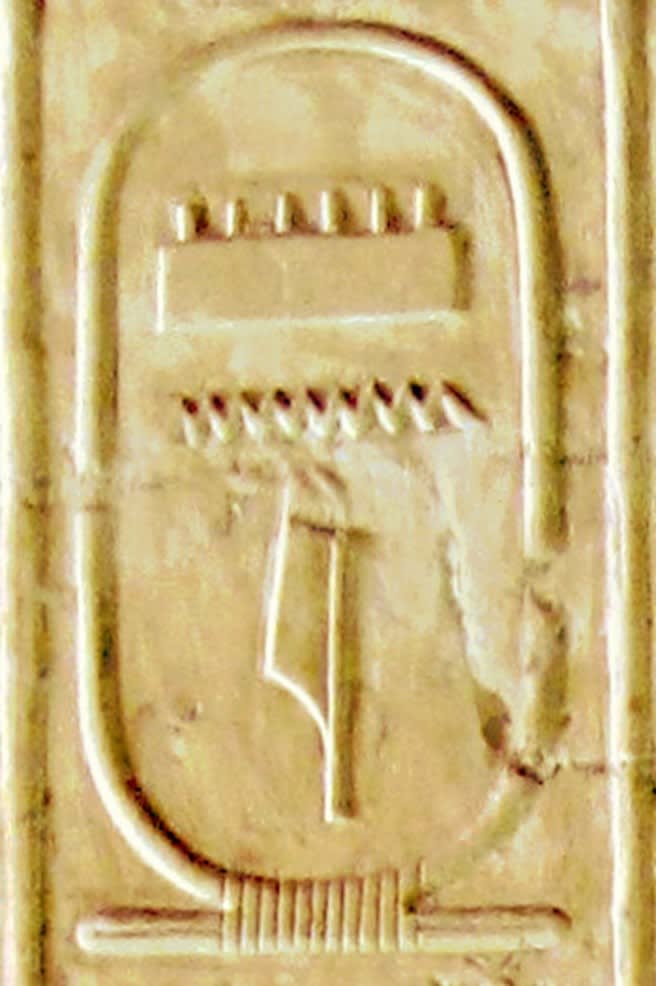
The ruler’s very name — Hor-Narmer — still provokes linguistic debate. The hieroglyphic spelling combines the sign of a fish (catfish), read as “Nar,” and a chisel corresponding to the sign “Mer.” The literal translation “Fierce Catfish” may seem strange to a modern reader, but in the belief system of predynastic Egypt the catfish symbolized untamed strength and control. In the art of that time “controlling” animals (including fish depicted on the handles of ancient knives) represented the ruler’s power over chaos. Thus the name Narmer was not merely a combination of sounds but a concise theological assertion of his divine nature and right to dominion.
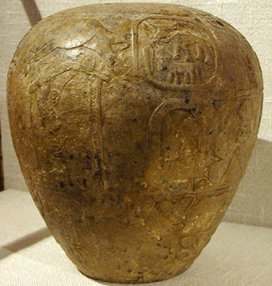
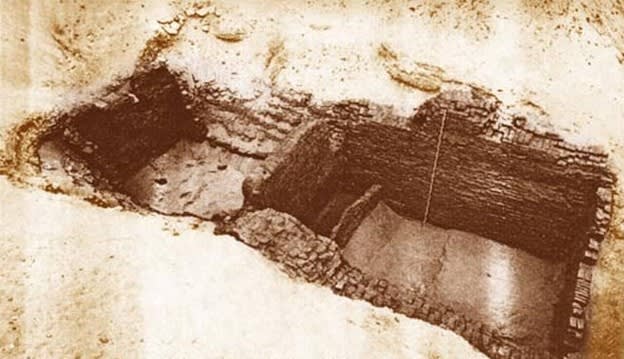
The earthly path of the first pharaoh ended at Abydos. His tomb in the sacred necropolis of Umm el-Qaab, consisting of two brick chambers (B17 and B18), was conclusively identified by Egyptologist W. Kaiser in 1964. Inside were discovered seals and fragments of clay vessels bearing his name, which are today scattered across the world’s major museums — from London and Berlin to Chicago and Toronto.
More than fifty monuments associated with his name are known: from finds in the area of the Hierakonpolis temple to artifacts from Saqqara, Naqada, and even the Step Pyramid of Djoser. Narmer left behind not only the foundation of Egyptian civilization but also a bloody and majestic imprint on history, transforming scattered settlements into the world’s first centralized state.


