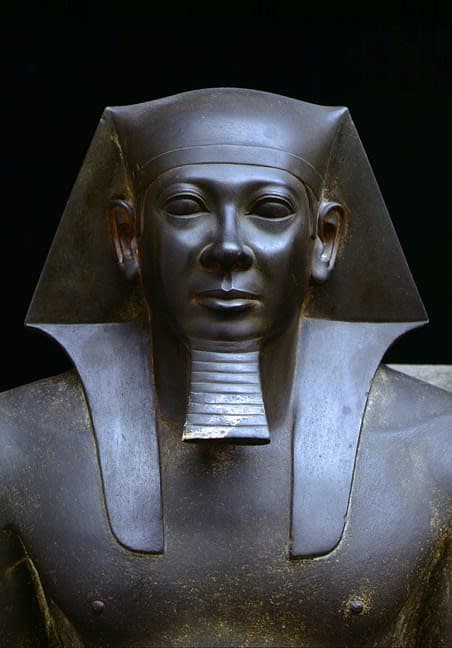
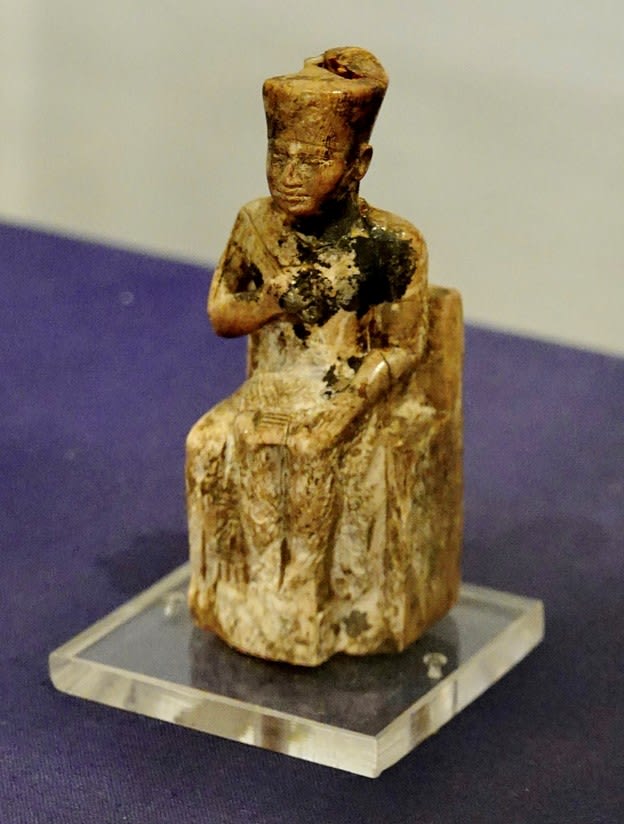
Menkaure ascended the throne after Khafre and, according to Herodotus, was the son of the great Cheops. His accession to power is described by ancient authors as an act of historical justice. Unlike his predecessors, who “closed the temples” and exhausted the people with unbearable labor, Mykerinus appears in the accounts as the most righteous of judges. He not only reopened the sanctuaries but also, according to legend, paid compensation out of his own funds to those subjects who considered his judicial decisions unjust.
One of the most vivid legends associated with his personality is the prophecy of the oracle from the city of Buto. The pharaoh was foretold only six years of life. Outraged that the gods punished him for his piety while his cruel ancestors had lived long lives, Menkaure decided to outwit fate. He ordered lamps to be lit at night, turning nights into days, and devoted himself to continuous revelry, hoping thereby to turn the allotted six years into twelve. Another, darker legend tells of his daughter, allegedly buried in a gilded hollow statue of a cow, which Herodotus claimed to have seen in Sais centuries later. Although modern scholars see in this merely a misinterpretation of a statue of the goddess Hathor, these traditions emphasize the deep impression left by Menkaure’s personality on Egyptian mythology.
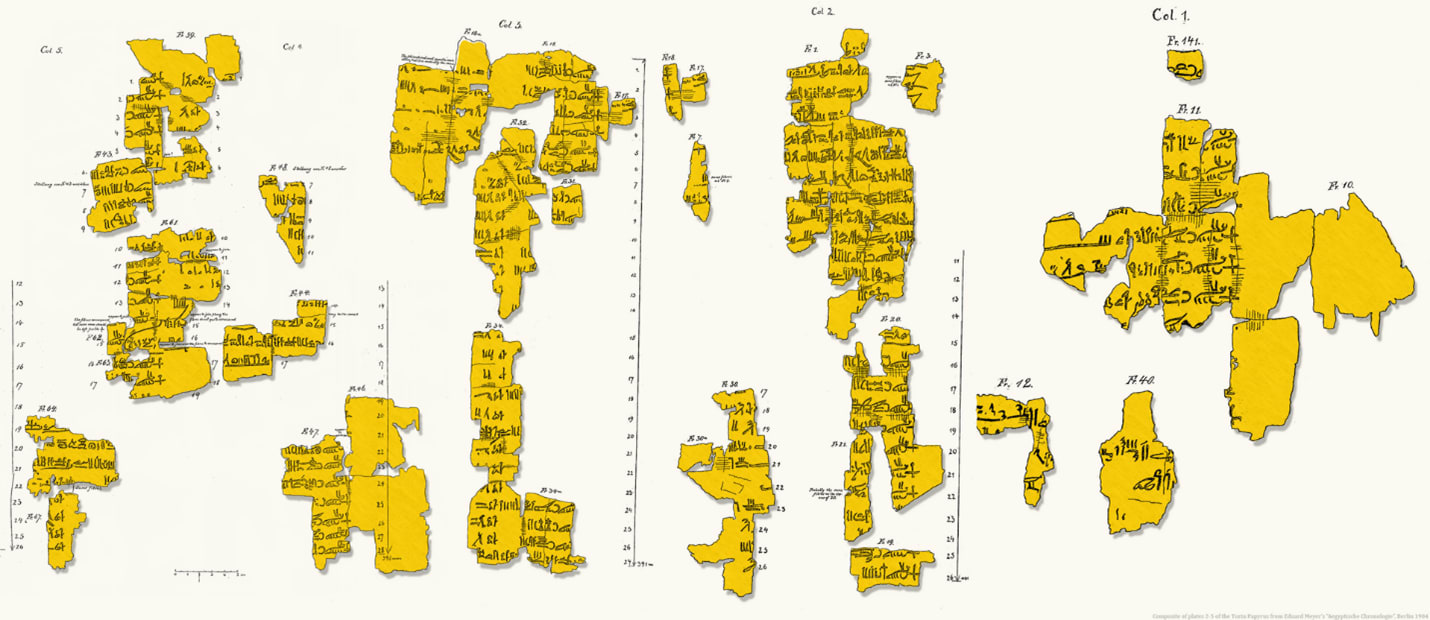
The exact duration of his reign remains a matter of scholarly debate. Manetho attributed to him an incredible 63 years, which is contradicted by the condition of his funerary complex. The Turin Papyrus gives a number ending in 8 (probably 18 or 28 years). Modern archaeology, relying on data from the “11th cattle count,” tends toward a reign of 18–22 years.
Upon ascending the throne, the pharaoh took the name Menkaure, meaning “Enduring are the spirits of the sun god.” His Horus name was Kakhet (“Bull-god in the flesh”), and as his Nebty name he chose the short Ka (“Bull”), emphasizing his strength and connection with ancient fertility cults.
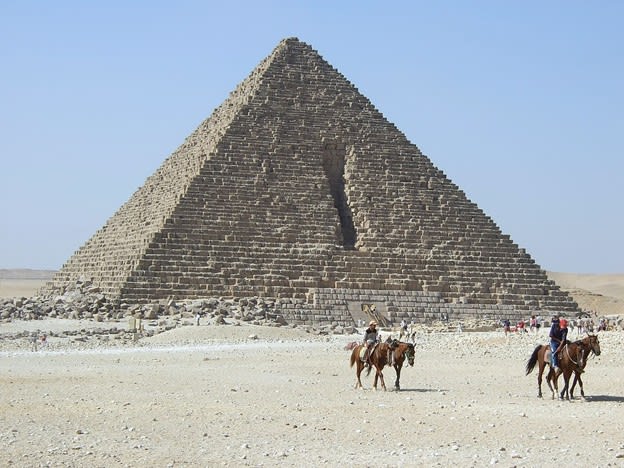
The pharaoh’s tomb, called Netjer Menkaure, stands in the southwestern part of the plateau. Although its volume (260,000 m³) is only a tenth of that of Khufu’s pyramid, it impressed contemporaries with the quality of its execution.
Dimensions: The original base measured $108.4 \times 108.4$ m with a height of 65.55 meters.
Materials: The pyramid was two-colored — the lower 16 courses were faced with red Aswan granite, above which white limestone was used.
The internal structure of the pyramid indicates repeated changes of plan. The burial chamber was originally located shallowly but was later moved to a depth of 6 meters. A curious fact: one of the work gangs building the pyramid called itself “Menkaure the drunkard” (or “the intoxicated one”), which echoes Herodotus’ stories about the carefree character of the pharaoh.
Unfortunately, Menkaure did not live to see the completion of his monument. His successor, Shepseskaf, finished the construction in haste, replacing stone with unbaked brick, as evidenced by inscriptions in the funerary temple.
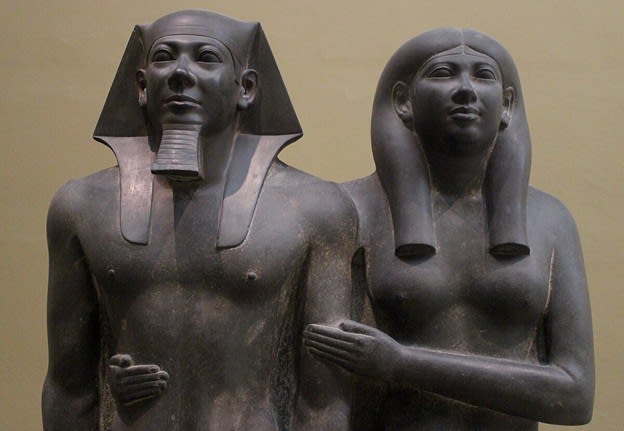
If pyramid construction shows a decline, then in the art of sculpture Menkaure’s reign became a “golden age.” Archaeologist George Reisner discovered in the temples of the complex unique triads — sculptural groups made of graywacke. In them the pharaoh is depicted accompanied by the goddess Hathor and personifications of various nomes (provinces) of Egypt.
Of particular interest is the double statue of Menkaure and his wife Khamerernebty II, striking for its realism and the tenderness of the queen’s gesture as she embraces her husband. A colossal alabaster statue of the pharaoh, 235 cm high and now kept in Boston, was also found; it demonstrates the power and divine serenity of the ruler.
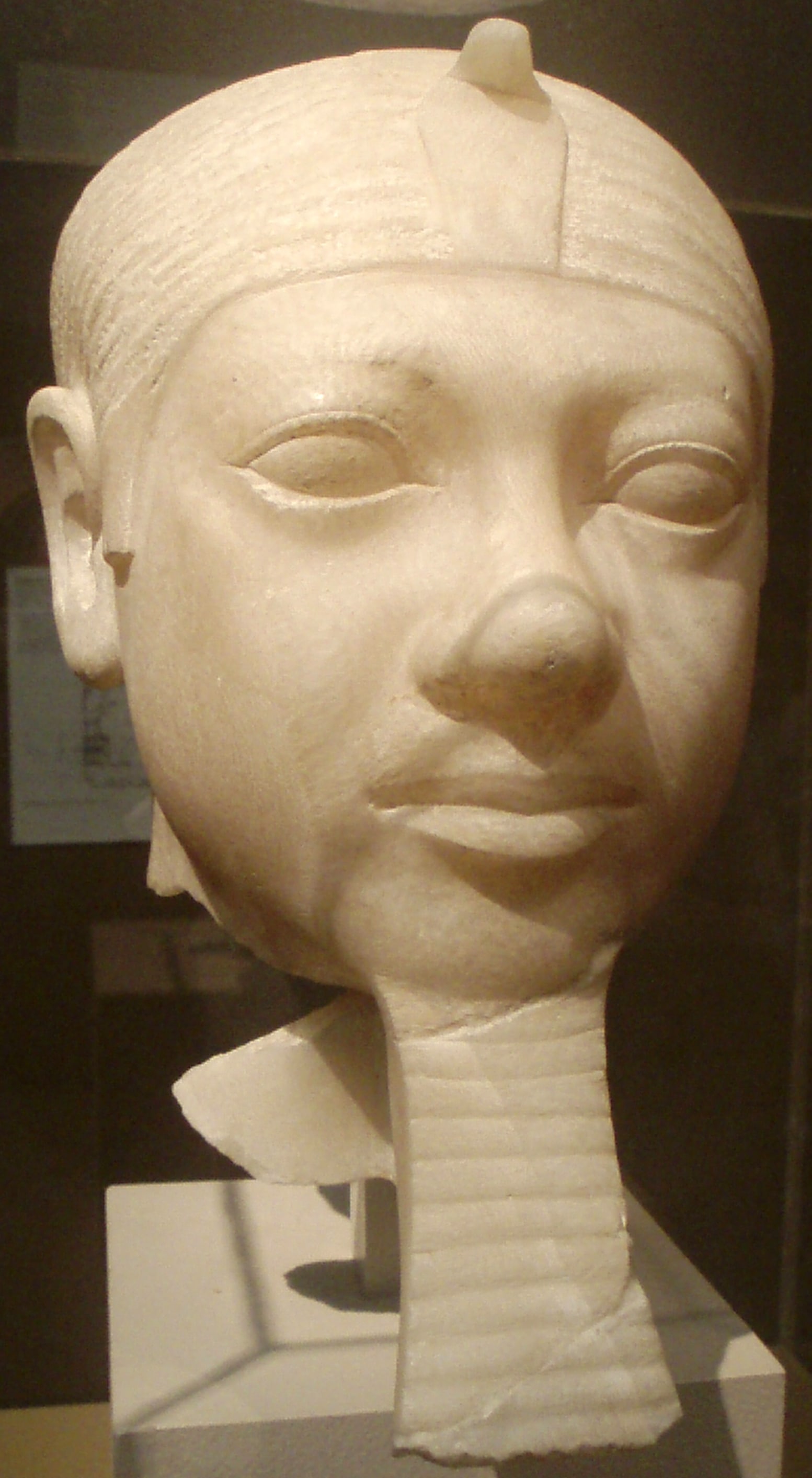
The pharaoh left behind not only an architectural ensemble but also the memory of wise rule. His wife Khamerernebty II bore him an heir, Shepseskaf, who, despite the brevity of his reign, completed his father’s monuments with deep reverence. South of the main pyramid three subsidiary pyramids have survived, in one of which a granite sarcophagus was found, probably belonging to the king’s principal wife.


