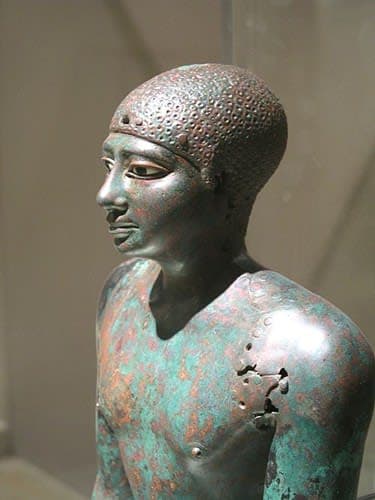
One of the most debated mysteries in Egyptology remains the duration of Merenre I’s reign. The Turin Royal Papyrus attributes to him an incredible 44 years of rule, but modern researchers unanimously agree that this figure is the result of a scribal error. Most likely, the name Merenre was confused with that of his father Pepi I, whose throne name was Meryre. The real length of his sole reign, according to the testimony of the ancient historian Manetho (who called the king Methusuphis) and archaeological evidence, was about 5 to 7 years.
Indirect evidence of this brief period is the fact that his younger brother and successor, the famous Pepi II, inherited the throne at the tender age of six. Despite the short duration, Merenre I managed to assume the full set of royal titles: throne name Merenre (“Beloved of Ra”), Horus name, and Nebty name — Ankhkhau (“Living in his ascent”). Notably, the pharaoh scarcely used his personal name Nemtyemsaf in official documents, reserving it only for sacred texts inside his pyramid.
The main vector of Merenre I’s policy was the final consolidation of Egypt’s control over Northern Nubia. During this period the country urgently needed resources: gold, ivory, ostrich feathers, and precious ebony. To realize these ambitions, the pharaoh relied on outstanding figures of the time.
The famous nobleman Weni, who had begun his career under the pharaoh’s grandfather, was appointed “Overseer of the South.” Under his leadership Egyptian influence extended far beyond the Second Cataract of the Nile. Weni accomplished an extraordinary feat for that time: he traveled to the granite quarries of the Ibhat region on a single warship. This became possible only because the princes of Elephantine, bearing the title “Guardians of the Gate of the South,” ensured absolute security in the region. Moreover, by order of Merenre, Weni cut five canals bypassing the First Cataract, creating a continuous waterway for transporting heavy granite blocks.
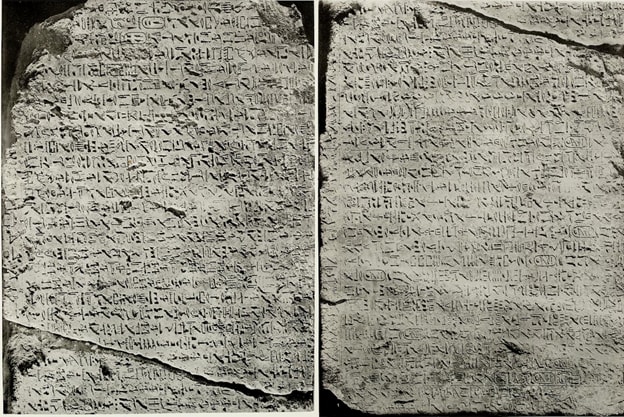
After Weni’s death, the task was taken up by the nomarch of Elephantine, Harkhuf. He led three expeditions to the mysterious land of Yam (near the Third Cataract), returning with rich tribute from the chiefs of the Irtjet, Setju, and Wawat tribes.
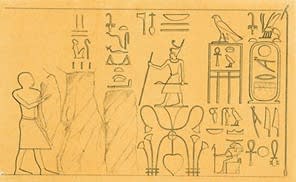
The culmination of Merenre’s southern policy was his personal visit to Egypt’s frontier at the First Cataract. This was an unprecedented political event, recorded in rock reliefs on the island of el-Hesse. An inscription dated to “Year 5, second month of the season Shemu, day 28” reports that the king himself arrived at the cataracts to receive oaths of loyalty from the chiefs of the Nubian tribes of the Medjay and Wawat. In the relief, the pharaoh is depicted majestically leaning on a staff, while the subdued rulers bow before him in deep reverence. This visit became a vivid demonstration of central authority.
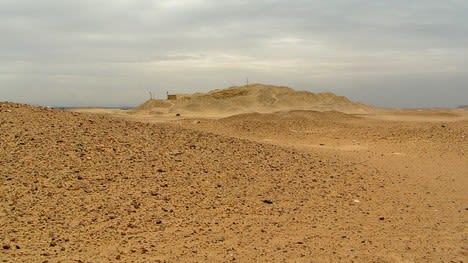
Merenre built his tomb at Saqqara, choosing a site 450 meters southwest of his father’s pyramid. The complex was given the poetic name “Ha-nefer Merenre” (“Merenre appears in beauty”). The pyramid had proportions typical for the period: a base of 78.75 meters and a height of 52.5 meters.
The internal layout largely copied the tombs of his predecessors, including the presence of the “Pyramid Texts” and a magnificent ceiling decorated with white stars on a black background. In the burial chamber a massive black granite sarcophagus was discovered — the very “Chest of the Living” that Weni had transported from Ibhat with great difficulty.
However, the king’s early death left its mark on the entire complex. Research by French archaeologists showed that the funerary temple remained unfinished: many reliefs were only sketched in black paint but never carved into stone. The valley temple was not begun at all, underscoring the suddenness of the young ruler’s death.
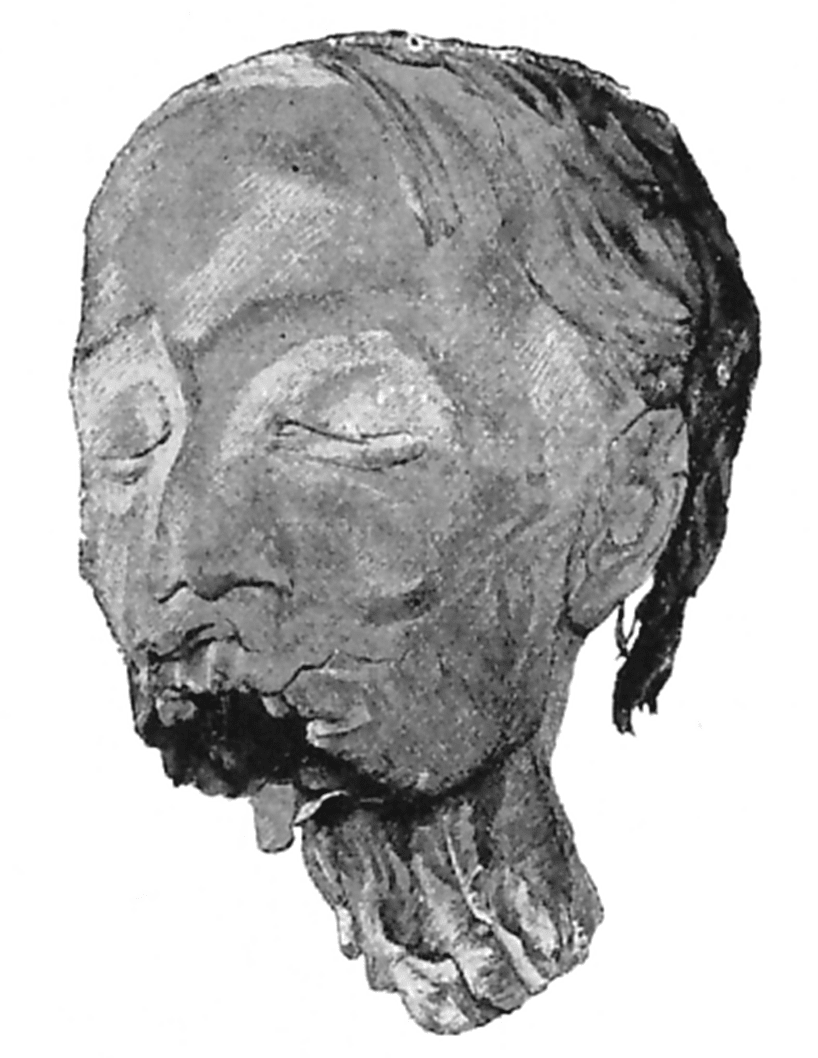
One of the saddest chapters in the study of Merenre I is the story of his mummy. In 1881 Gaston Maspero discovered in the pyramid an almost intact body, which he identified as the remains of the pharaoh himself. If confirmed, Merenre would have possessed the oldest surviving royal mummy of the Old Kingdom.
However, the find immediately provoked debate. The renowned anatomist Elliot Smith suggested that the mummy belonged to a later period (possibly the Eighteenth Dynasty), pointing to the embalming technique. Unfortunately, this can no longer be verified. Before World War II the mummy was kept in the Berlin Museum under number 8059, but in 1945, during evacuation and bombing, it disappeared without trace. Only descriptions remain, mentioning a strange detail: the mummy’s feet were turned inward at the toes — whether this was a congenital physical condition of the king or an error of the embalmers will remain forever a mystery.
The reign of Merenre I, despite its brevity, marked the moment of Egypt’s greatest power in Africa, becoming a short but dazzling bridge between the long eras of Pepi I and Pepi II.


