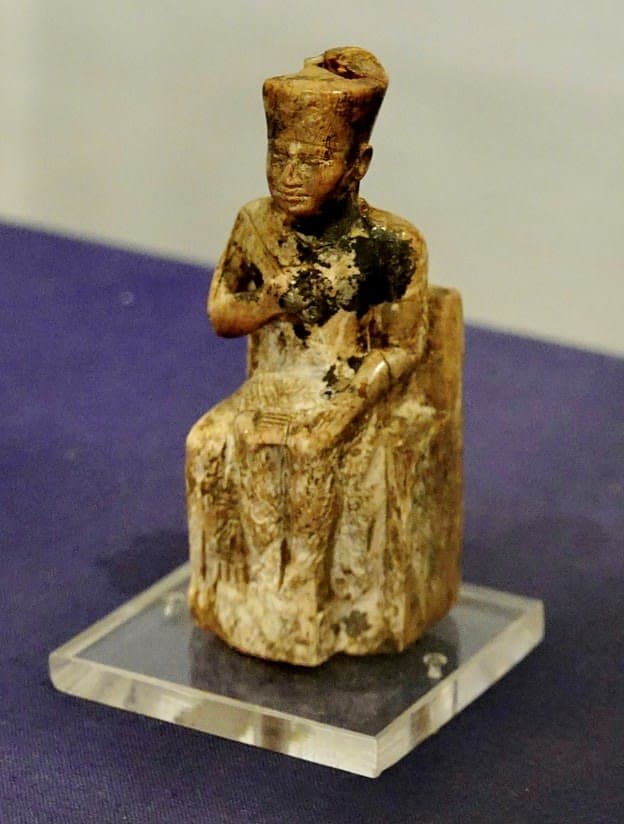
According to the legendary Westcar Papyrus, Khufu — better known as Cheops — was the son of the great builder pharaoh Sneferu. His mother is considered to have been Queen Hetepheres, whose titulary included the phrase: “Mother of the King whose instructions were always carried out.” This emphasizes not only her high status but also, likely, her strong influence on the young ruler. The future king spent his youth at the estate of Menat-Khufu (“Nurse of Khufu”) in Middle Egypt, under the patronage of the god Khnum, whose name became an integral part of the pharaoh’s full name — Khnum-Khufu.

The duration of his reign remains a subject of scholarly debate. The Turin Papyrus assigns him 23 years, whereas ancient historians such as Herodotus and Manetho credited him with the fantastical spans of 50 or even 63 years. Archaeological evidence mentioning the “17th cattle count” suggests that the actual length of his rule was between 27 and 34 years.


For his tomb, named Akhet-Khufu (“Horizon of Khufu”), the pharaoh chose a rocky plateau southwest of modern Cairo. This was not merely construction but a monumental logistical achievement. Stone blocks weighing several tons were quarried on the eastern bank of the Nile and transported across the river during the annual floods.
The technical specifications of the pyramid remain astonishing even in the twenty-first century:
Original height: 146.7 meters (today — 137.3 m)
Number of blocks: About 2,250,000
Total weight: Nearly 7 million tons
The internal structure of the pyramid is unique. It contains three principal chambers reflecting stages of construction. The lowest, carved into the bedrock, remained unfinished. The “Queen’s Chamber” lies higher, while at the heart of the pyramid is the King’s Chamber, lined with perfectly polished granite. Above it are five relieving chambers designed to protect the burial room from the immense pressure of millions of tons of stone. The architectural jewel is the Grand Gallery — a majestic ascending passage 8.5 meters high with a corbelled vault.

The pyramid did not stand alone. It formed the center of a complex ensemble that included a mortuary temple — of which only a basalt floor survives — and a causeway once decorated with reliefs. In 1954 archaeologists made a sensational discovery: in hidden “docks” at the base of the pyramid they found the Solar Boat — a 36-meter vessel made of Lebanese cedar, intended for the pharaoh’s journey in the afterlife.
To the east of the giant stand three subsidiary pyramids belonging to Khufu’s wives, including Henutsen and Meresankh. The most dramatic story, however, concerns the tomb of his mother, Hetepheres. Discovered in 1925, it was filled with treasures: golden furniture, silver bracelets, and cosmetic equipment. Yet when archaeologists opened the sarcophagus, it was empty. This gave rise to the theory that the real mummy had been stolen in antiquity, and that officials, fearing Khufu’s wrath, staged a “burial” with an empty coffin.
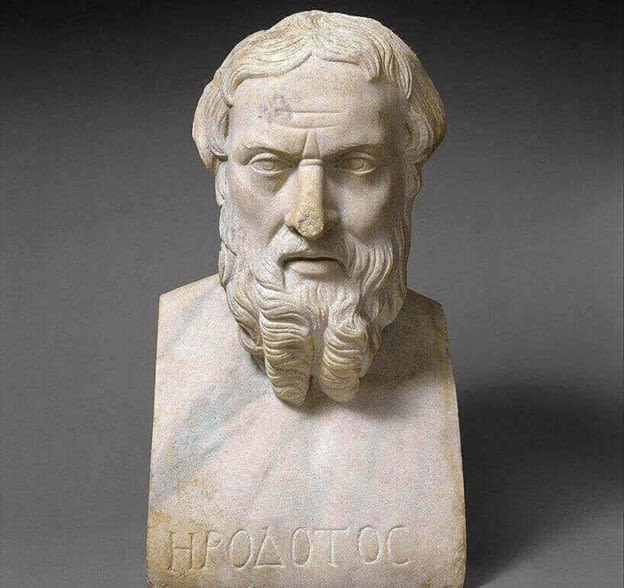
In Egyptian memory, Khufu’s reputation was ambivalent. On the one hand, he was the object of a cult that endured for two millennia — until the Ptolemaic period. On the other hand, Greek tradition, drawing on the accounts of Herodotus, portrayed him as a despotic tyrant and impious ruler who closed temples and forced the entire population to labor for his pride.
Archaeological evidence, however, suggests a harsh but effective ruler. He actively exploited the Sinai Peninsula, subduing nomadic tribes and mining turquoise, showed interest in the southern frontier near Aswan where pink granite was quarried, and built temples in the Delta. His “tyrannical” image in later narratives may have been merely a metaphor for the enormous strain on resources required to create the “Horizon of Khufu.”
Khufu left behind not merely a mountain of stone but proof that human will can contend with eternity. Although his mummy has never been found, his name remains immortal as long as the Great Pyramid — bearing his legacy — still stands.


