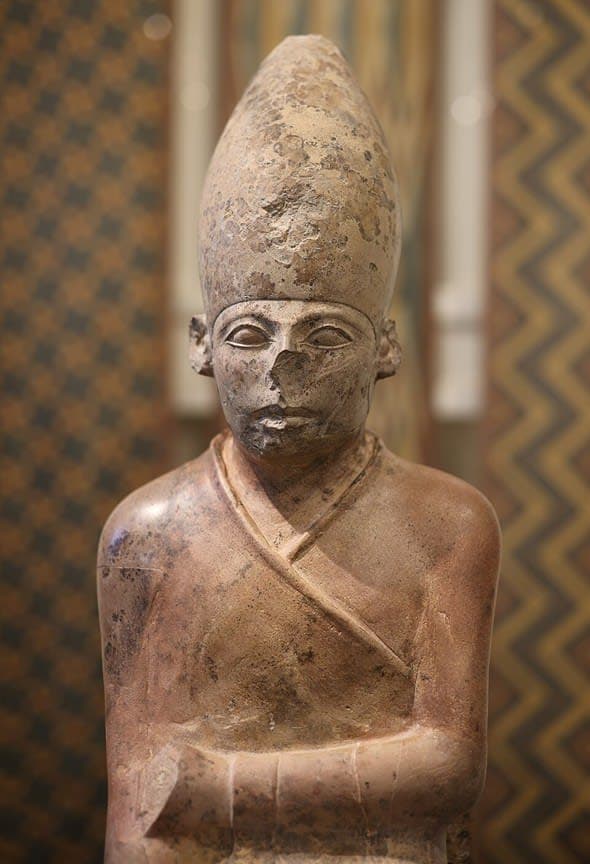
If the first pharaohs of the First Dynasty laid the foundations of Egyptian civilization, then Khasekhemwy, the last ruler of the Second Dynasty, was the one who literally “stitched” the country back together after a devastating civil war. His reign became the majestic finale of the Early Dynastic period and at the same time a powerful prologue to the age of the Great Pyramids.
One of the most intriguing aspects of his biography is the change of his name. Archaeologists have discovered monuments belonging to a pharaoh named Khasekhem (“He Who Arises with the Scepter”) exclusively in Upper Egypt (particularly at Hierakonpolis). This name does not appear on monuments from Lower Egypt. This led Egyptologists, such as Jean Vercoutter, to suggest the existence of two different kings.
Most likely, at the beginning of his career he ruled only the South under the name Khasekhem. But after he succeeded in suppressing the rebellious North and restoring the unity of the country, he changed his name to Khasekhemwy (“He Who Arises with the Two Scepters”). This symbolic gesture emphasized that power over both parts of the country was now concentrated in his hands.
Khasekhemwy’s accession to power, presumably following the reign of Sekhemib (or Peribsen), was accompanied by an extremely brutal military conflict. Northern Egypt (the Delta) revolted, and the pharaoh had to deploy the full strength of his army to restore order.
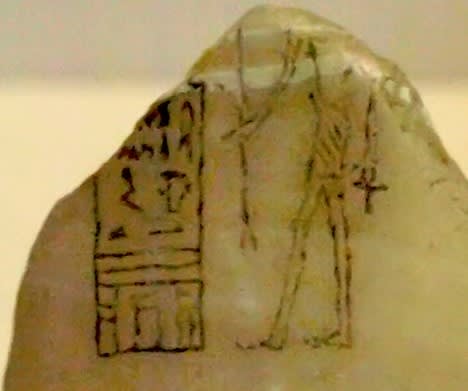
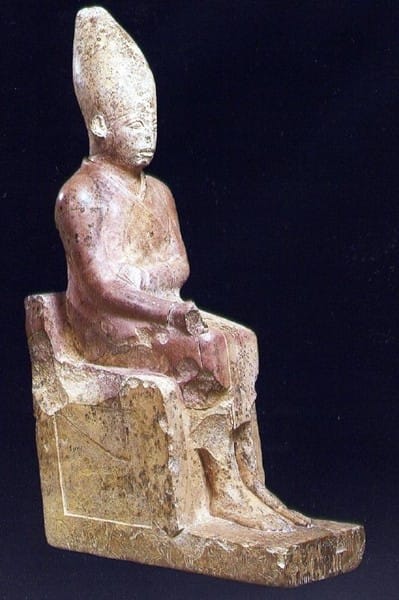
On the bases of two famous statues of Khasekhemwy that he dedicated to the temple at Hierakonpolis are inscribed terrifying figures: according to the texts, 48,205 people were killed during the war and another 47,209 were taken prisoner. Stone vessels from that time depict the goddess Nekhbet (patroness of the South) presenting the pharaoh with the symbol of the unification of the lands, accompanied by the solemn caption: “In the year of the defeat of Lower Egypt.” According to a number of scholars, it is Khasekhemwy who deserves the title of the true consolidator of the country to a far greater extent than the semi-legendary Menes or Narmer.

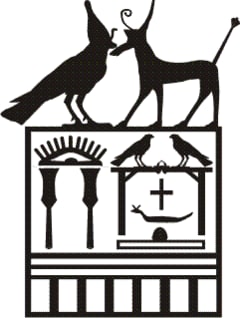
Khasekhemwy’s uniqueness is most vividly expressed in his official symbolism. In Ancient Egypt the pharaoh usually regarded the god Horus as his patron, whose image crowned his serekh (the heraldic frame containing his name). Khasekhemwy, however, took an unprecedented step: his serekh is topped by figures of two gods simultaneously — the falcon Horus and the animal of Seth.
He called himself “The One in Whom the Two Lords Are at Peace.” By acknowledging Seth (a god revered in the rebellious North) alongside Horus, the pharaoh demonstrated that the civil war was over and both sides were reconciled under his authority. Neither before nor after Khasekhemwy did any pharaoh dare to use such a combination of symbols; immediately after his death, Seth was once again removed from the royal serekh.
Khasekhemwy’s reign was marked by significant technological progress. The Palermo Stone preserves a reference to an outstanding achievement of that time — the casting of a colossal copper statue known as “Khasekhemwy Is Great.” This testifies to the flourishing of metallurgy and the ability of Egyptian craftsmen to work on a monumental scale.
The pharaoh also took care of the security and prestige of the state:
He erected two powerful mudbrick fortresses — at Nekhen (Hierakonpolis) and the famous Shunet el-Zebib at Abydos, whose walls are partially preserved to this day.
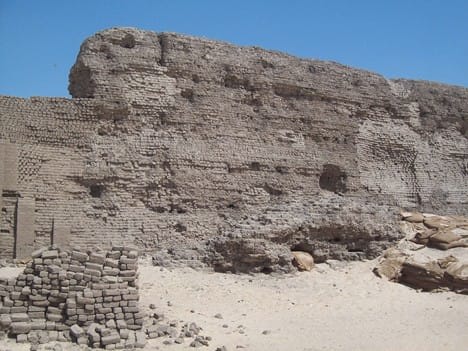

A vessel bearing his name found in distant Byblos (Kebene) in Lebanon proves that already in the early third millennium BC Egypt maintained active maritime trade with Phoenicia, importing valuable cedar and other resources.
Khasekhemwy was buried at Abydos, in the necropolis of Umm el-Qaab. His tomb became a true engineering marvel of its time. It consisted of 58 rooms grouped around a central burial chamber. Most importantly, this chamber was constructed from dressed stone blocks. This is the oldest known stone structure in Egyptian history and became the prototype for future monumental architecture.
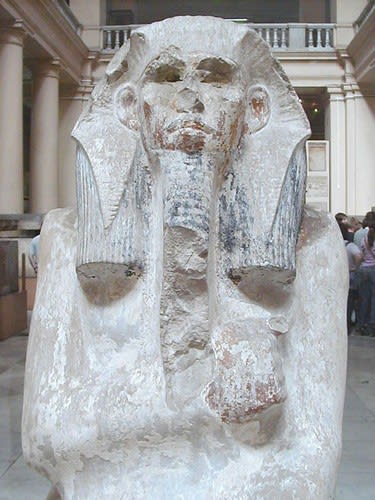
Manetho calls this ruler Cheneres and assigns him a reign of 30 years. Khasekhemwy was probably not only the terminator of the Second Dynasty but also the “founding father” of a new era. His wife, the great queen Nimaathap, is considered the mother of Pharaoh Djoser, builder of the first pyramid. Thus Khasekhemwy passed to his successor not a land torn by internal strife but a unified, powerful, and technically advanced state ready for the great achievements of the Old Kingdom.


