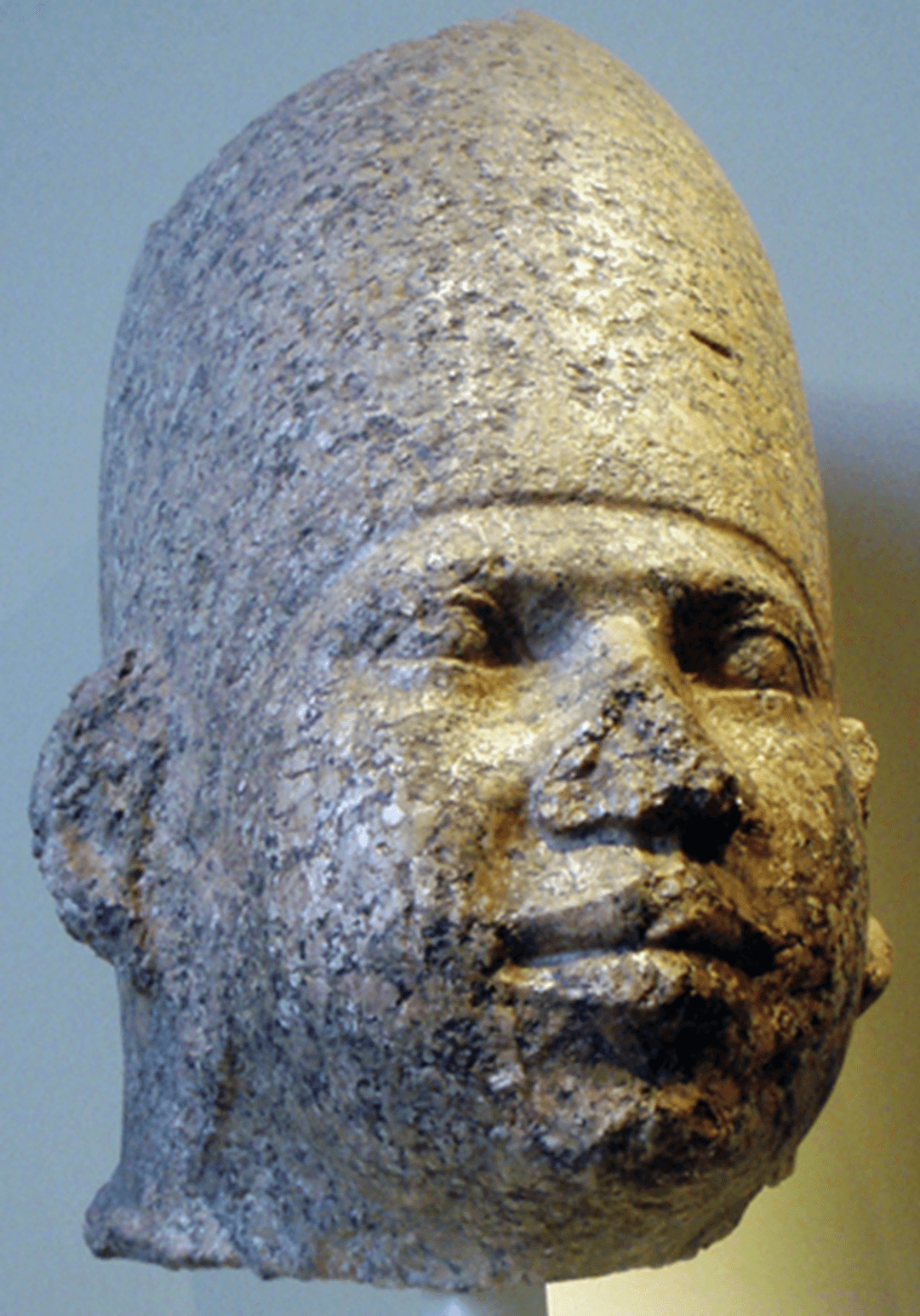
Huni was not a random figure in Egyptian history. According to historical evidence, a man bearing this name held high offices at court as early as the time of the great Djoser, the builder of the first pyramid. This suggests that Huni followed a long path of state service and ascended the throne already at a mature, if not advanced, age. Nevertheless, despite his late accession, the Turin King List — one of the most important documents of Egyptian chronology — assigns him an impressive 24 years of rule. During this time he managed not only to strengthen the state’s borders but also to lay the foundations for the architectural revolution that would later be completed by his successor.

One of Huni’s strategic priorities was securing the southern frontier. It was he who founded a powerful fortress on the island of Elephantine, located at the First Cataract of the Nile south of modern Aswan. This outpost became a crucial node for controlling the movement of goods and troops, permanently securing Egyptian influence in the region.
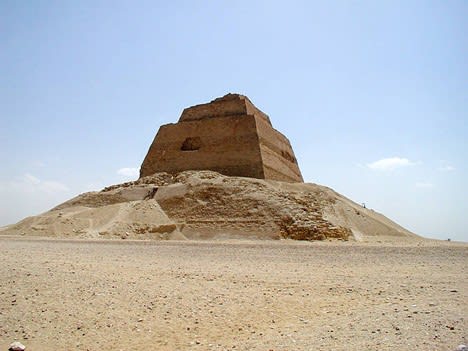
The central undertaking of Huni’s life was the construction of a grand pyramid at Meidum. This structure was conceived as something unprecedented: in scale it was meant to surpass the creation of Imhotep at Saqqara.
Originally the pyramid was designed as a stepped structure. By the time of the pharaoh’s death, builders had completed seven tiers. After his death, the work was continued by his successor — Sneferu, who, according to one version, was Huni’s son. Sneferu did not merely finish the project by adding an eighth step; he undertook a bold experiment: he ordered the spaces between the steps to be filled with stone and the entire structure to be faced with smooth slabs of white Tura limestone.
Thus was born the first “true” pyramid in human history with smooth sides. Its original height reached 118 meters. However, time and nature proved merciless: today only the central core about 45 meters high rises above the sands, resembling a strange tower, while the lowest 20 meters of the base are buried under masses of fallen stone and sand. Notably, archaeologists have found no traces of a sarcophagus inside this colossal structure, which continues to provoke debate as to whether it was an actual tomb or a cenotaph (a symbolic burial).
Around the Meidum pyramid, for the first time in history, a complete walled temple complex for the pharaoh’s mortuary cult was constructed. In 1871 the French archaeologist Auguste Mariette discovered in the vicinity of the pyramid a whole constellation of tombs belonging to high-ranking nobles. It was here that masterpieces of world art were found:
The famous frieze of the “Meidum Geese,” remarkable for its realism.


The paired statues of Prince Rahotep and his wife Nofret, whose inlaid eyes still appear alive after millennia.
The memory of Huni was preserved not only in stone but also in literature. His death and the subsequent transfer of power are described in the famous “Instruction of Kagemni” (part of the Prisse Papyrus). In this ancient text, written from the perspective of the vizier Kagemni’s father, it is said that “the Majesty of the King of Upper and Lower Egypt Huni went to rest,” after which he was succeeded by “the beneficent King Sneferu.”

Huni left behind not only secure borders and dynastic connections (he is believed to have been the father of Queen Hetepheres I, mother of Khufu) but also the very concept of the classic pyramid that would become the eternal symbol of Egypt. He concluded the era of the Third Dynasty, handing over a prosperous state to the great builders of the Fourth Dynasty.


