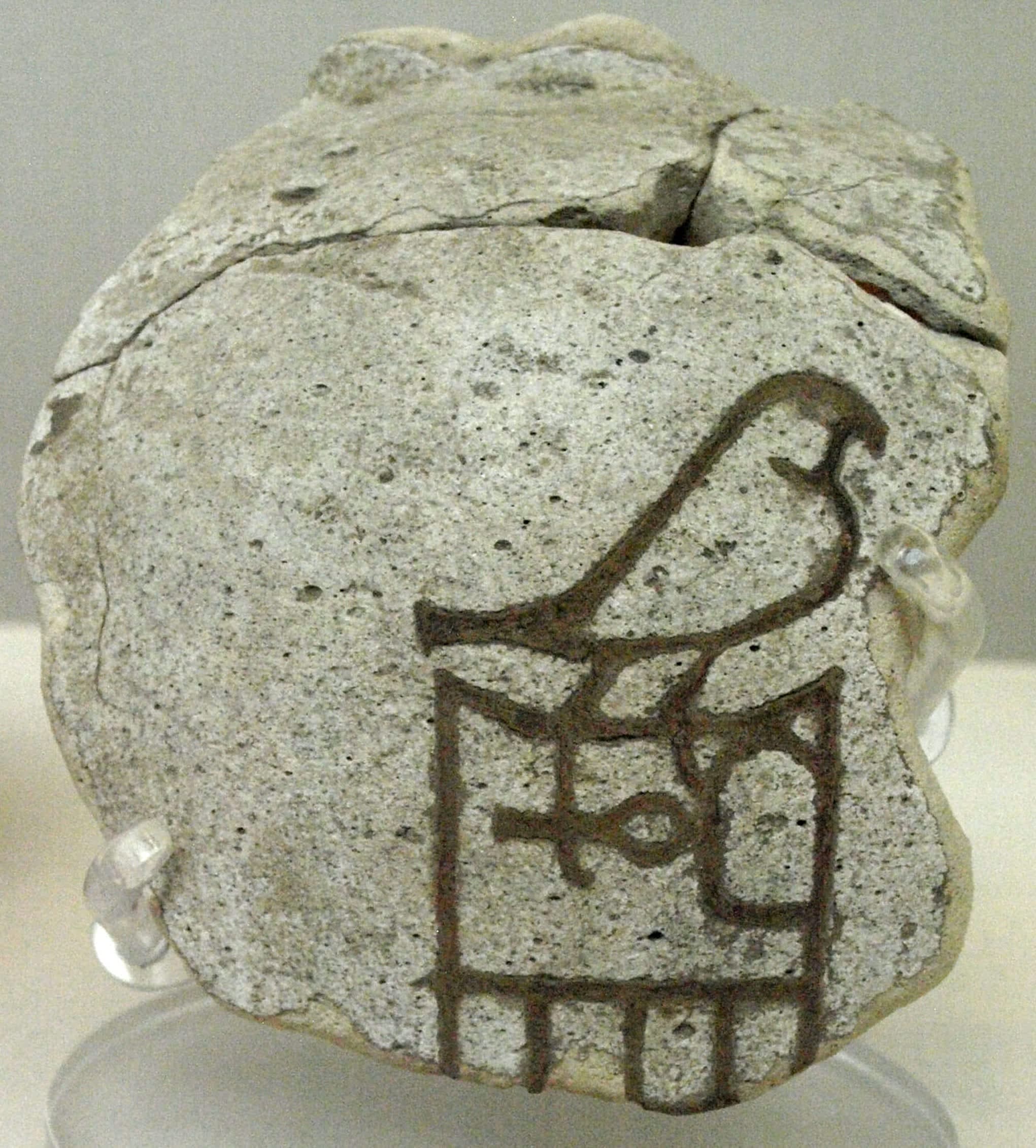
If the reign of Narmer became the foundation upon which the structure of Egyptian statehood was erected, then his successor, Hor Aha, was the one who turned this foundation into an impregnable fortress. The second pharaoh of the First Dynasty of the Early Kingdom, whose name translates as “Horus the Fighter,” occupies a special place in modern Egyptology. Many researchers are inclined to consider him the true unifier of Upper and Lower Egypt, as well as the legendary founder of Memphis — a city that became for millennia the political and cultural heart of the country.


The question of Hor Aha’s origin still provokes lively debate. Most scholars tend to believe that he was the direct heir of Narmer. There is also a version according to which Hor Aha (known in some lists as Teti) was the son of Menes, who in this context is identified with Narmer. If we accept the hypothesis that he was born from the marriage of Narmer and Queen Neithhotep, then his right to rule over both parts of the country — North and South — was indisputable both by right of conquest and by right of blood.

The accession of Hor Aha is an event that opens a new era. Different scholarly schools date this moment to 3118, 3100, or 3007 BC. Not only the time itself is important, but also the fact that it is precisely with this ruler that ancient Egyptian chronicle writing acquires clear form. With his rise to power began a regular counting of years, in which each year received a unique name in honor of the most significant event — whether a military campaign or a religious festival. These records later formed the basis of the famous Palermo Stone, which became a key source for understanding the early history of Egypt.

The reign of the “Fighter” fully justified his name. Archaeological finds testify to his active military expansion. One year of his reign was officially named “Hor Aha smote the Sati,” indicating successful campaigns in Nubia. The pharaoh likely also confronted Libyan tribes: an ivory tablet depicting Libyan captives has survived, although the interpretation of the inscription “Mina” on it remains a matter of debate.
Despite his warlike image, most evidence speaks of peaceful and systematic state-building. Chronicles mention the king’s regular appearances before the people, the manufacture of idols, visits to temples, and lavish festivals. Hor Aha succeeded in creating a system in which not only Egyptians but also subjugated Libyans acknowledged his authority and paid tribute regularly. This was a time of consolidation of resources necessary for the construction of monumental structures meant to endure for centuries.
Hor Aha’s building activity is striking for both its scale and ideological depth. At Naqada a majestic tomb has been preserved, which the pharaoh probably built for his mother, Queen Neithhotep (“Neith is gracious”). The presence of the king’s and queen’s names together there underscores the importance of the female line in legitimizing his power.
However, his constructions in Abydos and Saqqara are of greatest interest. It is believed that Hor Aha established the tradition of building double tombs — southern and northern. This was not merely a whim but a powerful political symbol demonstrating the equality and unity of Upper and Lower Egypt under a single crown.
Abydos Tomb: This is a large underground structure measuring 11.7 × 9.4 m, excavated in the ground and reinforced with brick masonry. Inside, traces of wooden pillars that once supported a massive roof have been preserved. One of the most mysterious finds here was a small gold plaque engraved with the pharaoh’s name — an extremely rare artifact for that era.

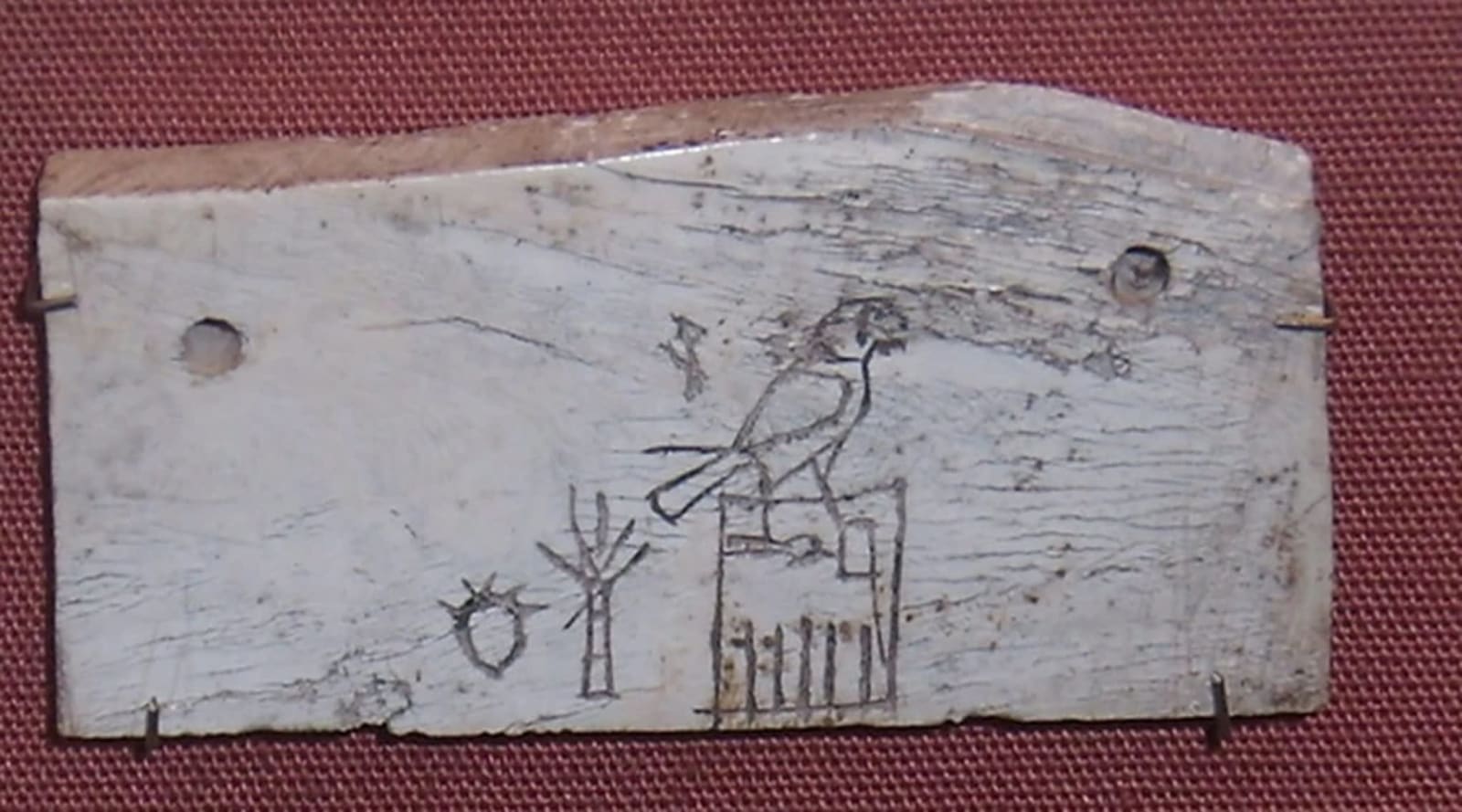
Our knowledge of the life and everyday reality of that period comes not only from tomb walls but also from hundreds of small objects. Clay sealings on vessels discovered in Saqqara contain information about the type and quantity of products intended for the king in the afterlife. In Abydos, ivory objects and labels bearing the name Ima-Ib (“Pleasant of heart”) were found. Since her burial lies in immediate proximity to the pharaoh’s complex, historians assume that Ima-Ib was the wife of Hor Aha.
Hor Aha left behind not merely united lands but a functioning state apparatus and a cultural canon. He transformed Narmer’s conquests into an ordered civilization, laying the foundations of the Egypt we know today. His reign became a bridge between myths of god-kings and the real history of the great dynasties.


