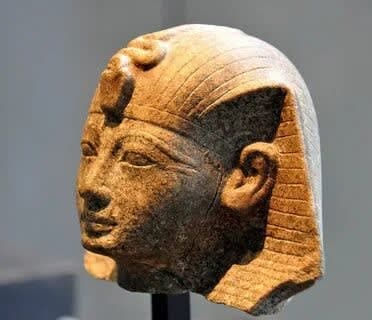
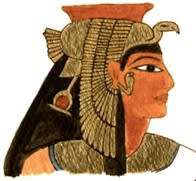
Amenhotep II, who ascended the throne at the height of Egypt’s power, was the son of the great conqueror Thutmose III and Queen Merit-Ra Hatshepsut. His lineage was the key to the state’s stability: through marriage to a daughter of Hatshepsut, he united two previously hostile factions — supporters of his step-grandmother and adherents of his father. This alliance allowed him to rely on broad segments of the aristocracy and priesthood while maintaining loyalty from the old companions of Thutmose III, who became the foundation of his own authority.
The pharaoh’s personal life was as expansive as his policy: he was surrounded by 323 wives, among them daughters of Palestinian princes, as well as hundreds of singers and dancers. However, the principal woman of his life and the mother of his heir, the future Thutmose IV, was Queen Tiaa.
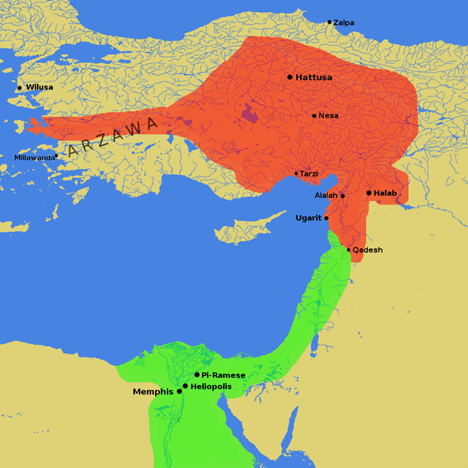
Amenhotep II sought to prove himself worthy of his great father. Already in the second year of his independent rule, he launched a rapid campaign into Upper Retjenu (Syria). This expedition entered history as one of the most brutal acts of intimidation: the pharaoh personally slew seven rebellious princes in the land of Tikhsi (near Damascus).
Their bodies, as a grim lesson to potential rebels, were hung upside down from the stern of the royal ship and transported to Egypt. Six were displayed on the walls of Thebes, while the seventh was sent to distant Nubia, to the city of Napata, so that the southern frontiers of the empire would know that the pharaoh’s wrath reached every corner of the world. Following this, Amenhotep visited the region of Karoy in Nubia, where he erected a commemorative stela affirming the inviolability of the southern borders and carried off so much ebony and ivory that thousands of people were required to transport it.
The second phase of his conquests began in the 7th year of his reign. In spring, the army advanced into Western Asia, where the pharaoh destroyed the city of Shamshi-Aduma in Galilee. Crossing the Orontes, he personally engaged the Syrians, capturing princes and their chariots. When the Egyptians reached the city of Niy, its inhabitants — remembering the fame of Thutmose III — greeted the new king from the walls.
Farther north, however, a conspiracy erupted in Ugarit. Amenhotep responded with a lightning punitive expedition, crushing the rebels and subjugating the entire coastal region. The terrified rulers of Gezer and Inka hastened to bring tribute, while the prince of legendary Kadesh swore loyalty without daring to fight. During this campaign, a commemorative stela was erected in the land of Mitanni (Naharina), and the total booty amounted to tons of gold and copper.
In the 9th year of his reign, the pharaoh marched again, this time against a coalition of cities in Palestine. After victories at Ikhem and Anaharath, Amenhotep II carried out a large-scale reorganization of power: unreliable vassals were removed and replaced with loyal appointees. It is from this period that the Memphis Stela records the capture of the astonishing number of 101,218 prisoners. Although modern historians regard this figure as propagandistic exaggeration, it vividly illustrates the scale of the king’s ambitions.
Amenhotep II entered popular memory not only as a warrior but as a man of extraordinary physical strength.
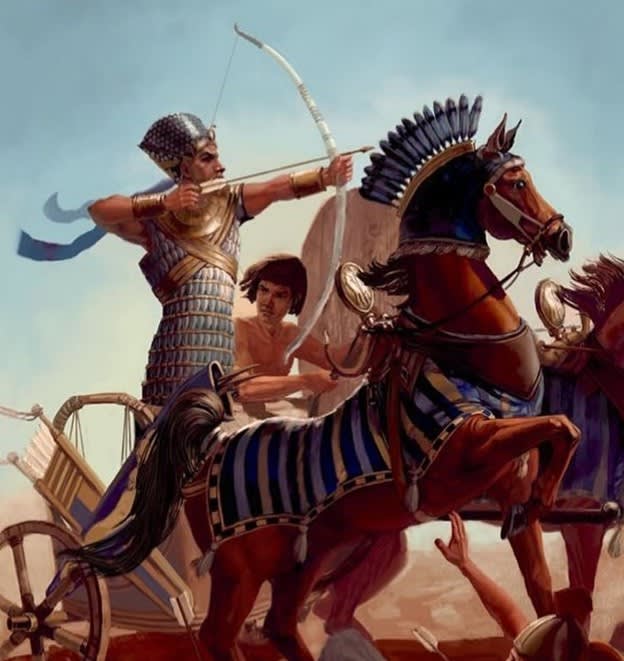
The legendary bow: It was claimed that no one — neither Egyptian nor foreigner — could string his personal bow. With it the pharaoh pierced copper targets three fingers thick, the arrow passing completely through. This story later formed the basis of Herodotus’s tale about the bow of the Ethiopian king that Cambyses II could not draw.
The great oarsman: The pharaoh claimed that he could surpass two hundred rowers single-handedly, covering vast distances on the Nile without fatigue while wielding an oar more than 10 meters long.
Although Amenhotep II was not a builder on the scale of his father, he devoted attention to completing temples at Amada and on Elephantine Island. In Thebes he constructed his mortuary temple and restored the colonnaded hall at Karnak that had previously been dismantled by Hatshepsut to erect her obelisks. His constructions at Memphis and Heliopolis have not survived, but records of work in the Tura quarries attest to their former grandeur.
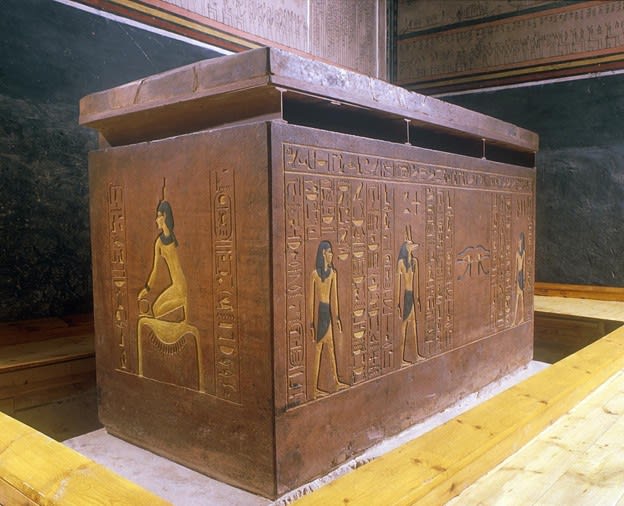
Amenhotep II ruled for about 26 years and died in 1425 BCE. His tomb, KV35 in the Valley of the Kings, discovered by Victor Loret in 1898, became one of the most important archaeological finds. It served as a cache for the mummies of some of the greatest rulers of the New Kingdom (Thutmose IV, Amenhotep III, Seti II, and others), whom priests hid there from tomb robbers.
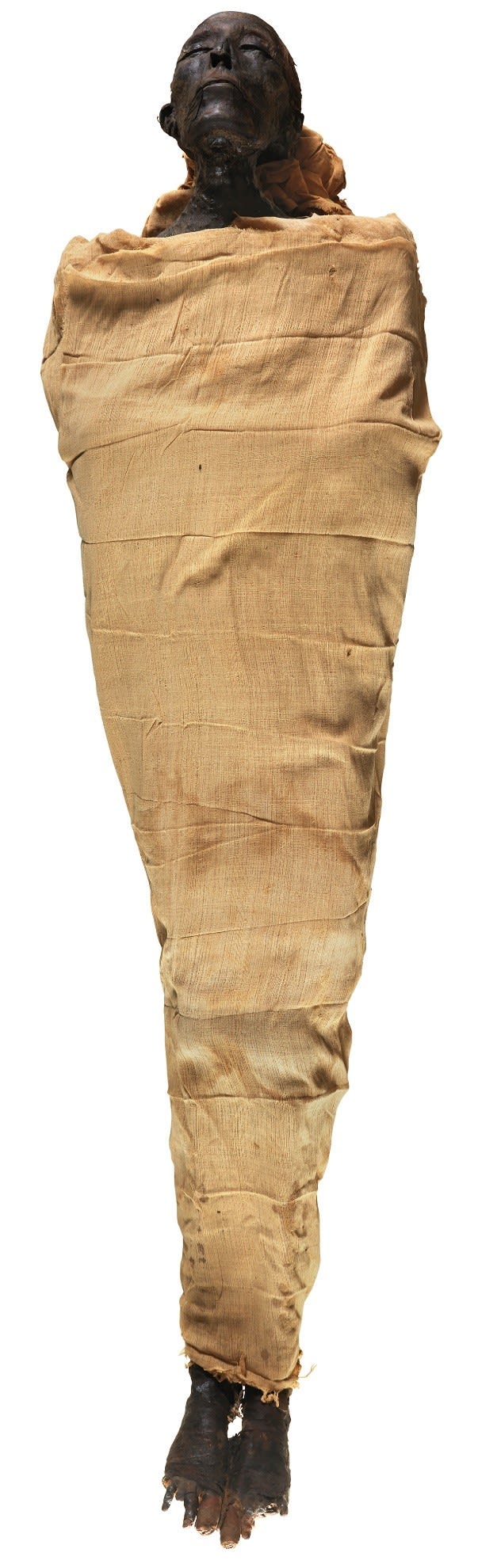
Unfortunately, in 1901, despite guard protection, the tomb was plundered again. Modern thieves damaged the mummy of Amenhotep II himself while searching for treasures among the wrappings. Nevertheless, surviving images and the body itself preserve the likeness of an athlete: a powerful, tall man with the characteristic features of the Thutmosid family, whose reign cemented the foundations of the Egyptian Empire for decades to come.


