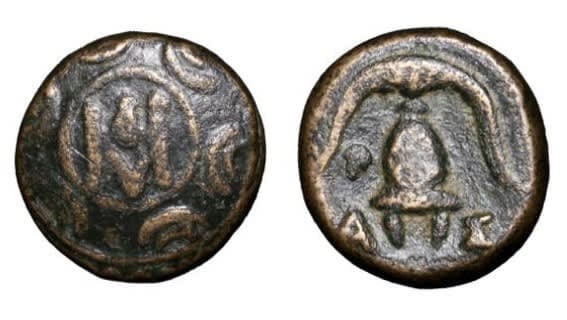
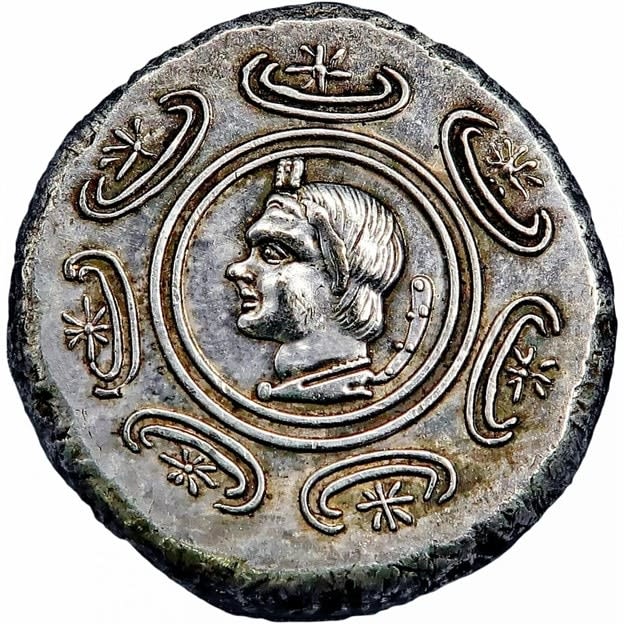
Demetrius II Aetolicus was the son of King Antigonus II Gonatas and Phila, a daughter of Seleucus I Nicator, the founder of the Seleucid Empire. From early childhood, he absorbed the political ambitions of two of the greatest dynasties of the Hellenistic world, and from a young age prepared himself to defend his father’s inheritance.
He demonstrated his outstanding military talent and personal courage while still a teenager, during the lifetime of his celebrated father. When King Alexander II of Epirus, son of the great Pyrrhus, treacherously invaded a weakened Macedonia, it was the young Demetrius — later known as “the Fair” — who took command of the army.
At the historic Battle of Derdia, apparently fought somewhere among the rocky passes of western Macedonia, Demetrius did more than simply inflict a crushing defeat upon the Epirote forces: he drove them into a complete rout.
Justin reports in his chronicles that the young prince, exhilarated by victory, pursued the enemy all the way into Epirus itself, forcing Alexander II to seek humiliating refuge in neighboring Acarnania.
This brilliant triumph of the young Demetrius had enormous strategic significance. The security of Macedonia’s northern frontiers was fully restored, allowing Antigonus Gonatas to concentrate his forces on suppressing anti-Macedonian revolts in southern Greece.
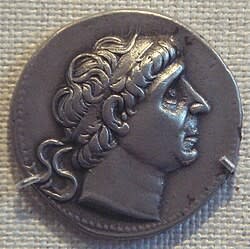
The political importance of the young heir was further emphasized through dynastic marriage.
During the 250s BC, Demetrius entered into his first marriage. His wife was Stratonice, the daughter of the powerful Seleucid king Antiochus II Theos.
The marriage was intended to reinforce the alliance between two of the most powerful states of the Hellenistic world.
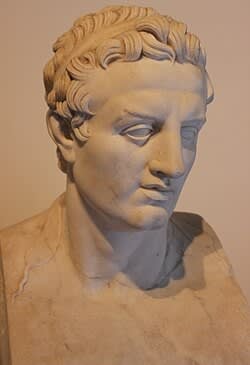
When Demetrius ascended the throne following his father’s death in 239 BC, he was immediately drawn into a large-scale conflict that entered history under his own name — the Demetrian War, fought from approximately 238 to 229 BC.
The war became one of the most difficult trials Macedonia had faced, as the kingdom was forced to confront the combined strength of the Aetolian and Achaean Leagues largely on its own.
At first glance, the conflict could appear to have been a noble Greek struggle for liberation from Macedonian tyranny.
Behind the grand slogans of freeing the Hellenic poleis, however, lay highly pragmatic and expansionist ambitions. Both the Aetolians and Achaeans were determined to enlarge their own federations by absorbing weaker neighboring states.
The situation was made still more difficult by the fact that this anti-Macedonian alliance received generous external support from the Egyptian monarch Ptolemy III Euergetes, who traditionally sought to weaken Macedonian influence in Greece.
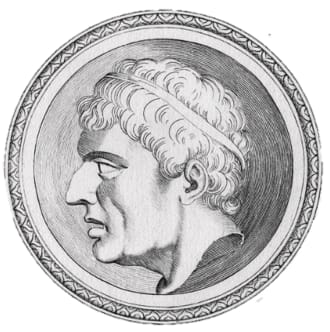
Surrounded by enemies, Demetrius II was forced to mobilize every available resource in defense of the traditional Macedonian sphere of influence in Greece.
The strategically important territories of Attica and Euboea remained the principal strongholds of Macedonian control.
The fighting proceeded with mixed results.
Plutarch preserved an account of an impressive Macedonian tactical victory. At the bloody Battle of Phylakia, the royal general Bithys decisively defeated an Achaean army commanded by the famous Aratus.
At the same time, Demetrius conducted a sophisticated diplomatic campaign alongside direct military operations, actively supporting loyal tyrannical regimes in Peloponnesian cities in order to counterbalance the growing influence of the Achaean League.
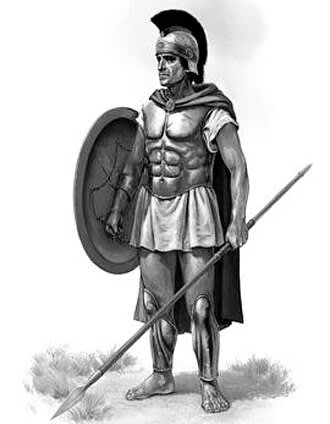
In 236 BC, Demetrius launched a determined offensive.
At the head of a powerful army, he invaded Boeotia.
The Boeotians, who had lived under the humiliating and involuntary domination of the Aetolian League since their defeat at Chaeronea in 245 BC, eagerly responded to the king’s appeal and defected to the Macedonian side.
This represented a major strategic success.
On the Peloponnese, however, the initiative passed to Macedonia’s enemies. The Achaeans achieved significant political victories by bringing important centers such as Megalopolis and Orchomenus into their federation.
Their successes were not complete, however.
Aratus never managed to capture Argos.
Even after the pro-Macedonian tyrant Aristippus fell fighting courageously against the Achaeans in open battle, power in the city passed firmly into the hands of his brother Aristomachus, who maintained his loyalty to the Macedonian crown.
The operation of 231 BC became, in many respects, the crowning achievement of Demetrius’s foreign policy.
The inhabitants of the Acarnanian city of Medion, which was under close siege by superior Aetolian forces, desperately appealed to the Macedonian king for assistance.
Demetrius’s main armies were tied down on other fronts, making it physically impossible for him to come to the city’s aid in person.
Instead, he demonstrated remarkable strategic ingenuity.
Using the Macedonian treasury, he bribed the warlike king of the Illyrian Ardiaei, Agron.
Agron immediately dispatched a powerful naval expedition to Medion.
The Illyrians fell upon the unsuspecting Aetolians like a thunderbolt and completely destroyed the besieging forces.
This brilliantly organized relief of Medion became the last well-documented foreign-policy victory of Demetrius II in southern Greece.
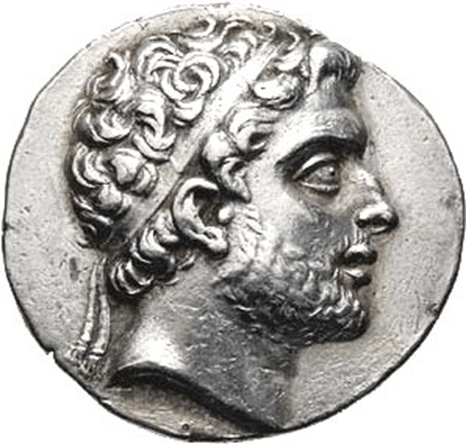
From the second half of the 230s BC onward, the king was forced to shift his attention elsewhere.
A new and terrifying threat emerged along Macedonia’s northwestern frontier, where the fierce Dardanians began launching systematic and devastating raids into Macedonian territory.
Repelling this barbarian pressure consumed almost all of the king’s resources.
The famous historian Johann Gustav Droysen believed that Demetrius II died in 229 BC during one of these difficult and exhausting campaigns against the Dardanians.
The ancient sources, however, remain silent about the exact circumstances of the king’s death, leaving the question unresolved.
The death of Demetrius II Aetolicus, who had spent his life fighting almost continuously for the power and prestige of his kingdom, was a severe blow to Macedonia.
His legitimate heir, the future King Philip V, was only nine years old at the time.
The kingdom therefore once again faced the dangers of regency, factional struggle, and political instability.


