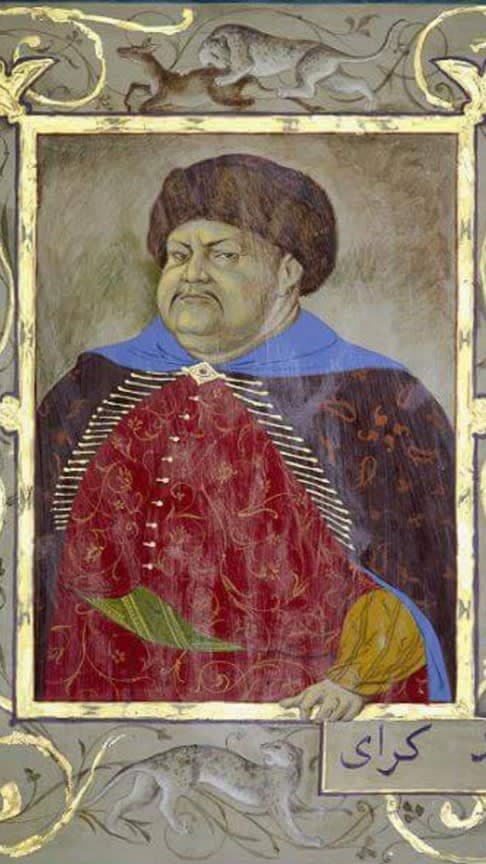
Mehmed Giray was not a accidental figure on the political stage. He spent most of his life as the loyal associate and “right hand” of his father. His official rise began in 1555, after the tragic events of the Battle of Sudbishchi. In that fierce clash with Russian forces, his elder brother, the kalga Ahmed Giray, was killed. It was then that Mehmed received the honorable and weighty rank of kalga-sultan — co-ruler and first heir to the throne — a position he held for twenty-two years (1555–1577).
His military experience was forged in endless campaigns. In the very year of his appointment, while his father was besieging Tula, Mehmed remained the “guardian of Crimea,” ready at any moment to come to the aid of the main army. In the following years, he personally led or took part in the largest operations:
Winter 1558: A campaign of a huge horde against the southern Russian frontier, halted only by the timely advance of Moscow’s regiments to the border.
1563 and 1570: Bloody raids on Ryazan and Kashira together with his brother Adil.
1566: A distant campaign to Hungary, where the Crimean cavalry fought side by side with the Ottomans against the Austrian Habsburgs.
1571–1572: Participation in the famous campaigns against Moscow and in the fateful Battle of Molodi, where the fate of the entire region was decided.

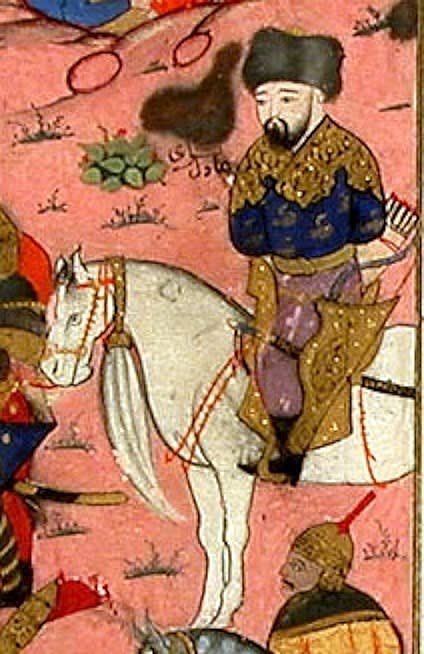
However, by the end of his father’s reign, a “great quarrel” broke out between Mehmed and his brother Adil. The rivalry was so sharp that Adil Giray even built his own fortified town, Boly-Saray, on the Kalmius River, which became a center of attraction for discontented Nogai murzas. Only the iron will of the dying Devlet I was able temporarily to reconcile the brothers in the face of the inevitable transfer of power.
In June 1577, when Devlet I Giray died in Bakhchisarai, the 45-year-old Mehmed II Giray officially ascended the khan’s throne. Seeking to secure stability, he appointed his former rival Adil as the new kalga. The new khan’s very first act was to demonstrate his strength to neighboring powers: his horde descended upon Volhynia. The scale of devastation was enormous — the Tatars captured 35,000 prisoners and nearly one million head of livestock, forcing the Polish king to pay an immense ransom to bring the campaign to an end. This success strengthened Mehmed’s authority, but ahead lay a trial for which he was unprepared — a prolonged war with Persia.
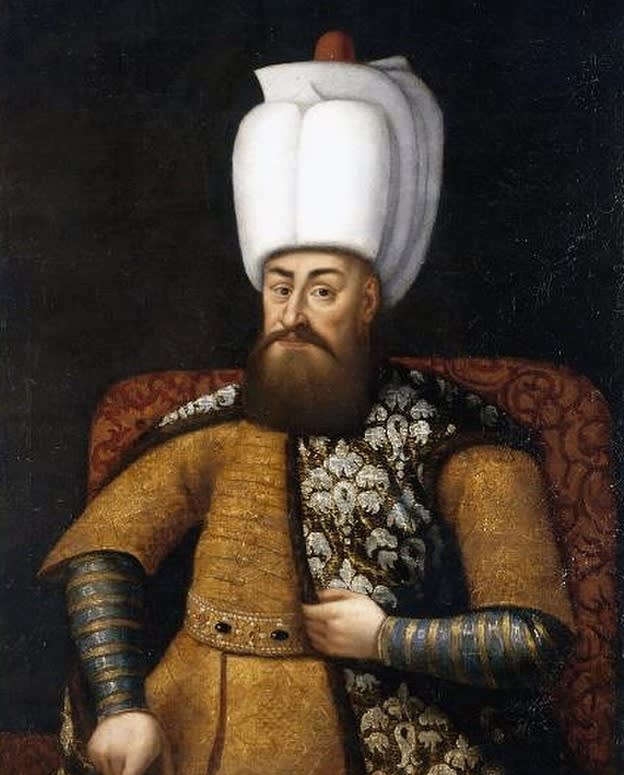
In the summer of 1578, the Ottoman Sultan Murad III ordered the Crimean khan to take part in a campaign against Safavid Iran. Mehmed II, unwilling to become entangled in an exhausting war on foreign soil, pleaded illness and sent in his place a 20,000-strong corps under the command of the kalga Adil Giray and the future rulers Gazi and Safa Giray.

At first, fortune favored the Tatars: in Shirvan, they utterly defeated the Iranian army of Aras Khan. However, on November 28, 1578, disaster struck at the Battle of Mollakhasan. Superior Persian forces under Hamza Mirza routed the Tatar cavalry. Kalga Adil Giray was wounded by a spear and taken prisoner. His fate was grim: in July 1579, he was killed in Qazvin.

The death of his brother became for Mehmed II a cause for revenge. In the summer of 1579, he personally led a 100,000-strong army into Shirvan. He declared that he had come to avenge his brother’s blood. The Tatars drove the Iranians out of the region, seized colossal booty, and took thousands of captives. But having achieved his goal, Mehmed II committed an act that enraged the sultan: he arbitrarily left the theater of war, leaving the Turkish garrisons face to face with the advancing Persians.
The vacant position of kalga provoked a new dynastic crisis. Mehmed II wanted his son Saadet to become heir, whereas by right of seniority the post should have gone to his brother Alp Giray. The conflict escalated to the point that Alp and another brother, Selyamet, fled Crimea, were captured by Cossacks, but eventually made their way to Istanbul, where they received the sultan’s support.

Mehmed II gradually moved toward open disobedience. In 1582, he openly refused to take part in another campaign against Iran, with the support of the council of Tatar beys. In response, the sultan ordered the Turkish commander Osman Pasha to arrest the khan. The conflict turned into armed confrontation. In 1584, Mehmed II, with a 40,000-strong army, blockaded Kefe (Caffa) — the main Ottoman stronghold in Crimea. When ordered to surrender, he answered with proud words:
“I am the padishah, lord of the khutba and the coin — who can depose and appoint me?”
However, the political balance shifted. His brother Alp Giray went over to the side of the Turks. In May 1584, a new protégé of the sultan — Islam II Giray — arrived from Istanbul with detachments of janissaries. The Crimean nobility, bound for centuries by ties of vassalage to the Porte, did not dare oppose the sultan’s decree. One by one, the beys went over to Islam’s side.
Abandoned by all except the loyal Nogai murzas of the Mansur clan, Mehmed II Giray was forced to flee from beneath Kefe. He hoped to reach the Nogai steppe, gather a new army there, and reclaim the throne. But his physical peculiarity — excessive corpulence — played a fatal role. In pursuit of him rode his own brothers: Alp, Selyamet, and Mubarak.
In the vicinity of Perekop, near the place called Kanlyjak, the cart of the slowly moving khan was overtaken by Alp Giray’s detachment. The former ally and brother showed no mercy: the deposed ruler was strangled on the spot.
Mehmed II Giray entered history not only as a warrior, but also as a reformer of the state apparatus: it was he who introduced the office of nureddin — the third most important person in the khanate after the khan and the kalga. His reign became an attempt by Crimea to assert its own political agency, an attempt that was ultimately crushed by the military and political power of the Ottoman Empire.
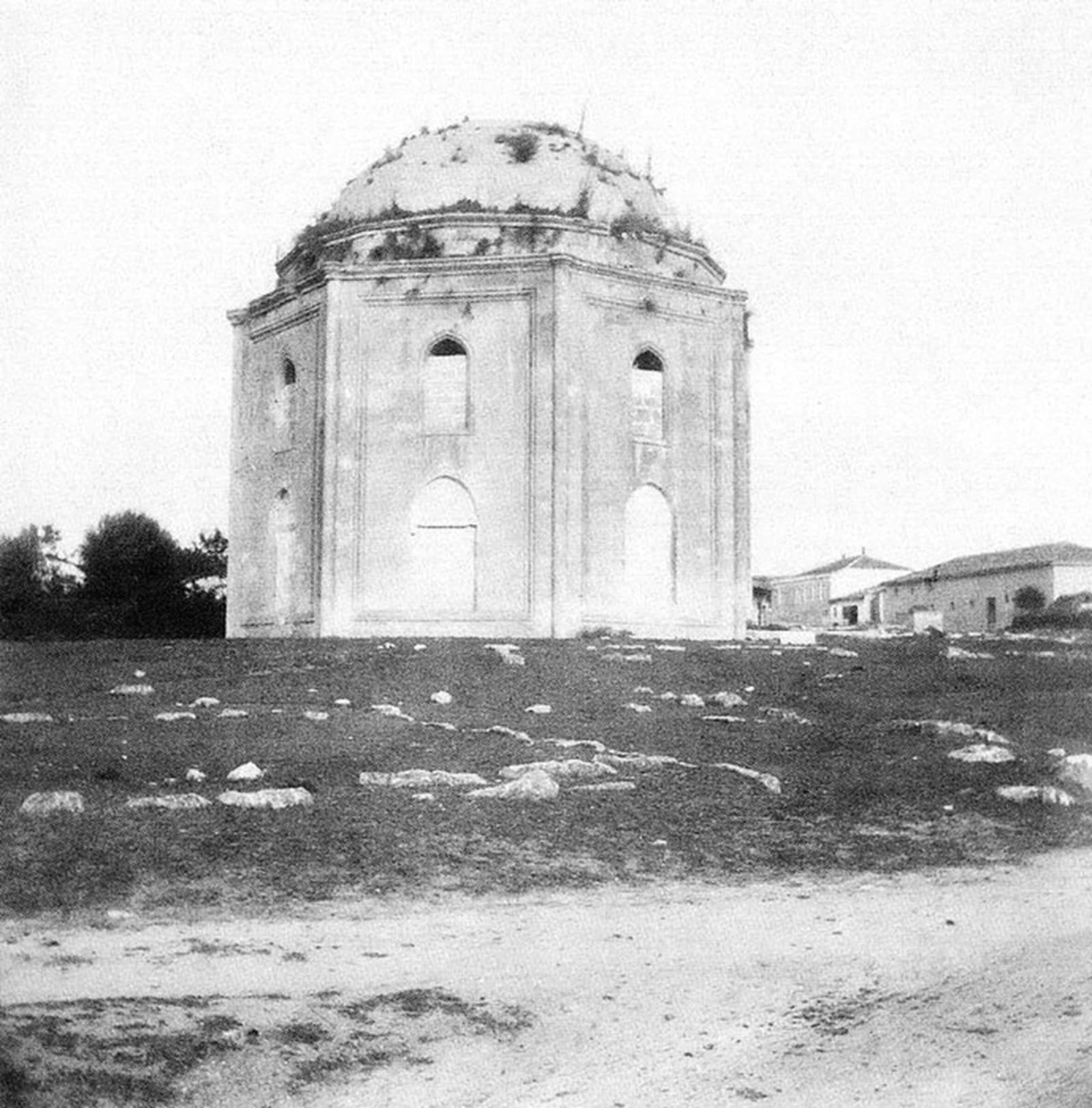
The khan’s body was transported to the family mausoleum in Bakhchisarai (Eski-Yurt), where he found his final resting place beside his grandfather and father.


