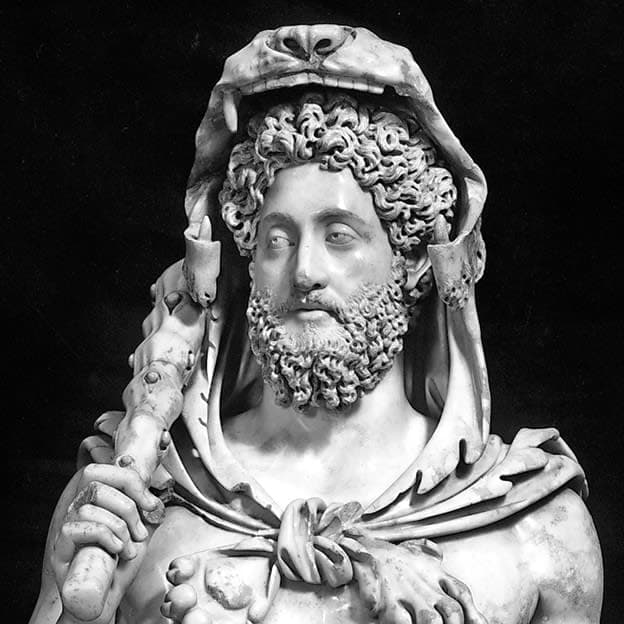

Commodus was born on August 31, 161 CE, into the family of the reigning emperor Marcus Aurelius and his stepsister, Faustina the Younger. He was a twin, but his brother, Titus Aurelius Fulvus Antoninus, died in 165, and another younger brother, Marcus Annius Verus, died in 169, leaving Commodus the only surviving son of Marcus Aurelius.

Commodus was educated by the finest minds of the time, including the famous physician, Galen. His parentage, however, has long been debated. Some historians, repeating rumors current already in Commodus’s lifetime, claim that his real father was not Marcus Aurelius but a gladiator with whom his mother amused herself a rumor likely inspired by Commodus’s own passion for gladiatorial combat.
Commodus was with the army when his father died. His first act was to conclude peace with the Germanic tribes, the Marcomanni and Quadi, which allowed him to return to Rome and stage celebratory games. He abandoned expansionist policy, making peace with the Dacians and Sarmatians.
The first years of his rule were populist, and Commodus was popular with the people. It soon became clear, however, that he had brought an end to the era of the “Five Good Emperors.” He took little interest in state affairs, preferring pleasure and debauchery. His reign was marked by a depleted treasury and rampant corruption.
In the very first year of his reign a conspiracy organized by his sister Lucilla was uncovered. The assassin she sent was seized, and all the conspirators, including Lucilla, were executed or exiled. The episode left Commodus in a panic fear of plots. He grew suspicious and cruel, answering the slightest hint of disloyalty with executions.
Because the emperor lived in a fantasy world, the actual governance of the state fell to his favorites. First came the praetorian prefect Tigidius Perennis, but he was executed at the demand of the British legions. Power then passed to the freedman Cleander, who received the unusual title of “the Dagger.” Under him corruption and the sale of offices flourished as never before.
In 190 Cleander’s enemies deliberately provoked a food shortage and sicced the mob on him. Seeing the crowd surround his palace and demand Cleander’s execution, Commodus complied without hesitation.
In 193 another plot was hatched. Quintus Aemilius Laetus, Marcia (the emperor’s mistress), and the freedman Eclectus resolved to remove Commodus. They enlisted the city prefect, Pertinax, by promising him the throne. Marcia gave Commodus poisoned wine, but when the poison failed, the emperor was strangled by the wrestler-slave Narcissus. This occurred on December 31, 193.
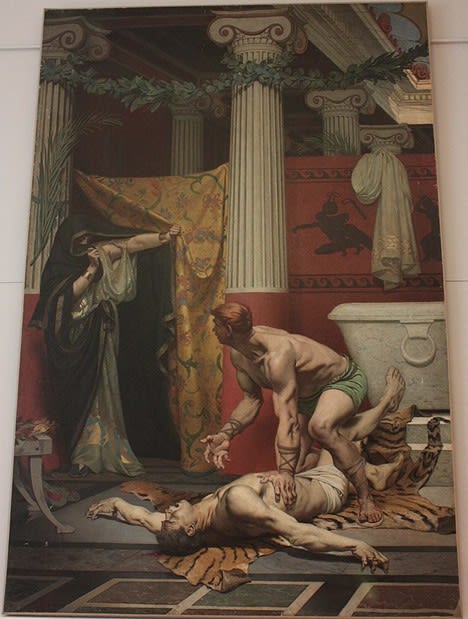

The Senate immediately declared Commodus an “enemy of the fatherland” and ordered his name erased from all public works. His body was secretly interred in Hadrian’s Mausoleum. Soon afterward, however, the new emperor Septimius Severus, seeking to legitimize his rule, deified Commodus and styled himself his brother. With Commodus’s death the Antonine dynasty ended, and a period of civil war began, known as the “Year of the Five Emperors.”
According to Cassius Dio, Commodus was not evil by nature but, through simplicity and timidity, fell under the influence of courtiers who led him into debauchery and cruelty. He killed people for the smallest offenses, even for potential discontent. He loved gladiatorial combat and entered the arena himself as a secutor, which was considered disgraceful. Commodus fought 735 bouts, killing animals and men before the public.
The emperor demanded his own deification and identified himself with Hercules, insisting on being called not Commodus but Hercules, son of Jupiter. He also renamed the months after himself and his “deeds.” In 190 he renamed Rome as the City of Commodus. The Senate, fearing his wrath, acceded to all his whims.


