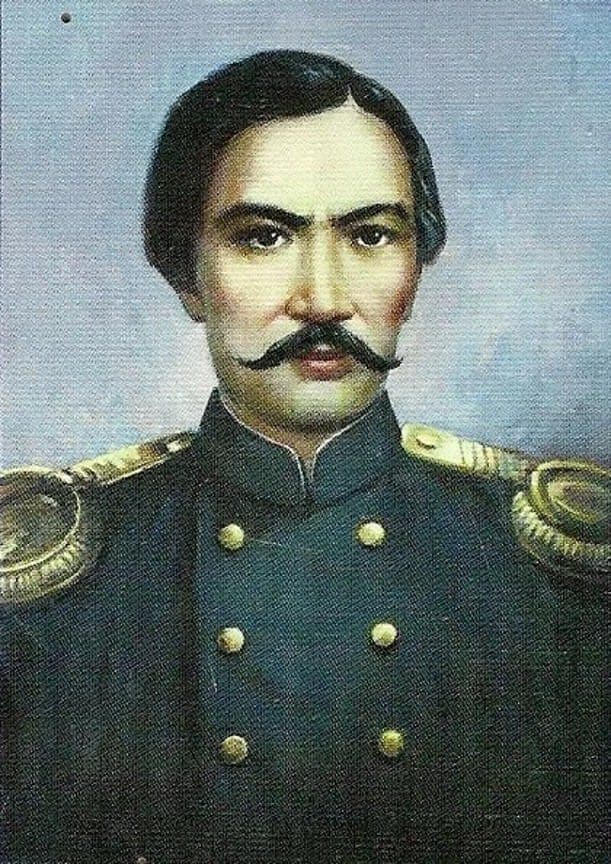
Chokan Chingisovich Valikhanov was born in 1835, at birth he was given the name Muhammad-Qanapiya. A descendant of the great Khan Abylai and a nephew of Kenesary Kasymov, Chokan grew up in the noble family of the senior sultan Chingis Valikhanov. His childhood in the steppe horde profoundly shaped him: from an early age he loved folk creativity, storytelling, and drawing. He received his first drawing lessons from Russian military topographers, and he recorded poetic tales and folk legends together with his father and tutor.
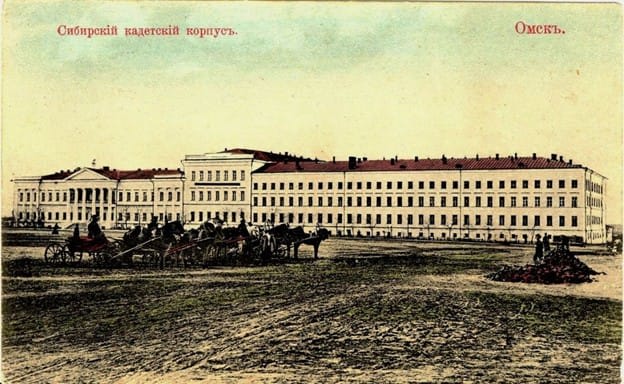
In the autumn of 1847, the 12-year-old Chokan went to Omsk to enroll in the Siberian Cadet Corps one of the best schools of its day, where, in addition to military disciplines, history, geography, Oriental languages, and the natural sciences were taught. Although Chokan did not know Russian, he quickly overcame this barrier. His exceptional abilities and thirst for knowledge impressed teachers and classmates, among them the future famed explorer Grigory Potanin. Even in youth, Chokan dreamed of major scientific discoveries in the uncharted corners of Asia.

After graduating in 1853, Valikhanov was appointed aide-de-camp to the Governor-General of Western Siberia, Gustav Gasfort. He became an officer for special assignments, which allowed him to combine service with scholarly work. During this period, he began corresponding with the noted Orientalist I. N. Berezin, assisting him in deciphering khans’ yarlyks (charters) of the Golden Horde.
In Omsk, Chokan met the writer Fyodor Dostoevsky, who was in exile there. Their friendship was deep and sincere; Dostoevsky called Valikhanov his “brother” and followed his scholarly successes with keen interest.

In 1855, Valikhanov took part in Gasfort’s expedition, which ran from Omsk to Semipalatinsk and on to the fort of Verny (today Almaty). During this journey he collected legends and traditions and examined historical monuments.
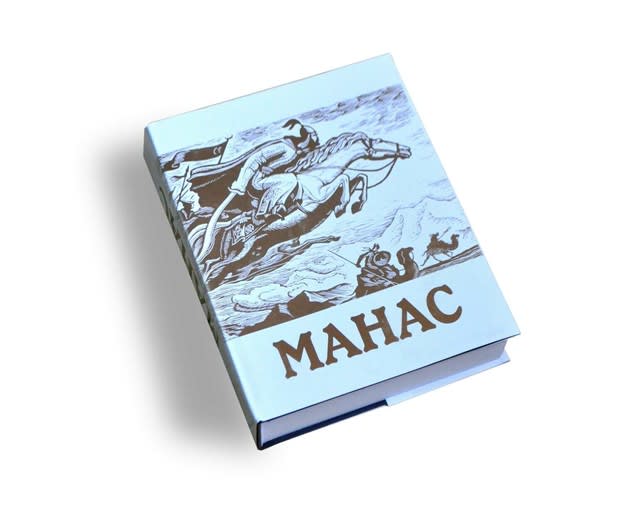
At last, in 1856, Chokan had the chance to pursue full-fledged research. He joined a military-scientific expedition to Issyk-Kul. On that trip he studied the region’s flora and fauna, carried out topographic surveys, and most importantly made the first scholarly recording of the famous Kyrgyz epic Manas. Valikhanov was the first to conduct a historical-literary analysis of the epic, calling it the “Iliad of the steppe.”
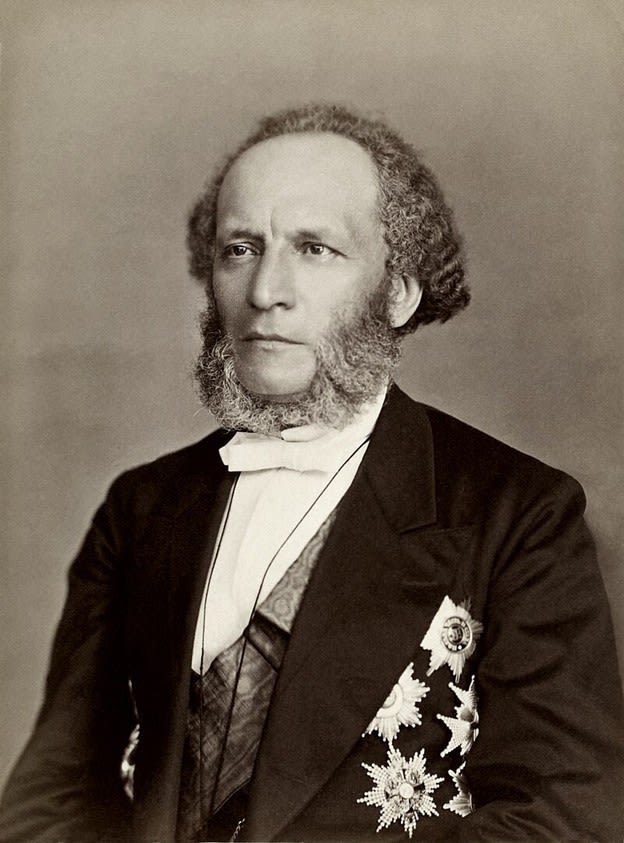
Soon after his return, Chokan was tasked with heading a diplomatic mission to Kulja to restore trade relations with China. He accomplished the task brilliantly, and his work laid the foundation for the future Tarbagatai Treaty. Back in Semipalatinsk, he met with Dostoevsky and the renowned geographer Pyotr Semyonov (Tyan-Shansky), who highly praised his work. On Semyonov’s recommendation, in 1857 Chokan Valikhanov was elected a full member of the Russian Geographical Society.

In 1858 Valikhanov faced the most difficult and dangerous mission of his life penetrating the mysterious, European-forbidden Kashgaria. This region, under Qing Chinese control, had become an “apple of discord” between Russia and Great Britain. After the brutal suppression of the uprising led by Valikhan-tyure, the situation there was extremely unstable. Europeans who tried to enter Kashgaria were killed; the German explorer Adolf Schlagintweit had been beheaded on Valikhan-tyure’s orders a year earlier.
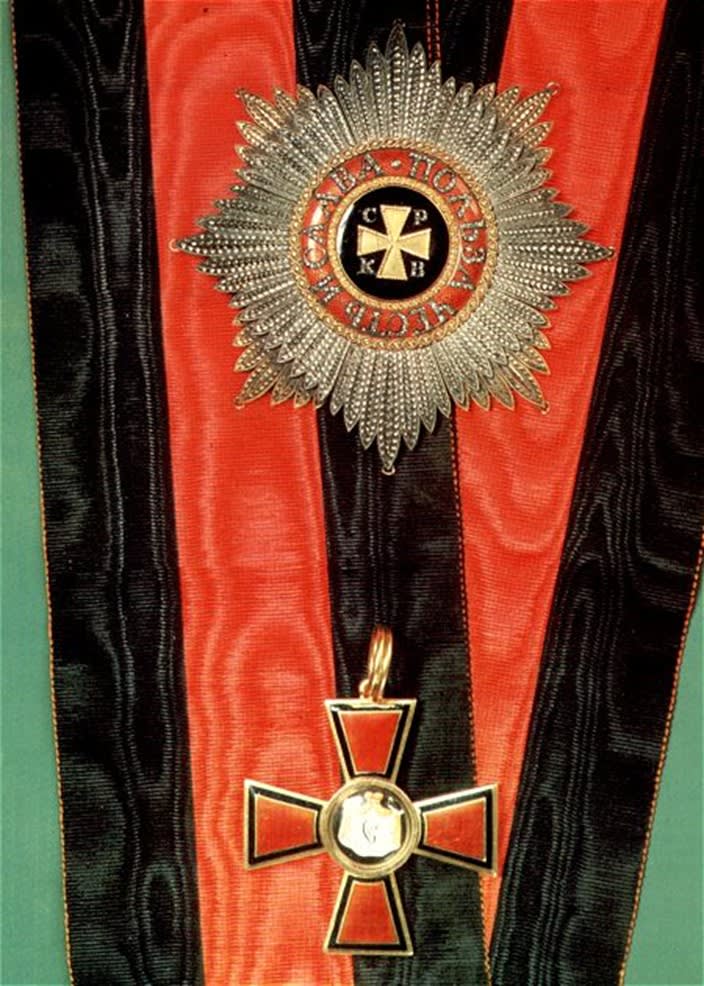
To protect himself, Chokan set out with a merchant caravan from Semipalatinsk, traveling in disguise under the name Alimbai. He successfully crossed the Tian Shan and reached Kashgar, where he spent half a year. During that time, he gathered invaluable information on the region’s history, geography, economy, and political system. He learned of the cruelty of Valikhan-tyure’s rule who, in 115 days, erected a pyramid of human heads and of the atrocities of Chinese authorities, who punished rebels by displaying their heads on stakes. Valikhanov acquired unique Oriental manuscripts and materials that became the basis of his principal work, “On the Condition of Altyshar, or the Six Eastern Cities of the Chinese Province of Nan-Lu (Little Bukharia).”
In March 1859, fearing exposure, he left Kashgar and, eleven months after the start of his journey, returned to Verny. The expedition’s harsh conditions undermined his health. In Omsk he began processing his materials, and his report, sent to St. Petersburg, was highly esteemed in scholarly circles.
At the beginning of 1860, the young researcher arrived in St. Petersburg. He was received as a hero; by personal order of Emperor Alexander II, he was awarded the Order of St. Vladimir and promoted to the rank of staff-rottmeister.
Life in the capital was filled with intense work. Valikhanov served in the General Staff and in the Asian Department of the Ministry of Foreign Affairs, where he compiled maps of Central Asia and Eastern Turkestan. His study of Kashgaria, submitted after his expedition, received the highest praise and was deemed “extremely useful for the government and for science.” The manuscript was read at the highest levels of power, attesting to its practical significance. Chancellor Alexander Gorchakov personally authorized Valikhanov to publish his works an important achievement for the young scholar.
During the 15 months he spent in St. Petersburg, Valikhanov immersed himself in public life. He worked at the Russian Geographical Society, lecturing on the history of the East, studied Oriental manuscripts, and collaborated with encyclopaedia publishers. He became the first scholar in the world to study Muhammad Haydar Dulati’s Tarikh-i Rashidi and introduced Kashgarian manuscripts into scholarly circulation.
In St. Petersburg he renewed his friendship with Fyodor Dostoevsky and became acquainted with other luminaries of the Russian intelligentsia, such as the poets A. N. Maikov and Ya. P. Polonsky. His wit and dazzling polemical talent won many admirers. Contacts with the democratic intelligentsia, visits to literary circles, and to the editorial office of the journal Sovremennik had a major impact on the formation of his socio-political views.
However, the capital’s climate severely affected Valikhanov’s health. Attacks of consumption (tuberculosis) forced him in the spring of 1861 to return to his homeland, to his father’s aul. There he hoped to recover, enjoying fresh air and traditional kumys.


In the aul he did not cease his scholarly work. Folk poets, storytellers, and musicians flocked to him, providing sources for his research. But his foremost goal was to serve his people. He decided to run for the post of senior sultan of the Atbasar district. In letters to Dostoevsky, he confessed that he wanted to show his compatriots how an educated ruler could be useful and to protect them from bureaucratic arbitrariness.
His intentions, however, met resistance from the Omsk authorities. In the 1862 elections, even though Chokan won a majority of votes, the governor A. O. Duhamel (Dugamel) rejected his candidacy, fearing that such an educated and independent sultan would become a powerful symbol of dissent. It was an exemplary reprisal against him.

Disillusioned with politics, Chokan accepted Colonel M. G. Cherniaev’s invitation to join an expedition to Southern Kazakhstan. He hoped to help local residents suffering from Kokand oppression and believed matters would be resolved peacefully. However, after the brutal capture of the Aulie-Ata fortress in 1864, during which civilians suffered, Chokan, deeply shaken, left Cherniaev’s detachment.
Disappointment and the worsening of his illness finally sapped his strength. In July 1864 he traveled to Verny and then was forced to stop in the aul of his relative Tezek Nuralin. There he found peace and love, marrying Aisara, the daughter of Tezek’s cousin.
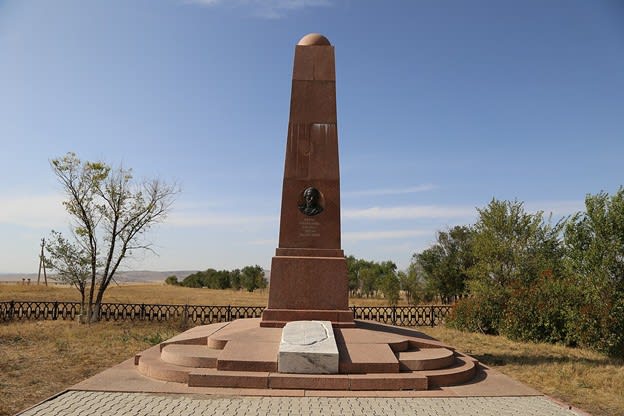
There, far from political intrigue and urban bustle, he spent the last year of his life. Despite his progressing illness, he continued to work, observing events in nearby Kulja and sending his reports to General Kolpakovsky.
On 22 April 1865, in Tezek-tore’s aul, the 29-year-old Chokan Valikhanov died of consumption. He was buried in the tore cemetery, and his grave became a place of pilgrimage.
In subsequent years, rumors arose that he had been murdered rather than dying of tuberculosis. As “evidence,” archival documents were cited reporting surveillance of Valikhanov and his father-in-law. Closer study by historians, however, showed that these documents concerned his second cousin Gazi Valikhanov and were compiled in 1869 after Chokan’s death. This confirms that Chokan Valikhanov died of illness, not by murder.
The scholarly achievements of Chokan Valikhanov were recognized worldwide. Academician N. I. Veselovsky called him a “brilliant meteor” who, in not quite thirty years, accomplished what others could not do in a lifetime. His works remain an invaluable source for researchers of the history and ethnography of Central Asia to this day.


