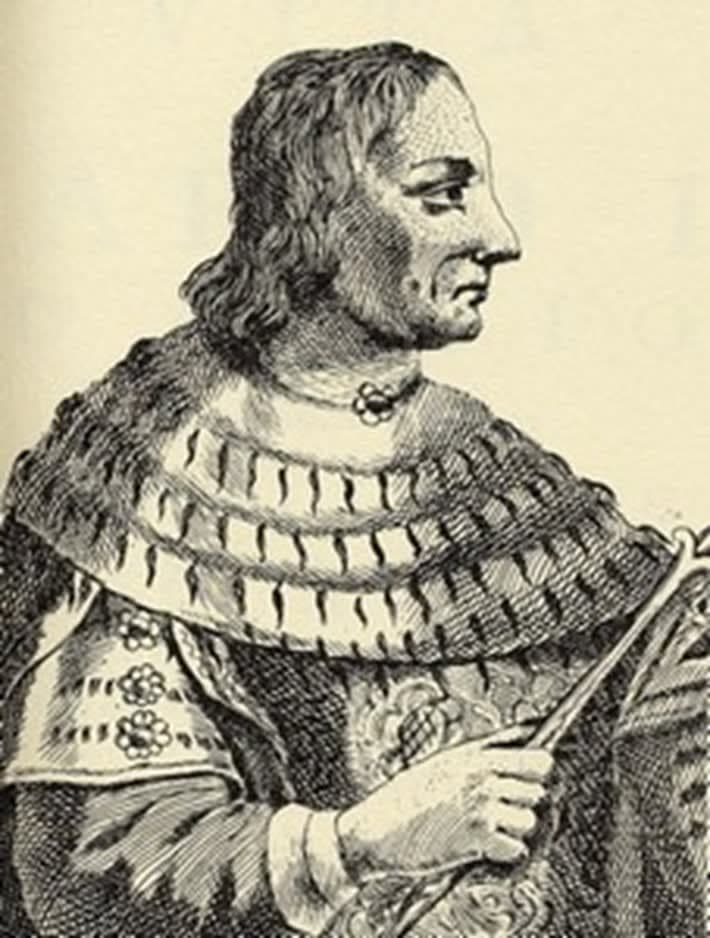

The massive uprising that went down in history as the Sicilian Vespers irreversibly divided the powerful Angevin realm and challenged the established political order throughout the Mediterranean. The heir to the throne, Charles II, remembered by posterity as Charles the Lame, found himself facing an exceptionally severe political and military crisis.
Realizing that maintaining control over the rebellious island would be impossible without enormous resources, he hastily departed for France to raise an army capable of crushing his enemies. Launching an extensive recruitment campaign, Charles succeeded in mobilizing forces of truly extraordinary proportions for his era: his army numbered 22,000 heavily armed horsemen and 60,000 infantrymen. To transport this immense military force and secure supremacy at sea, an impressive fleet of 200 warships was assembled.
With this unprecedented military machine, Charles the Lame launched a full-scale war against King Peter III of Aragon, whom the rebellious Sicilians, having despaired of achieving freedom through their own efforts, had solemnly proclaimed their new monarch.

However, the fortunes of war proved unpredictable, and numerical superiority offered no guarantee of victory against the brilliant naval commanders of the opposing side.
The summer of 1283 witnessed the first terrible catastrophe: the formidable Angevin fleet engaged in a fierce battle off the coast of Malta against a combined Spanish-Sicilian squadron commanded by the renowned Admiral Roger of Lauria. The French forces suffered a crushing defeat, permanently losing the initiative at sea.
Yet the most devastating ordeal for the dynasty still lay ahead.
On June 5, 1284, during a naval battle in the Bay of Naples, Prince Charles, having fallen for an enemy provocation, recklessly led his ships out of the harbor. The Neapolitan fleet was once again utterly defeated.
The disaster reached its climax when Charles the Lame himself was captured by his bitterest enemy.
The capture of the direct heir to the throne sent shock waves throughout Catholic Europe.
Neither the severe papal bulls of excommunication generously issued by Pope Martin IV nor the subsequent large-scale crusade launched by French forces against Aragon could break the iron will of Peter III. He categorically refused to release such a valuable prisoner.
The long-awaited prospect of freedom emerged only years later, following Peter III's death.
In 1288, his successor, the new King James II, who had assumed control over Sicily, agreed to release Charles.
The price of this liberation was extraordinarily high and humiliating: Charles was forced to leave three of his own sons as hostages and pay an astonishing ransom of 30,000 marks of pure silver.

Having regained his physical freedom but remaining bound by the extremely burdensome oaths he had sworn to the Aragonese, Charles immediately traveled to the city of Rieti.
There, he was received by the new Pope Nicholas IV, who decisively intervened in the course of events.
Exercising his supreme spiritual authority, the pontiff immediately absolved Charles of all obligations and oaths he had been compelled to undertake before James II.
In 1289, Nicholas IV solemnly crowned Charles the Lame as the legitimate King of Sicily.

The intricate web of diplomatic intrigue gained new momentum with the election of Pope Boniface VIII in 1294.
The conclave took place directly in Naples under the watchful supervision of King Charles himself, ensuring the new pontiff's loyalty to the Angevin court.
Boniface VIII assumed the role of supreme peacemaker and mediator between Charles and James of Aragon.
The outcome of these exceptionally complex negotiations was the famous Treaty of Anagni.
Under its terms, the dynastic conflict was to be brought to an end through the marriage of James to Charles's daughter, Princess Blanche.
As a magnificent form of compensation, James received from the Pope the right of investiture over Corsica and Sardinia, solemnly undertaking to renounce Sicily forever and grant the Angevins complete freedom of action in recovering the rebellious island.

It seemed that Charles II was on the verge of triumph, but reality once again overturned his plans.
Although James II had relinquished his claims to the island, he simultaneously called upon his younger brother, Frederick II, to assume the government of Sicily.
The Sicilians, who categorically refused to return to the despotic rule of the French, enthusiastically supported Frederick, and the flames of war erupted once again with renewed and devastating intensity.
Charles the Lame, acting in close alliance with the Papacy, once more committed his troops to battle, but misfortune continued to pursue his family.
In 1299, at the fierce Battle of Falconara, the Angevin army suffered another defeat, while another of Charles's sons, Philip I of Taranto, repeated his father's fate and fell into enemy captivity.

The realization that Sicily could not be recovered by force of arms finally compelled the opposing sides to enter negotiations.
The exhausting twenty-year struggle came to an end in 1302 with the signing of the historic Treaty of Caltabellotta.
Reluctantly, Charles II definitively renounced all legal and actual claims to Sicily.
The peace was reinforced by another dynastic marriage: Charles's daughter Eleanor became the wife of King Frederick II of Sicily.
In 1303, this momentous agreement was officially ratified by the Pope, permanently dividing the once-united kingdom into its island and mainland territories.

Having come to terms with the loss of Sicily, Charles II the Lame devoted his final years to peaceful development and reconstruction.
Establishing himself in Naples, which had become the undisputed capital of his diminished but still powerful kingdom, the king directed all his energy toward the advancement of the arts, the strengthening of the state's defenses, and the architectural embellishment of the city.
Under his patronage, Naples flourished, becoming one of Europe's leading cultural centers.
Passing away peacefully and leaving behind a prosperous mainland kingdom, Charles bequeathed the crown to his son, who would go down in history as an outstanding ruler — Robert the Wise.


