Cassander was born into the family of one of the most powerful men in Macedonia — Antipater, the loyal companion of Philip II. His birth is dated no later than 354 BC. While Alexander was conquering Asia, Cassander remained in Macedonia, helping his father maintain order in the European possessions. While his peers were winning glory in the battles of the Granicus and Gaugamela, Cassander was mastering the art of administration and diplomacy in the shadow of his stern parent.
Their first personal meeting with Alexander in 324 BC in Babylon proved fatal. Cassander arrived there to defend his father against numerous accusations of abuse of power. Plutarch preserved a colorful episode: raised in a strict Hellenic spirit, Cassander could not restrain his laughter when he saw barbarians lying prostrate before the king in the ritual of proskynesis. The enraged Alexander seized Cassander by the hair and began smashing his head against a wall.
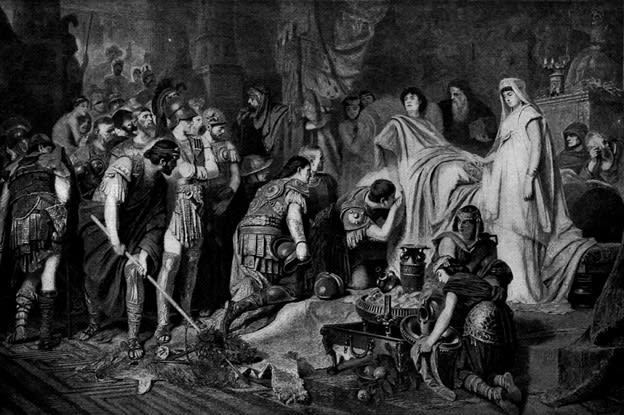
Later, when Cassander tried logically to refute the accusations against Antipater, Alexander sharply remarked that his “Aristotelian sophistries” would cost him dearly if his father’s guilt were proven. This fear of the king remained with Cassander for the rest of his life: it is said that even years later, when he had become ruler of Macedonia, he trembled all over upon seeing a statue of Alexander. It is no surprise that after the king’s death in 323 BC, rumors spread that Cassander himself had brought poison to Babylon, which his brother Iollas mixed into the monarch’s cup.
After Alexander’s death, Cassander received command of an elite detachment of hypaspists, but his ambitions were far greater. When the aged Antipater died in 319 BC, he left a will that shocked his son. Polyperchon was appointed regent of the empire, while Cassander received only the role of chiliarch — the second man in the state.
Cassander, possessing a firm will and cold-blooded resolve, refused to be second. He fled to Asia to Antigonus Monophthalmus, who supplied him with a fleet and an army. The Second War of the Diadochi began. Cassander acted calculatingly: while Polyperchon tried to attract the Greeks with promises of “freedom,” Cassander took control of key ports, including the Athenian Munychia and Piraeus. His alliance with the oligarchic circles of Athens, where Demetrius of Phalerum became ruler, secured him a reliable foothold in Greece.
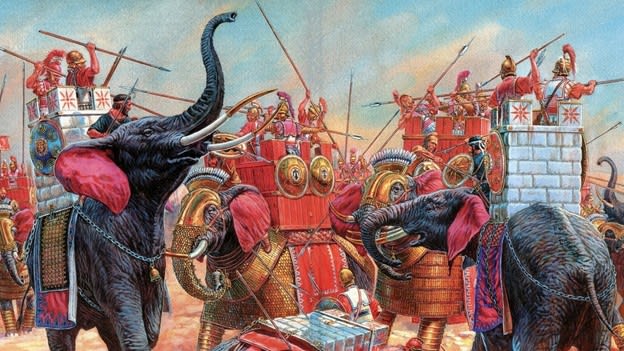
Polyperchon, meanwhile, suffered failure after failure. His siege of Megalopolis collapsed — there the Macedonians lost large numbers of war elephants for the first time — and his fleet was defeated by Antigonus near Byzantium. At that moment, the ambitious wife of King Philip III Arrhidaeus, Eurydice, entered the political stage. She officially proclaimed Cassander regent, hoping with his help to free herself from Polyperchon’s guardianship.
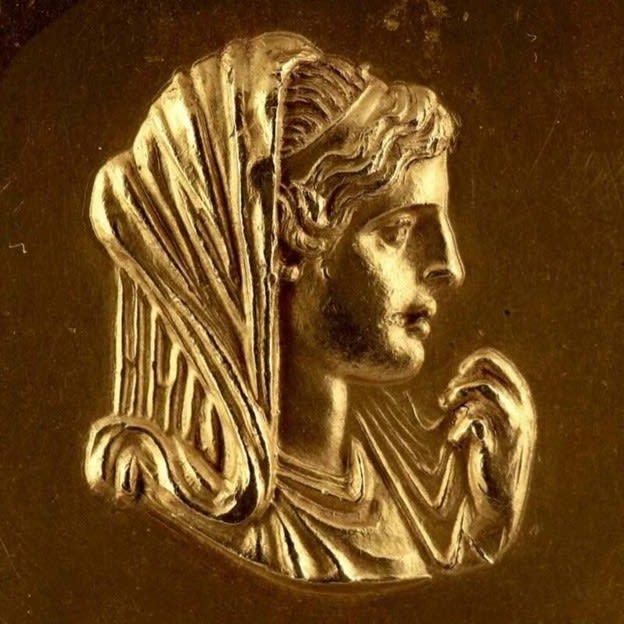
In response to the actions of Cassander and Eurydice, Polyperchon summoned Alexander’s mother, Olympias, from Epirus. In 317 BC, she invaded Macedonia. The Macedonian soldiers, seeing the mother of their idol, refused to fight. Philip III and Eurydice were captured and brutally executed by the queen’s order. Olympias unleashed terror, exterminating the supporters of Antipater and his family; Cassander’s brother Nicanor was killed.
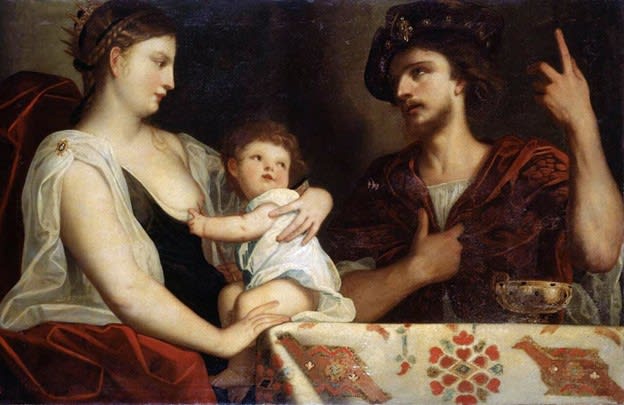
Cassander, who at that time was on the Peloponnese, acted with lightning speed. He outmaneuvered the Aetolians, who had blocked Thermopylae, by transporting his troops by sea into Thessaly, and trapped Olympias in the coastal fortress of Pydna. The siege was long and terrible: famine began in the city, and even cannibalism occurred.
In the spring of 316 BC, Olympias surrendered after receiving a promise that her life would be spared. However, Cassander, fearing the changing moods of the people, organized a trial against her by the relatives of her victims. When the soldiers sent to kill her did not dare raise their hands against Alexander’s mother, Olympias was stoned by the very people whose loved ones she had executed. Cassander refused her even burial, finally breaking the link with the former greatness of the Argeads.
After Olympias’s death, the young king Alexander IV and his mother Roxana fell into Cassander’s hands. Cassander understood that as long as the direct heir of Alexander the Great lived, his own power remained illegitimate. Under the terms of the peace of 311 BC, he remained strategos of Europe until the prince came of age. This was a death sentence for the boy.
Around 310–309 BC, Cassander ordered the commander Glaucias to secretly kill Roxana and Alexander IV. Their bodies were buried without honors. To ensure that no claimant remained, Cassander later persuaded Polyperchon to kill Heracles, Alexander’s illegitimate son by Barsine, in exchange for co-rule. Thus Cassander became the only one of the Diadochi who deliberately and completely destroyed the dynasty that his father had served.
In these same years he fought successful but difficult wars on the northern frontiers — against the Illyrian king Glaucias and the Autariatae, whom he eventually settled near Mount Orbelus.
Cassander was not only a warrior, but also a city-builder. His policy was symbolic in character: he restored Thebes, which Alexander had destroyed, emphasizing his superiority over the dead king. On the site of Potidaea he founded Cassandreia, and on the site of ancient Therma he founded Thessalonica, naming the city after his wife, Alexander’s sister, thereby legitimizing his connection with the royal house.
His rule was isolationist: Cassander did not seek to break into Asia, striving only to hold Macedonia and Greece. However, the expansion of Antigonus Monophthalmus forced him to enter a coalition with Seleucus, Ptolemy, and Lysimachus. In the decisive Battle of Ipsus in 301 BC, Cassander’s troops, under the command of his brother Pleistarchus, contributed to the defeat of Antigonus. As a result of the division of the Asian territories, Pleistarchus received Cilicia, creating a buffer zone in Cassander’s interests.

Cassander died in the spring of 297 BC. His death was painful — Pausanias writes that he swelled from dropsy and suffered from an illness “accompanied by worms,” possibly tuberculosis. His eldest son Philip IV ruled for only a few months, after which Macedonia plunged into a new series of civil wars.
Historians assess Cassander as a man of contrasts: highly educated, possibly a pupil of Aristotle, and a patron of philosophy and the Peripatetics, he was at the same time rough, harsh, and ruthless. Hieronymus of Cardia, a contemporary of the events, painted his portrait in the darkest tones, accusing him of exterminating Alexander’s line. Cassander did not seek the people’s love; he sought stability and power. Although his dynasty collapsed almost immediately after his death, the cities he founded and the foundations of the Macedonian state he laid in the Balkans endured for centuries.


