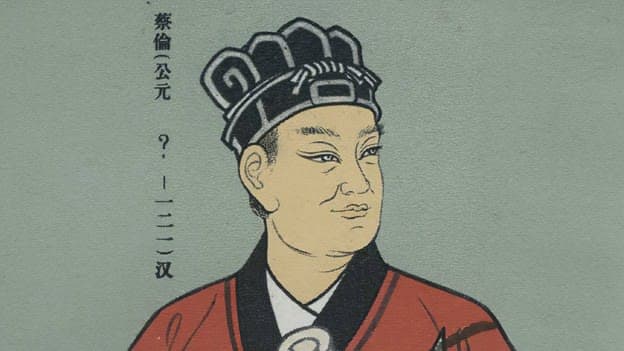
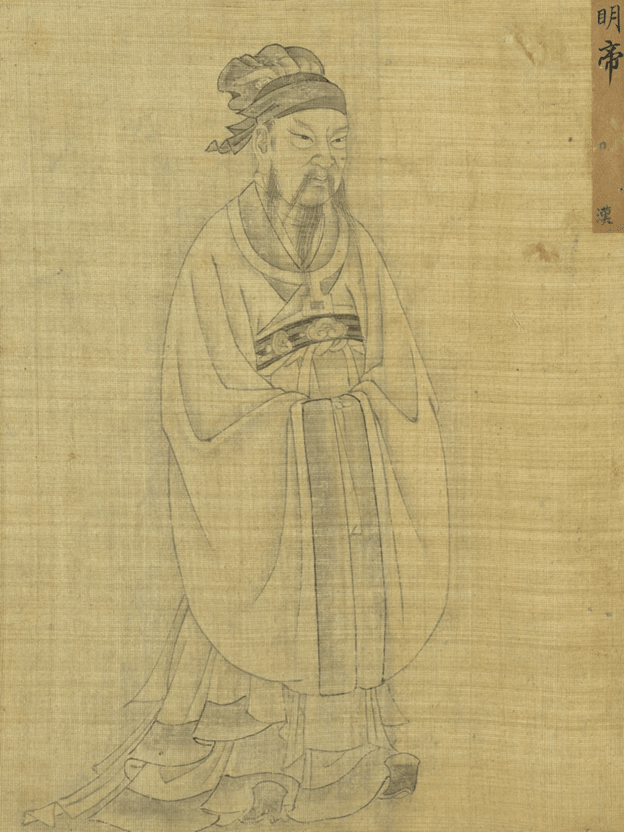
Cai Lun was born in 50 CE in Leiyang County and entered the imperial palace in 75 CE as a eunuch at the end of Emperor Mingdi’s reign.
Throughout his career he held various important posts, including head of the palace workshops, where he was responsible for producing ceremonial items.
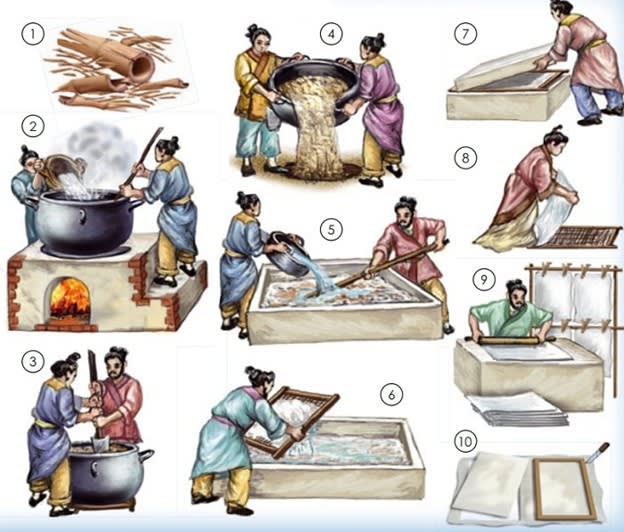
In 105 CE Cai Lun submitted a memorial to Emperor Hedi describing a new paper-making process he had developed. Although samples of paper made from plant fibers dating to the Western Han already existed, Cai Lun refined the technology, making it more accessible and of higher quality. He proposed using inexpensive materials such as tree bark, waste from hemp processing, old rags, and fishing nets. These components were mixed with water to form a pulp, which was then spread on screens to dry. The resulting paper was stronger and far cheaper than silk, which at the time was the principal writing material. Emperor Hedi praised the invention, granted Cai Lun high ministerial rank and wealth, and the paper produced by his method was officially called “the Marquis Cai’s silk.”
After Emperor Hedi’s death in 121 CE, Cai Lun retained influence at court, but fell out of favor with the new emperor, Andi. Andi’s grandmother had once been the subject of an interrogation led by Cai Lun forty years earlier. Realizing disgrace and trial awaited him, Cai Lun chose to end his life by taking poison.
Despite his tragic end, Cai Lun’s invention had an enormous impact on world history. He was venerated as a deity, and his invention became a cornerstone of human development. The historian Michael Hart, in his book The 100: A Ranking of the Most Influential Persons in History, placed Cai Lun seventh—above Johannes Gutenberg—arguing that paper has far wider applications than printing alone and that Gutenberg’s invention might not have been possible without the paper created using Cai Lun’s technique.


