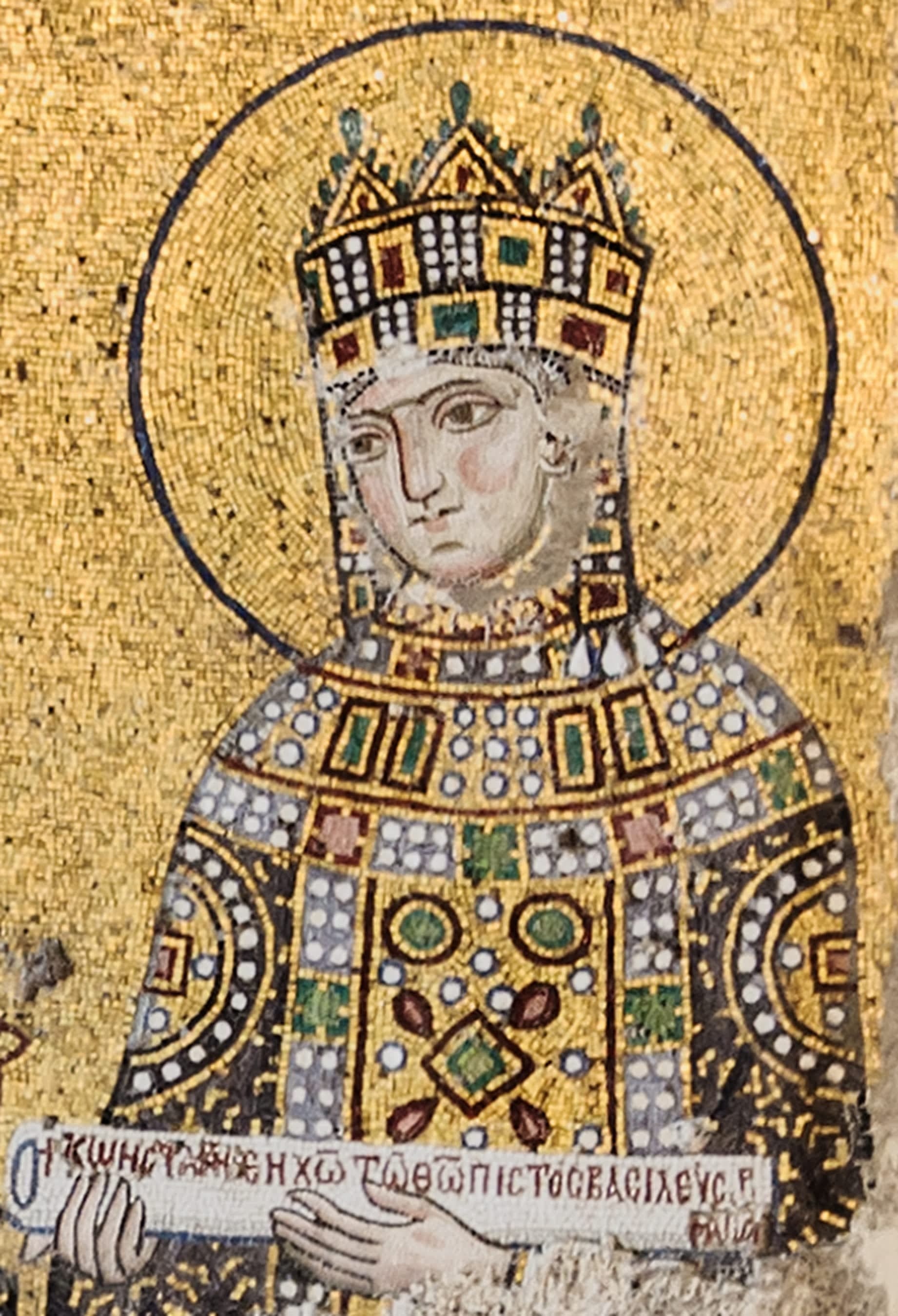
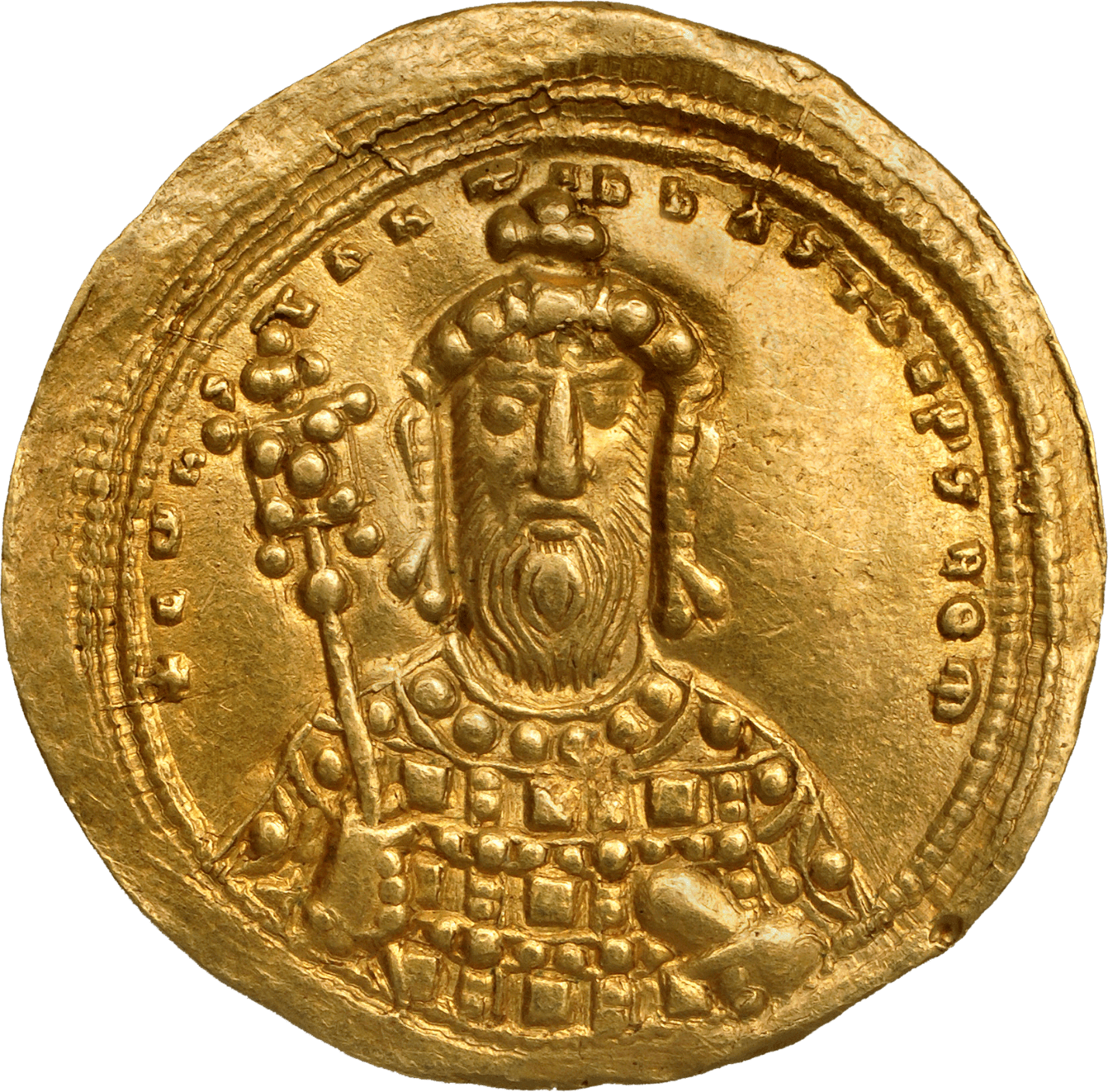
The life of Empress Zoe, the middle daughter of Constantine VIII and Helena Alypina, is one of the most remarkable stories in Byzantine history. Born around 978, she bore the proud title of Porphyrogenita (“Born in the Purple”), meaning that she had come into the world in the sacred Purple Chamber of the imperial palace, reserved exclusively for the lawful heirs of the throne. Her entire life became an embodiment of the twilight of the great Macedonian dynasty — a period when the glitter of gold and intrigue eclipsed the former military glory of the empire.
According to Michael Psellos, Zoe possessed a beauty that for a long time seemed untouched by age. She was of متوسط height, with deep-set eyes beneath stern brows, light-brown hair, and skin so white that it literally “shone.” Yet behind this beauty there lay a highly unusual nature. While her peers occupied themselves with needlework, Zoe transformed her chambers into a true laboratory. Her gynaikonitis was always filled with heat and dampness from boiling concoctions: the empress was passionately devoted to alchemy and cosmetics. She created unique ointments and reworked perfumes and aromatic blends. This labor bore fruit: even at seventy, her face remained smooth and unwrinkled, though her hands had begun to tremble and her back to bend. The famous recipe of “Empress Zoe’s ointment” included dates, plums, raisins, figs, lilies, and honey — a preparation that became legendary in its day.
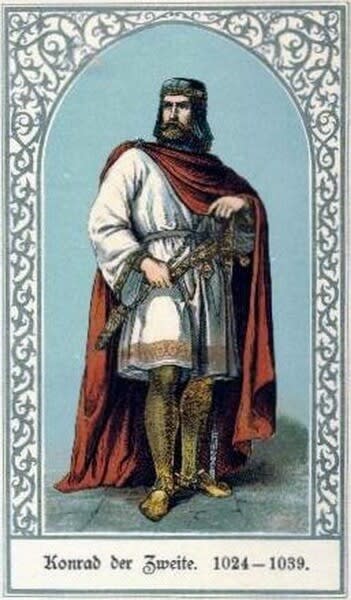
Her early youth passed in expectation of great dynastic alliances. In 1001 or 1002, she was chosen as the bride of Holy Roman Emperor Otto III, but the death of the bridegroom interrupted her journey to Bari, and Zoe returned to Constantinople. Later, in 1027, Conrad II sought Zoe’s hand for his son Henry, but her father, Constantine VIII, refused the match.

For a long time Constantine VIII hesitated to transfer power, but sensing death approaching, in 1028 he resolved to marry off one of his daughters. The younger, Theodora, proved willful and refused marriage to Romanos Argyros, citing both the fact that his wife was still alive and their too-close kinship. The choice then fell upon Zoe, who by that time was already fifty.

On November 12, 1028, she was married to the sixty-year-old prefect of Constantinople, whose wife Helena was forcibly tonsured as a nun under threat that her husband would be blinded. Three days later, Constantine VIII died, and Romanos III ascended the throne. Wishing to continue the dynasty, the elderly couple resorted to magic and dubious medicine: Zoe covered herself in amulets and stones, while Romanos used ointments and stimulants in the hope of “awakening nature.” When all failed, Romanos grew cold toward his wife, reduced her allowance, and devoted himself entirely to the business of state. Zoe, nursing resentment, vented her anger upon her sister Theodora, personally supervising her forced tonsure into a monastery.

The rejected empress soon found comfort in the arms of the young Michael, brother of the eunuch John the Orphanotrophos. The “rosy-faced” youth, of perfect beauty, became her favorite. Zoe made no attempt to hide the affair: she kissed Michael in public and seated him upon the throne, placing the scepter in his hand. Romanos III, aware of how precarious his own position was, pretended not to notice, preferring that his wife’s passion be directed toward one man rather than many.
In 1033, however, Romanos’s health deteriorated sharply. It was said that John the Orphanotrophos was poisoning him slowly. The end came on Holy Thursday, April 11, 1034. While bathing in a pool, the emperor was held under water by servants, possibly on Zoe’s orders. Zoe entered the bedchamber of her dying husband, but once she had assured herself that he would not survive, she left at once, making no effort to conceal her indifference.


That same night, in defiance of all custom, Zoe crowned Michael and placed him on the throne. For a payment of one hundred pounds of gold, Patriarch Alexios Studites blessed the marriage of the fifty-six-year-old widow and the twenty-four-year-old youth. Yet the happiness was short-lived. Michael IV, fearing the fate of his predecessor, removed Zoe from power, confined her within the gynaikonitis, and replaced her attendants with his own relatives.
Zoe attempted to resist and even planned to poison the eunuch John through his physician, but the conspiracy failed. Meanwhile, Michael IV suffered from epilepsy and dropsy. Realizing that they would have no children, he compelled Zoe to adopt his nephew, the future Michael V. In December 1041, sensing death approaching, the emperor took monastic vows. Zoe walked on foot to the monastery to see him, begging for an audience, but he never allowed her across the threshold. On December 10, 1041, Michael IV died.

Her adopted son, Michael V Kalaphates, proved ungrateful. At first he showed respect, but soon, wishing to free himself from the “party of the bureaucrats” that Zoe symbolized, he ordered her arrest. On the night of April 19, 1042, the purple-born empress was forcibly tonsured and exiled to the island of Prinkipo.
This decision ignited Constantinople. The people, loyal to the Macedonian house, poured into the streets crying, “Where is our mother Zoe?” For the first time, women ran out of their gynaikones, fighting on the barricades like maenads. In order to calm the mob, Michael brought Zoe back — but when the people saw her in monastic garb, they became even more enraged. From her monastery, Zoe’s younger sister Theodora was dragged out by force and proclaimed co-ruler in Hagia Sophia. Michael V was overthrown and blinded.
On April 21, 1042, Zoe and Theodora began their joint autocratic rule, which lasted about fifty days. It was one of the rarest examples of a female duumvirate. They sat upon a single throne, received ambassadors, and issued decrees against the sale of offices. Yet Zoe, inclined toward reckless extravagance, quickly began to drain the treasury, while the thrifty Theodora hoarded gold. Realizing that the empire needed a firm ruler, Zoe, at the age of sixty-four, resolved upon a third marriage.
Her chosen husband was her old favorite Constantine Monomachos, recalled from exile. The wedding took place on June 11, 1042. Since it was the third marriage for both, the Church treated it coldly, and they were married not by a patriarch but by an ordinary presbyter.
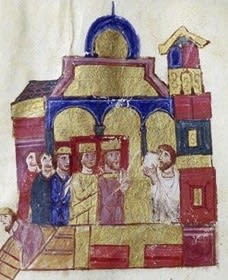

This union was highly unusual. Constantine brought with him his mistress Maria Skleraina, whom Zoe, “worn out by misfortunes and advanced in years,” accepted with striking calm. Skleraina received the title of sebaste and lived in apartments adjacent to those of the imperial couple. This “marriage of three” provoked murmuring among the people, and in 1043, during unrest, Zoe and Theodora had to appear personally on the balcony to assure the crowd that their lives were in no danger.
During these years Zoe witnessed the attack of Yaroslav the Wise’s Rus’ fleet in 1043, as well as the presence at court of Harald Hardrada. She withdrew almost entirely from affairs of state, devoting herself to fine clothing and to her jeweled icon of Jesus, with which she conversed as though it were alive, trying to predict the future from changes in the color of its face.
Toward the end of her life, Zoe became “unstable in mind,” falling into fits of anger. In 1050, at the age of seventy-two, she died. Constantine IX gave her splendid funeral honors and even tried to have his wife canonized, claiming that miracles occurred at her tomb in the Church of Christ Antiphonites, but the Church refused on account of her turbulent personal life.
Zoe left no heirs, and after the death of Theodora in 1056, the great Macedonian dynasty came to an end forever. Her era remained in history as a time of whims and luxury, behind which there loomed the approaching crisis of an empire once thought unshakable.


