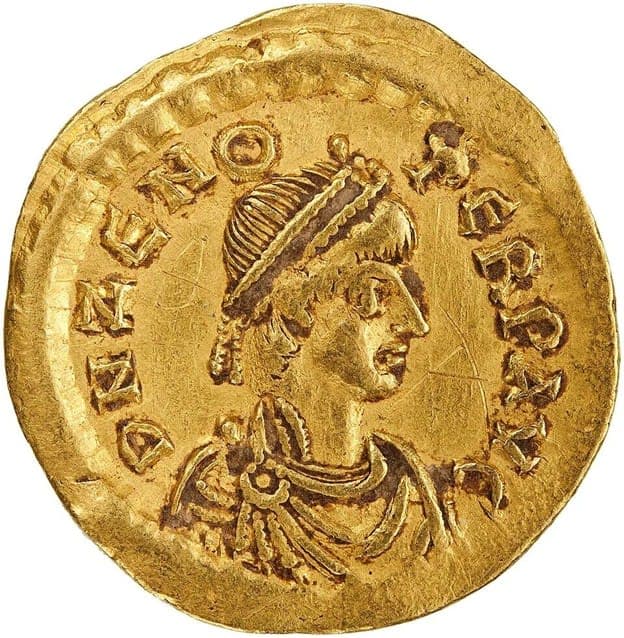

The story of Emperor Zeno is one of the most dramatic chapters in the chronicle of Byzantium. It tells how a harsh mountaineer from wild Isauria managed not only to ascend the throne of a great empire, but also to hold it despite conspiracies, ethnic hatred, and death itself. His path to the summit of power began not with the splendor of palace halls, but with the political calculation of Emperor Leo I, who was seeking a reliable support base in his struggle against the dominance of barbarian military commanders.

In 468, a man with a name difficult for Greek ears to pronounce appeared on the political stage of Constantinople — Tarasicodissa. He came from a noble Isaurian family, whose tribesmen were regarded in the capital almost as barbarians, much like the Germans. However, for Leo I this harsh warrior became the ideal ally. To make him “one of their own” in the eyes of the Roman elite, Tarasicodissa adopted the Greek name Zeno and married the emperor’s daughter, Ariadne. Leo I granted his son-in-law the titles of patrician, commander of the imperial guard, and commander-in-chief of the troops of Asia Minor, preparing him for the decisive struggle against the powerful general Aspar.
The confrontation with Aspar nearly cost Zeno his life. During the Thracian War, Aspar organized an assassination attempt against the Isaurian, but the plan failed. Returning to the capital, Zeno launched a counterattack: he accused Aspar of treason. In the bloody purge that followed, Aspar and his son Ardabur — who, ironically, had previously been considered Ariadne’s fiancé — were killed. The path to the throne was cleared of the main rivals, but this was only the beginning of his trials.
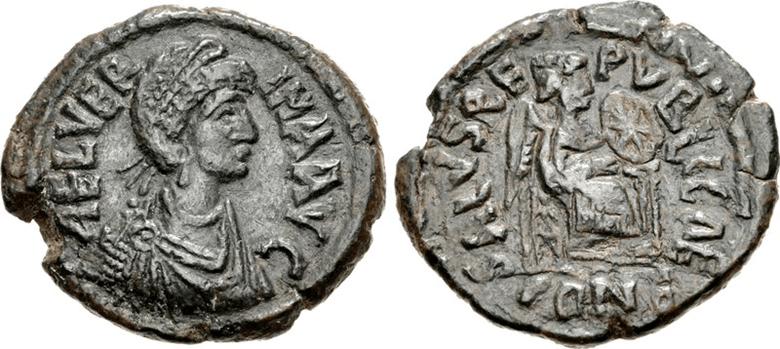
In 474, Leo I died, leaving as heir the young son of Zeno and Ariadne — Leo II. Zeno became regent for his own son and soon, thanks to the intrigues and influence of his mother-in-law Verina, was officially crowned as co-emperor. However, fate was cruel to the young Leo II: the boy lived only a few months after his grandfather’s death. Dark rumors spread through the corridors of the palace that his parents had had a hand in the child’s death for the sake of sole power, especially when Zeno proclaimed himself sole emperor.
To the Constantinopolitan aristocracy and the people, Zeno remained an outsider, a “barbarian,” whose presence on the throne offended the traditions of the empire. The cunning Verina took advantage of this unpopularity. She formed a conspiracy, hoping to raise her lover Patricius to the throne. She was joined by her brother Basiliscus and the influential military commanders Illus and Trocundes. On January 9, 475, riots instigated by the conspirators broke out in the capital. Zeno was forced to flee to his homeland in Isauria. Pursued by the troops of Illus, he took refuge in an impregnable mountain fortress together with the faithful Ariadne, while in Constantinople Basiliscus ascended the throne.

But Basiliscus’ rule proved short-lived and chaotic. Having executed Patricius and turned both the Church and the people against himself, he quickly lost his support. Zeno, showing the talent of a diplomat, managed to win over Illus and Trocundes, his former pursuers. In 476, he triumphantly returned to Constantinople. Basiliscus was exiled to Cappadocia, where he met his death. Having strengthened his power, Zeno revealed his harsh nature: he ordered the murder of the military commander Armatus, who had helped him regain the throne, and forced Armatus’ son to become a monk, eliminating potential threats.
Zeno’s reign was an era of great upheavals. In 477, a terrible earthquake turned many cities of the empire, including the capital, into ruins. Barbarians constantly pressed on the frontiers, but the emperor could not concentrate on external defense because internal conflicts never ceased. In 479, the revolt of Marcian, son of the Western Roman emperor Anthemius, broke out. Thanks to the decisiveness of Illus, the rebellion was suppressed and Marcian was exiled, but his later escape and attack on Ancyra kept the empire in tension.

The most difficult trial was Zeno’s break with Illus. In 484, Illus raised a large-scale rebellion in Asia Minor. An army under Leontius was sent against him, but Leontius went over to the rebels and was himself proclaimed emperor with the support of the tireless Verina. The war dragged on for years. Only in 488 did the general John the Scythian manage to storm the fortress of Papurius, where the conspirators were hiding. Illus and Leontius were executed, while Verina had died in captivity even before the fall of the citadel.
In international affairs, Zeno proved himself a master of “divide and rule.” To rid the Balkans of the devastating raids of the Ostrogoths under Theodoric the Great, he redirected their energy westward. The emperor sanctioned Theodoric’s campaign into Italy against Odoacer, which led to Odoacer’s fall and the foundation of the Ostrogothic Kingdom. In this way, Zeno formally restored Roman sovereignty over Italy while at the same time freeing himself from a dangerous neighbor.


Zeno’s religious policy was also full of attempts to find compromise. In 482, he issued the Henotikon — an edict of unity intended to reconcile the supporters of the Council of Chalcedon and the Monophysites. Although this document did not bring the long-awaited peace, it became an important milestone in the history of Eastern Christianity.
The emperor’s life came to an end on April 9, 491, during an epileptic seizure. His death gave rise to one of the most horrifying legends in Byzantine history. It was said that Zeno, being in a deep state of unconsciousness, was mistakenly taken for dead and sealed inside a sarcophagus. People claimed that cries for help could be heard from the tomb for a long time, but Ariadne and the highest officials, who hated the Isaurian, forbade the coffin to be opened until the sounds ceased. Thus ended the life of the man who came from the mountains of Isauria to change the face of the empire. After him, Ariadne gave preference to the experienced official Anastasius, who became the next emperor.


