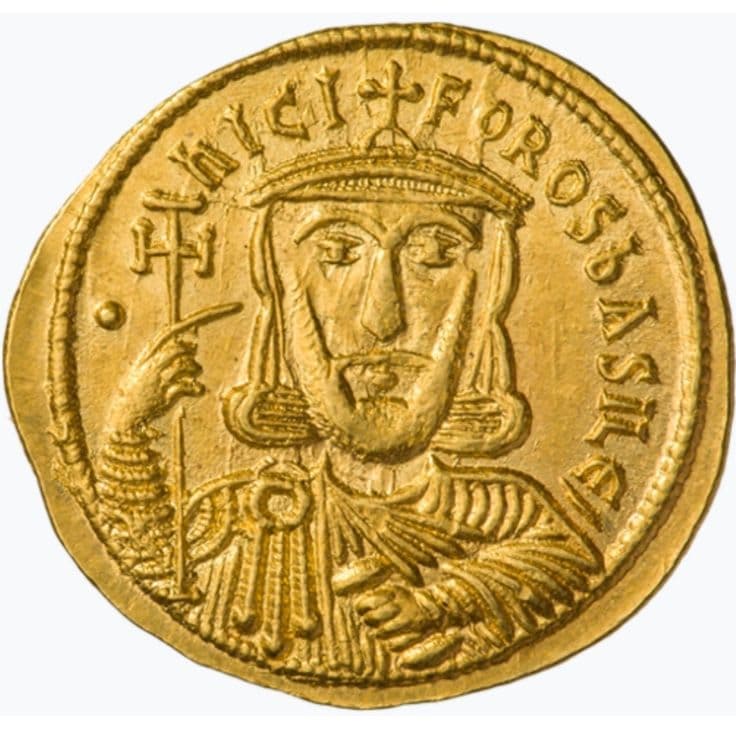
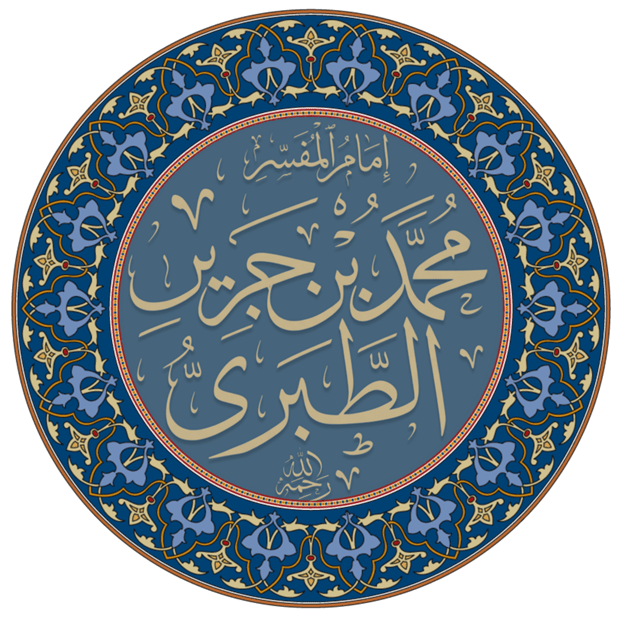
The reign of Nikephoros I, surnamed Genikos, represents one of the most dynamic and at the same time tragic chapters of ninth-century Byzantine history. His path to the summit of power began in Asia Minor, in the Greek city of Seleucia Sidera, located in the picturesque yet harsh region of Pisidia. Despite his deep integration into the Byzantine elite, Nikephoros’s origins are shrouded in legend: Arab and Syriac chroniclers, such as al-Tabari and al-Masudi, persistently traced his lineage back to the Ghassanid dynasty and its last ruler, Jabala ibn al-Ayham. In Constantinople, however, he was above all a brilliant financier. Before his accession, Nikephoros held the key office of logothete of the genikon, the empire’s chief treasury official, which gave him the nickname “Genikos,” a name that became synonymous with his harsh and calculating approach to government.

The decisive turning point in Nikephoros’s fate came in 802. At that time the empire was ruled by Irene, whose position had been weakened by the plans of Charlemagne. Recently crowned emperor of the West, he sought to legitimize his title through marriage to Irene, which would in effect have meant the union of the Frankish state and Byzantium. A group of high officials, fearful of losing their independence and dissatisfied with the empire’s financial condition, rallied around Nikephoros. As a result of a palace coup, Irene was overthrown, and on October 31, 802, Patriarch Tarasios placed the crown upon the head of Nikephoros I. The former empress was first exiled to the island of Prinkipo and then, out of fear of a new conspiracy, sent into more distant exile on Lesbos.
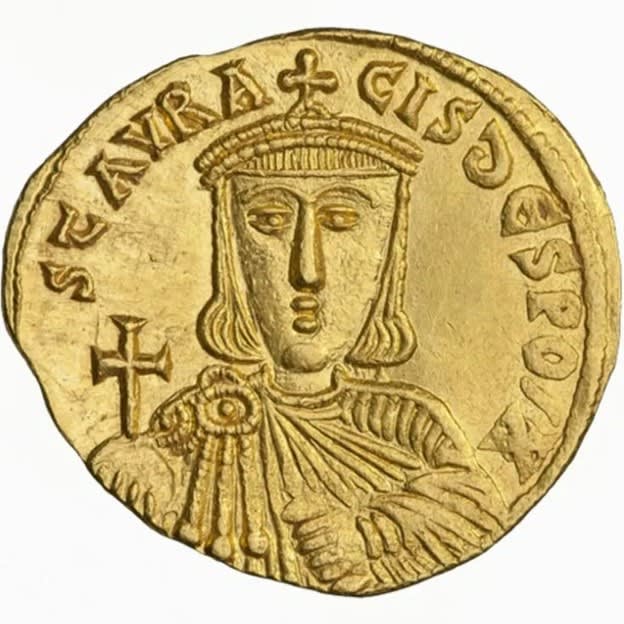
Once in power, Nikephoros launched sweeping reforms, driven by his past experience as treasurer. His fiscal policy was marked by exceptional severity: he imposed new taxes and kept strict watch over the replenishment of the treasury, which provoked murmuring among the population. One of his most ambitious projects was the forced resettlement of peasants from Anatolia into the European provinces of the empire. This was done in order to strengthen the frontiers and restore lands that had become heavily Slavicized. To ensure dynastic continuity, at Christmas in 803 Nikephoros proclaimed his son Staurakios co-emperor, thereby laying the foundations of a new dynasty.

In matters of faith, the emperor displayed a pragmatism bordering on cynicism. Formally remaining an icon-venerator, he sought to limit the economic and political power of the Church. After the death of Tarasios in 806, he placed his namesake Nikephoros on the patriarchal throne. Yet his tolerance toward iconoclasts and radical sects such as the Paulicians brought him into open conflict with the Orthodox party led by the monks of the Stoudios Monastery.

Nikephoros’s foreign policy was no less resolute. He refused to continue paying the humiliating tribute to the Abbasid Caliphate that Irene had previously agreed to pay. This led to an immediate deterioration in relations with Caliph Harun al-Rashid. In the summer of 804, a huge Arab army crossed the frontier. In August or September of that year, the general battle at Krasos took place. The Byzantine army suffered a catastrophic defeat; according to al-Tabari, the empire lost more than 40,700 soldiers, while Nikephoros himself was wounded three times and barely escaped death. Only the outbreak of internal strife within the caliphate allowed the emperor to turn his attention to the growing threat from the north — Bulgaria.
The war with the Bulgarian khan Krum proved fatal for Nikephoros. In 811, the emperor assembled an impressive army and invaded the lands of the Bulgarian Khanate. The campaign began triumphantly: the Byzantines captured and brutally sacked the Bulgarian capital, Pliska. Nikephoros rejected all of Krum’s offers of peace, seeking the complete destruction of his enemy. Yet on the return march, the emperor’s overconfidence played a cruel trick on him.
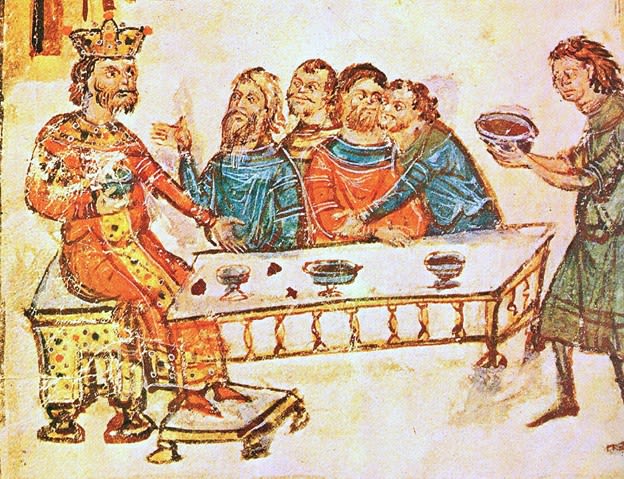
The Byzantine army, burdened with plunder, fell into a carefully prepared trap in the Varbitsa Pass. In the bloody slaughter that took place in July 811, almost the entire army was destroyed, and Nikephoros I Genikos himself fell on the battlefield. Following a barbarian custom, Khan Krum ordered the emperor’s skull to be cleaned and mounted in silver, turning it into a drinking cup from which he made his nobles drink at feasts.

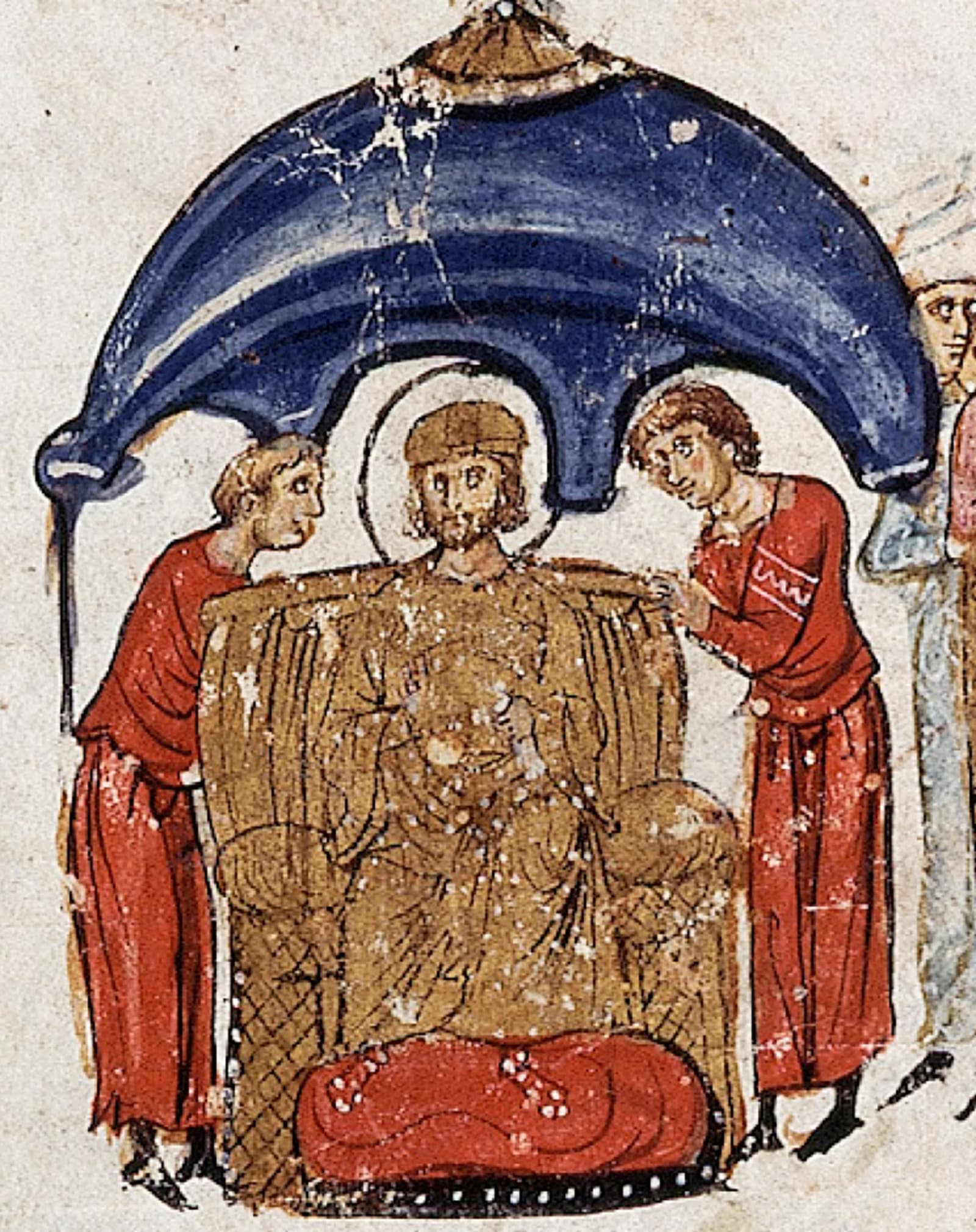
Nikephoros’s son, Staurakios, managed to escape the massacre, but suffered a grave spinal wound. He was carried to Constantinople on a litter and proclaimed sole ruler. However, the paralyzed and dying emperor was incapable of governing the state. Already on October 2, 811, he was deposed by his brother-in-law Michael Rangabe, bringing to an end the short but turbulent period of the rule of Nikephoros’s dynasty.


