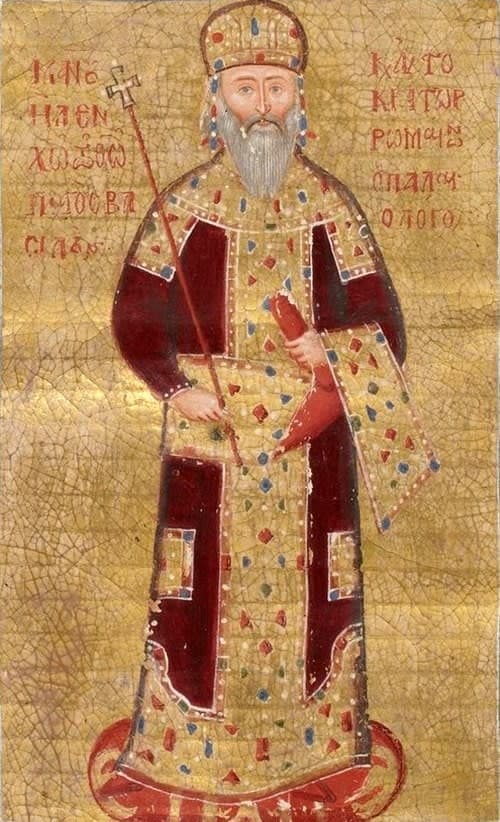

Manuel was born into a family in which the burden of responsibility for the fate of Orthodoxy and the Roman legacy was felt more acutely than ever. As the second son of Emperor John V and Helena Kantakouzene, he united within himself two of the most powerful dynastic lines. His maternal grandfather, Emperor John VI Kantakouzenos, and his grandmother Irene Asanina were key figures of the previous era, but Manuel inherited a far harsher time.
From childhood, he watched his father’s desperate attempts to find allies in the West. In 1365 and 1370, John V made long journeys to Western Europe, seeking support against the advancing Turkish threat, but these missions did not bring the desired result. A fateful turn in Manuel’s life came in 1373. His elder brother Andronikos IV made an unsuccessful attempt to usurp power, which led to his disgrace. It was then that Manuel was officially declared heir and co-emperor of his father. By that time, he already had experience in government, holding the post of despot of Thessaloniki from 1369, a position he retained until 1387.
The period from 1376 to 1379 became a time of severe trials: Andronikos IV nevertheless managed temporarily to depose John V. However, the legitimate emperor was able to regain the throne, relying on the fragile support of the Venetians and the Turks. As a result of this unstable peace, Andronikos was left with the title of co-emperor and the city of Selymbria, while Manuel continued to rule in Thessaloniki.
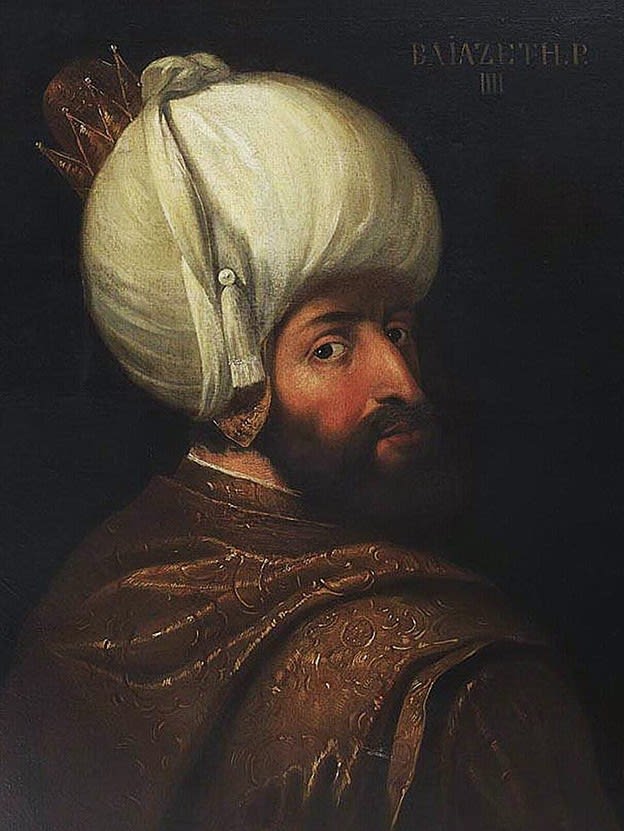
Political instability reached its peak in 1390, when internal discord again led to the overthrow of his father, this time by Andronikos’ son — John VII. Manuel showed decisiveness and, in that same year, with the help of the Venetian fleet, defeated his nephew and restored John V to the throne. However, the price of this victory was humiliating. Manuel was forced to go to the court of Sultan Bayezid I in Bursa as an “honorable hostage.”

The darkest episode of this period was Manuel’s forced participation in the Turkish campaign to capture Philadelphia — the last Byzantine enclave in Anatolia. A Byzantine emperor, compelled to storm his own city for Turkish interests, became a symbol of the empire’s deepest humiliation. The chronicler Laonikos Chalkokondyles rightly called this fact disgraceful. News that the heir to the throne was serving as Bayezid’s vassal reached Moscow in 1392. The reaction was harsh: in 1393, Grand Prince Vasily I sent an angry letter to Constantinople. From that moment, Rus’ effectively recognized Byzantium as a fallen power, and the emperor’s name was removed from Russian liturgies, since, according to Vasily’s conviction, “religion cannot exist without a true empire.”
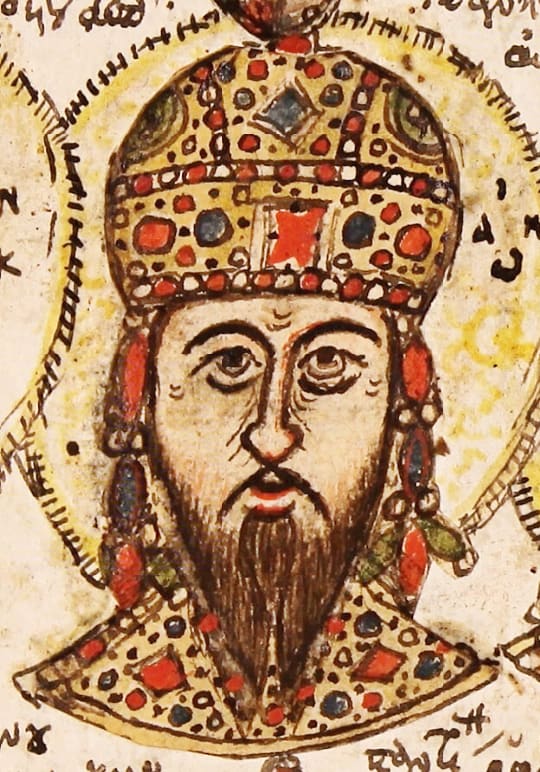
In February 1391, upon learning of his father’s death, Manuel made a daring escape from Bursa. He arrived in Constantinople, took the throne, and managed to neutralize the claims of John VII. But the external threat did not recede: from 1394 to 1402, Bayezid I kept Constantinople under an exhausting siege. Understanding that the city could not withstand the pressure without external aid, Manuel took an unprecedented step. Entrusting the defense of the city to his former rival and nephew John VII, with whom relations had temporarily improved, the emperor set out on a grand journey through Europe.
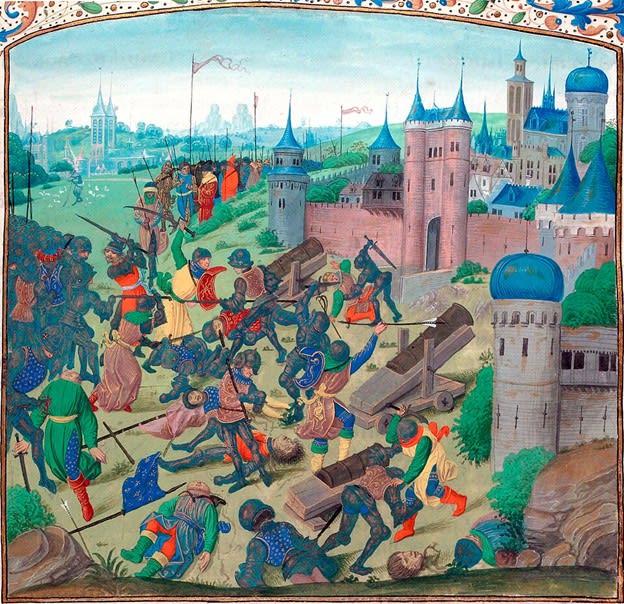
For several years, he visited the royal courts of England, France, the Holy Roman Empire, and Aragon. Manuel was the first and last Byzantine monarch to reach London. While he conducted negotiations, the Turks mercilessly ravaged the Despotate of the Morea in the Peloponnese. Hopes for the West seemed illusory, especially after the crushing defeat of the crusaders of Sigismund of Luxembourg at the Battle of Nicopolis on September 25, 1396.

Salvation came from the east, from where no one expected it. In 1402, the great conqueror Timur defeated Bayezid I at the Battle of Ankara. The Ottoman state sank into the chaos of civil strife. Taking advantage of this moment, John VII managed to restore to the empire the European coast of the Sea of Marmara and Thessaloniki. When Manuel returned to the capital in 1403, he found the situation far more favorable than he could have dreamed. John VII voluntarily handed power back to him and withdrew to rule in Thessaloniki as despot.

Manuel II used the respite he had been given to maximum advantage. He focused on strengthening the defenses of the Peloponnese, where Byzantine influence was expanding at the expense of the weakening Principality of Achaea. The main achievement of this period was the construction of the Hexamilion — the “Six-Mile Wall” across the Isthmus of Corinth, intended to become an impassable barrier against Ottoman armies on the road to the Morea.
For a long time, Manuel managed to preserve peace by maintaining friendly relations with Mehmed I, the victor in the Ottoman civil war. However, his attempt to intervene in the next Turkish dispute proved a fatal mistake. In 1422, Sultan Murad II once again besieged Constantinople, reminding the Romans of the fragility of their position.
In the final years of his life, Manuel II, worn down by decades of struggle, gradually handed affairs over to his eldest son and heir, John VIII. In 1424, the empire was forced once again to sign a peace treaty, returning to the status of tributary to the sultan. Sensing the end, the emperor performed one final spiritual act: two months before his death, he took monastic vows in the Monastery of the Pantokrator in Constantinople under the name Matthew. He died in 1425, leaving behind the image of a ruler who did the impossible to prolong the agony of his great homeland for another half century.



