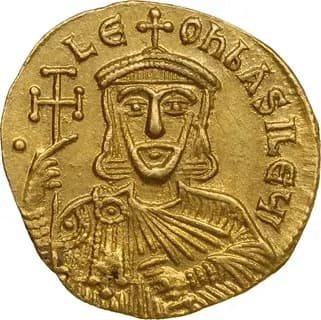

The roots of the future emperor disappear into a haze of legend and contradictory testimony. Leo was the son of the patrician Bardas, and The Oxford Dictionary of Byzantium unequivocally points to his Armenian origin. However, historians, particularly Anthony Kaldellis, note a more complex picture: in the sources of the time, his ancestry is described as a curious mixture of Armenian, Assyrian, and even “Amalekite” elements. The latter, being a biblical ethnonym, may in the context of the ninth century have carried a more symbolic than strictly ethnic meaning. Nevertheless, it was military talent, not noble birth, that paved his way to the summit of power.
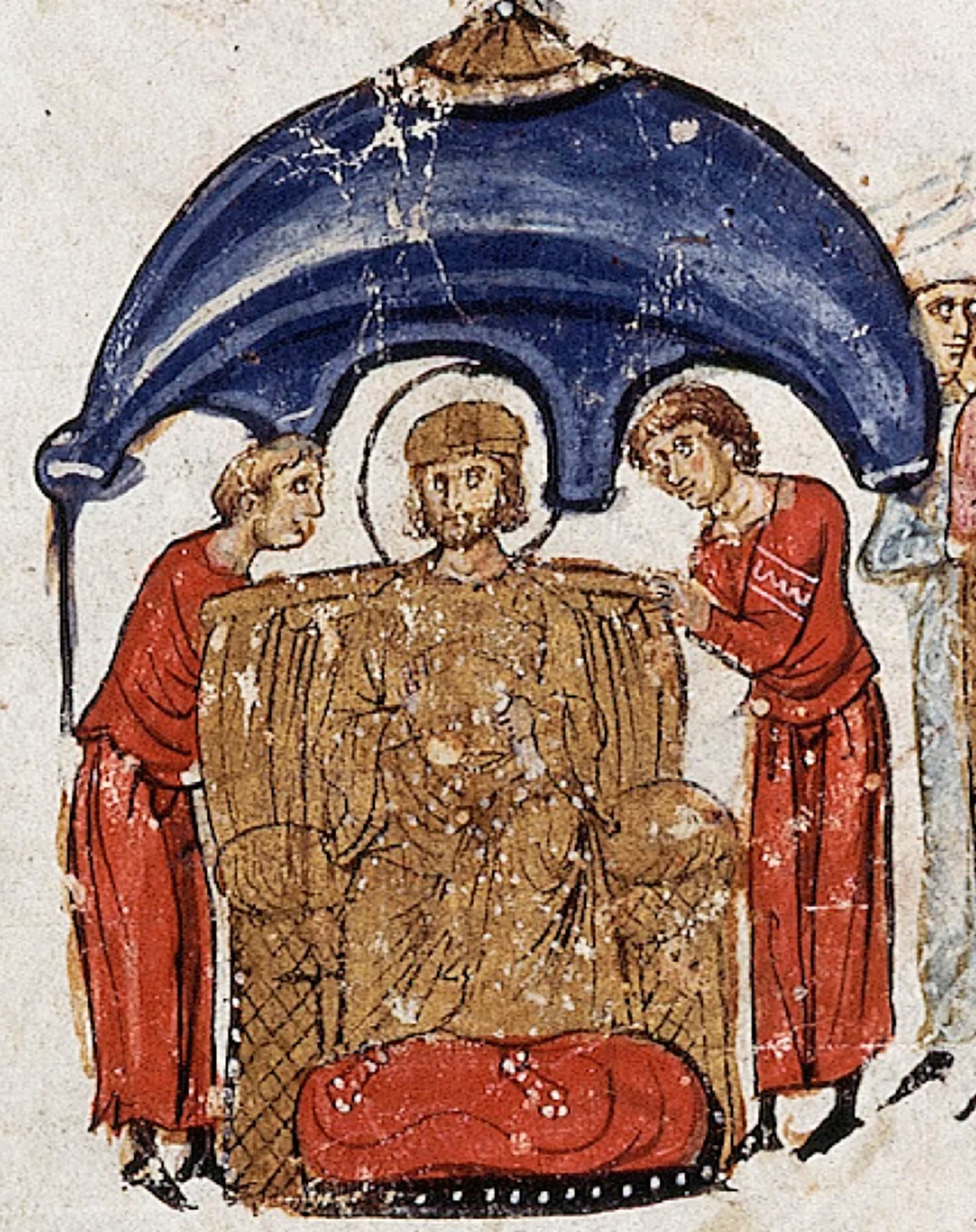
Leo began his career as an outstanding general, serving loyally under Emperors Nikephoros I and Michael I Rangabe. His influence grew in proportion to the failures of his predecessors. The decisive moment came with the Battle of Versinikia in the summer of 813. After the crushing defeat by the Bulgarian Khan Krum, when the enemy already stood beneath the walls of Constantinople, it became clear that Michael I was incapable of defending the state. On July 11, 813, amid chaos and the threat of the capital’s capture, Leo was proclaimed emperor. Although the chronicles claim that he initially refused the crown, circumstances and pressure from the army left him no choice.
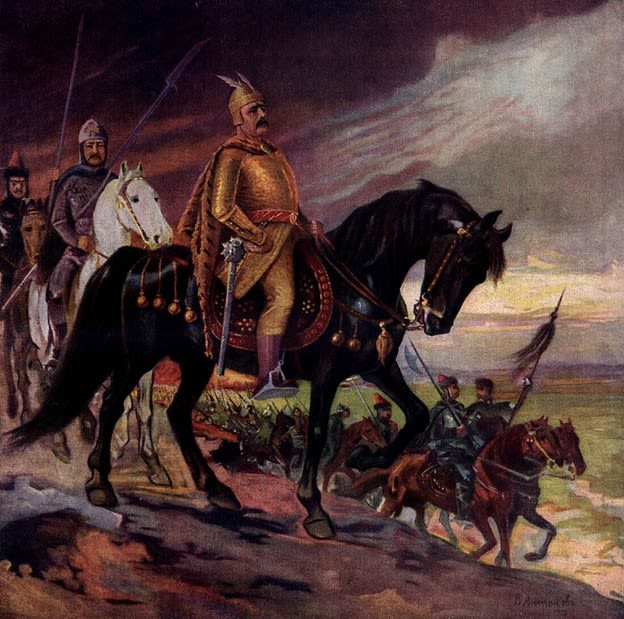
Leo V’s reign began with the gravest trial — the siege of Constantinople by the forces of Khan Krum. The Bulgarians, intoxicated by victory, hoped for a swift capture of the “City of the Caesars,” but the mighty fortifications and the nomads’ lack of professional siege equipment saved the city. During this period, Leo showed himself to be a cunning and ruthless politician. During negotiations, he made a bold attempt to assassinate Krum. The plot failed: the khan narrowly escaped and, burning with a thirst for revenge, put the countryside around the capital to the torch. Many civilians were killed or carried off into captivity, and Krum, retreating northward, stormed Adrianople.

Leo V’s response was swift. In the autumn of that same year, 813, the emperor invaded Bulgarian territory. In the decisive battle near Mesembria, his forces inflicted a crushing defeat upon the Bulgarians. The chronicles of the time preserve grim testimony to the cruelty of this war: the Byzantines slaughtered many Bulgarian children in an effort to cripple the future of the hostile people. Krum began preparing a new and even greater campaign against Constantinople, but history took another course — on April 13, 814, the formidable khan died suddenly. This gave the empire a much-needed respite, and in the winter of 815/816 Leo concluded a “Thirty Years’ Peace” with Krum’s successor, Khan Omurtag, restoring the borders to the condition they had held in the time of Khan Tervel.

Having secured external safety, Leo V turned to domestic affairs and resolved to revive the policy of iconoclasm. He saw in it a way to strengthen discipline and restore God’s favor, which, in his view, the empire had lost because of idolatry. In 814, he instructed the learned cleric John — nicknamed “the Grammarian” for his exceptional learning — to prepare a theological justification for the banning of icons.
This decision provoked fierce resistance. Patriarch Nikephoros tried to reason with the emperor, but Leo remained unyielding. An even harder line was taken by Theodore the Studite, who had returned from exile. His words, addressed to the basileus, became a symbol of the Church’s struggle for independence from imperial authority:

“Do not disturb the peace of the Church; God has appointed in the Church some as apostles, others as shepherds and teachers, but He did not mention kings; leave the Church to shepherds and teachers.”
Leo V ignored these warnings. In 815 he deposed Nikephoros and convened a local church council. The decisions of the Seventh Ecumenical Council were annulled, and the empire returned to the doctrines of the iconoclast council of Hieria of 754. Although the veneration of icons was formally described as an error rather than a heresy, in practice a reign of terror against religious art began. An edict was issued allowing the destruction of any images of saints with impunity. Icons, masterpieces of Byzantine painting, were smashed with axes and burned in public squares, vanishing forever from history.

The end of Leo V’s reign was as harsh as its beginning. The chief threat ripened within his own inner circle. In December 820, the emperor’s former associate, Michael the Stammerer, also known as Michael the Amorian, was accused of insolent speech and conspiracy. Leo immediately sentenced him to death by burning. The execution was set for the end of the month, but chance intervened. Empress Theodosia, moved by piety, persuaded her husband not to defile the feast of Christmas with an execution and to postpone the sentence.
This act of mercy proved fatal. On December 25, 820, during the solemn Christmas service in Hagia Sophia, conspirators disguised in priestly vestments attacked the emperor. Leo tried to defend himself with a heavy cross seized from the altar, but fell beneath the blows of their swords. According to Theophanes Continuatus, at that moment a mysterious prophecy from a Sibylline book, which the emperor had feared all his life, was fulfilled.
Leo V’s death was not the end of his family’s suffering. His body was thrown into a public latrine and then carried on a mule to the harbor, where the empress and his children were waiting. Theodosia, together with their four sons, was exiled to the Princes’ Islands. In order to extinguish forever the claims of his line to the throne, all of his sons were castrated. The procedure was carried out with such needless brutality that one of the boys died during the mutilation itself. Thus ended the age of “Leo the Armenian,” who left behind the memory of a strong ruler, a stern warrior, and a destroyer of icons.


