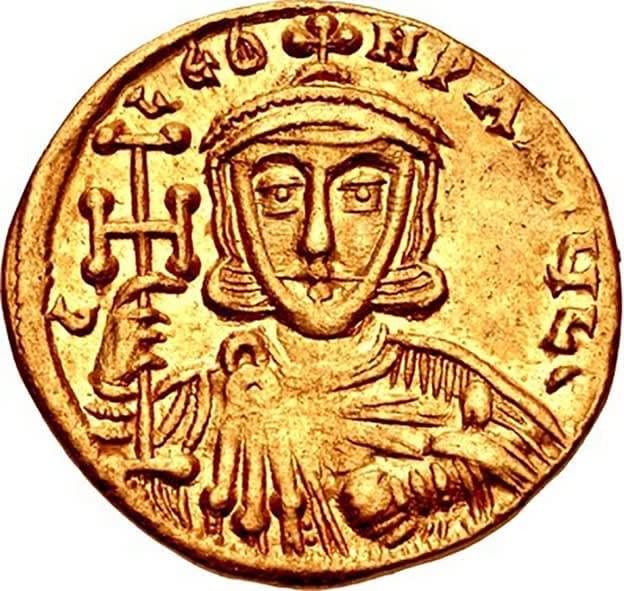

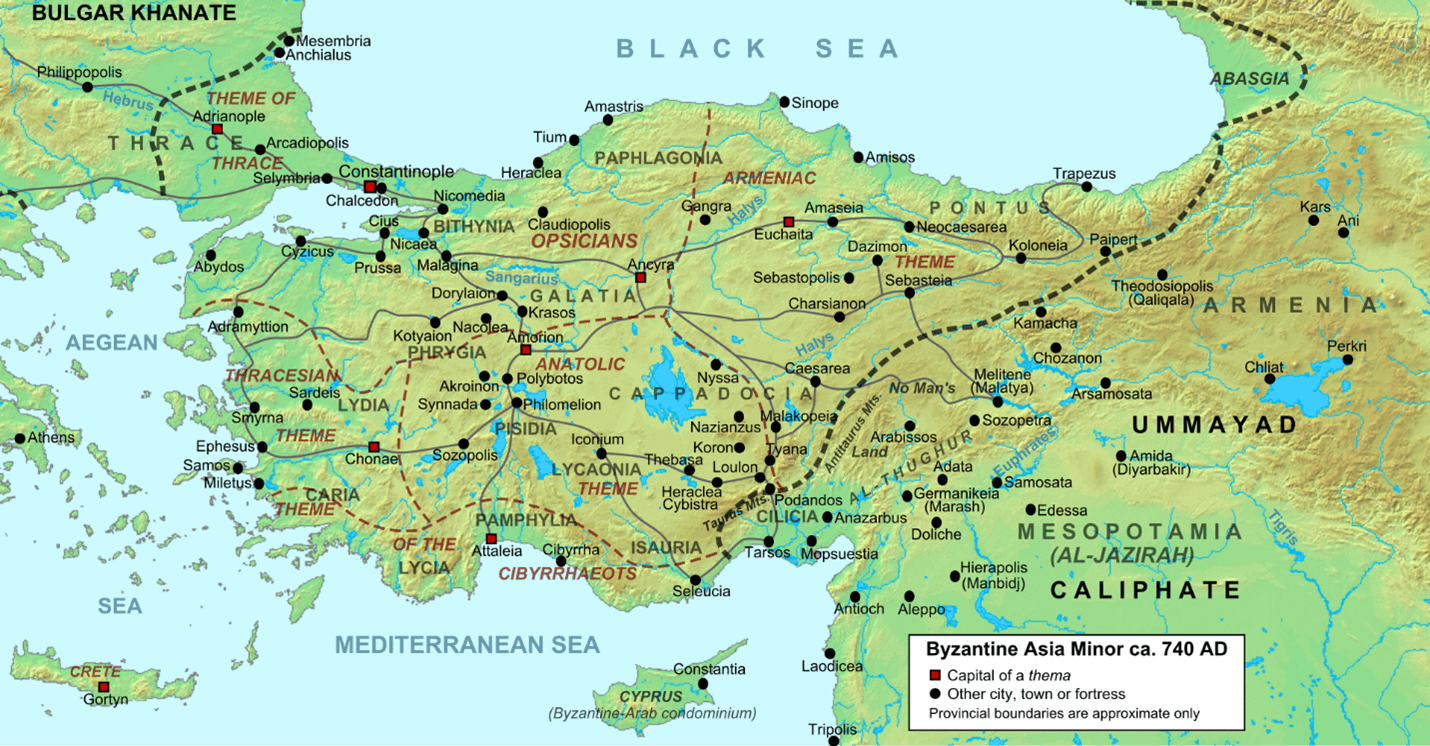
The future emperor was born around 675 in Germanikeia, on the border of Asia Minor and Syria. His origins remain a matter of debate among historians: some describe him as an Isaurian, while others point to Armenian roots. At birth he was given the name Konon. Konon’s family was forced to flee the Arab advance to Thrace, to the city of Mesembria. It was there that his legendary career began.
In 705, when the deposed Justinian II Rhinotmetos was marching on Constantinople at the head of a Bulgar army, the young Leo made his first political move. He drove a flock of five hundred sheep into Justinian’s camp in order to feed the soldiers. This gesture won him the favor of the basileus. Yet Justinian II, known for his pathological suspicion, soon began to suspect Leo of treason and sent him on an almost impossible mission to distant Lazica in the Caucasus. There Leo proved himself a master of diplomacy and survival: left without the promised treasury funds, he nevertheless managed to persuade local chieftains to fight on the empire’s side in exchange for promises alone. It was said that on one occasion he crossed the mountains on skis over dangerous spring snow with only a handful of men in order to take command of a mercenary detachment. Leo was not merely a warrior — he spoke Arabic fluently and possessed a quick intelligence, which made him a dangerous opponent in any game.
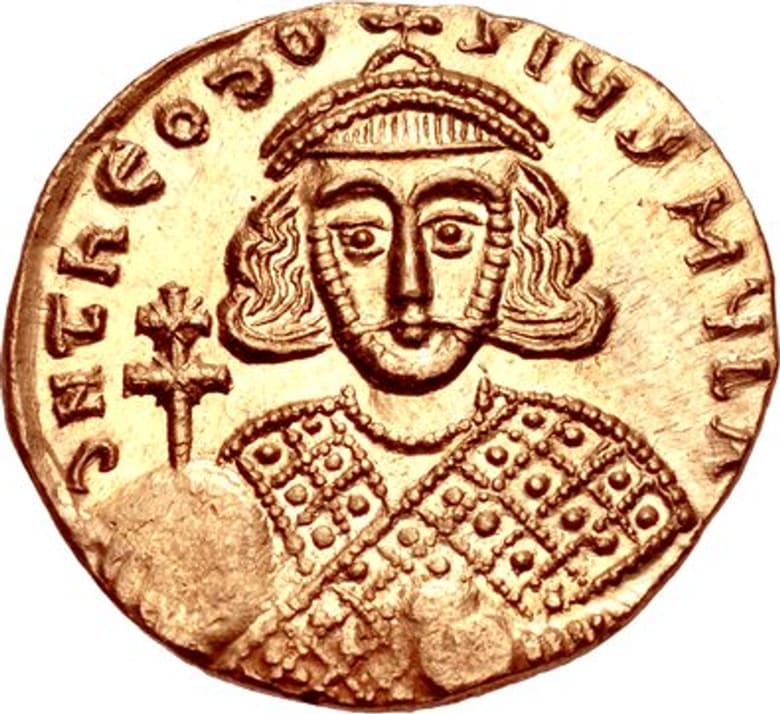
After the fall of Justinian II and the rapid succession of emperors, Anastasius II appointed Leo strategos of the powerful Anatolic Theme. In conditions of chaos, when the weak Theodosius III occupied the throne, Leo raised a revolt. In March 717 he entered Constantinople as the unquestioned ruler, taking the name Leo III.

Hardly had Leo placed the crown upon his head when the empire was confronted with the question of physical survival. Maslama, the brother of the Arab caliph, was leading an enormous army and fleet against the capital. Leo, using his knowledge of Arab psychology, spent a long time deceiving Maslama by promising surrender and the payment of tribute, thereby buying precious days to strengthen the walls.
On August 15, 717, one of the greatest sieges in history began. The Arab fleet of 2,500 vessels filled the Sea of Marmara. Leo personally led a sortie of Byzantine ships armed with “Greek fire” and dealt a crushing blow to the enemy vanguard. Yet nature became Leo’s greatest ally: the winter of 717–718 proved exceptionally severe. The Muslims, unaccustomed to snow, died by the thousands from cold, hunger, and disease. In the spring of 718, the Bulgar khan Tervel, arriving to assist, shattered the Arab land forces beneath the walls of the city. In August 718, the remnants of the Arab fleet were destroyed by storms and Greek fire. Of the caliphate’s army of 180,000 men, less than a quarter returned home. It was a defeat that permanently broke the offensive momentum of the Umayyads.
Leo placed the final seal on the Arab wars in 740, when together with his son Constantine he defeated the Arabs in the Battle of Akroinon. This victory, alongside Charles Martel’s success at Poitiers, effectively halted Islamic expansion into Europe.
Having stabilized the frontiers, Leo III turned to the reorganization of the state. He understood that the great themes, the military provinces, gave their strategoi too much power. To prevent new rebellions, he divided the giant Anatolic Theme, creating a new naval theme — the Cibyrrhaeot Theme — along the southern coast of Asia Minor. This made it possible to establish a regular fleet capable of responding rapidly to raids by Saracen pirates.

In 726, the emperor issued the Ecloga, a new law code in the Greek language. Leo sought to make justice accessible and humane, at least in the Christian understanding of the time: judges were forbidden to accept gifts, and fixed salaries were introduced. The Ecloga brought a strong element of Christian ethics into Roman law, especially in matters of family life, replacing the death penalty in many cases with mutilation, which in that age was regarded as an act of mercy, giving the sinner a chance for repentance.
Leo III’s most controversial and radical deed was the proclamation of iconoclasm. As a man from the East, where ideas about the impossibility of depicting the divine were strong, the emperor saw the veneration of icons as the cause of God’s wrath. In 726, a powerful volcanic eruption took place in the Aegean Sea, which Leo interpreted as a sign that the Lord was punishing the empire for idolatry.

The first dramatic act was the removal of the image of Christ from the Chalke Gate, which provoked a bloody riot in Constantinople. Leo acted decisively: icons were removed from churches or placed so high that people could no longer kiss them. In 729, Patriarch Germanus, who refused to support iconoclasm, was deposed, and the compliant Anastasius took his place.
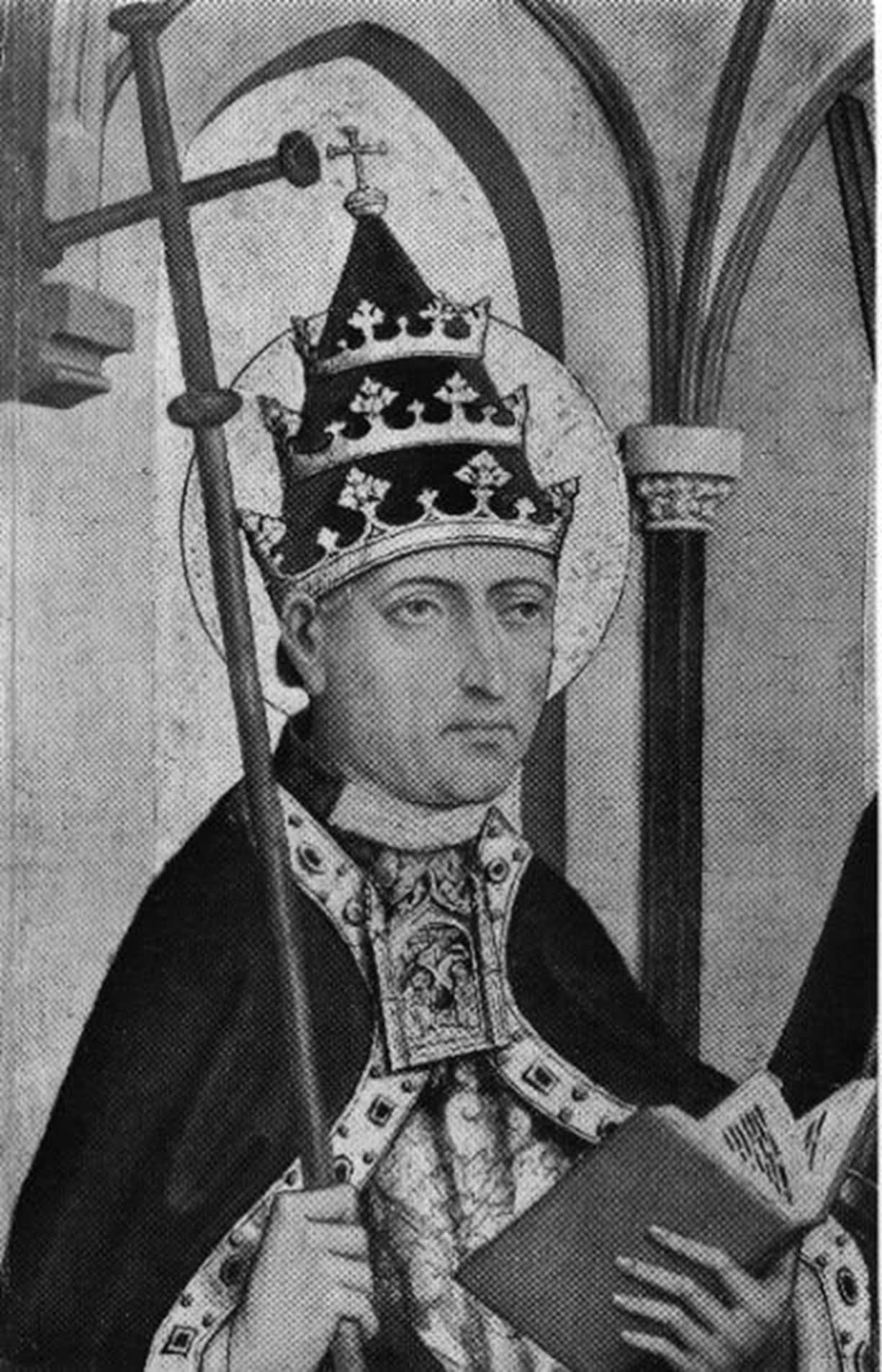
This policy caused a deep split. The popes of Rome, Gregory II and Gregory III, firmly condemned the emperor. Councils were held in Rome affirming the legitimacy of icon veneration, and Byzantium in practice began to lose control over Italy. It was in this period that the great theologian John of Damascus wrote his famous Discourses Against Those Who Decry the Holy Images, becoming Leo’s chief ideological opponent. Despite uprisings in Hellas and the fierce resistance of the monasteries, Leo remained faithful to iconoclasm until the end of his days, relying on the loyalty of the army.

Leo III the Isaurian died on June 18, 741, leaving the throne to his son Constantine V. He had inherited an empire ruined, besieged, and demoralized, and he handed on to his heir a powerful state with an effective military machine and renewed legislation. His reign marked the beginning of the Isaurian dynasty, which retained power for a century.


