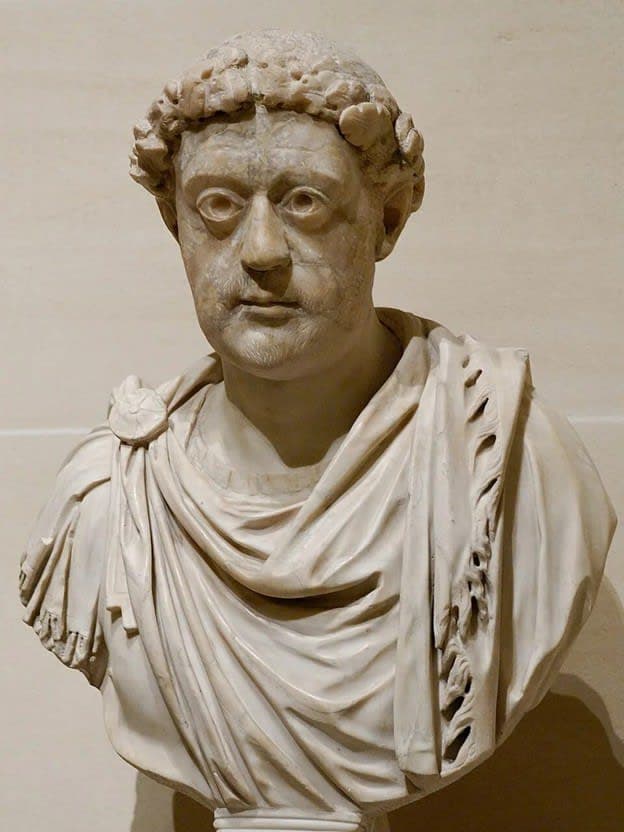

The birth of the future ruler, which took place in the lands of Thrace or Dacia, was surrounded by a simplicity highly unusual for future wearers of the purple. The historian John Malalas pointed to his Bessian origin, while in Constantinople itself there long lived a legend that in his youth Leo had been a simple butcher. For many decades afterward, the city’s inhabitants would curiously look at the small shop in the capital where he had once sold meat together with his faithful wife Verina. It was precisely for this reason that he received his popular nickname — Macella, “the Butcher.” However, fate led him along a different path: Leo entered military service and, having shown valor, managed to rise to the high rank of comes.

When Emperor Marcian died in 457, the fate of the empire fell into the hands of powerful generals of Alan origin — Aspar and his son Ardabur. Unable to take the throne themselves because of their origin and Arian faith, they decided to place Leo on it, believing that the old soldier would become an obedient puppet in their hands. To give legitimacy to the accession of a man of such low birth, an act was performed that changed the history of the Christian world. On February 7, 457, Leo I became the first emperor whose crown was placed on his head not by a military commander, but by Anatolius, Patriarch of Constantinople. From that moment, this religious rite of coronation became an obligatory tradition, securing for the Church a crucial role in the state.

However, Aspar’s expectations were not fulfilled. Leo I, contrary to the hopes of his patron, did not wish to remain in the shadows. Understanding that his power was unstable as long as Alan generals stood behind him, the emperor began to seek a new support base. In 463, when the rift with Aspar became obvious, Leo turned to the Isaurian federates — harsh mountain people from Asia Minor. He brought their leader Tarasicodissa Rousoumbladeotes close to him, gave him the Greek name Zeno, and, sealing the alliance by marriage, gave him his daughter Ariadne as wife, appointing his son-in-law commander of the imperial guard.
The confrontation reached its peak when Ardabur, trying to regain control, planned to bring the Isaurians under his authority. The conspiracy was uncovered, and Leo I struck a decisive blow: by his order, Aspar and his sons were killed. Although this step freed the throne from the dominance of all-powerful kingmakers, it created new problems. The people disliked Zeno and his tribesmen, while external enemies were quick to take advantage of the internal struggle. The Balkans suffered devastating raids by the Ostrogoths, and the borders once again trembled under the blows of the Huns.

The internal condition of the empire under Leo also provoked controversy. The historian Malchus of Philadelphia left a harsh testimony, describing the emperor as a man who possessed immense glory and inspired fear among barbarians, but was merciless toward his own subjects. Leo I created an extensive network of informers and burdened the cities with unbearable taxes, seeking to gather all the gold in the world into his treasury. This financial pressure deprived the provinces of their former prosperity, making them vulnerable.
Leo’s foreign policy was ambitious but tragic. In 467, he helped Anthemius take the throne of the Western Roman Empire, seeking to restore the unity of the Roman world. The summit of his ambitions was supposed to be the grand expedition against the Vandals in 468. It was a colossal undertaking: the treasury allocated incredible sums — 130,000 pounds of gold and 700 pounds of silver. However, because of the overconfidence and incompetent command of his brother-in-law Basiliscus, the fleet suffered a crushing defeat. This catastrophe literally bled the empire dry, leaving the shores of Greece defenseless against retaliatory attacks by Geiseric’s Vandals until a forced peace was signed.
Sensing that his end was near, Leo I proclaimed his young grandson, Leo II, the son of Zeno and Ariadne, as his successor. The life of the great and controversial emperor came to an end on January 18, 474. At the age of 73, he died of dysentery. Despite the harshness of his rule and the financial burden he placed on the people, the Church glorified Emperor Leo the Great among the confessors, establishing his feast day on January 20 / February 2. He entered history as the ruler who managed to wrest the Byzantine scepter from the hands of barbarian generals and laid the foundations of the sacred rite of imperial power.


