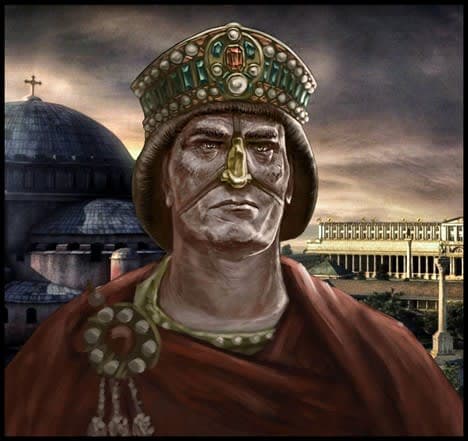

Justinian II ascended the Byzantine throne in 685 as a sixteen-year-old youth. Despite his young age, the dominant trait of his character revealed itself early — merciless cruelty, which soon made him an object of genuine hatred among his subjects. Hardly had he put on the purple robes when the new basileus abandoned the policy of prudent peace with the Caliphate. Striving for triumphs, he sent an army into Armenia under the command of the general Leontios. This military pressure forced Caliph Abd al-Malik to agree to a humiliating increase in tribute: from then on, the Arabs were obliged to pay the empire one thousand gold coins every day, as well as provide one slave and one horse.
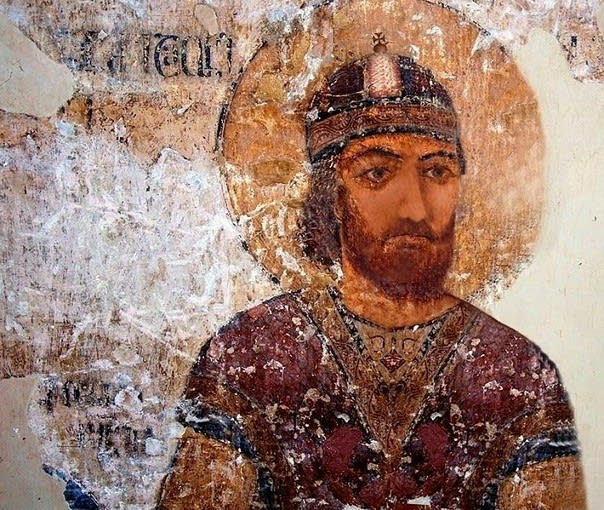
Attempting to strengthen the frontiers, Justinian undertook large-scale population transfers. Under the terms of the new treaty, he relocated the Maronites from Lebanon, settling them in Pamphylia and the Peloponnese, while their twelve-thousand-strong force was sent to Armenia. In 689 and 690, the basileus waged fierce wars against the Bulgars, who had recently established themselves on the Danube among the Slavic population. The captured Slavs were resettled en masse in Asia Minor, where Justinian formed from them a special corps of thirty thousand men.
However, fortune abandoned him in 692. Having broken the peace with the Arabs, Justinian confronted them in the Battle of Sebastopolis in Cilicia. The battle turned into a catastrophe because part of the Slavic troops defected to the Muslims. In a fit of rage, Justinian ordered the slaughter near Nicomedia even of those Slavs who had remained loyal to him. One consequence of this defeat was the loss of southern Armenia, where Smbat VI Bagratuni rose in revolt.

The internal life of the empire during this period was no less grim. Popular hatred was fueled by the extortions of two imperial favorites: the chief logothete Theodotos and the imperial sakellarios Stephen. In ecclesiastical affairs, Justinian convened the Quinisext Council in 691–692, also known as the Council in Trullo. Its decrees, however, were not recognized by Pope Sergius I, and all attempts by the basileus to force the pontiff into obedience came to nothing.
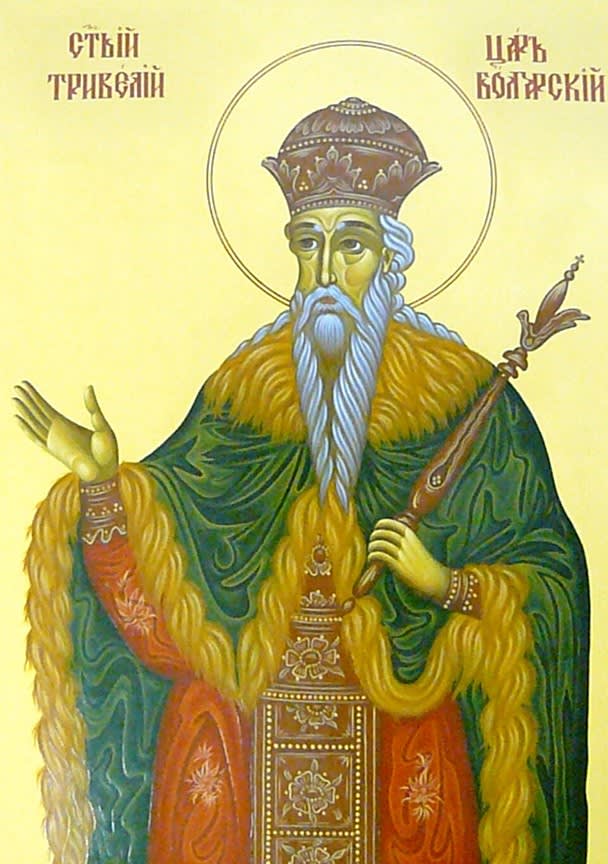
The cup of popular patience overflowed in 695. Justinian’s universal unpopularity was exploited by the general Leontios. Escaping from prison, where he had been thrown by the suspicious basileus, Leontios roused the people of the capital. Justinian, once captured, had his nose and tongue publicly cut off — earning him the nickname Rhinotmetos, “the slit-nosed” — and was exiled to distant Cherson in Crimea. His notorious favorites, Stephen and Theodotos, were executed.
In exile, Justinian did not submit. Even when Leontios was replaced by Tiberios III, Rhinotmetos continued to believe in his destiny. Driven by visions of restored power, he fled from Cherson to the mountain fortress of Doros, and then to the Khazars in Phanagoria on the Taman Peninsula. There he married the sister of the khagan Ibouzeros Gliabanos, who took the name Theodora. Sensing danger from Byzantium, the khagan tried to betray his son-in-law, but Justinian fled again — this time to the Bulgars. In 705, with a great army of Slavs and Bulgars under Khan Tervel, he approached the walls of Constantinople.
Having regained the throne, Justinian II turned his second reign into an unending act of vengeance. The deposed emperors Tiberios and Leontios were publicly beheaded, while Patriarch Kallinikos was blinded and exiled to Rome. Justinian richly rewarded his ally Tervel, granting him, for the first time in history, the title of Caesar to a barbarian ruler. Yet the alliance was fragile: already in 708, Justinian suddenly attacked Bulgaria, only to suffer a crushing defeat at the hands of Tervel in the Battle of Anchialos.
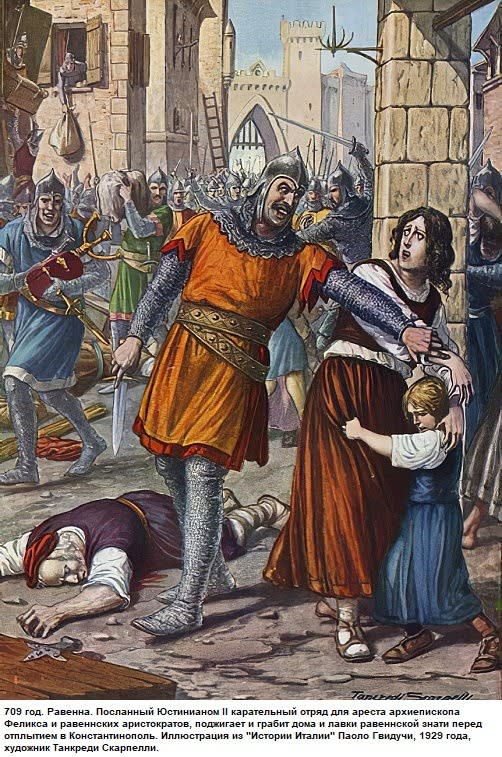
The emperor’s vindictiveness extended to Italy as well. In 709, he sent a punitive expedition under the strategos Theodore to Ravenna, whose inhabitants had once mocked the fallen basileus. The leading citizens were treacherously seized during a banquet and killed in Constantinople, while Bishop Felix had his eyes burned out. This terror provoked a revolt in Ravenna in 710/11, during which Exarch John III Rizocopus was killed, effectively marking the beginning of the end of Byzantine influence in Italy.
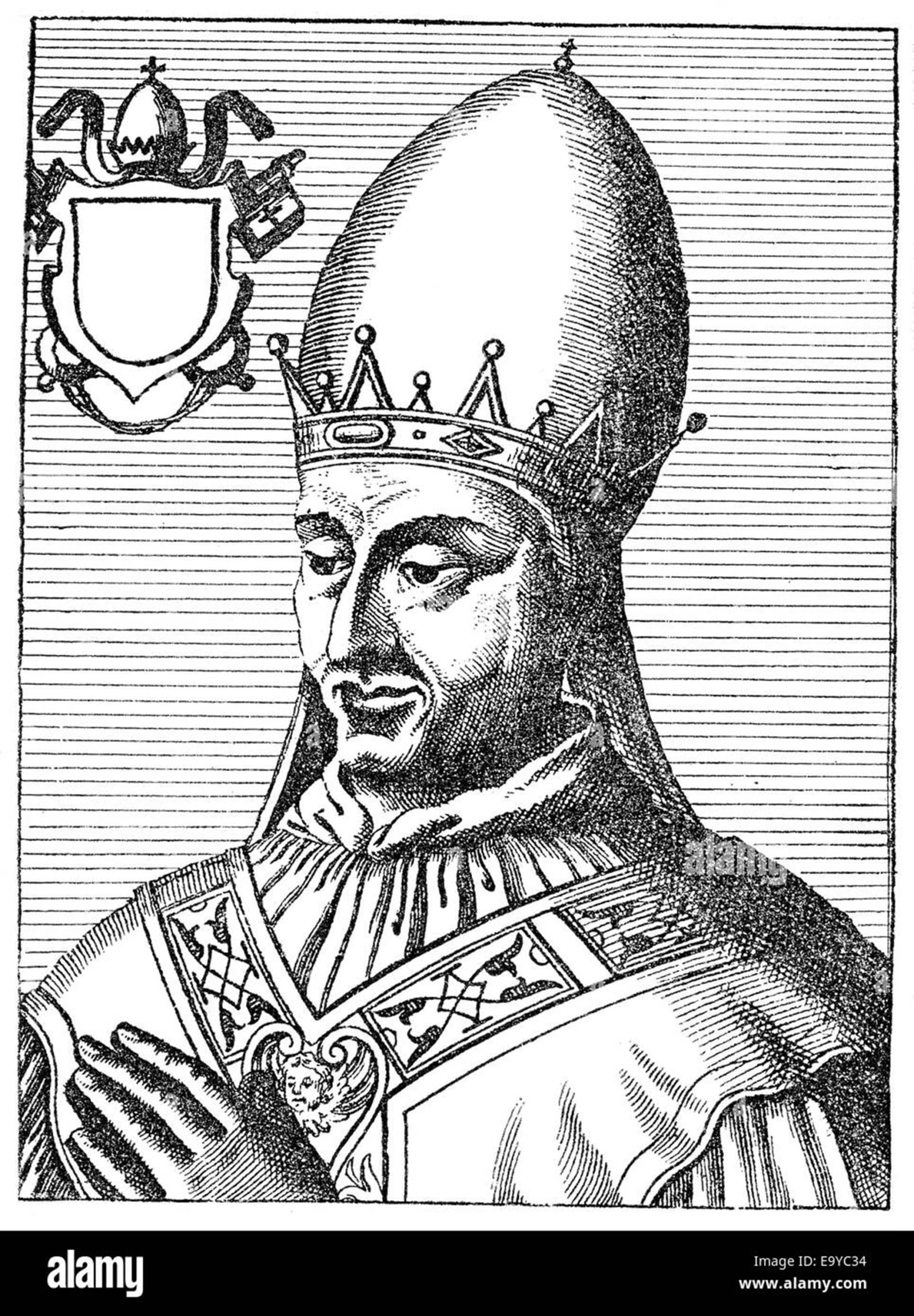
Trying to find support in the West against the Lombards, Justinian moved toward reconciliation with the papacy. In 710, Pope Constantine visited Constantinople, where the basileus received him with unprecedented honors, even kissing his feet. However, on the eastern frontiers matters were going badly: the Arabs captured Mopsuestia and Tyana, and in 709 they invaded Thrace.
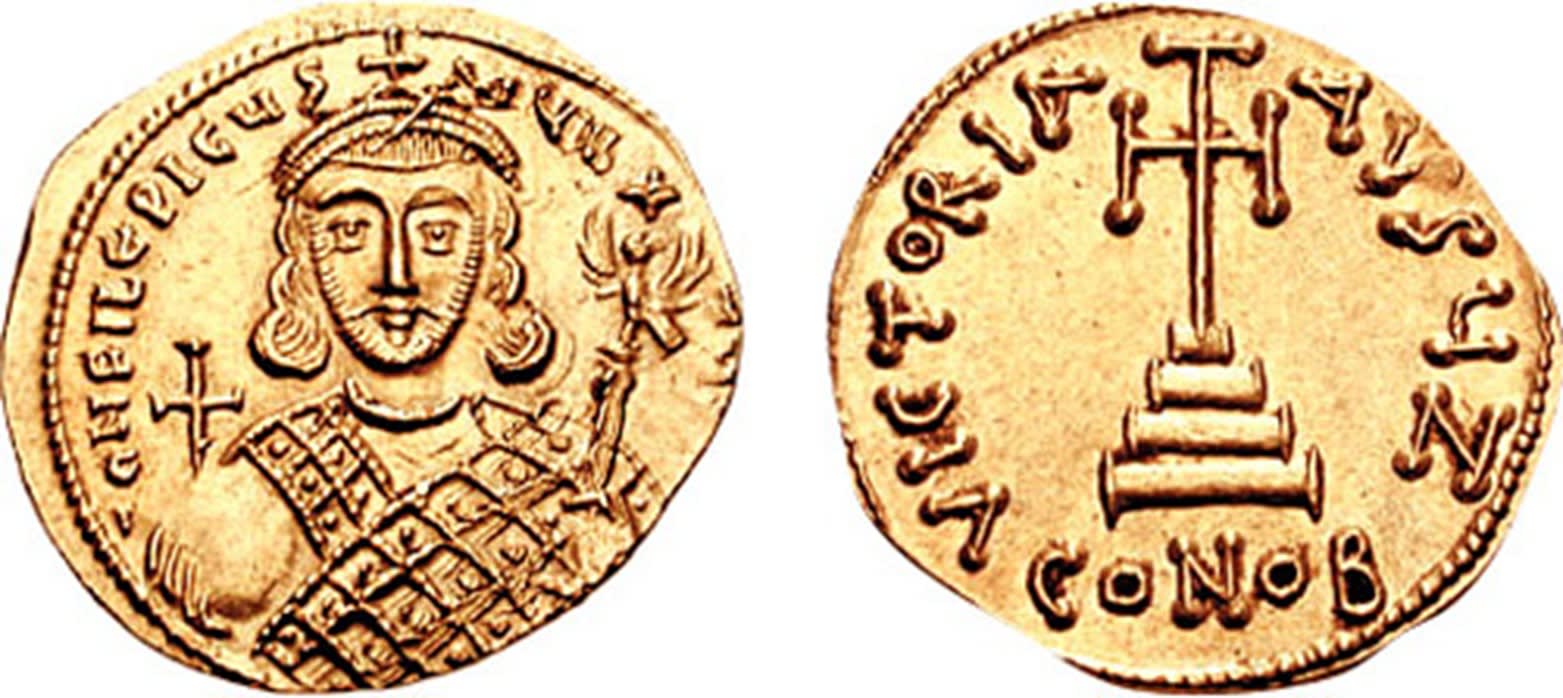
Justinian’s final fatal mistake was his decision to punish Cherson for old grievances. An army was sent to Crimea, but the soldiers, exhausted by tyranny and mad orders, revolted and proclaimed Philippikos Bardanes emperor. While Justinian was gathering forces in Asia Minor, Philippikos seized the capital and killed the emperor’s little son, the co-ruler Tiberios.
Justinian again turned to Tervel for help, but the khan, seeing the hopelessness of the situation, sent only a small detachment. In November 711, abandoned by all, the emperor was captured and beheaded. His body was thrown into the sea, while his head, mounted on a pike, was carried through the streets of Constantinople before being sent to Rome and Ravenna. In Ravenna, this dreadful news was greeted with jubilation as a just retribution.
With the death of Justinian II, the great Heraclian dynasty came to an end, and Byzantium plunged into a twenty-year period of bloody anarchy, which ended only in 717 with the accession of Leo III the Isaurian.


