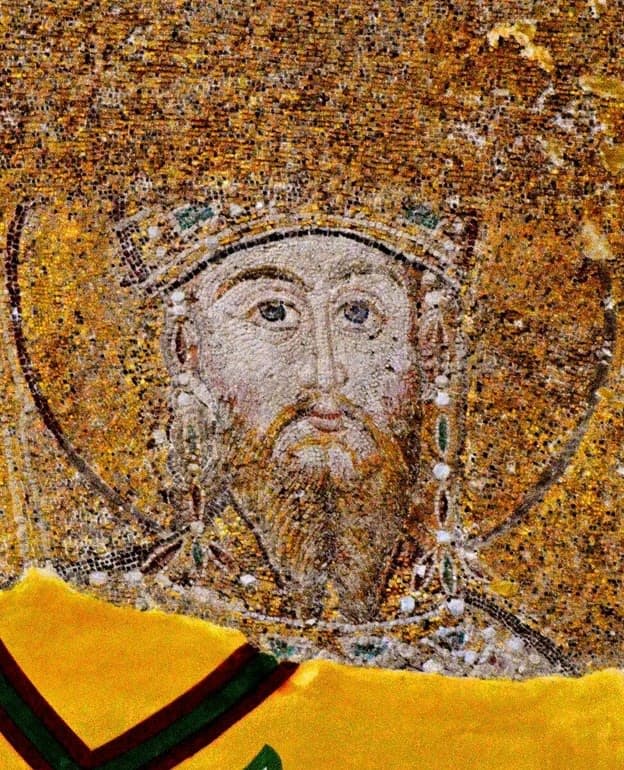
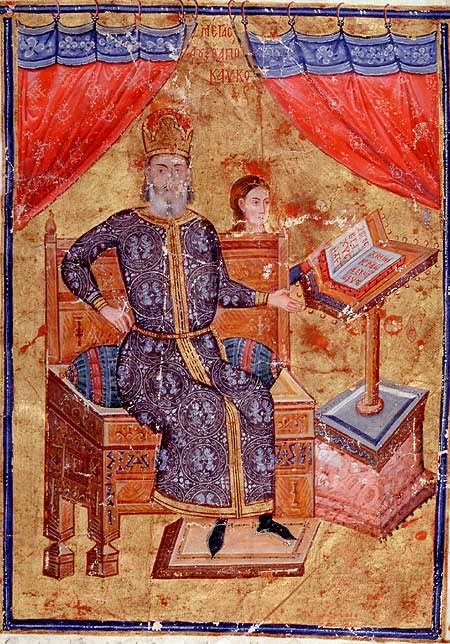
John V was born into the family of Emperor Andronikos III Palaiologos and Anna of Savoy, as the eldest son and legitimate heir to the throne. However, his entry into affairs of state was overshadowed by the early death of his father. While still a youth, he found himself at the center of a political whirlwind, where real power was concentrated in the hands of his mother Anna, Patriarch John XIV Kalekas, and the powerful megas doux Alexios Apokaukos. This rivalry among the elites grew into a destructive civil war from 1341 to 1347, which exhausted the resources of the empire precisely at the moment when the external threat became critical.
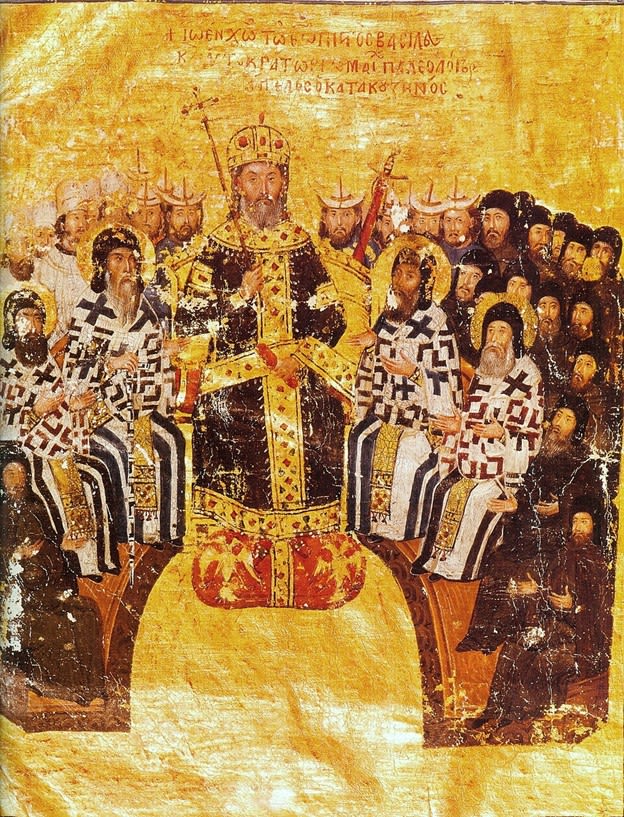
The conflict ended in a compromise that would determine the balance of power in the palace for a long time: John VI Kantakouzenos emerged victorious and was recognized as co-emperor. To secure this alliance and legitimize his position, Kantakouzenos gave his daughter Helena in marriage to the young John V, becoming not only his political partner but also his father-in-law. Their period of joint rule lasted from 1347 to 1354, when the two emperors tried to maneuver between the ambitions of the nobility and growing pressure from outside.

The turning point came in 1355, when John V Palaiologos finally became sole ruler after removing Kantakouzenos. However, peace did not follow. As early as 1354, Matthew Kantakouzenos had been proclaimed co-emperor and heir of his father, and he had no intention of renouncing his rights to the throne. For about three years, John was forced to wage an exhausting struggle against Matthew before finally consolidating his power. In this same period, he attempted to break the resistance of Kantakouzenos’ younger son, Manuel, who ruled in the Morea as despot. However, this campaign ended in failure for John — his army was defeated, and the Morea remained under the control of the Kantakouzenos family.
While the struggle for the throne continued inside Byzantium, the Ottomans were systematically turning the Balkan Peninsula into their own domain. Territorial losses followed one after another: in 1357, strategically important Gallipoli fell; in 1361, the Ottomans captured Adrianople, turning it into their new capital in Europe. By 1368, Nissa — the suburban residence of the emperors — had submitted to Sultan Murad I, which meant the effective encirclement of Constantinople.
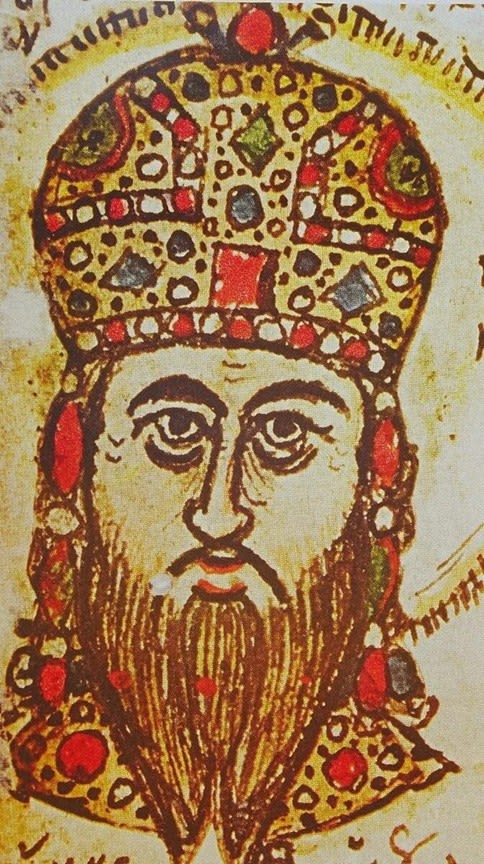
Finding himself in a hopeless position, John V decided on an unprecedented step. Hoping for military aid from the Christian West, he traveled to Rome. There, under the vaults of St. Peter’s Basilica, he solemnly converted to Catholicism, professing the faith according to the Latin rite. However, this spiritual and political sacrifice proved useless: European monarchs were in no hurry to gather a crusade. The emperor’s humiliation did not end there. On his way back in 1369, he was detained in Venice like an ordinary debtor — the authorities of the republic did not let him leave until funds were sent from Constantinople to repay his enormous personal debts.
The collapse of western diplomacy forced John to seek peace with the victor. In 1373, he officially recognized himself as a tributary and vassal of the Turkish sultan, agreeing to shameful terms of submission. But even this status did not guarantee security. In 1386, the Turks captured Thessaloniki, and a decade earlier, in 1376, the Ottomans had supported the rebellion of the emperor’s own son — Andronikos IV. The son overthrew his father, and John V, together with his other sons, was thrown into prison.
Three years later, in 1379, John managed to regain his freedom and the throne, but the price was unbearably high. He undertook to pay the Turks an even larger annual tribute and, what was especially bitter, to maintain at the Ottoman court an auxiliary military detachment of 12,000 men, which the sultan could use in his campaigns.
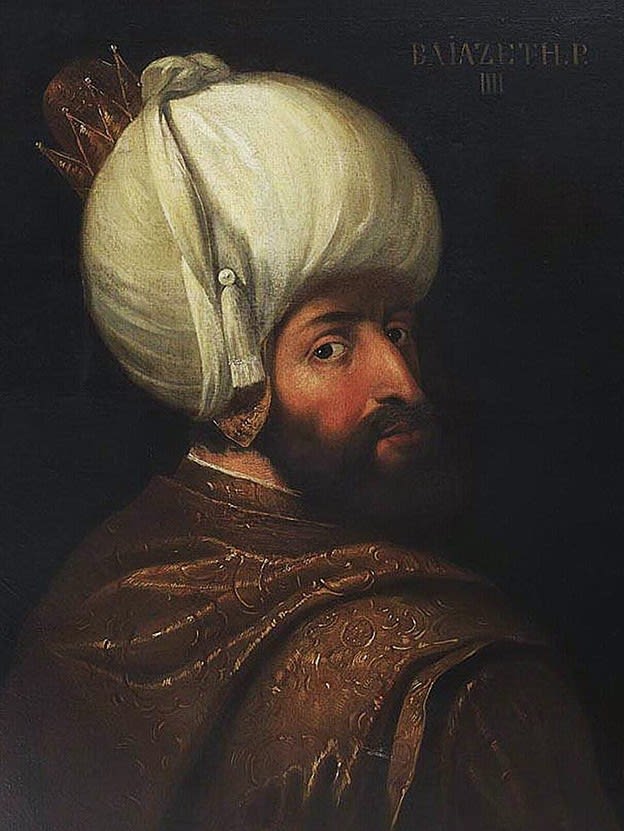
The final days of John V were full of humiliation. The new sultan Bayezid I, distinguished by particular cruelty, demanded that the emperor destroy the new fortifications he had begun to build around Constantinople, especially near the Golden Gate. The sultan threatened not only to begin a full-scale war, but also to blind the heir to the throne, Manuel, who was being held by the Turks as a hostage. John, broken by years of defeats and fear for his son, was forced to personally order the destruction of his city’s fortifications. Only a few days after carrying out this shameful demand, in 1391, the emperor died, leaving behind a dying empire that had become a shadow of itself.


