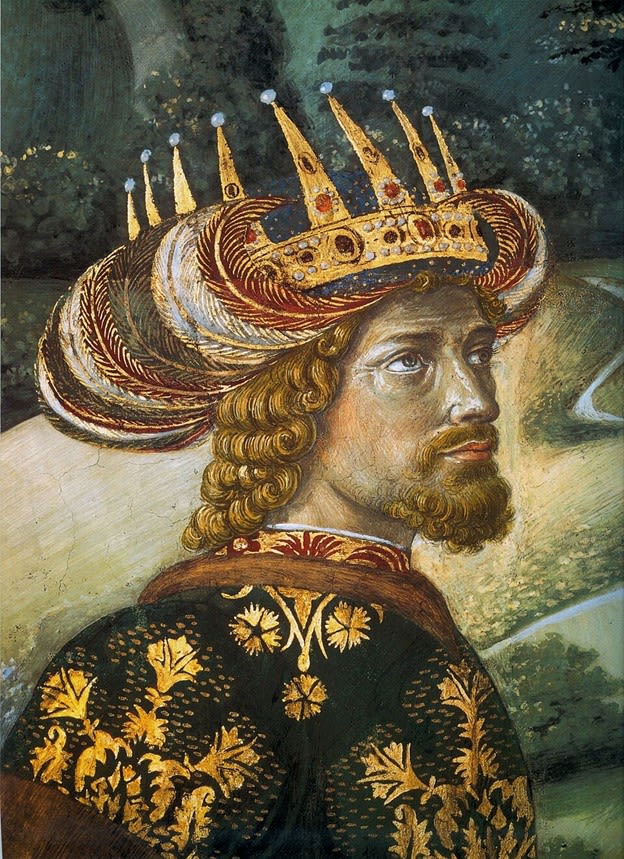
Constantine was born into the family of Emperor Manuel II and the Serbian princess Helena Dragaš, becoming the eighth of the ten children of this crowned couple. In his veins flowed the blood of the greatest dynasties of the Balkans: on his mother’s side, he was the great-grandson of the Bulgarian tsar Ivan Alexander, and on his father’s side, a descendant of Ivan Asen II. Despite the prestige of the Palaiologos surname, Constantine felt a special attachment to his Serbian roots and preferred to be called by his mother’s surname — Dragaš.
He spent most of his childhood in Constantinople, but his nature was far from courtly softness or bookish contemplation. Constantine did not shine in classical education, but instead of studying manuscripts, he perfected himself in military exercises. Contemporaries described him as a hot-tempered man, but one who possessed sober judgment and a rare gift of persuasion. These qualities served him well between 1437 and 1439, when, during the journey of his elder brother John VIII to Italy, Constantine successfully performed the duties of regent and ruler of Constantinople.
Before wearing the imperial diadem, Constantine won fame and respect as despot of the Morea. Under his rule, this province in the Peloponnese became the last stronghold of the Byzantine spirit. It was there, in Mistra, in October 1448, that news reached him of the death of his childless brother John VIII. Although his younger brother Demetrios tried to seize power in the capital first, he found no support.
Constantine was proclaimed emperor in Mistra at the beginning of January 1449. In March of that same year, he arrived in Constantinople to assume power over an empire that effectively consisted of a single city and a few enclaves. Notably, Constantine was never officially crowned by the patriarch — the cause was the deep church turmoil provoked by the Union of Florence. The Orthodox people and monastic circles were extremely hostile toward rapprochement with the Catholics, and the emperor had to balance on the edge of civil war while trying to prepare the city for the inevitable siege.
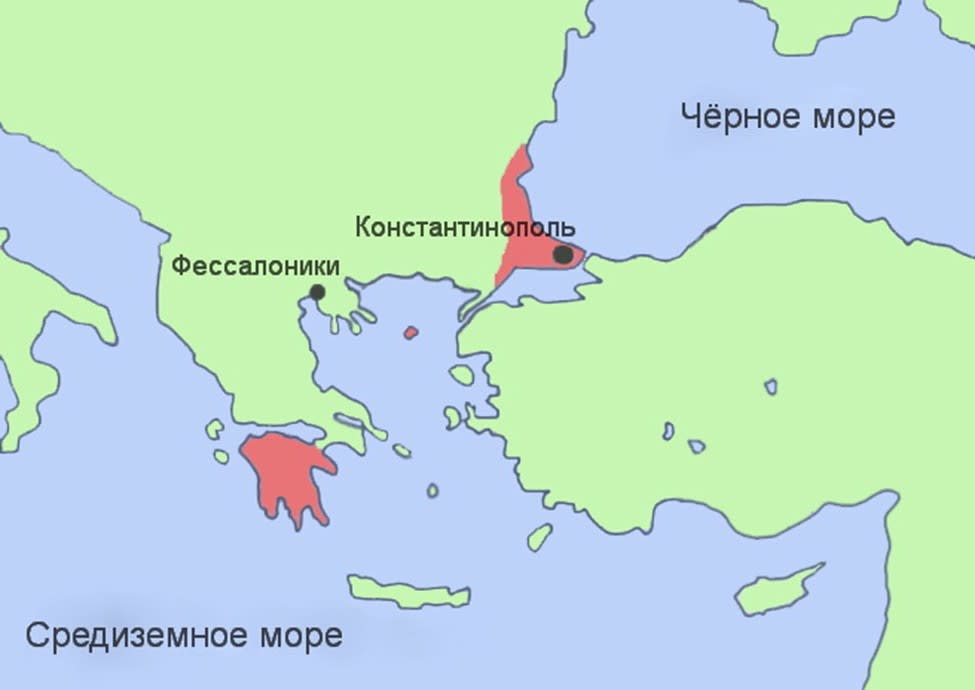
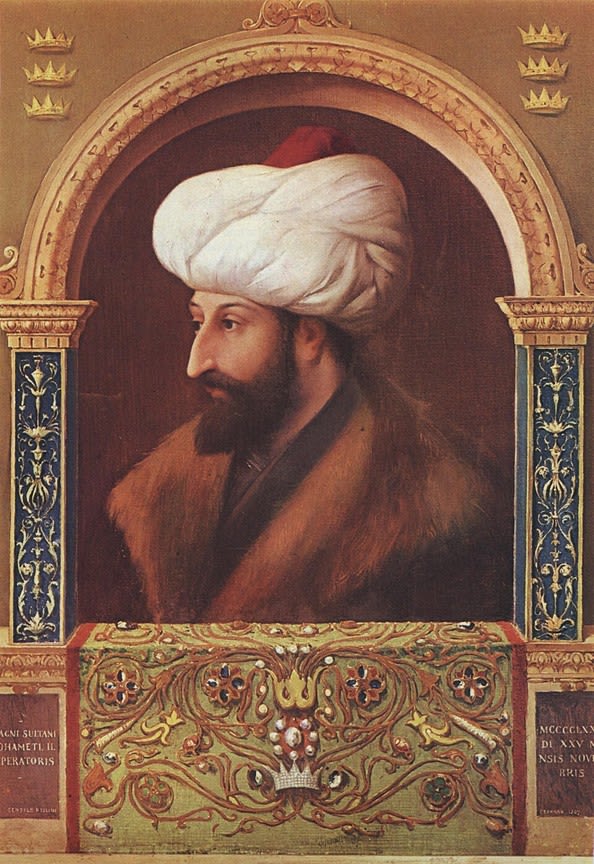
In 1452, Constantine took a step that became the catalyst for the final act. Trying to put pressure on the young Ottoman sultan Mehmed II, he demanded an increase in the payments for the maintenance in Constantinople of Prince Orhan — a dangerous claimant to the sultan’s throne. Mehmed II, who had long dreamed of capturing the “City of Cities,” responded not merely with refusal, but with a declaration of war.
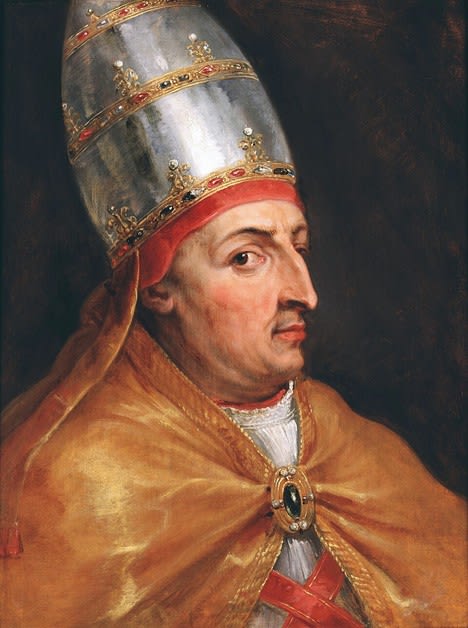
The emperor feverishly sought help from the West, but Pope Nicholas V demanded, in exchange for support, the final recognition of the union. Constantine personally was ready for compromise for the sake of saving the state and even permitted a Latin service to be held in Hagia Sophia in the presence of the senate. This caused an explosion of indignation among the Greeks; it was then that the megas doux Loukas Notaras uttered his famous phrase: “It is better to see the Turkish turban in the city than the papal tiara.” Western military aid, however, proved catastrophically small and late.
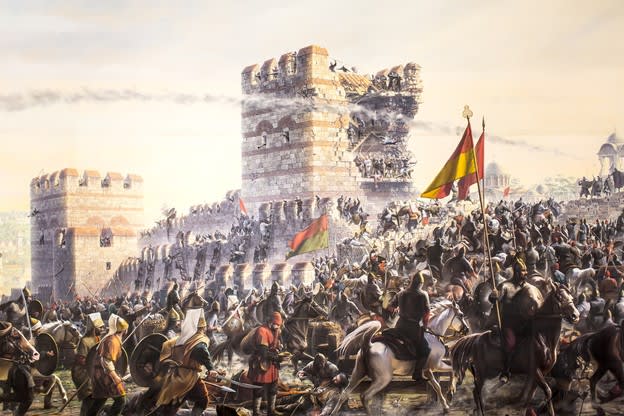
On April 5, 1453, the great siege of Constantinople began. Sultan Mehmed II offered the emperor the chance to surrender the city in exchange for his life and the right to rule in Mistra, but Constantine answered with a categorical refusal. For two months, a handful of defenders held back the assault of the overwhelmingly superior forces of the Ottoman army.
May 29, 1453, became the final day of the empire. When the Ottomans broke through the breaches in the walls — either through the Kerkoporta gate or through the breach near the Gate of Saint Romanos — Constantine understood that the city was doomed. According to the historian Kritoboulos, his last words were: “The city has fallen, and I am still alive!”
The emperor cast off all signs of distinction — the purple mantle, the regalia, and the eagles — leaving only his boots, and as an ordinary warrior threw himself into the thickest part of the battle. He died in combat, receiving two blows: one in the back, the other in the face. The circumstances of his death became surrounded by many conflicting rumors. Christian sources insisted on his heroic death, while Ottoman and western accounts sometimes tried to diminish him by claiming that he had fled. However, most historians agree: Constantine Dragaš fell as a true defender of his people.
After the capture of the city, Mehmed II ordered the emperor’s body to be found. According to one version, he was identified by his purple boots with golden eagles. Constantine’s head was displayed on the Column of Augustus, and later, according to rumor, was carried in a jeweled casket through eastern courts as a trophy. His body, according to legend, was secretly buried by the Greeks. Later, in the sixteenth century, people pointed to an abandoned grave under an old willow tree in the Vefa quarter, but the exact resting place of the emperor remains a mystery to this day.
The death of Constantine, whose body was never found and solemnly buried, gave rise to one of the most beautiful legends of the Greek people — the legend of the “Marble Emperor” (Μαρμαρωμένος βασιλιάς). According to the legend, at the moment of the Turkish breakthrough, an angel saved the emperor, turned him into marble, and hid him in a cave beneath the Golden Gate. There he sleeps and awaits the hour when the angel will return and awaken him, so that he may lead an army, drive the invaders as far as the “Red Apple,” and restore the empire. Belief in Constantine’s return supported the Greeks for centuries during the years of Ottoman rule.
Interestingly, in some lists he is mentioned as Constantine XII, if Constantine Laskaris, who was proclaimed emperor in 1204, is taken into account.
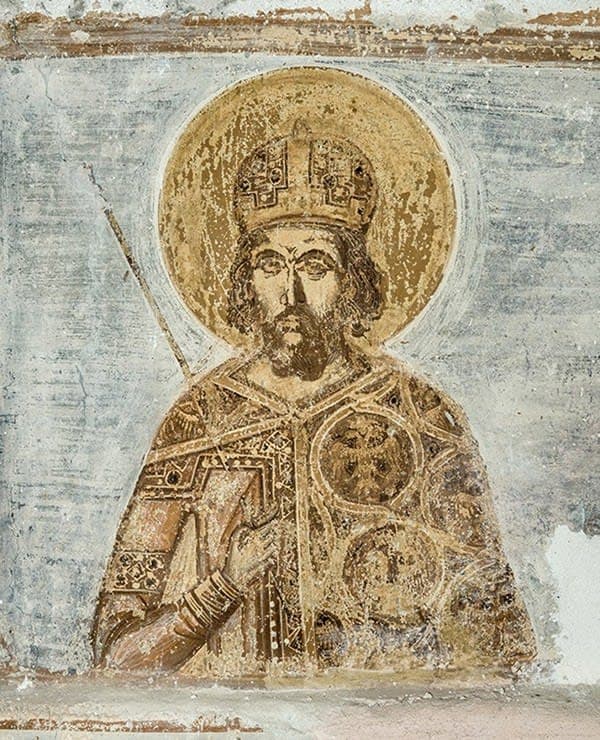
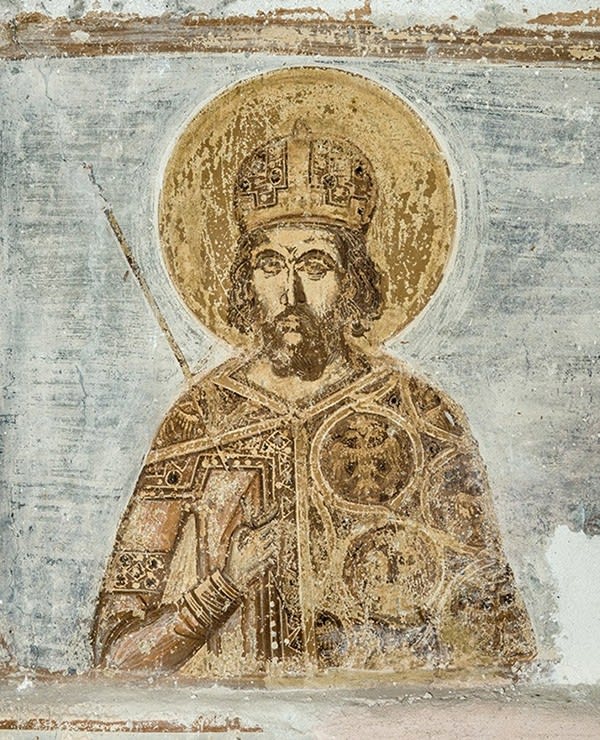
For a long time, it was believed that no lifetime portraits of Constantine had survived, but the year 2024 brought a sensational discovery. During the restoration of frescoes in the Monastery of the Holy Taxiarchs in Aigialeia, Greece, an image of a mid-fifteenth-century emperor was discovered beneath a layer of later painting. In the fresco, Constantine XI appears in a luxurious sakkos and a purple mantle decorated with double-headed eagles. Researchers believe that this is the only portrait painted from life by an artist from Mistra who personally knew the emperor. This discovery allowed us, almost six centuries later, to look into the face of the man who became a living symbol of loyalty to duty and unbending courage in the face of inevitable catastrophe.


