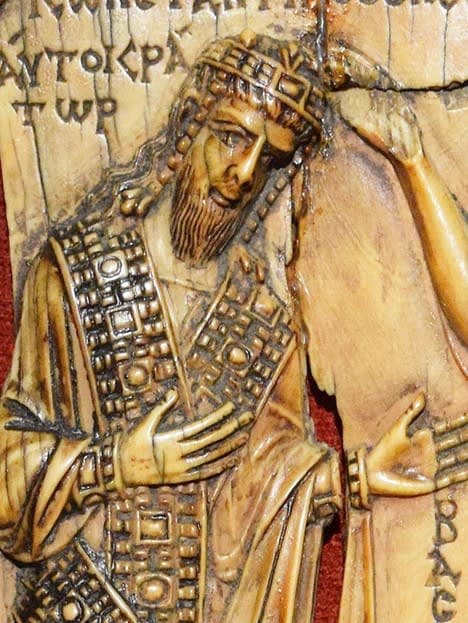

Constantine was born in September 905, the only son of Emperor Leo VI the Wise and his beloved Zoe Karbonopsina. Yet his birth was accompanied by a tremendous scandal: Zoe was Leo’s fourth wife, and a fourth marriage was strictly forbidden by church canon law. The young Constantine was therefore formally regarded as illegitimate, which placed the future of the entire Macedonian dynasty in jeopardy.
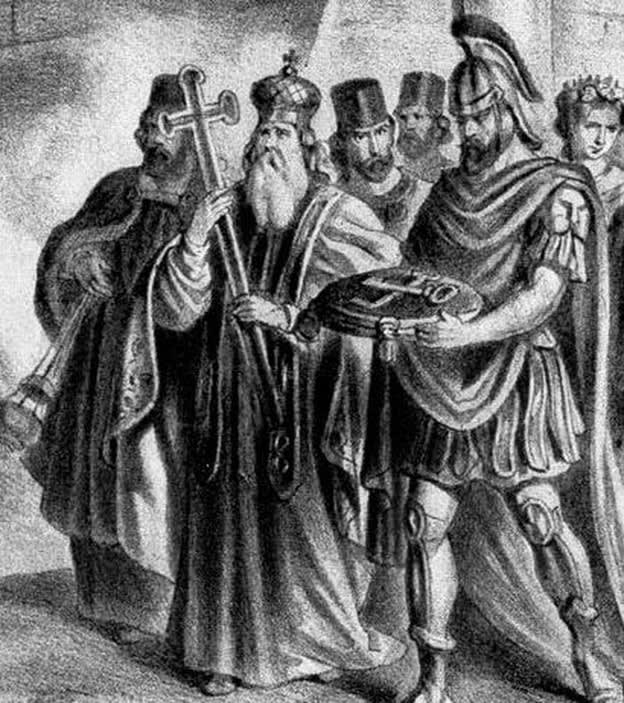
The struggle over his status lasted for months. Only in January 906 was the child finally baptized, and in April of that same year, despite the furious resistance of Patriarch Nicholas Mystikos, Leo and Zoe were secretly married. The epithet Porphyrogenitus — “Born in the Purple” — became Constantine’s chief political shield: it emphasized that he had been born in the Purple Chamber of the imperial palace, a room reserved exclusively for the births of reigning dynasts, and thus made his claim to the throne indisputable in the eyes of the people.
On May 15, 908, Leo VI, seeking to secure his son’s future, proclaimed him co-emperor. After his father’s death in 912, however, power passed to Constantine’s uncle Alexander, who ruled only briefly and died a year later. In 913, the eight-year-old Constantine found himself in the center of political storms under a regency council headed by that same Nicholas Mystikos.

In 920, a long period of “shadow rule” began in Constantine’s life. Power was usurped by the ambitious droungarios — the admiral of the fleet — Romanos I Lekapenos. To lend legitimacy to his authority, he had already married the fourteen-year-old Constantine in 919 to his daughter Helena, and soon afterward made himself co-emperor, in effect pushing the lawful basileus aside from the actual government of the empire.

For another man this would have meant ruin, but for Constantine it became a period of extraordinary intellectual flowering. For nearly a quarter of a century he remained in the background, devoting himself to scholarship, literature, and self-education. While the Lekapenoi ruled, Porphyrogenitus studied the archives, wrote treatises, and gathered the knowledge that would later make his name famous.
Constantine’s hour struck in 944. The sons of Romanos I, hoping to rule by themselves, overthrew their own father, but miscalculated. The people of Constantinople, who had preserved their loyalty to the Macedonian dynasty, rose in revolt. The streets of the capital rang with demands to restore power to the “lawful purple-born emperor.” The crowd was calmed only when Constantine finally stepped out of the shadows. Forty days after the overthrow of his father-in-law, in January 945, Constantine VII sent his brothers-in-law to a monastery and at last became the full and sole ruler of the empire.
Once he had taken the reins of government, Constantine VII showed himself to be a defender of the interests of the capital’s civil bureaucracy, waging a subtle struggle against the centrifugal ambitions of the provincial military aristocracy.
His foreign policy was centered on the struggle against the Arab threat. The beginning was difficult: in 949, an expedition to recover Crete ended in crushing defeat. Yet the emperor knew how to learn from failure. He placed his trust in talented generals — Nikephoros Phokas and John Tzimiskes. Thanks to them, Byzantine armies crossed the Euphrates in 952. The military climax of his reign came in 958, when Roman arms covered themselves with glory in the capture of Samosata and the defeat of the forces of the Hamdanid emirate in the great battle of Raban.

An important figure in his administration was the eunuch Basil Lekapenos, the son of the deposed Romanos I. Constantine appointed him parakoimomenos, and this man acquired such immense influence that he remained a key player at court for decades afterward.
Yet Constantine VII is remembered above all as one of the most educated men of the Middle Ages. His literary legacy is immense. He did not merely write books; he systematized knowledge itself about the governance of the world:
De Administrando Imperio (c. 950) — a unique treatise containing priceless information about the peoples surrounding Byzantium, including a detailed description of the economic and political structure of Kievan Rus’.

De Ceremoniis — a grand compendium of court ceremonial, which includes the famous visit of Princess Olga to Constantinople in 957.
De Thematibus — a work on the administrative organization of the empire.
At the emperor’s command, the Constantinopolitan Synaxarion was also compiled, and it is still used in Orthodox liturgy to this day. Constantine furthermore authored part of the chronicle known as Theophanes Continuatus, writing the biography of his grandfather, Basil I.
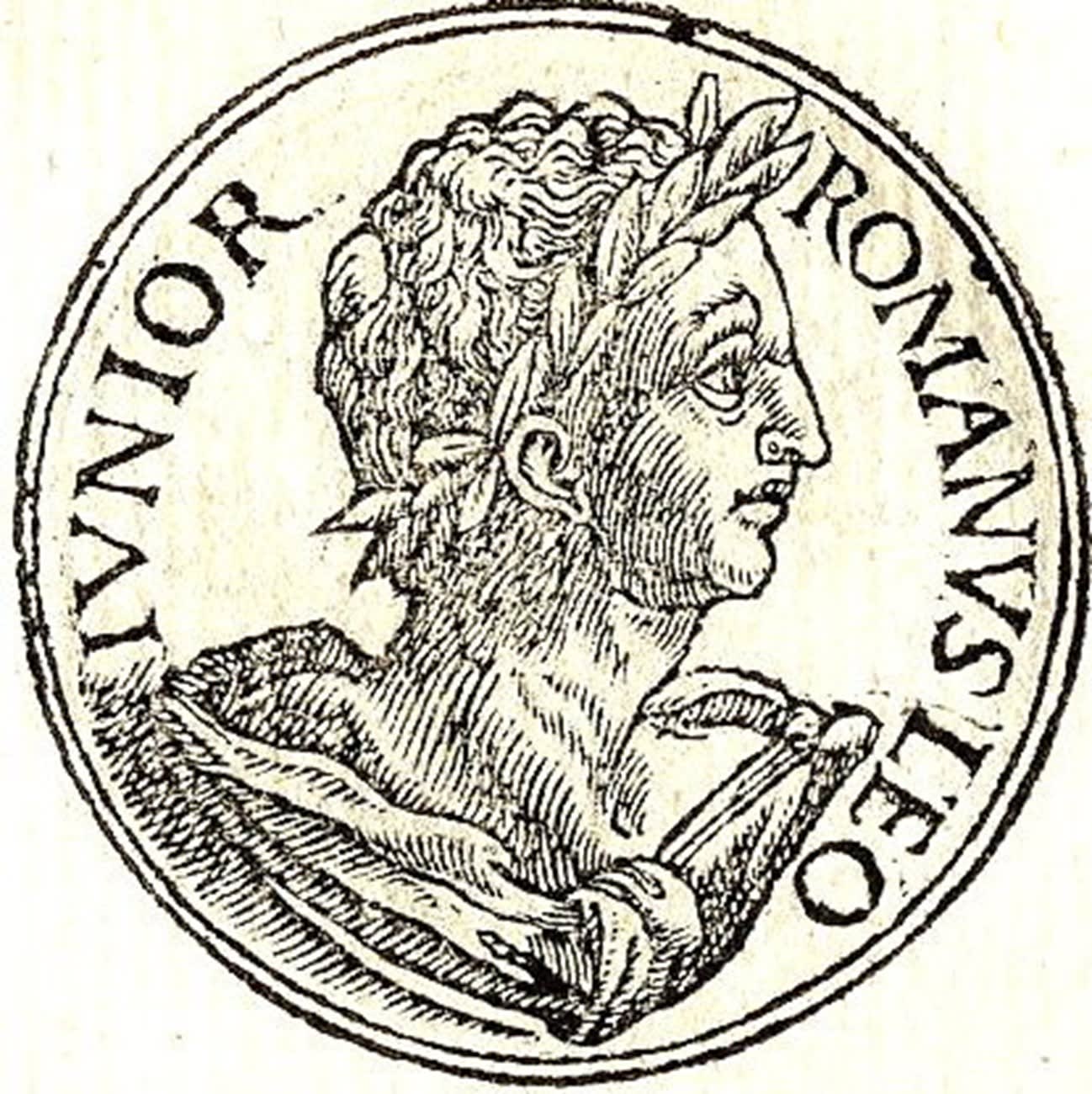
The earthly journey of Porphyrogenitus ended in 959. As with many Byzantine emperors, his death was surrounded by rumors of poisoning — it was whispered that his son, Romanos II the Younger, stood behind it.
“Constantine Porphyrogenitus was an emperor who preferred the pen to the sword, yet it was precisely his pen that made Byzantium intelligible and visible to posterity through the darkness of the centuries.”
He left behind a powerful and intellectually vibrant empire, as well as a son who inherited the throne that Constantine himself had approached only after long decades marked by marginalization, books, and faith in his own destiny.


