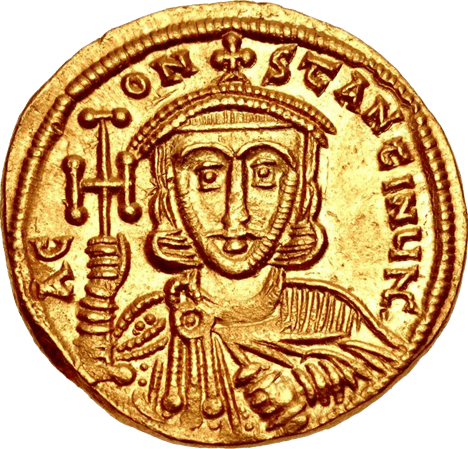

The son of the great Leo III, Constantine V entered history as one of the most controversial figures of Byzantium. To his soldiers, he was an unconquerable hero and a “new Moses,” while to his religious opponents he was the “Antichrist in the flesh.” History preserved for him the mocking nicknames Kopronymos (“Dung-named”) and Kaballinos (“Horseman” or “Mule-man”), invented by iconophile monks to blacken his memory.
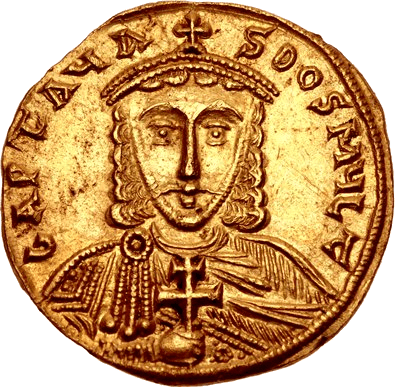
Yet behind the veil of medieval “black propaganda” there emerges the image of an energetic ruler who not only kept the empire from disintegration, but also launched a determined offensive on every front.
Constantine began his sole reign with a civil war. In 741, his brother-in-law Artavasdos seized Constantinople and proclaimed himself emperor as a supporter of icon veneration. Constantine, having retained the loyalty of the Asian legions, defeated the usurper a year later.

Interestingly, the basileus showed a degree of leniency rare for that age: instead of ordering mass executions, he commanded that Patriarch Anastasius, who had supported the rebellion, be seated backwards on a donkey and paraded through the Hippodrome under the mockery of the crowd. After this humiliation, the disgraced hierarch was restored to his see.
In order to prevent future separatism by powerful military commanders, Constantine divided the mighty Opsikion theme into three parts, creating smaller and more manageable districts: Opsikion, the Bucellarians, and the Optimatoi.
If his father Leo III had saved the capital from siege, Constantine V himself crossed the Taurus Mountains and carried the war to the enemy.
In 745, the Byzantines recaptured Germanikeia from the Arabs.
In 746, the Arab fleet was defeated off the coasts of Cyprus and Crete.
In 751, the army reached the Euphrates, destroying the key fortresses of Melitene and Samosata.
His successes were so impressive that Caliph al-Mansur preferred to move the capital of the Caliphate from Damascus farther inland to Baghdad, fearing Byzantine raids.
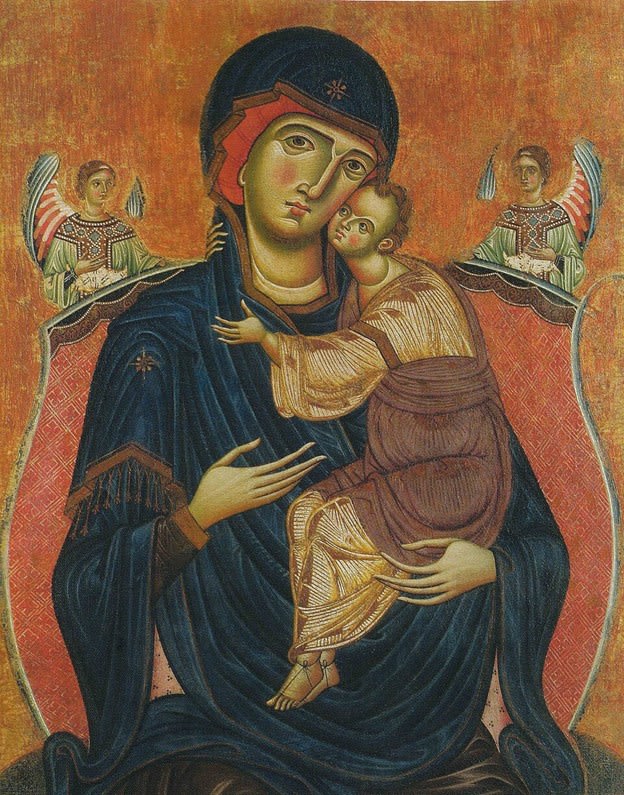
In 754, Constantine convened a council that officially banned icons. His theology was even more radical than his father’s: he opposed the veneration not only of images, but also of the saints and even of the Virgin Mary.

The main blow fell upon the monks, whom the emperor contemptuously called “bearers of darkness.” Monasteries were turned into barracks, their lands were confiscated, and the monks themselves were forced to choose: either marriage and secular clothing, or torture and death.
In 765, he staged a “parade of shame” in the Hippodrome, forcing monks and nuns to walk in pairs holding hands under the spitting and jeering of the townspeople. Nevertheless, ordinary laypeople were scarcely persecuted for venerating icons — the struggle was aimed specifically at the monastic estate as a political opposition.
Constantine conducted an astonishing nine campaigns against the Bulgarian Khanate. He was a master of amphibious landings and psychological warfare.
In 763, he won a decisive victory at Anchialos, which was followed by a magnificent triumph in the capital.
Despite his military genius, Constantine made one serious mistake in diplomacy. The Bulgarian khan Telerig tricked the emperor into revealing the names of all Byzantine spies in Bulgaria, after which he promptly executed them. It is said that Constantine, realizing how easily he had been deceived, tore at his gray hair in fury.
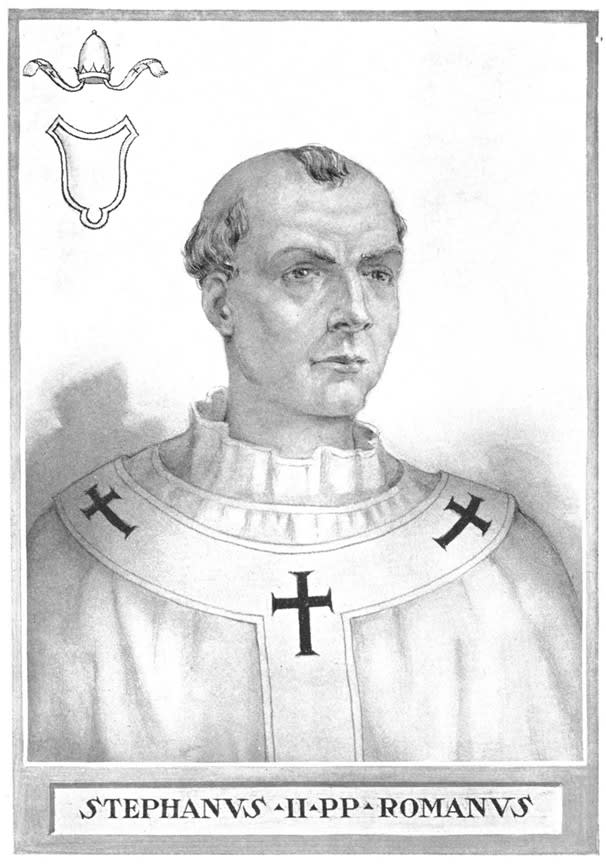
While Constantine was fighting in the East and the North, Byzantium was finally losing Italy. The popes, seeing in the basileus a heretic and a tyrant, ceased asking for his approval upon assuming office. In 751, Ravenna fell under the blows of the Lombards, and Pope Stephen II found a new protector in the Frankish king Pepin the Short. This marked the beginning of the alliance between Rome and the Franks, which would later lead to the creation of Charlemagne’s Western Empire.
Constantine V died on September 14, 775, during yet another campaign against the Bulgars. He left behind a financially stable empire with a powerful army, but also a deeply divided society.
His nickname “Dung-named” outlived the centuries, yet his reforms of the army and the administrative division of the themes became the foundation that allowed Byzantium to endure for many centuries more.


